


I have seen cinema rooms that feel immersive only when the screen size actually matches the seating distance and wall scale.
Many setups end up looking impressive in plans but create awkward viewing angles once people are sitting down with snacks and blankets.
In my own home I would test the screen height first because that single choice seems to decide whether the room works for long evenings or just short viewings.
Floor to ceiling screens change how the rest of the space needs to be arranged so the tech does not dominate every other detail.
Layout decides everything.
Tiered Seating Platforms In Cinema Rooms

A raised platform under the back rows of seats makes a big difference in a home cinema. It gives everyone a clear line of sight to the screen without anyone having to crane their neck or shift around.
This layout works best in rooms that fit three or more rows of recliners. Keep the platform low and simple, match the wood tone to the rest of the floor, and leave enough depth for the seats to recline fully.
Built-In Storage Under A Large Screen
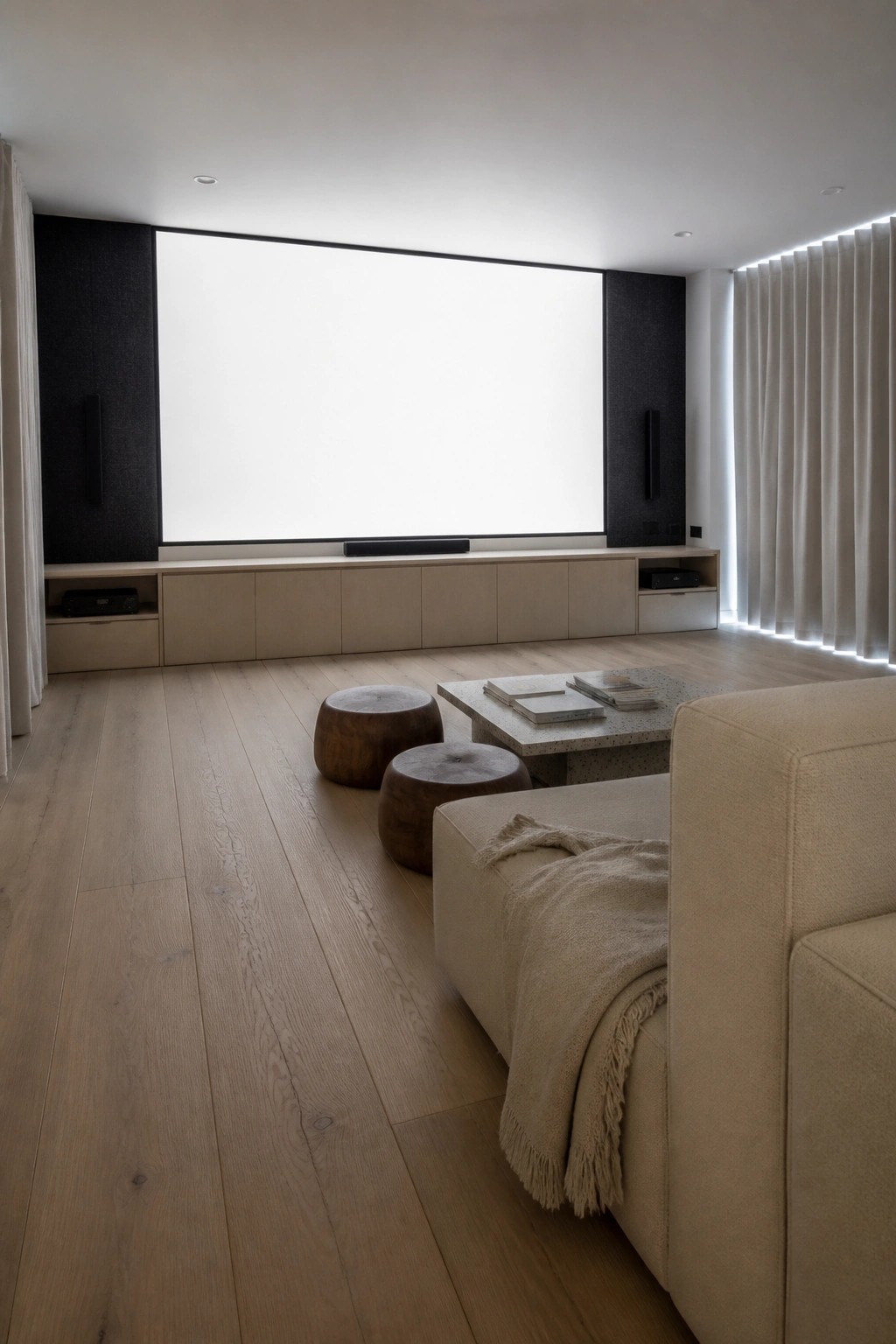
A long low cabinet under the screen gives you room to hide all the equipment while keeping the rest of the space open. It cuts down on visible wires and boxes so the room stays calm instead of crowded.
This setup works best in media rooms or open living areas where you want the screen to feel like the main feature. Keep the cabinet height modest and choose a finish that blends with the floor so the whole wall stays simple.
Tiered Seating For Better Sightlines

Tiered rows work well in home cinemas because they keep every seat at a good angle to the screen. This setup avoids the usual problem of heads blocking views when people sit in front of each other. Dark green velvet chairs add a soft, comfortable touch without making the space feel too formal.
This layout suits rooms that already have a solid floor-to-ceiling screen and a bit of depth. It works best in basements or converted spaces where you can build the steps into the floor. Just keep the rise low enough that walking between rows stays easy.
Perforated Metal Screens For Full Height Displays

A perforated metal screen running floor to ceiling can turn one wall into the main feature in a cinema room. The holes let some light pass through while still giving a solid surface for projection, which keeps the space from feeling closed in.
This approach suits modern homes with high ceilings and an industrial edge. Pair it with low seating and minimal furniture so the wall stays the main draw without extra clutter competing for attention.
Built-In Cabinetry Under The Screen

A large screen works better when it sits on top of custom cabinetry instead of floating on the wall by itself. The base gives the screen a solid anchor and hides wiring and components at the same time.
This approach suits rooms that double as regular living space. Keep the cabinet doors simple and match the wood tone to other trim or furniture so the screen feels like part of the architecture rather than an add-on.
Full Wall Screens Change The Room

A floor-to-ceiling screen turns the whole wall into the movie. The size alone makes the space feel more like a real theater than a regular TV room, and it cuts down on the need for extra decor.
This setup works best in a closed-off room where you can keep lights low. Keep the seating low and simple so nothing blocks the view, and add a small counter along one side if you want easy access to snacks during long films.
Curved Screens That Follow the Room Shape

A curved screen can make a big difference in how immersive a home cinema feels. Instead of a flat surface that cuts off at the edges, the curve keeps the picture in front of you no matter where you sit. This setup works especially well in smaller or medium rooms where you want every seat to feel close to the action.
It suits homes that already have some architectural curves or where you can build a simple curved wall behind the screen. Keep the seating low and arranged in a gentle arc so no one ends up at a sharp angle. Dark walls and simple lighting help the screen stand out without extra fuss.
Low Seating In Front Of Large Screens

Low seating keeps the whole room focused on the screen without adding bulk. It opens up the floor space and lets the big screen feel like the main event instead of just another piece of furniture.
This setup works best in smaller or minimalist homes where you want the room to stay calm and uncluttered. Use simple cushions or low platforms so nothing blocks the view, and keep the rest of the space light on furniture.
Curved Seating For Big Screens

A curved sofa helps a floor to ceiling screen feel like the main event in the room. Everyone gets a clear view without needing to turn their heads, and the shape pulls the whole space together in a simple way.
This layout works best in dedicated media rooms where you want to seat six or more people at once. Keep the curve fairly gentle so the ends do not push anyone too far from the center of the screen.
Long Chaise Seating Fits Narrow Cinema Rooms

A long chaise takes up less floor space than a set of separate seats while still giving several people room to stretch out. In a tight cinema room this layout keeps the focus on the screen and leaves more open floor in front of it.
It works best in basements or small spare rooms where width is limited. Place the chaise against one long wall and keep the rest of the furniture low so sight lines stay clear for everyone.
Tiered Seating Improves Sightlines in Home Cinemas

Tiered seating helps everyone get a clear view of the screen without anyone blocking the person behind them. The stepped benches let you fit more seats in a smaller footprint while keeping the room comfortable for longer movie nights.
This layout works best in dedicated basement rooms or converted spaces that already have some depth. It suits homes that want a simple theater feel without needing custom recliners or raised platforms.
Built-Ins That Add Storage Without Crowding the Screen
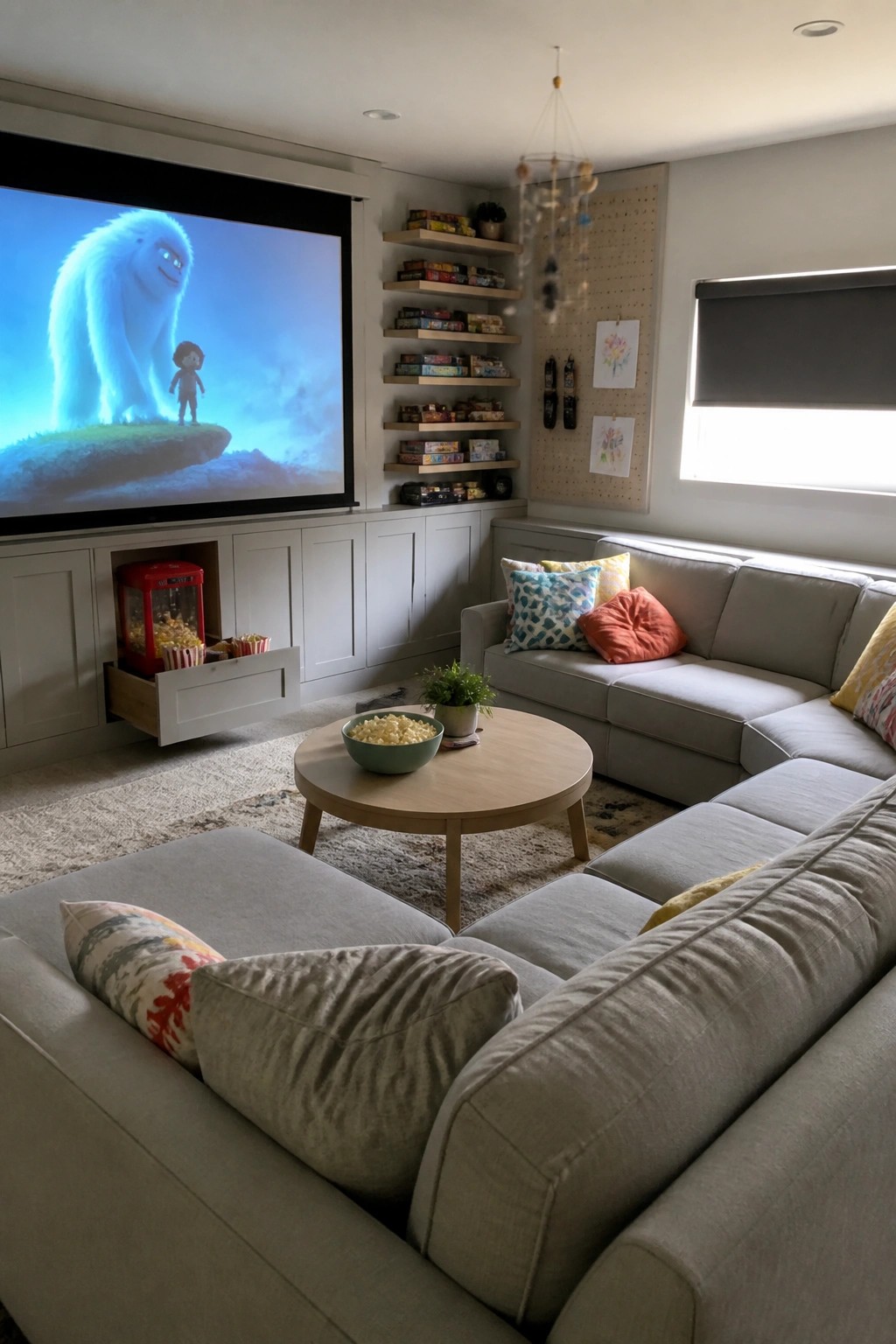
Built-in cabinetry around a large screen helps keep a cinema room organized. The lower cabinets and shelves hold games and gear while the screen remains the main feature.
A pull-out drawer for a popcorn machine works well here and keeps snacks handy during movie nights. This setup fits family spaces where you want easy access to everything without extra furniture in the way.
Full Wall Screens In Home Cinemas

A full wall screen changes how a cinema room feels right away. Instead of a TV sitting on a stand, the image takes over the entire front wall and pulls you in without any frame or border getting in the way.
This works best in a room that can stay fairly dark and has enough depth for seating. Dark textured walls help control light and sound, while a row of recliners keeps the focus on the screen rather than extra furniture.
Full Wall Screens in Dark Rooms

A full wall screen works well in a home theater because it fills the view and makes the whole space feel more like a real cinema. Keeping the walls, seating, and floors dark helps reduce glare and keeps the focus on the image.
This idea fits best in a dedicated room with controlled lighting and minimal windows. It works especially well when you can add thick carpet or acoustic panels to manage sound without adding visual clutter.
Add A Bar Counter To Your Cinema Room

A bar in the cinema room keeps drinks and snacks within reach so no one has to leave during the film. It turns the space into a complete spot for longer viewing sessions without extra trips back and forth.
This setup works well in rooms that already have enough floor space to place the bar along one side. It suits homes that often host small groups and want the whole experience contained in one area.
Full Wall Screens With Low Seating

A floor to ceiling screen gives a cinema room real presence without needing much else around it. The dark walls and simple layout keep the focus right where it should be.
This approach works well in smaller or medium sized spaces where you want the screen to feel large but not overwhelming. Use low modular seating so sightlines stay clear, and stick to dark or neutral tones so the room stays comfortable during long viewing sessions.
Tiered Seating For Clear Sightlines

Tiered seating works well in a home cinema because it gives every row an open view of the screen. The slight rise between rows keeps heads from blocking the picture, which matters more than people expect once you sit through a full movie with friends or family.
This setup fits best in a dedicated room where you can build a low platform or step. It pairs nicely with recliners that stay low to the floor, and it works in both small and medium spaces as long as the screen stays large enough to fill the view from the back row.
Living Walls Beside the Screen

Many cinema rooms lean heavy on dark walls and tech gear. Adding living walls on either side of the screen brings in greenery that keeps the space from feeling closed in or overly mechanical.
This setup works best in larger rooms where the plants can get steady light. Choose hardy indoor varieties and plan for easy access so the walls stay healthy without constant upkeep.
Built-In Shelving Makes Cinema Rooms Feel More Livable

Built-in shelving along one wall gives a cinema room extra purpose without taking attention from the screen. The wood adds warmth and texture that plain walls often lack, and it turns leftover space into useful storage for books and a few lamps.
This works best in rooms that already have some width beside the screen. Keep the shelves low enough not to compete with the viewing area, and match the wood tone to your seating so everything feels connected.
Central Table Keeps Snacks Within Reach
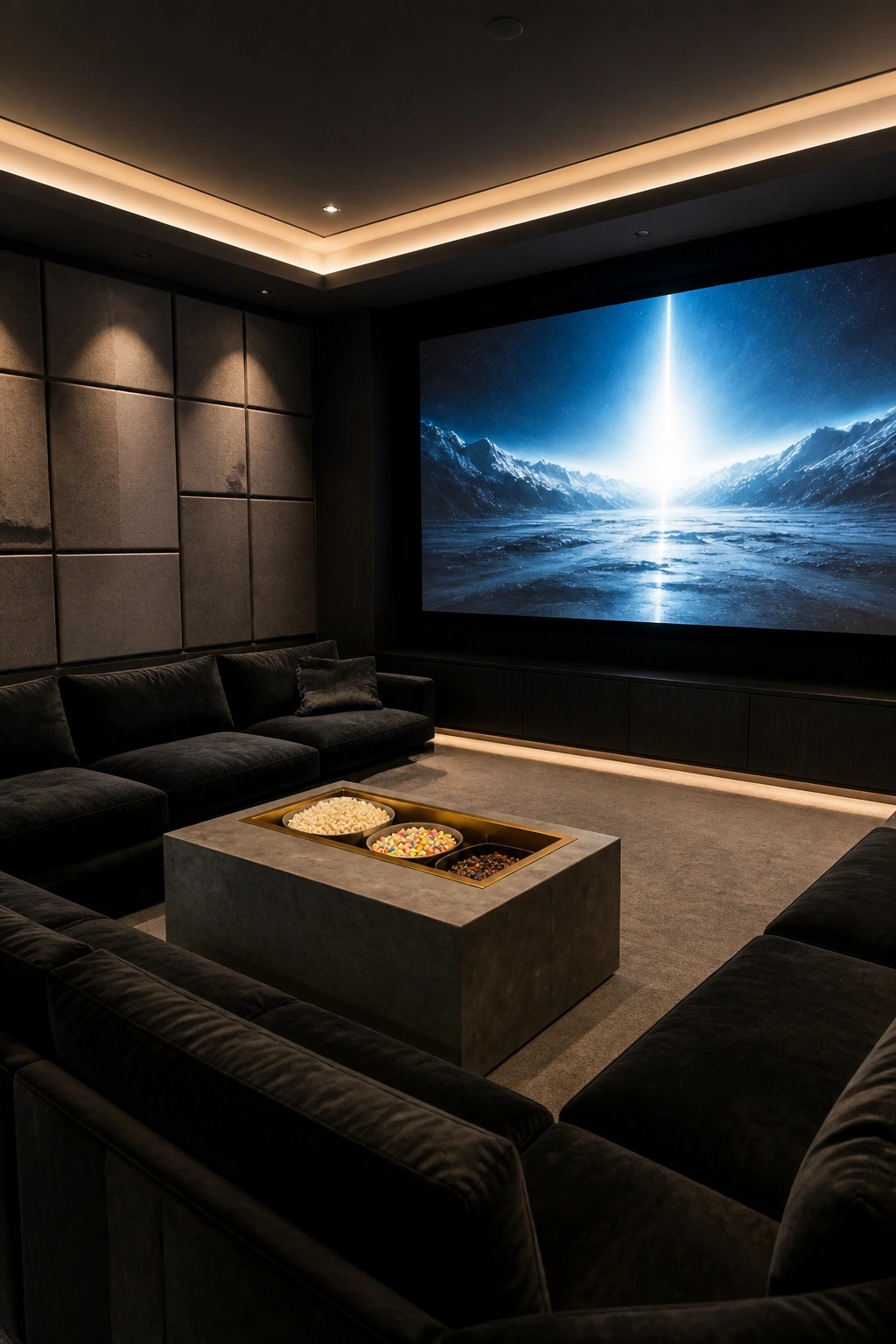
A central table built right into the seating layout makes a big difference during long movie sessions. It puts popcorn, candy, and drinks in easy reach for everyone without anyone needing to get up or pass things around awkwardly. The setup works especially well in rooms where the seating wraps around the screen area.
This works best in medium to large cinema rooms that can fit a solid block in the middle without crowding the walkways. Keep the table height low enough so it does not block the screen view from any seat, and choose a durable material that can handle spills and everyday use.
Frame the Screen into Dark Wood

Many people build the screen right into the wall rather than hanging it on the surface. This makes the setup feel more like a permanent part of the room and helps it blend with wood and stone details that often show up in lower level spaces.
It works best in dedicated media rooms or basements where you want a simple, immersive look without a lot of extra trim or molding. Keep the frame color close to the surrounding wood so the screen does not stand out as a separate box on the wall.
Velvet Seating For A Cinema Room

Velvet seating stands out in a cinema room because it adds softness and comfort without needing extra layers or throws. The deep color also helps the space feel more enclosed, which keeps attention on the screen once the movie starts.
This approach works best in rooms that see regular use. Choose a sturdy velvet that holds up to sitting and leaning, and keep the rest of the room fairly simple so the seats remain the main feature.
Low Seating That Keeps The Screen In Focus
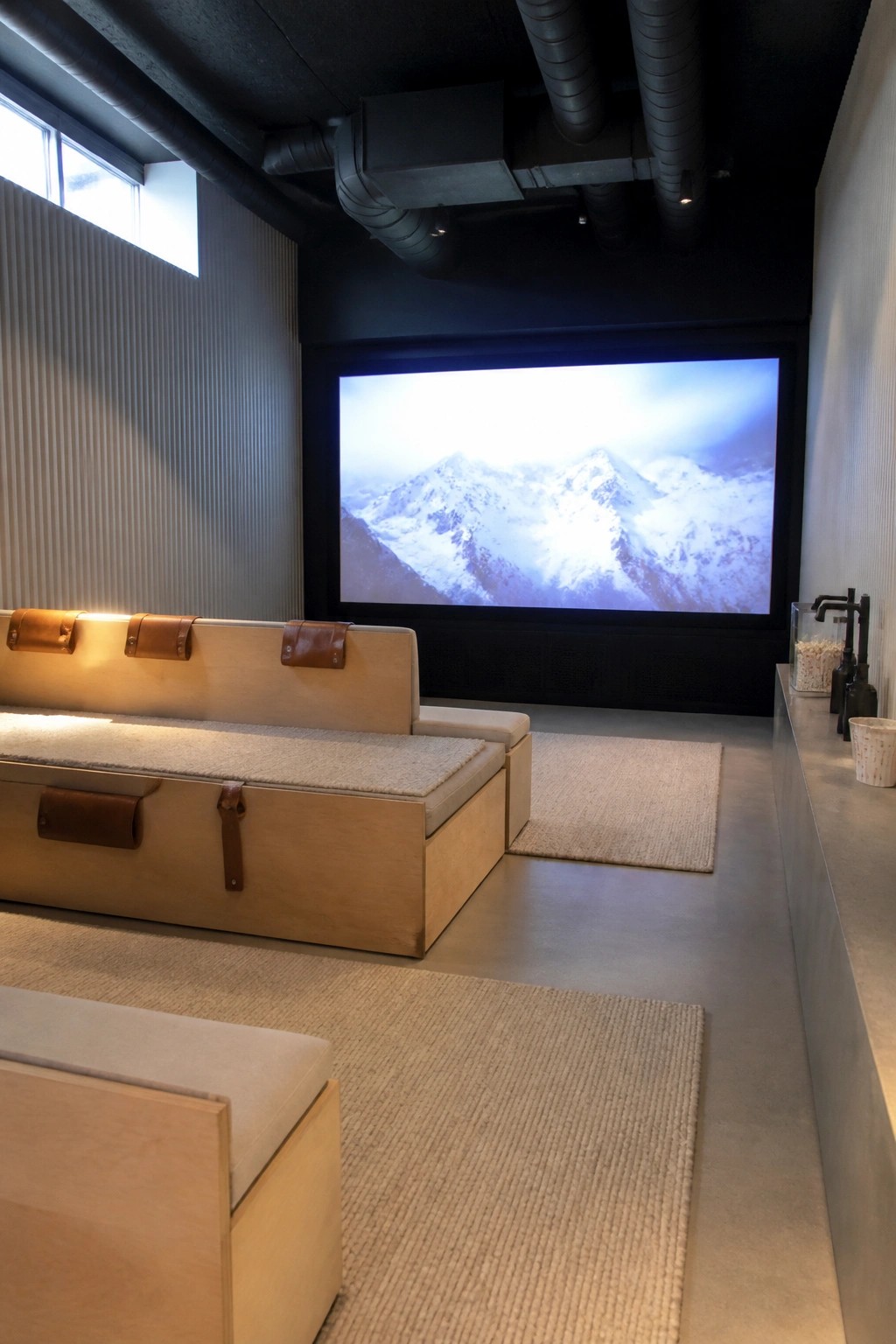
Low seating works well in a cinema room because it stays out of the way. The screen can run nearly floor to ceiling without anything blocking the view, and the whole space feels more open instead of crowded with tall furniture. People often like this setup when they want the movie to feel like the main event rather than the room itself.
This kind of seating suits smaller or multi-use rooms where you still need flexibility. You can move the pieces around for different group sizes, and the built-in lighting under the cushions adds just enough glow without extra lamps. Make sure the cushions are firm enough for longer viewing sessions, since low platforms can feel less supportive than standard sofas.
Floor To Ceiling Screens

A floor to ceiling screen changes how a home cinema room feels right away. It removes the usual frame around the picture so the image takes over the whole wall and pulls you in more completely.
This setup works best in smaller or medium rooms where you can keep the walls and curtains dark. It suits homes that already have high ceilings and can handle the scale without the screen feeling oversized.
Built-In Media Consoles For Hidden Storage

A long built-in console under the screen gives you room for all the gear while keeping the wall looking clean. The open shelves hold what you need without turning the space into a tangle of wires and boxes.
This works best in rooms where the screen is the main focus. Match the console finish to the wall color or nearby cabinetry so it fades into the background instead of competing with the screen.
Frequently Asked Questions
Q: How do you keep the picture sharp on a screen that goes all the way to the ceiling?
A: Position your projector at the right distance and angle first. Test the focus across the full height before you finalize anything. A slight tilt adjustment often fixes most distortion issues.
Q: What seating works best when the screen fills the entire wall?
A: Low profile chairs keep the view clear from every spot. Arrange them in gentle curves rather than straight rows.
Q: Can I add ambient lighting without washing out the image?
A: Use bias lighting behind the screen edges only. Set it to a dim warm tone that matches your wall color. It reduces eye strain during long movies without hitting the screen directly.
Q: How do I handle the screen if the room gets direct sunlight sometimes?
A: Pick a screen material with good ambient light rejection. Close heavy curtains during showtime. That simple step makes the difference on bright days.
