

I have noticed that lighting changes how a room settles at the end of the day more than most people expect.
Cove lights tucked along the upper edges can spread a steady glow that makes ceilings feel higher and walls less flat.
In my own hallway the stairs stayed awkward until I added a few low step lights that let me move through without flipping on the big overhead.
Rooms tend to work better when the light follows the way people actually walk and sit rather than just filling the space from above.
Small adjustments like these often make the biggest difference.
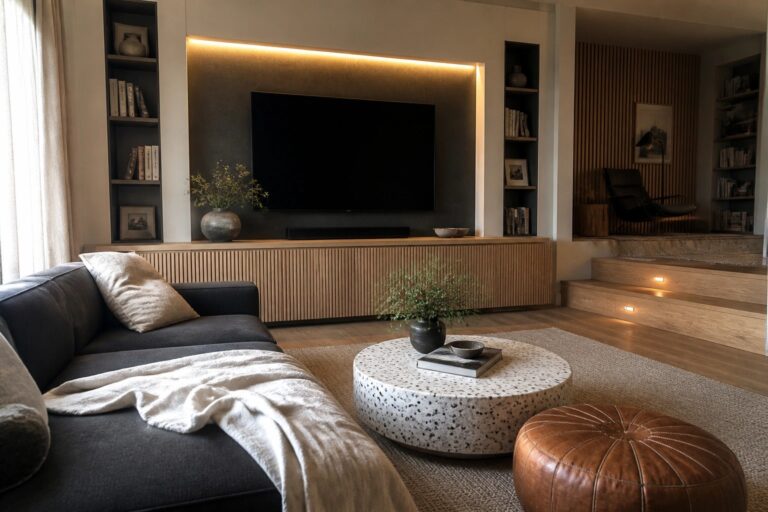
Cove Lighting Over Media Walls

Many living rooms feel more finished when you run a hidden LED strip along the top of the media wall. The light stays out of sight but gives the whole area a steady, low glow that makes the television look like it belongs there instead of just hanging on the wall.
This approach works best in rooms with some depth behind the console or in a shallow niche, and it pairs well with warm bulbs on a dimmer. It suits homes where people watch shows in the evening and want the space to feel calm without needing table lamps everywhere.
Hidden LED Lighting In Platform Beds
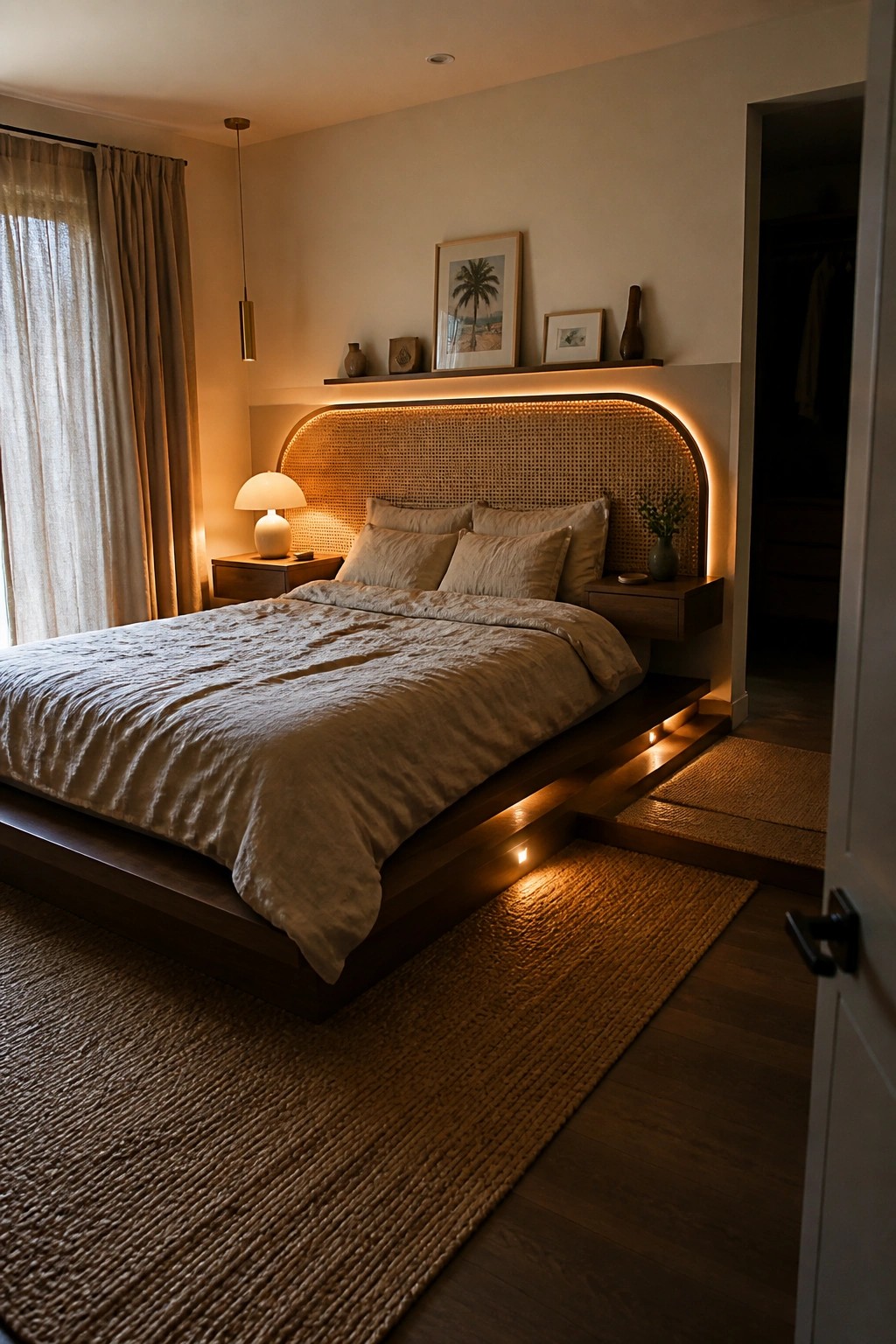
Many bedrooms feel calmer when the main light comes from low, built-in sources instead of ceiling fixtures or table lamps. A platform bed with LED strips tucked under the frame and behind the headboard gives a steady, soft glow that lights the floor and the wall without glare.
This setup works best in rooms where you want simple evening lighting that stays on while you read or wind down. It suits beds with enough depth along the base and headboard to hide the strips, and it helps keep the overall look clean since no extra lamps are needed on the nightstands.
Cove Lighting Under The Kitchen Island

One simple way to add a soft layer of light in a kitchen is to run LED cove strips under the island overhang. It creates a low glow that lights the floor and the base of the stools without needing bright overhead fixtures on all the time.
This works best in open kitchens where the island doubles as a seating spot. Keep the strips on a dimmer so you can adjust them for evening use, and make sure the island base hides the hardware so the light stays clean and even.
Cove Lighting With Recessed Step Lights

Many bathrooms end up feeling harsh at night because of one bright ceiling fixture. Running a cove light along the ceiling and adding small recessed lights at floor level gives a much softer result that still lets you see where you are going.
This setup suits modern bathrooms where you want calm lighting after dark. It works best in tiled wet zones since the low lights stay out of the way and reduce the chance of slipping. Keep the cove light on a separate dimmer so you can adjust it without turning on brighter sources.
Cove and Step Lighting in an Entry Hall

LED cove lighting along the ceiling combined with step lights creates a soft wash that guides people through the space without any harsh overhead glare. The effect feels calm and steady, especially in the evening when the rest of the house might be darker.
This approach works best in hallways, entries, or stair landings where you need low-level light for safety and mood. Keep the color temperature the same on both the cove and steps, and test the brightness so it stays gentle rather than overly bright.
Cove Lighting And Step Lights In A Media Room

Cove lighting works well in a media room because it gives a soft wash of light across the ceiling without any visible bulbs. This keeps the space feeling calm and focused on the screen while still making it easy to move around.
It suits basement or lower level rooms best, where you want controlled lighting that feels intentional. Step lights add just enough visibility on the way down without breaking the mood or requiring extra fixtures on the walls.
Built-In Shelves With Warm LED Cove Lighting
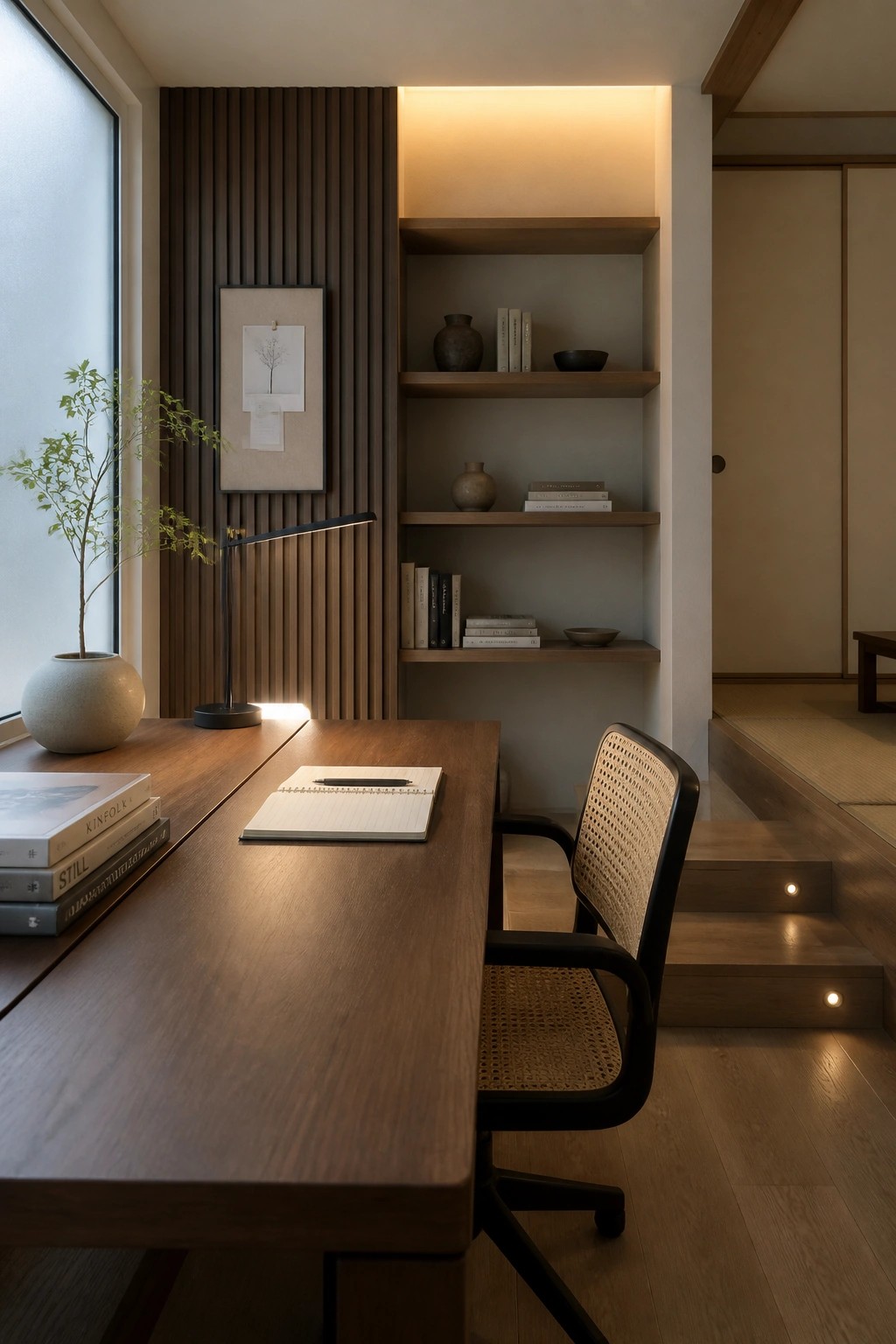
Tucking LED cove lights into a set of built-in shelves gives a workspace a soft, steady glow that feels calm without needing extra lamps on the desk. The light stays focused on the shelves and leaves the rest of the room easy on the eyes, which helps when you spend long hours there.
This setup works best in smaller studies or offices where you want light that feels built into the room rather than added on later. Pairing it with simple step lights on nearby stairs makes the whole area safer to move through at night without turning on brighter overhead lights.
Cove Lighting And Step Lights For A Softer Bathroom

Cove lighting along the ceiling edge and step lighting under the vanity give this bathroom a gentle layered glow instead of one bright overhead source. The effect feels warmer and less stark, especially in a space with dark walls and deep tile.
This setup works well in smaller bathrooms or powder rooms where you want to avoid a flat, clinical look. Keep the fixtures on separate switches so you can use just the lower lights at night or run both for a fuller wash of light.
Cove Lighting for a Gentle Overhead Wash

Cove lighting gives a dining room a soft, even layer of light that feels calmer than a single overhead fixture. It washes the ceiling and upper walls without creating bright spots or shadows right over the table.
Run LED strips inside a shallow recessed edge and add a few low step lights where the floor drops near doors or transitions. This works especially well in rooms with high ceilings or connections to outdoor spaces, and it keeps the main seating area from feeling too dim at night.
Cove Lighting Along The Porch Ceiling
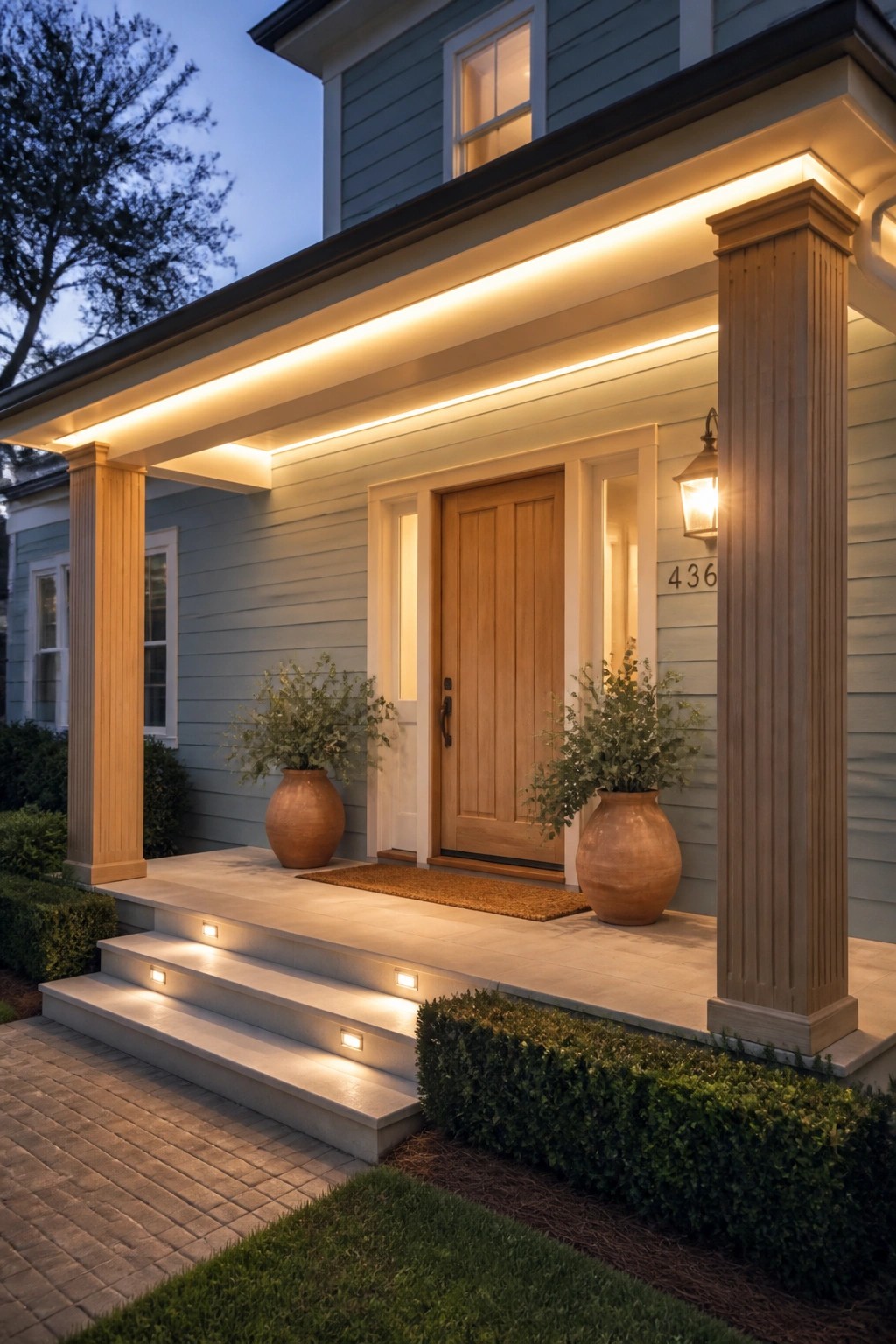
Cove lighting tucked under the porch roof gives the entry a steady, even glow without any bright spots or visible bulbs. It makes the whole front of the house feel calmer at night and helps the door stand out without needing extra fixtures.
This works best on homes with a deep overhang where the light can bounce off the ceiling. Add a few small step lights on the stairs so the path stays clear and safe. It suits older houses or simple traditional styles where you want the lighting to feel built in rather than added on later.
Add Step Lights Around Outdoor Seating

Step lights make a patio easier to use once the sun goes down. They mark changes in level without bright overhead fixtures, so the space stays calm while still feeling safe to walk through. In this setup the lights sit right in the risers, giving just enough glow to guide people from the yard up to the table.
This approach works best on patios that have built-in seating or small level changes. Keep the fixtures low and warm so they do not compete with any cove lighting already running along benches or walls. It suits homes where the outdoor area gets regular evening use and you want simple, low-maintenance lighting that does not require extra poles or strings.
Step Lights Along Pool Edges
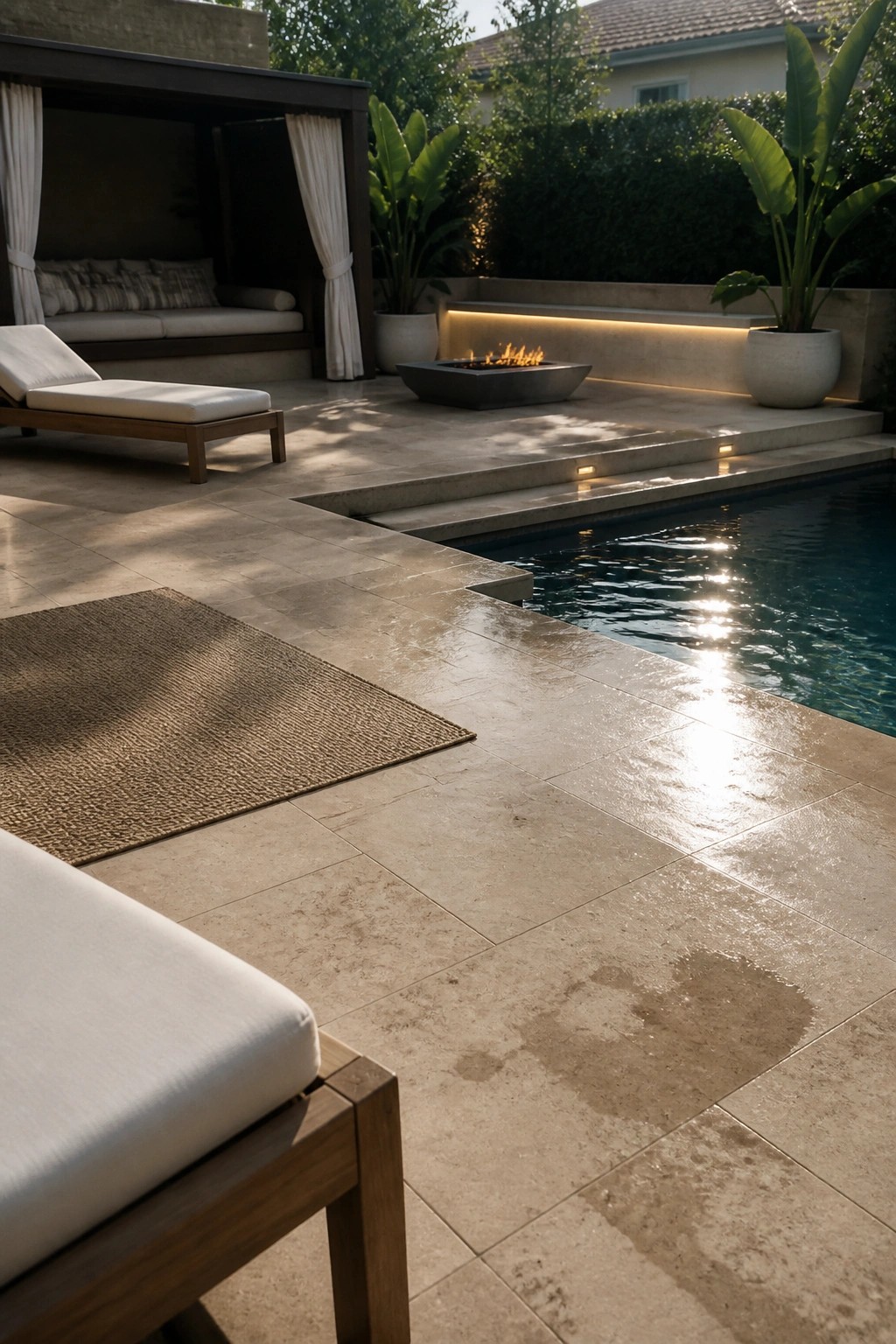
Low level LED step lights make a big difference around pools because they guide movement without flooding the whole area with bright light. In this setup the small fixtures sit right into the stone risers, so people can walk down to the water safely even after dark while the glow stays soft and contained.
This approach works best on homes with raised pool decks or terraced patios where stairs connect different levels. Keep the lights warm and evenly spaced, and avoid overdoing the brightness so the surrounding seating and fire pit areas stay calm.
Step Lights Help Small Balconies Feel Usable After Dark
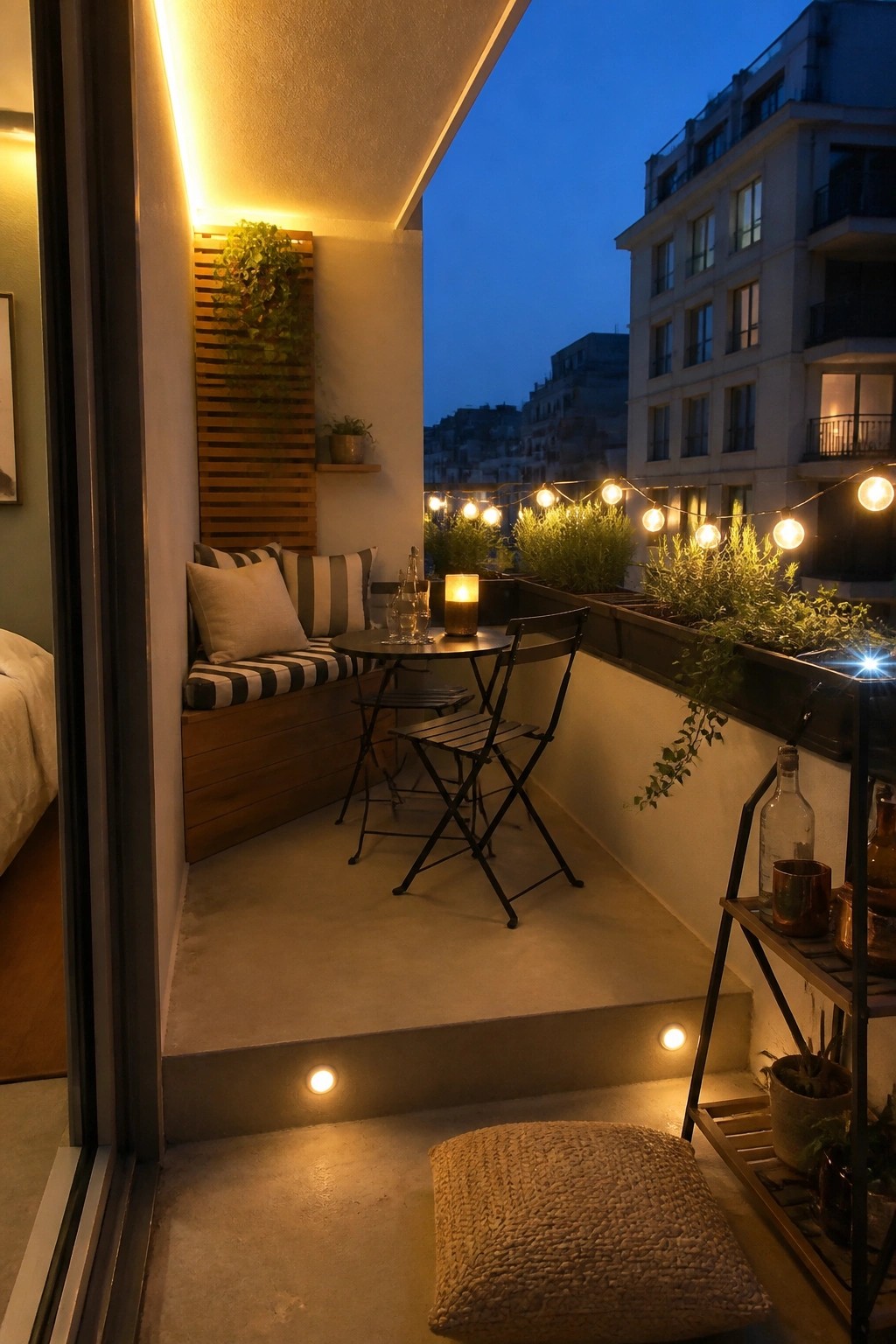
Recessed lights built into the steps give just enough glow to keep the floor visible without overpowering the space. On a compact balcony this keeps things practical while still letting the area feel calm once the sun goes down.
The same approach works on any outdoor landing or terrace that sees evening use. Keep the fixtures small and warm, and let them sit low so they do not compete with string lights or other accents you already have.
Cove Lighting With Step Lights
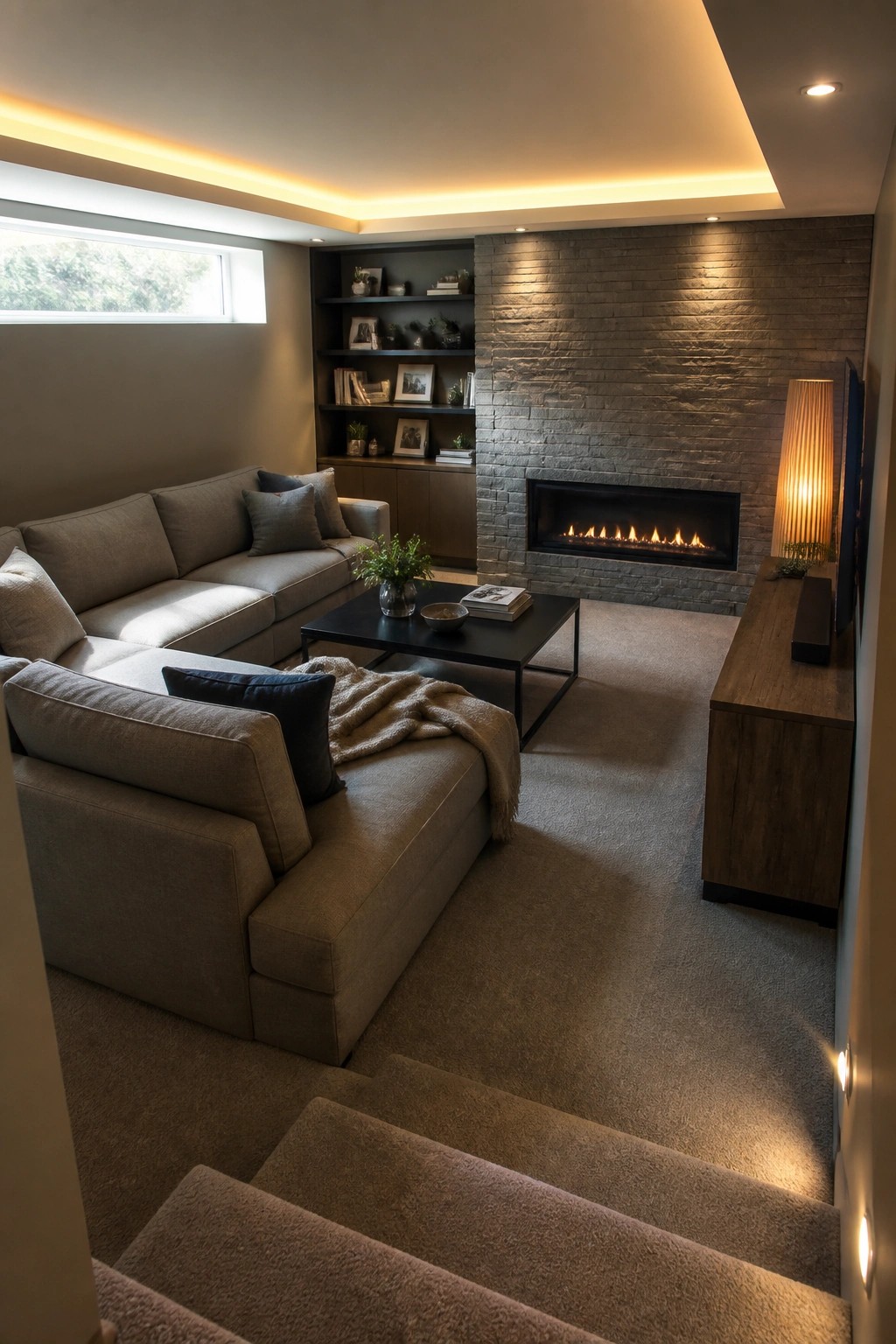
Cove lighting along the ceiling edges combined with lights tucked into the stairs gives a room a steady, low glow after dark. It keeps the space usable without turning on bright overhead fixtures or scattering lamps around. The effect feels calm and even, especially in living areas that stay active into the evening.
This approach works best in homes with open layouts or stairs that open into the main room. Keep the lights on separate dimmers so you can soften them further at night. Avoid placing too many other light sources nearby, or the gentle layers get lost.
LED Cove Lighting With Step Lights In Hallways

Cove lighting along the ceiling edge gives a hallway a soft wash of light that feels much calmer than a single overhead fixture. The step lights add just enough glow to keep the stairs visible at night without turning the whole space bright.
This works especially well in older homes with long, narrow passages or split levels where you want light to feel built in rather than added on. Keep the cove shallow and use warm LEDs so the effect stays gentle instead of clinical.
Step Lighting on Outdoor Stairs

Built-in lights along the side of each step give outdoor stairs a clean look while making them much safer after dark. This approach works especially well on concrete stairs that connect a deck or patio to another level, since the lights stay out of the way but still mark the edge of every tread.
It suits homes with multi-level outdoor spaces where people move around at night. The lights can be spaced evenly and kept low in brightness so they do not glare, and they pair easily with simple decking materials that already feel grounded.
LED Step Lighting On Utility Stairs
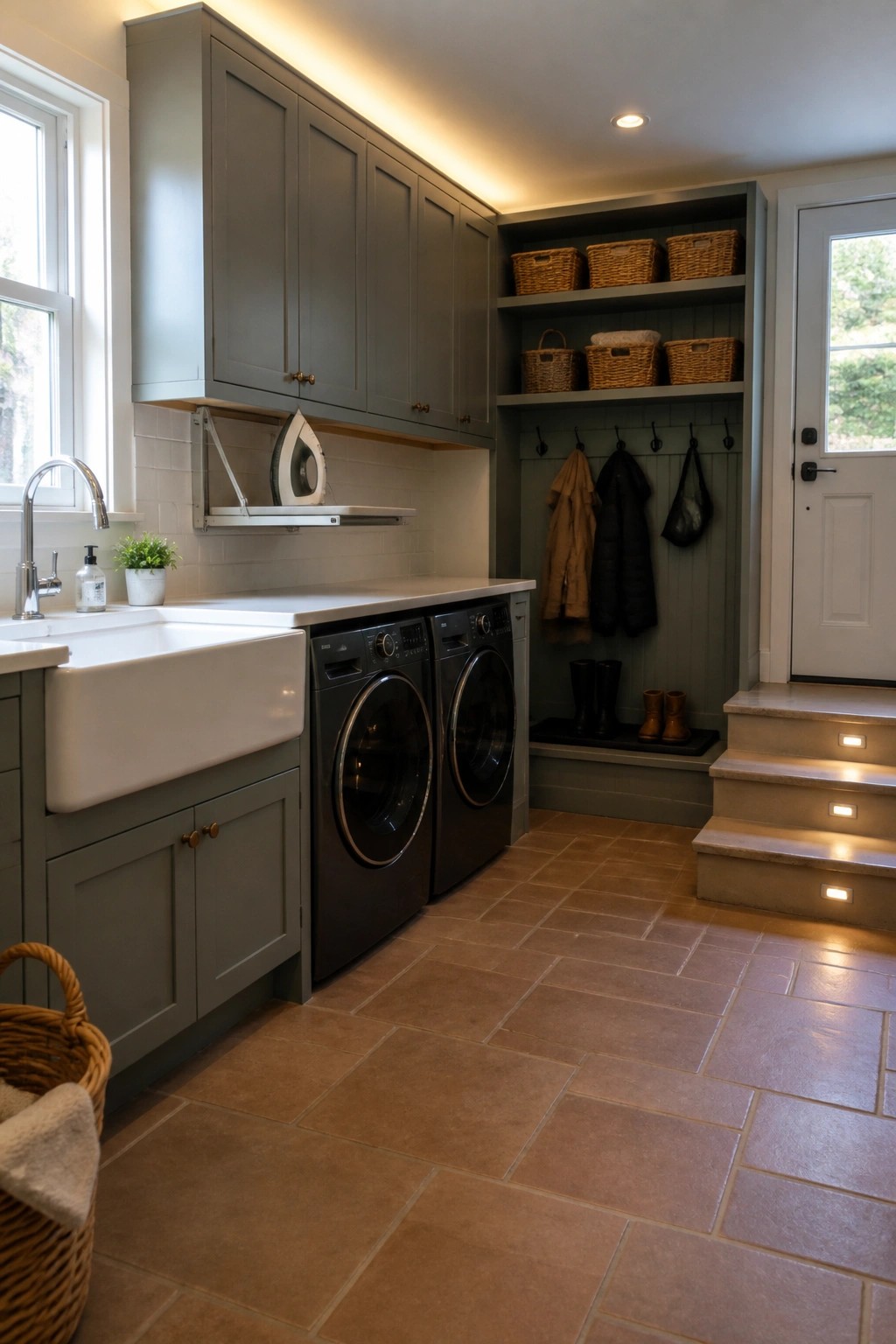
Small LED lights built into the front of each step give a laundry room or mudroom just enough light to move safely without turning on a big overhead. The effect feels calm at night and keeps the focus on the practical side of the space rather than making it look like a showcase.
This works best in homes where the laundry sits a half level down or connects to a garage or back door. Keep the lights on a separate switch so they can stay on low after dark without affecting the rest of the room.
Step Lighting Along Garden Paths
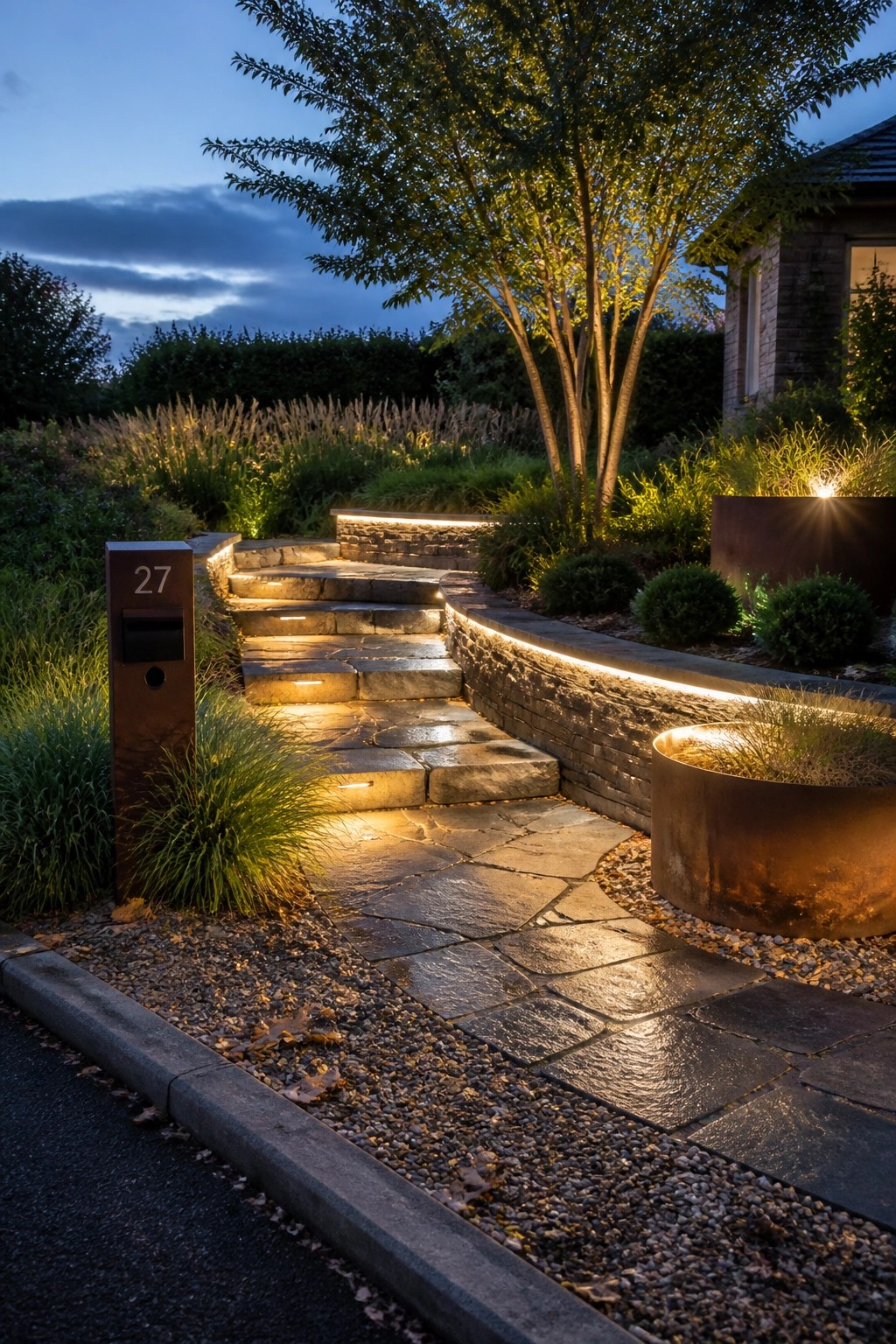
LED step lights built into stone stairs and paths give outdoor areas a quiet, usable glow once the sun goes down. The lights stay low and even, so people can see where they are walking without bright fixtures that stand out during the day.
This works best on homes with changes in level or longer walkways that need clear guidance at night. Place the lights along the edges of the steps and keep the color temperature warm so the lighting blends with nearby plants instead of competing with them.
Frequently Asked Questions
Q: What if my ceilings are low? Can cove lighting still work? A: Yes, keep the cove narrow and use a softer LED strip. Angle it so the light washes the ceiling gently instead of hitting the wall straight on. This keeps the room feeling open.
Q: How do I stop the step lights from shining right in my eyes at night? A: Mount them low and direct the beam downward with a small shield or diffuser. Test the angle while walking up and down the stairs after dark. You want just enough light to see the edge of each step.
Q: Is it worth adding these lights to an existing room or only during a remodel? A: You can add them without tearing everything apart. Run the wiring along baseboards or inside channels that stick to the wall. Start with one area like the living room to see how it changes the feel.
