


I have found that small dedicated rooms often make the best home theaters because they are easier to control for light and sound.
When I plan one of these spaces the first thing I consider is how the seating will fit without crowding the screen or the doorways.
Layout matters more than most people expect in tight quarters.
Some ideas work better when you test them with actual furniture measurements instead of just sketches.
Over time I have learned to prioritize soft materials that absorb sound while still looking polished.
Raised Platforms With Under Lighting
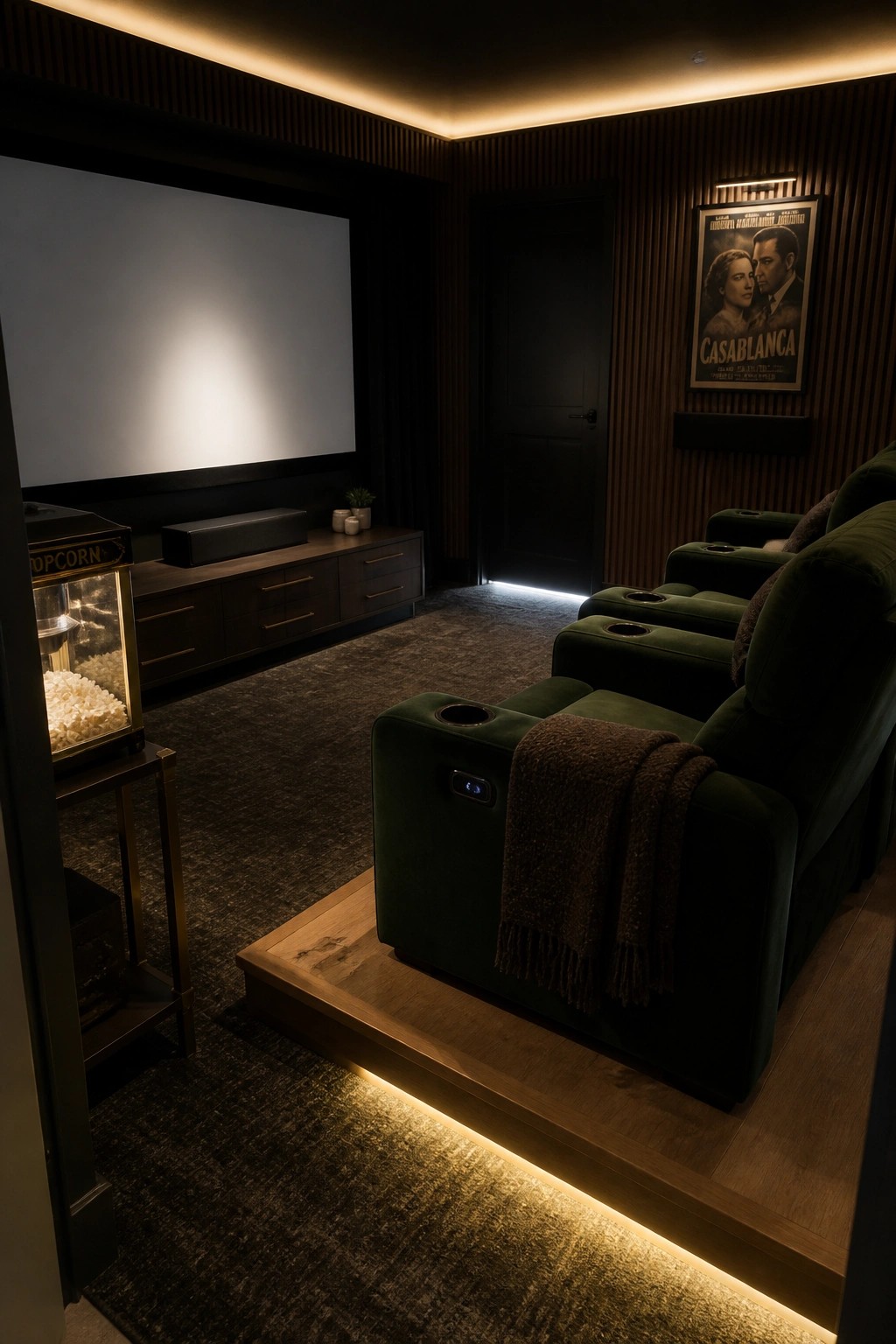
One idea that works especially well in small home theaters is adding a raised platform under the seating. It defines the area clearly and brings in that subtle glow from the lights underneath, which makes the whole setup feel more intentional and cozy.
This approach suits compact rooms because the platform does not need much extra depth. It works best when the lighting stays warm and the platform material matches the flooring or trim elsewhere in the space.
Projector Setup For Small Theater Rooms
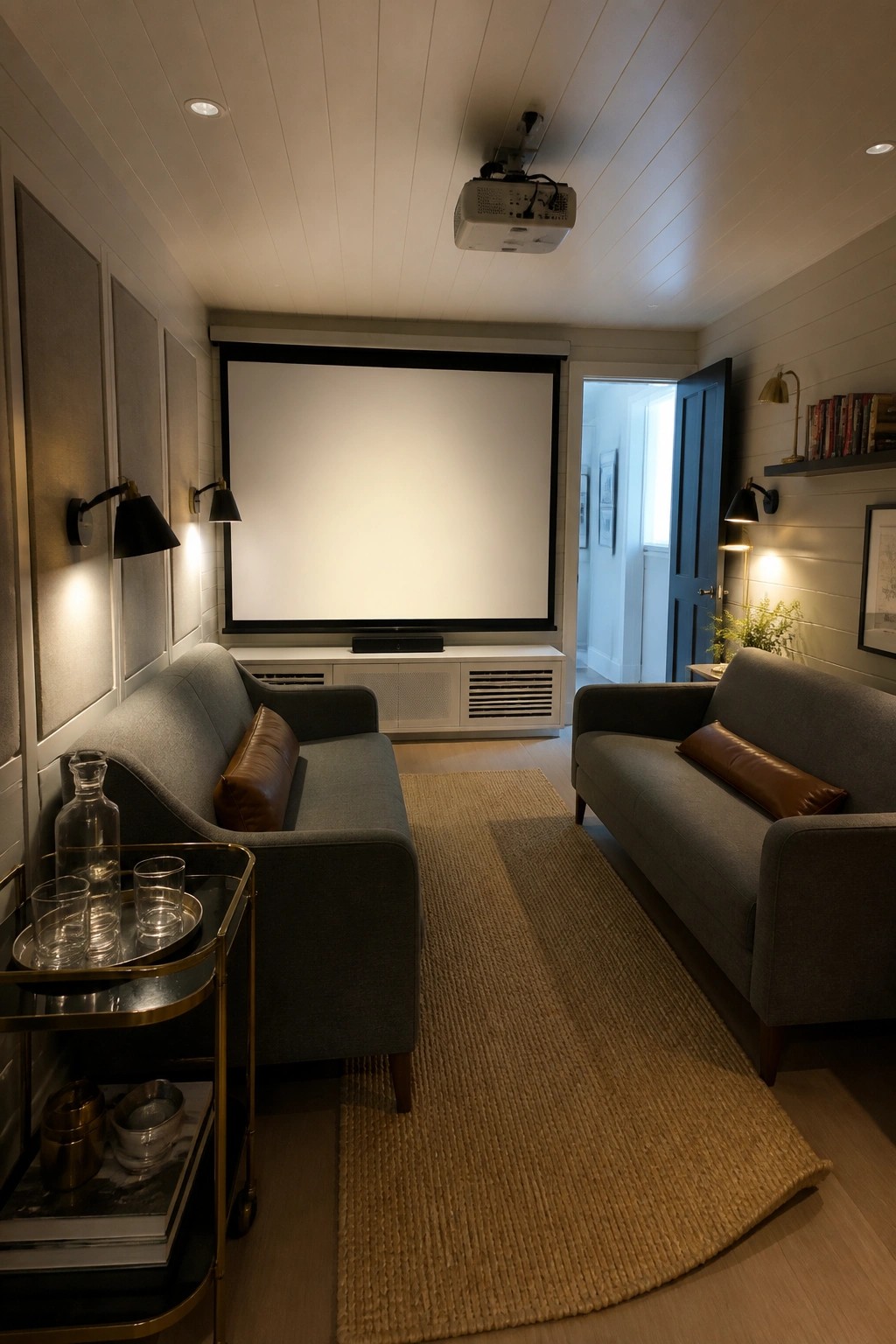
Mounting a projector on the ceiling works well in small dedicated rooms because it frees up floor space that a large television would otherwise take. The result feels more open while still giving you a proper screen size for watching movies.
This approach suits narrow rooms where seating can run along the sides. Make sure the ceiling height works for your throw distance and add blackout shades if there are windows nearby.
Clustering Armchairs in Small Theaters

In a small dedicated theater room, grouping three armchairs in a close cluster works better than spreading out larger seating. The tight arrangement keeps everyone close to the screen and each other, which adds to the cozy feeling without crowding the floor.
This setup suits rooms that measure under 200 square feet and already have built-in screen space. Use soft upholstered chairs in a warm tone so the space still feels inviting even when the lights go down.
Built-In Shelves Around The TV

Built-in shelves on either side of the screen give a small theater room extra storage without crowding the floor. This keeps the seating area open while still holding books, decor, and media pieces that make the space feel finished.
The setup works best in rooms that already have some wall depth for the shelves to sit flush. Keep the lower sections open for larger items and use the upper spots for lighter pieces so the view to the screen stays clear.
Raise the Seating on a Low Platform
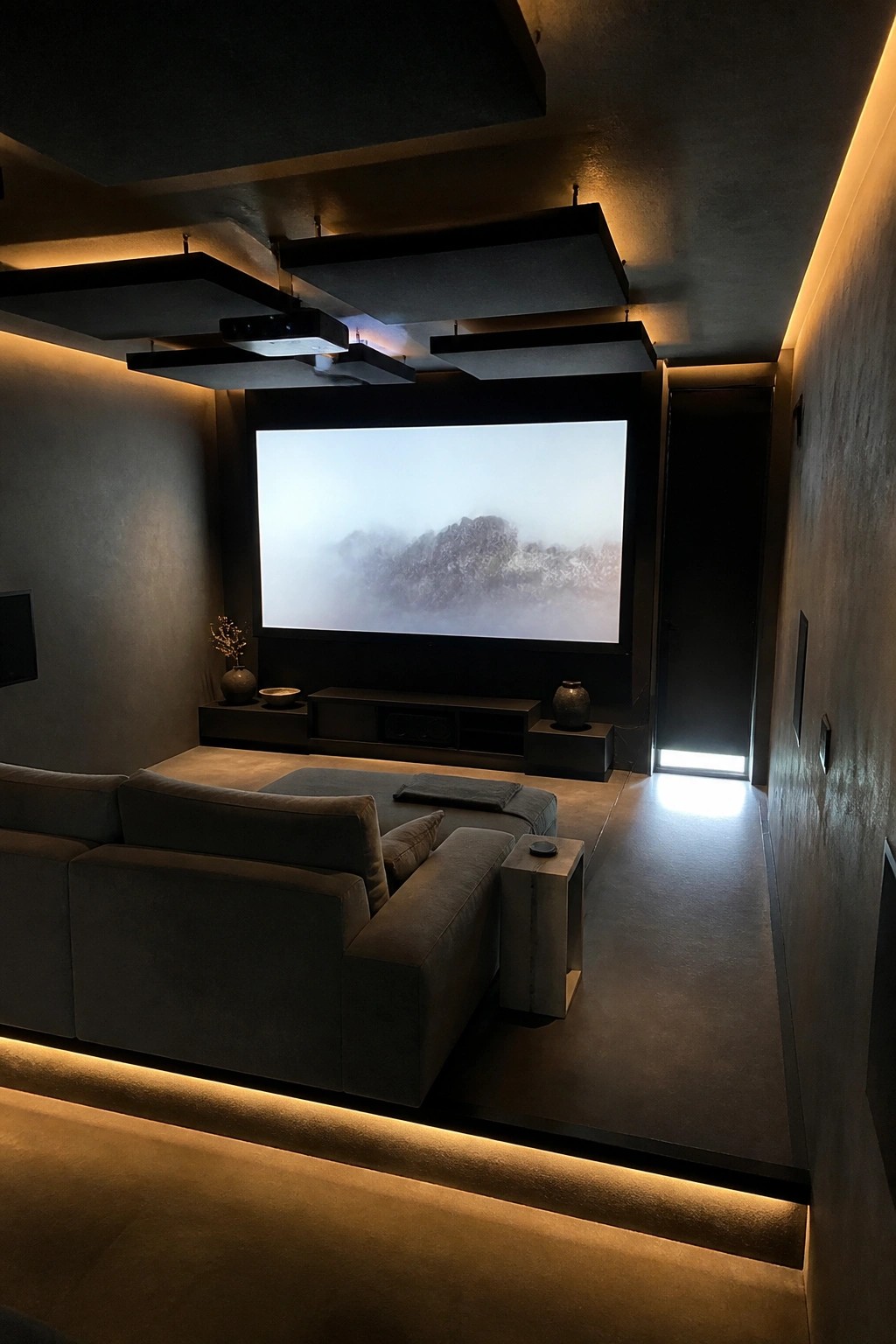
A raised platform under the seating gives a small theater room a clear sense of separation without needing walls or extra furniture. It turns the viewing area into its own zone, which helps the space feel more intentional and cozy even when square footage is limited.
This setup works best in rooms that are used for other things during the day. Keep the height modest so the step does not become a trip hazard, and add a simple light strip along the edge for a soft glow that does not compete with the screen.
Deep Green Walls For Small Theaters

Dark green walls give a small theater room an enclosed, almost hidden feel that works well when space is tight. The color absorbs light instead of bouncing it around, so the focus stays on the screen and the seating stays comfortable even in a compact layout.
This approach suits dedicated rooms that do not need to double as something else. Keep the rest of the finishes dark too, like the seating and carpet, and add just one or two classic touches such as a simple framed poster to keep the mood consistent without crowding the space.
Built-Ins Under the Screen

In a small dedicated theater room, built-in cabinetry right below the screen gives you storage without adding extra furniture that would crowd the floor. The low unit can hold throws, remotes, or even a few favorite items on display while keeping the main seating area open and easy to move through.
This approach works best in compact spaces where every inch counts. Paint the cabinets the same color as the wall so they recede, and keep the shelves fairly shallow so they do not push the seating too far forward.
Built-In Storage Under the Screen

One simple way to make a small home theater feel more open is to build storage straight into the wall under the screen. It keeps all the receivers and components out of sight while leaving the floor clear for seating.
This approach works best in attic rooms or any space where every foot counts. Match the cabinet fronts to the wood tones already in the room so the whole setup stays calm and uncluttered.
Console With Cup Holders In Front Of The Seats

A long console placed right in front of the seating gives everyone a place to set a drink without adding side tables that eat up floor space. In a small dedicated theater this keeps the room feeling open and focused on the screen.
It works best when the console matches the scale of the seating and uses a durable surface like stone. Dark walls and plush seating already make the room feel enclosed, so the console just needs to stay low and practical rather than trying to be a statement piece on its own.
Low Seating On Tatami Mats

Low seating keeps a small theater from feeling cramped. Placing the dark modular pieces directly on the tatami lets the floor stay open, so the room feels calmer and more spacious even when the screen is large.
This works best in homes that already use simple flooring and minimal furniture. Keep extra pieces light, like a low tray for snacks, so the focus stays on the screen rather than on tall chairs or bulky cabinets.
Built-Ins Around the TV

Built-in shelving and cabinetry around the television can turn even a modest room into a working home theater without making it feel crowded. The shelves give you space for books, baskets, and small decor while the lower cabinets hide media gear and clutter. This setup keeps the focus on the screen and makes the room feel more finished and intentional.
It works especially well in smaller homes or multi-use spaces where a full dedicated theater room is not possible. Keep the finish on the built-ins simple and match it to the wall color so the whole wall reads as one unit. Avoid overloading the open shelves or the room can start to feel busy.
Raised Seating Platforms For Small Theaters
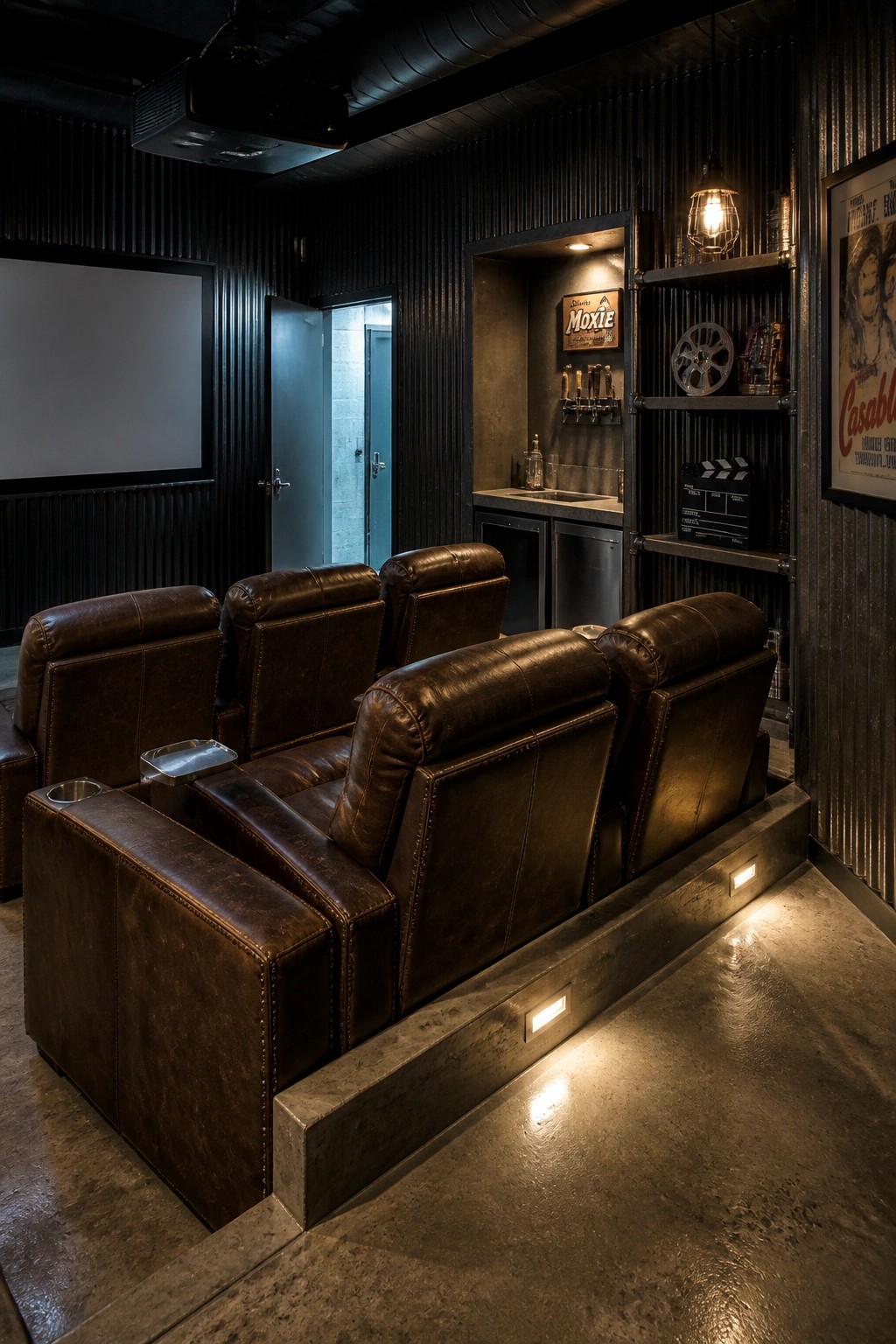
A low platform under the seats helps in a small home theater by lifting the back row just enough for clear sight lines. It also keeps the chairs from sitting flat on the floor, which can make the room feel more like a real theater without taking up extra space.
This works best when the platform is kept simple and low, around six or eight inches, and paired with dark flooring and walls so it blends in. Add a strip of lighting along the front edge if you want a bit of guidance at night, but avoid anything too bright that could distract from the screen.
Swivel Chairs Keep Small Theaters Flexible

Swivel chairs work well in a small dedicated theater because they let people shift position without rearranging the whole room. They keep the focus on the screen while still allowing some movement during a long movie or when chatting before the film starts.
Place three or four chairs in a gentle curve around a low central table so everyone has a clear view. This setup suits rooms that double as viewing spaces a few nights a week and still need to feel open during the day. Dark walls and a simple rug help the chairs stand out without crowding the space.
Acoustic Panels on the Walls

Many small home theaters struggle with echo because the room is tight and hard surfaces bounce sound around. Acoustic panels cut down on that reflection and make dialogue and effects clearer without needing a full professional setup. They also add some texture to the walls so the space does not feel like a plain box.
These panels work best when you cover at least one or two main walls behind the seating. They suit carpeted rooms with low furniture since the soft floor helps absorb more sound. Keep the layout simple so the panels do not crowd the space or block outlets.
Large Ottomans For Cozy Theater Seating

Large ottomans give a small theater room a relaxed feel without crowding the space. They sit low and wide, so two or three can replace a row of chairs while still leaving room to stretch out or shift positions during a long movie. The soft tufted surface adds some texture and comfort that hard seats never quite match.
This setup works best in rooms under 200 square feet where traditional recliners would feel bulky. Place the ottomans side by side facing the screen and add a few trays for drinks. Keep the rest of the room simple so the seating stays the main feature.
Low Media Consoles Work Well in Small Theaters

A low media console under the screen gives you storage without adding height that can crowd a small room. It keeps the focus on the screen and leaves the space feeling more open even when you add seating.
This works best in rooms that need to stay flexible. Pick one with drawers so remotes and small items stay out of sight, and keep the top fairly clear.
Oversized Lounge Chairs For Small Theater Rooms

Many small dedicated theaters feel stiff when they rely on rows of fixed seats. Large rounded lounge chairs change that by turning the space into something closer to a relaxed living area. The soft shapes and deep cushions make the room feel inviting even when the screen is off.
This approach works best in compact rooms where you want flexible seating for a few people at a time. Arrange three or four chairs on a simple textured rug so the layout stays open and easy to move around. Keep the rest of the room simple so the chairs remain the main feature.
Dark Walls With Backlit Shelves

Dark walls can make a small theater room feel more enclosed and comfortable instead of cramped. The backlit niche adds just enough interest without taking up floor space or needing extra furniture.
This approach works best in dedicated rooms where you want the focus on the screen and seating. Pair it with low seating that wraps the walls so the space stays practical while still feeling finished.
Use Compact Seating With a Small Side Table
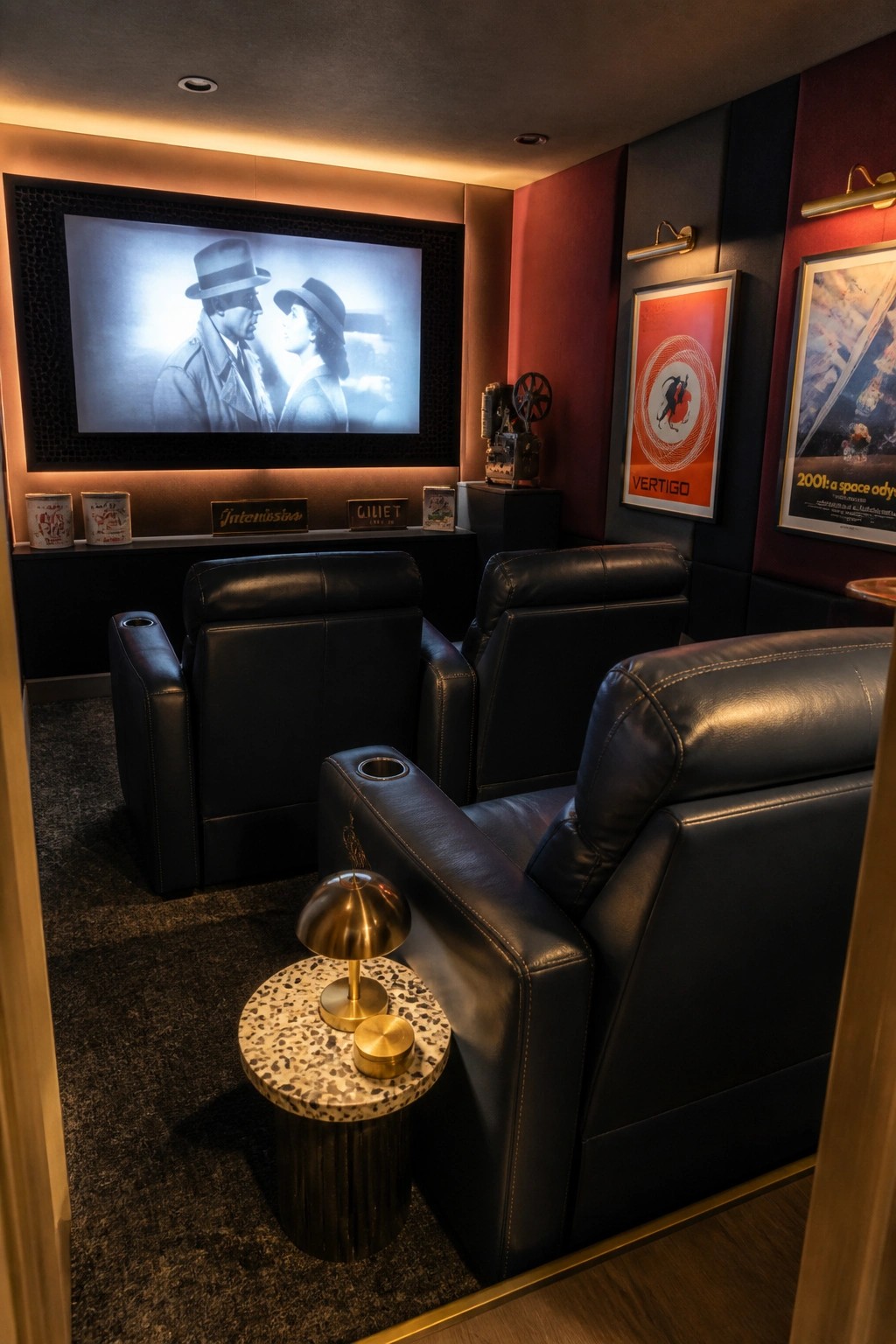
Dark leather recliners work well in small home theaters because they can sit close without looking cramped. The low round table in front holds drinks and a lamp while leaving plenty of floor space open for walking around the chairs.
This setup suits rooms that are under 200 square feet and already have built-in cabinetry or wall panels. Keep the table simple and low so it does not block the screen view or make the seating feel crowded.
Wicker Chairs For A Cozy Small Theater

Low wicker lounge chairs with thick throws give a small theater room a relaxed feel without crowding the space. They sit low to the ground, so the screen stays the main focus while the seating still feels comfortable for long movies.
This setup works well in rooms that need to stay open during the day. Use the same natural texture on one or two pieces only, and keep everything else simple so the chairs do not compete with the screen or projector.
Frequently Asked Questions
Q: What screen size works best in a small dedicated room without making it feel cramped?
A: Measure the distance from your main seat to the wall first. Pick a screen that takes up roughly half that view so the room stays open. This keeps the setup cozy instead of overwhelming.
Q: How can I add sound without the neighbors complaining?
A: Soundproof the walls with thick panels or heavy curtains. Then use a soundbar instead of separate speakers. It delivers clear audio while keeping noise from traveling.
Q: Is there a way to fit comfy seating for more than two people in tight quarters?
A: A loveseat with built-in recliners works well here. It gives everyone room to stretch without eating up extra floor space.
Q: What kind of lighting keeps the cozy vibe while still letting me see the screen?
A: Install dimmable LED strips behind the screen. They cast a soft glow that highlights the area without glare on the picture.
