

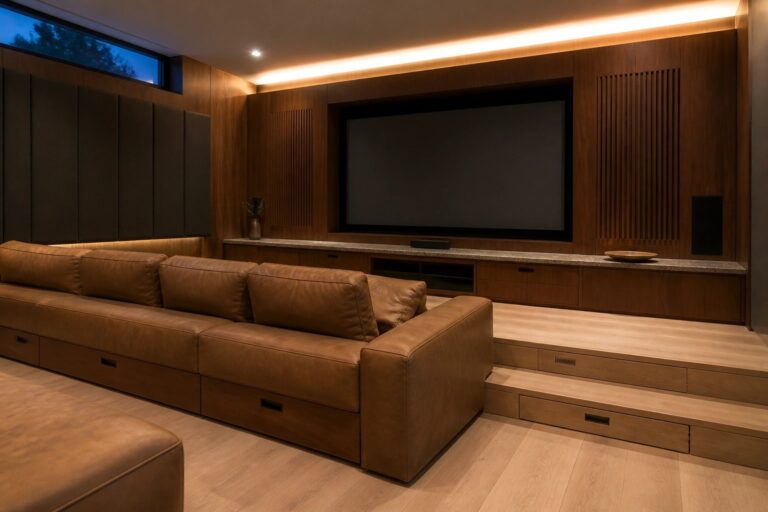
I have found that home cinema spaces often feel more relaxing when every piece of equipment has a place that does not interrupt the lines of the room.
Built-in options let you keep the walls flat and the floor clear so movement stays easy during movie nights.
Storage changes everything.
I noticed this most when rearranging my own setup and realizing how much better the room flowed without visible shelves or stacks of cases.
Adapting these ideas means thinking first about how often you will reach for certain items and where they should sit out of view.
Built-In Storage Under The Seating

One simple way to keep a home cinema tidy is to build drawers straight into the base of the seating. This removes the need for extra cabinets or shelves along the walls and leaves the floor clear.
It works best in rooms where you want a calm, uncluttered feel. The drawers can hold blankets, cables, and small accessories while still letting the seating stay low and comfortable.
Seating With Built-In Storage

One way to keep a home cinema tidy is to build storage right into the seating. Lift-up tops on the modules give a place to store blankets or small items without needing extra cabinets that would crowd the room.
This approach works best in smaller cinemas or rooms that need to stay flexible. It suits homes that want a calm, uncluttered look while still having room for everyday use.
Built-In Storage Along The Media Wall

Built-in storage works well in a home cinema because it keeps everyday items close without adding extra pieces of furniture. The drawers slide out right under the screen area so snacks or media stay hidden until needed, which helps the room stay open and simple.
This approach suits smaller or medium rooms where every surface counts. Place the drawers at a height that is easy to reach from the seats and keep the fronts the same material as the wall so they disappear when closed.
Built-In Media Console With Storage Drawers
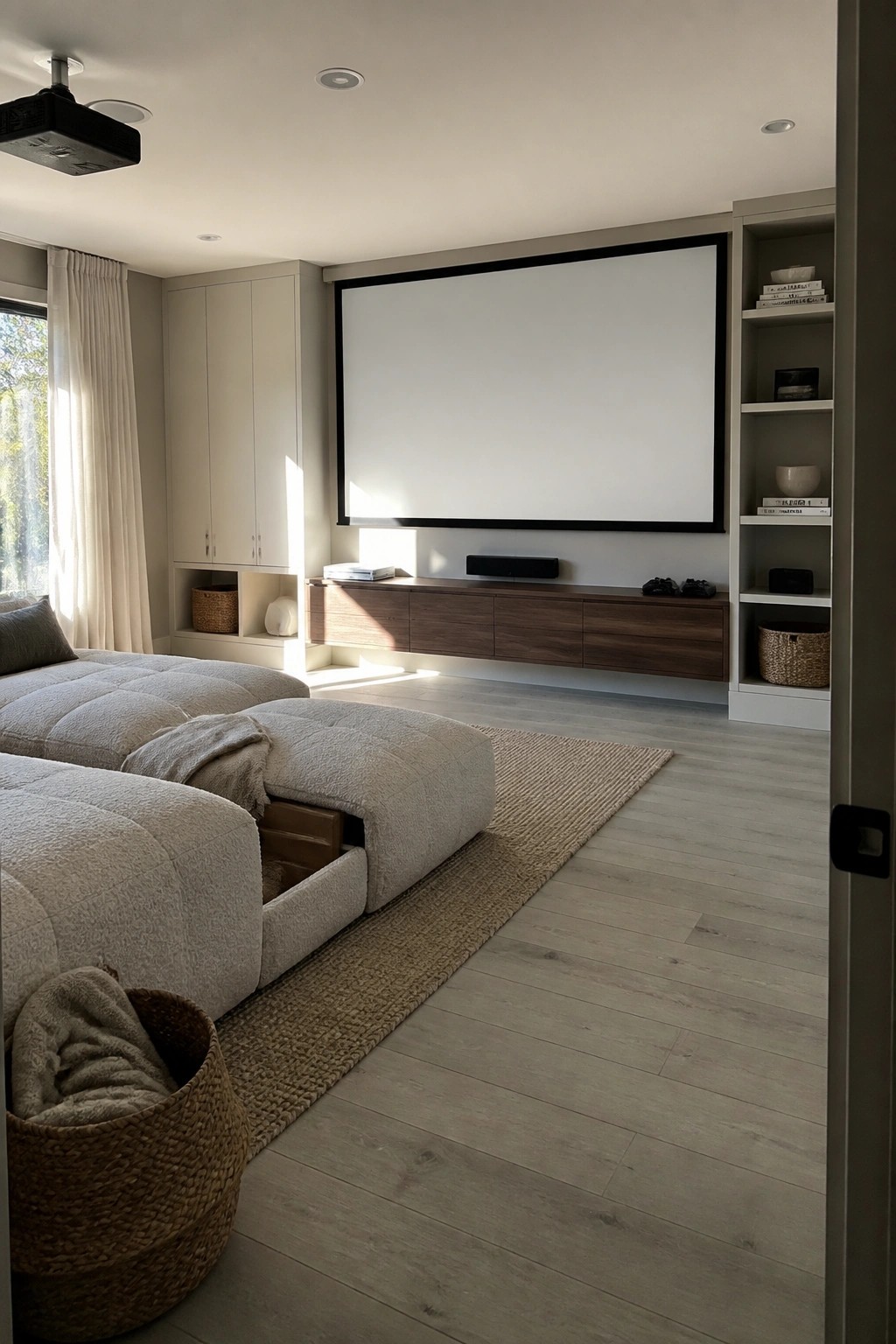
A floating console under the screen gives you storage without adding visual weight to the room. The low profile keeps the focus on the screen while the drawers hold remotes, cables, and small devices out of sight. Side shelving built into the wall units adds more room for occasional items without crowding the space.
This setup works well in rooms that double as guest spaces or quiet lounges. It suits homes that already use built-ins elsewhere, since the cabinetry can match other millwork for a seamless look. Just keep the top surface mostly clear so the console stays practical rather than decorative.
Built-In Wall Storage In A Narrow Media Room

Running built-in cabinetry and a bench along one long wall helps a small room feel organized without looking crowded. The dark finish lets the storage disappear into the background while still holding all the media gear and bar items in one place.
This setup works best in homes where the cinema space also needs to double as a lounge or guest area. Keep most doors closed to maintain the clean look and use the bench for extra seating when needed.
Built-In Storage Under A Raised Platform

Raising the seating area on a low wooden platform lets you add drawers and compartments right where they are needed most. The storage stays hidden yet easy to reach, so the room keeps its open feel without extra cabinets or shelves taking up floor space.
This approach works especially well in smaller rooms that double as a cinema space. Pair the platform with tall wall cabinets for blankets, remotes, and media gear, and the whole setup stays tidy while still feeling comfortable for regular use.
Built-In Storage That Hides The Gear
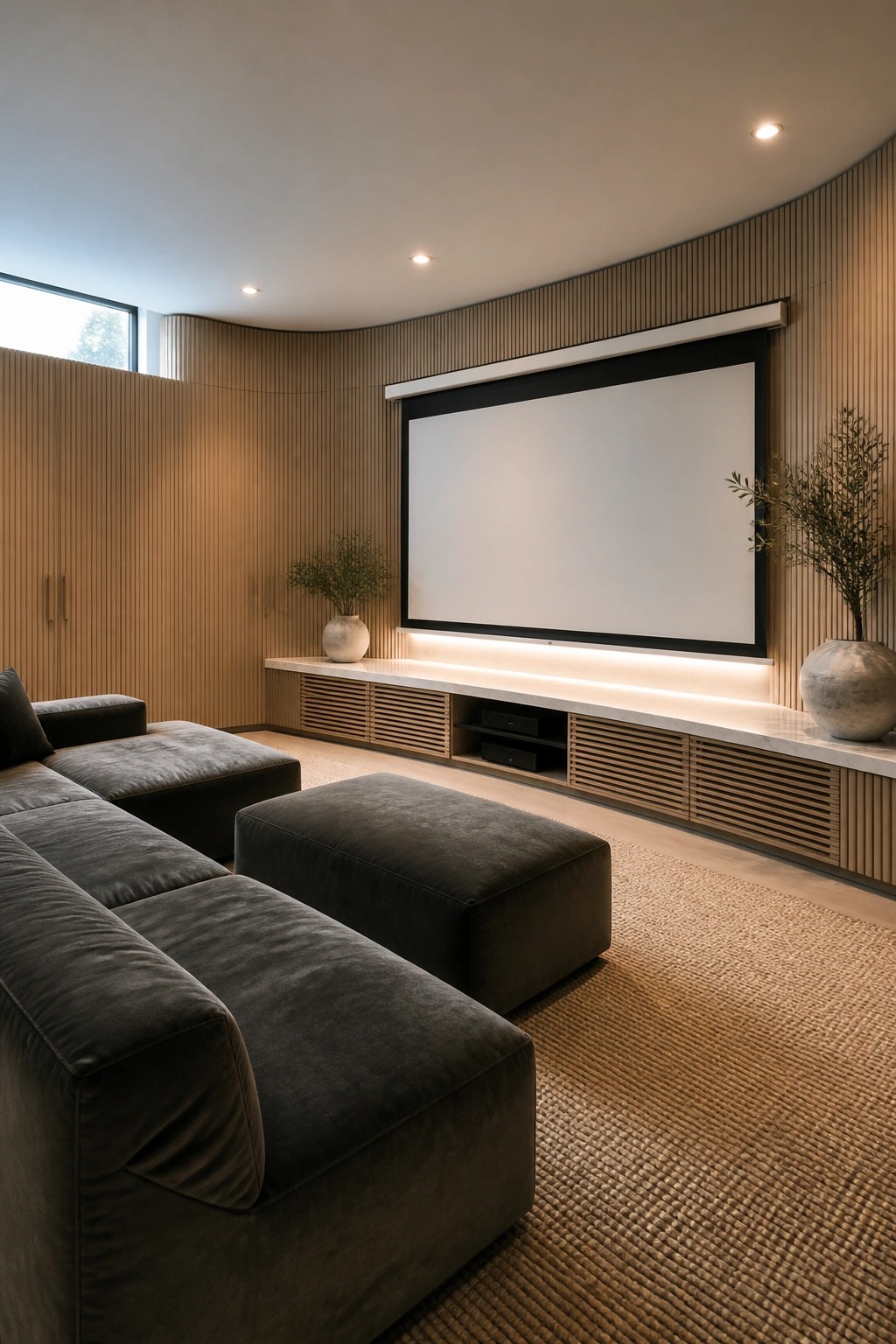
Many home cinemas end up looking busy because of all the equipment that needs to stay close to the screen. Built-in storage solves this by tucking the boxes and cables behind closed doors so the room stays calm and open.
This setup works best in rooms where you want the screen to feel like the main feature without extra furniture crowding the space. It suits smaller or simply finished homes where you already have a low console or shelf area that can be adapted with doors and vents.
Built-In Storage Under Theater Seating

Many home cinemas end up with clutter because there is never enough room for blankets, remotes, or extra pillows. Raising the seating on a low platform and adding drawers underneath solves that without making the room feel crowded.
This approach works well in smaller or lower-ceiling spaces where every inch counts. Keep the drawers simple and match the platform finish to the floor so the storage stays out of sight until you need it.
Built-In Cabinets Keep Media Gear Hidden
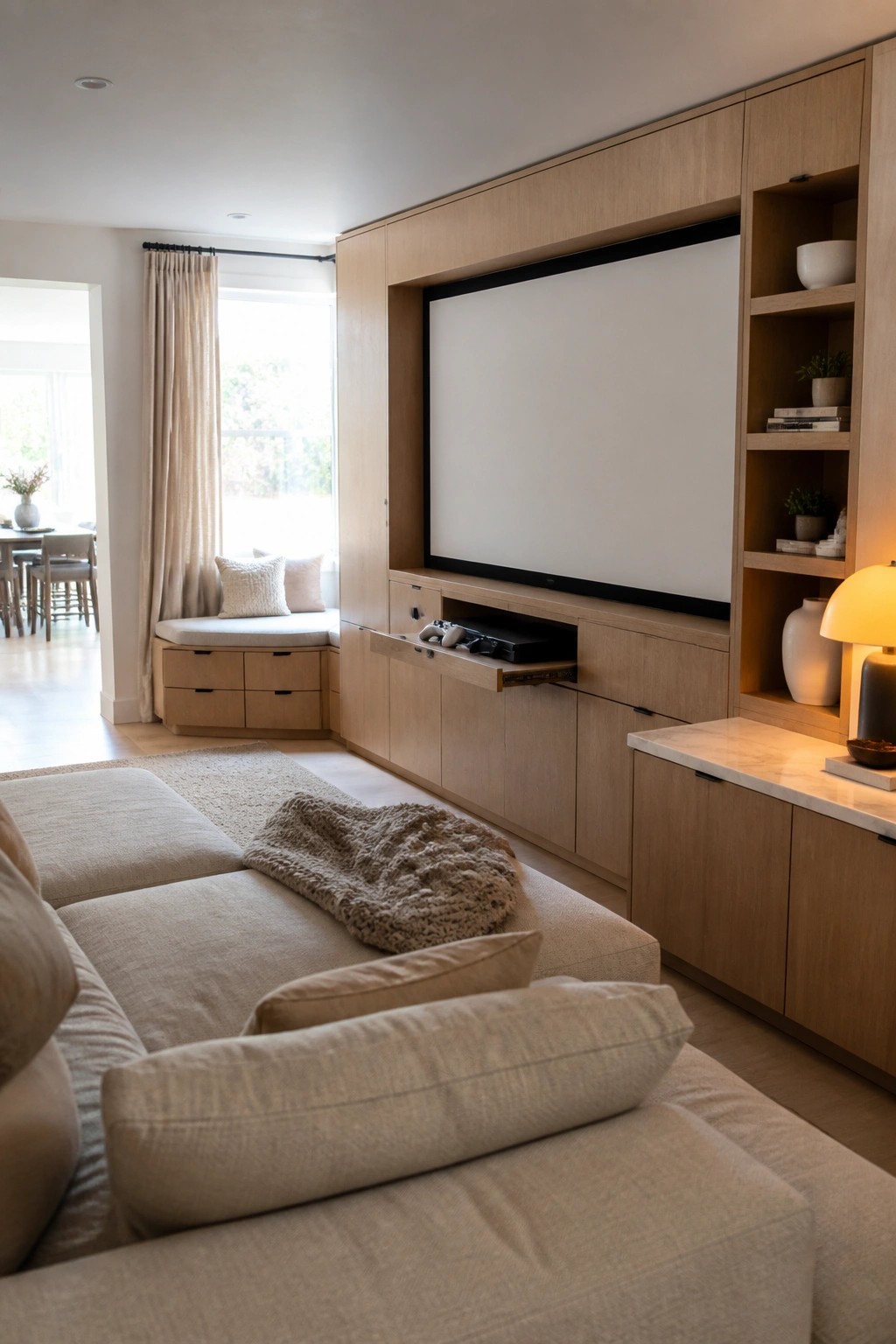
One useful way to handle a home cinema is to build storage right into the wall around the screen. Cabinets and drawers can hold consoles, remotes, and cables without leaving anything out in the open. The light wood finish here blends with the rest of the room so the focus stays on the screen instead of the equipment.
This approach works best in rooms that already have some millwork or where you want a calm, uncluttered look. It suits smaller spaces especially well because everything stays contained in one area. Just make sure the drawers and doors open smoothly and leave enough room for ventilation around the devices.
Built-In Storage Along The Media Wall

A long run of low cabinets under the screen gives you a place to tuck away all the gear without adding extra furniture. This keeps the room feeling open and calm even when the screen is off. The cabinets blend into the wall so the focus stays on the screen itself rather than on scattered boxes or shelves.
This approach works best in rooms that need to double as living space during the day. It suits homes where you want the cinema area to feel finished rather than technical. Just make sure the cabinet depth matches the seating height so nothing sticks out awkwardly into the walkway.
Built-In Storage Below The Screen

Many home cinemas feel calmer when storage sits right under the screen instead of scattered around the room. Open cubbies let you keep games and remotes within reach while the flat front of the unit stays simple and clean.
This setup suits smaller rooms that need every bit of space to work harder. Match the shelves to the surrounding wall color so the storage blends in rather than stands out.
Built-In Storage Keeps The Focus On The Screen
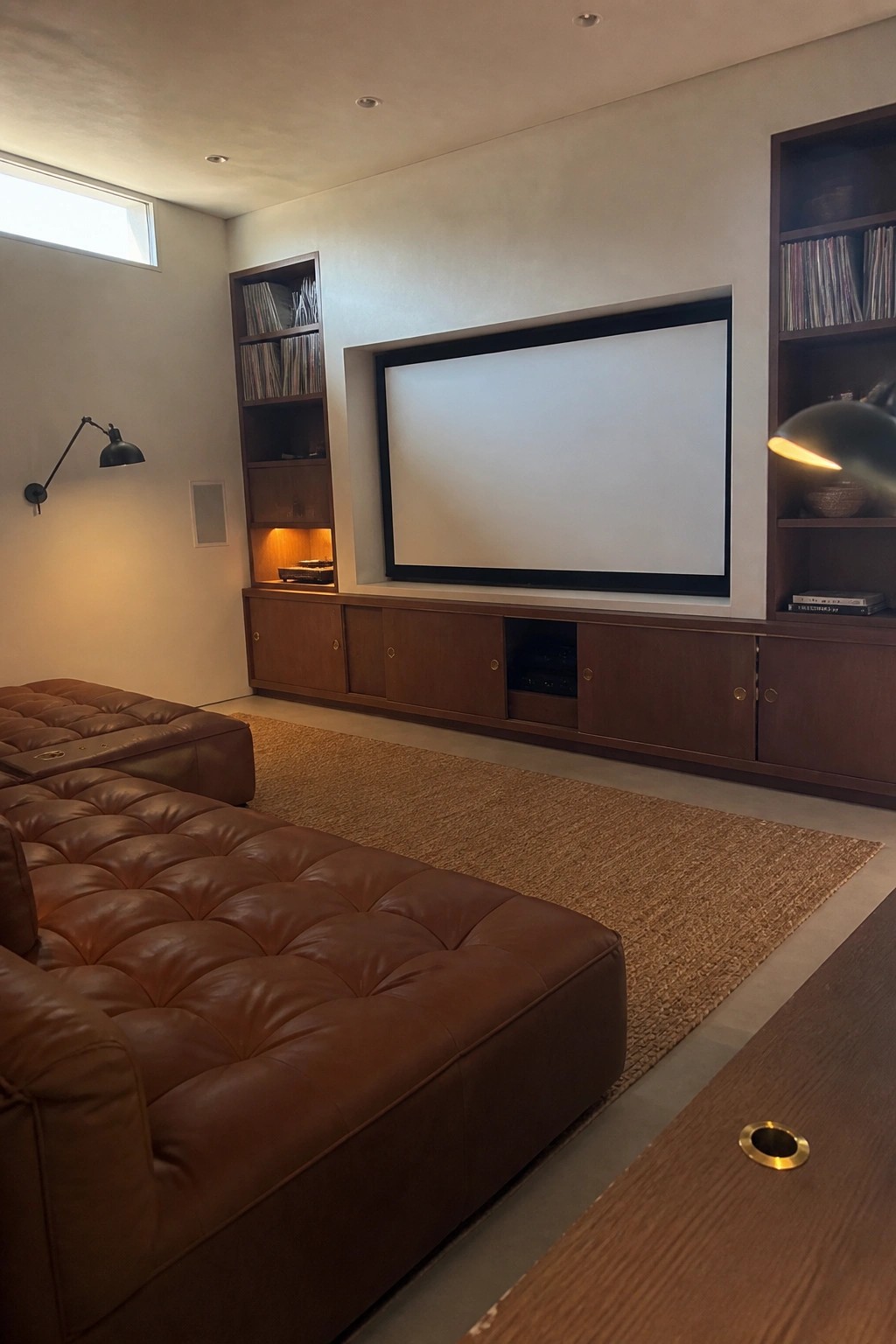
Built-in cabinets and shelves around a screen can hold records, books, and equipment without adding clutter to the room. The wood tones tie everything together and give the space a calm, finished look that still feels simple.
This setup works best in smaller or minimalist rooms where you want the screen to stay the main feature. Keep the cabinet doors plain and match the wood to other trim or furniture so the storage feels like part of the wall rather than extra pieces.
Built-In Shelving That Doubles As Storage

One simple way to keep a home cinema from feeling cluttered is to build storage right into the back wall. The lit shelves here hold a few framed pieces and small items while the lower cabinets stay closed, so everything stays tidy without needing extra furniture along the sides.
This approach works best in smaller rooms where you want to keep the focus on the screen. Dark walls and seating already make the space feel enclosed, so the warm wood and soft lighting on the shelves prevent it from going too heavy. Just watch the depth of the shelves so they do not push the seating too far forward.
Built-In Storage Along The Media Wall

A long low cabinet under the screen gives you plenty of hidden space without adding extra pieces of furniture. The vents keep the equipment cool while the doors hide everything else, so the room stays open and simple.
This setup works well in smaller rooms where you need storage but do not want clutter. Match the cabinet depth to your seating so the lines stay clean and the space feels balanced.
Built-In Storage Around The Screen
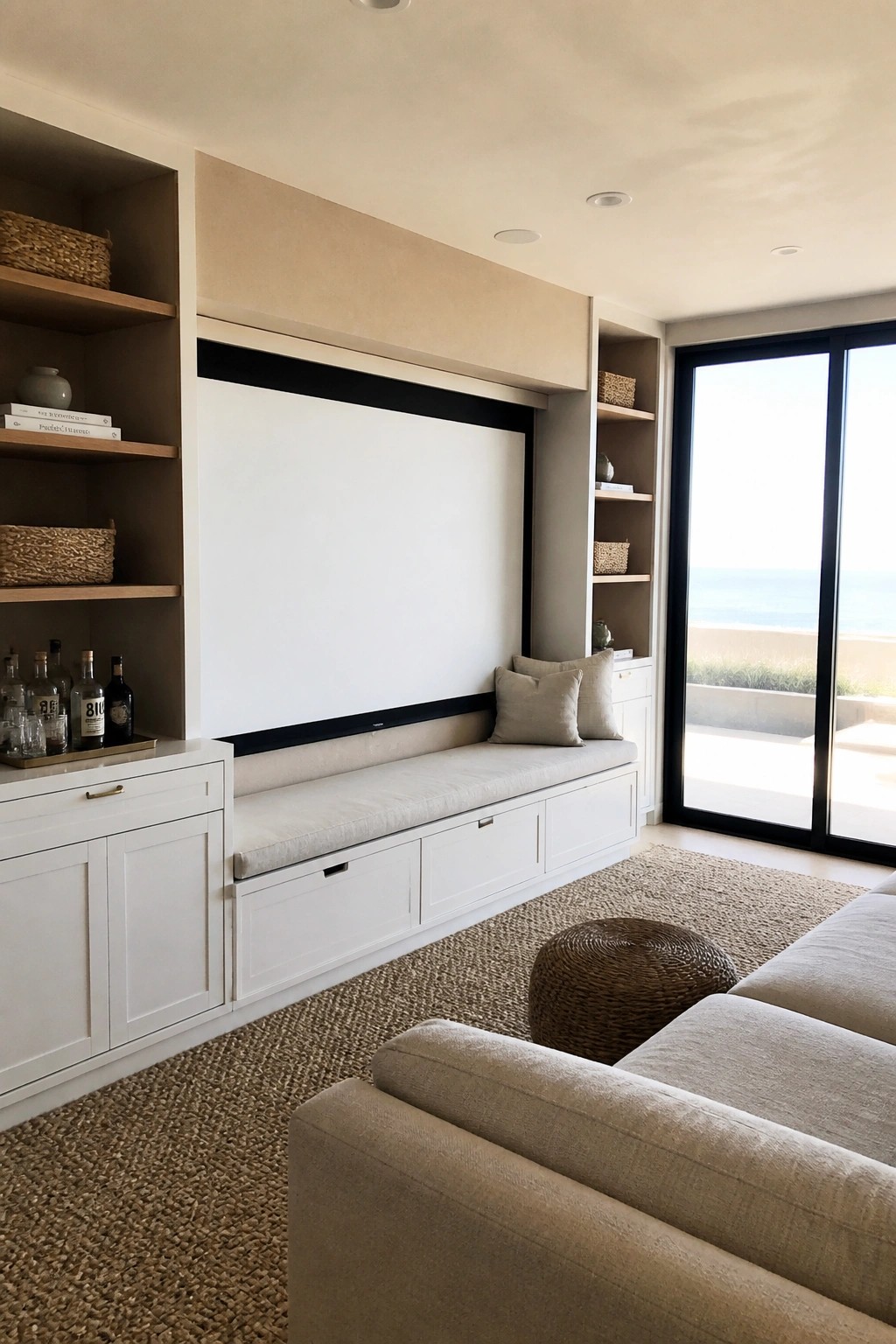
One way to keep a home cinema from feeling like a separate room is to build storage right into the wall around the screen. Shelves on the sides hold a few items without crowding the view, while drawers and a long bench below add practical space for blankets or extra seating.
This works especially well in open living areas where you need the screen but do not want a big media console taking up floor space. It suits homes that already use built-in cabinetry elsewhere, so the new piece feels like part of the same system rather than an add-on.
Built-In Storage Under Lounge Seating

Adding storage directly under the main seating is a simple way to keep a home cinema tidy without adding extra pieces of furniture. The long bench style seating here shows how drawers can hold blankets or accessories while the surface stays clear for lounging.
This approach works best in rooms that need to feel open during the day or in smaller spaces where every inch counts. Match the storage fronts to the walls or surrounding cabinetry so the room stays calm and uncluttered.
Built-In Storage Keeps A Cinema Room Tidy

Built-in storage helps a home cinema stay looking calm and uncluttered. Instead of loose baskets or side tables, the storage is worked right into the seating and the long wall unit, so everyday items stay hidden but still close at hand.
This works best in smaller rooms where you want to keep floor space clear. Low cabinets along the wall and small drawers in the armrests give you places for bottles, remotes, and blankets without adding extra furniture.
Built-Ins That Hide The Screen And Add Storage

One useful way to handle a home cinema is to build storage directly into the wall that holds the screen. The long low cabinets keep remotes, blankets, and media items out of sight while the side niches hold just a few simple pieces so nothing feels busy.
This setup works best in rooms that also serve as regular living space. Keep the cabinetry low and the finishes calm so the focus stays on the screen when it is in use and the room still feels open when it is not.
Built-In Storage Along The Media Wall

A long low console built right into the wall under the screen gives you storage without adding extra furniture. The drawers hold all the usual media clutter while the surface stays clear and the focus stays on the screen itself.
This setup works best in rooms that already lean toward simple lines and wood tones. It keeps the space feeling open and makes sense in homes where you want storage close at hand but nothing that competes with the screen.
Built-In Storage Under The Stairs
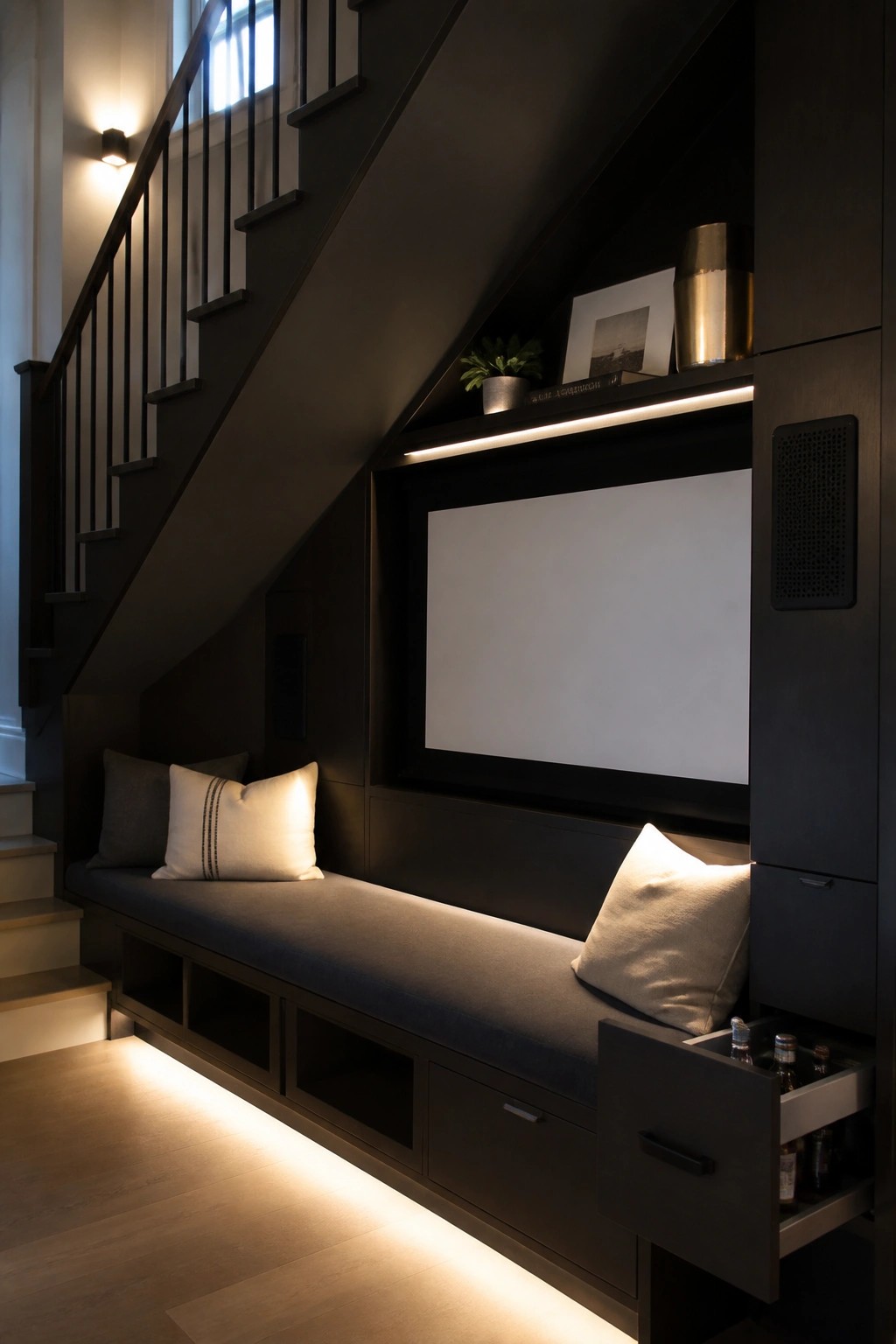
Many homes leave the space under the stairs empty or only lightly used. Turning it into a home cinema with built-in seating and storage puts that area to work while keeping the room from feeling crowded.
A low bench with open cubbies below holds blankets and small items. At one end, a deep drawer pulls out to store bottles and glasses so nothing sits out in the open.
Built-In Shelving For Hidden Storage

Built-in shelving around the screen gives you a place to store and display without adding extra furniture. It keeps the room feeling open while still offering practical spots for books, decor, or media items. The lighting inside the shelves also helps the space feel finished instead of bare.
This works best in rooms where you want storage but still need clean lines. It suits smaller cinemas or any space where freestanding cabinets would crowd the seating area. Just make sure the shelves are deep enough for what you plan to keep there.
Frequently Asked Questions
Q: How do I store snacks and extra blankets without breaking the clean lines? A: Tuck shallow drawers right under the platform seating so they slide out only when needed. Match the drawer fronts to the floor or wall color for a seamless look. This keeps everything handy yet hidden during movie time.
Q: What if I want to add more tech later like extra speakers? A: Leave a few empty cavities behind the screen wall during the build. Run basic conduit through them now so upgrades stay hidden. You avoid tearing anything apart down the road.
Q: How do I stop the storage doors from reflecting sound? A: Cover the inner panels with thin fabric that matches the room. Keep the doors slightly inset so they sit flush. The fabric absorbs stray noise without adding bulk.
Q: Can these ideas work if my ceiling is low? A: Focus storage along the base of the walls instead of stacking it up high. Low built-in benches with lift tops give plenty of room while keeping the space open overhead.
