


I have always noticed that the walls in a home theater set the tone for how immersive the whole space feels once the lights go down.
Wood slat panels add texture and depth that flat surfaces just cannot match when you are sitting there for hours.
Acoustics matter more than looks alone.
In my own setup I learned the hard way that poor wall choices make the room echo and feel less private while the right material choice can fix that without major changes.
The right layout can turn an ordinary room into one that actually works for movie nights without constant adjustments.
Wood Slat Paneling For TV Walls

Wood slat walls give a home theater area a clean structure that still feels warm. The vertical lines draw the eye upward and keep the television from looking like it is just floating on a plain surface.
This approach works best in rooms that serve as both living space and viewing area. Keep the media console low and simple underneath, and add side panels if you want to improve sound without covering the wood.
Wood Slat Panels For Home Theater Walls

Wood slat panels work well on a home theater wall because they add texture and warmth while keeping the focus on the screen instead of a flat painted surface. The vertical lines break up the width of the wall and help the whole setup feel more like part of the room.
Run the slats floor to ceiling or at least above the console so the eye stays on the wood rather than the equipment. This works best in spaces that double as living rooms, since the material softens the tech look and pairs easily with simple furniture.
Vertical Wood Slats With Linear Lighting

Vertical wood slats paired with thin light strips give a home theater wall a clean, structured look without making the room feel busy. The panels add texture and help break up the flat surface behind the screen, while the lights keep the focus centered and make the space feel more finished at night.
This works best in rooms that stay dark most of the time and already have some sound treatment. Keep the rest of the walls simple so the slatted section stays the main feature, and test the light spacing before final install since too much glow can pull attention away from the screen.
Wood Slat Panels On Theater Walls

Wood slat panels give a home theater a clean backdrop that still feels warm and finished. The vertical lines keep the wall from looking flat behind a big screen, and they help tie the viewing area into the rest of the room without extra trim or molding.
This works best in rooms that get used for both movies and casual lounging. Run the slats floor to ceiling on the main wall, then add built-in shelves on the side walls for books and small decor so the space stays practical without crowding the screen.
Wood Slat Panels Behind The Screen

Wood slat panels give the wall behind a big screen some texture while still keeping the focus on the viewing area. The vertical lines add depth and warmth without making the space feel busy or overly decorated.
This works best in rooms that already lean toward simple, low furniture and natural materials. Keep the slats evenly spaced and add a bit of lighting from above so the texture shows up without competing with the screen.
Wood Slat Panels Behind The Screen

Wood slat panels give a home theater wall some texture and warmth without pulling attention away from the screen. The vertical lines break up the large flat surface and help the room feel more finished, especially when the rest of the space uses darker tones and simple materials.
This works best in rooms that already lean industrial or have tall walls to spare. Keep the slats in a mid to dark tone so they sit back visually, and make sure any built-in lighting or shelving on the sides stays secondary to the screen area.
Wood Slat Panels Behind The Screen
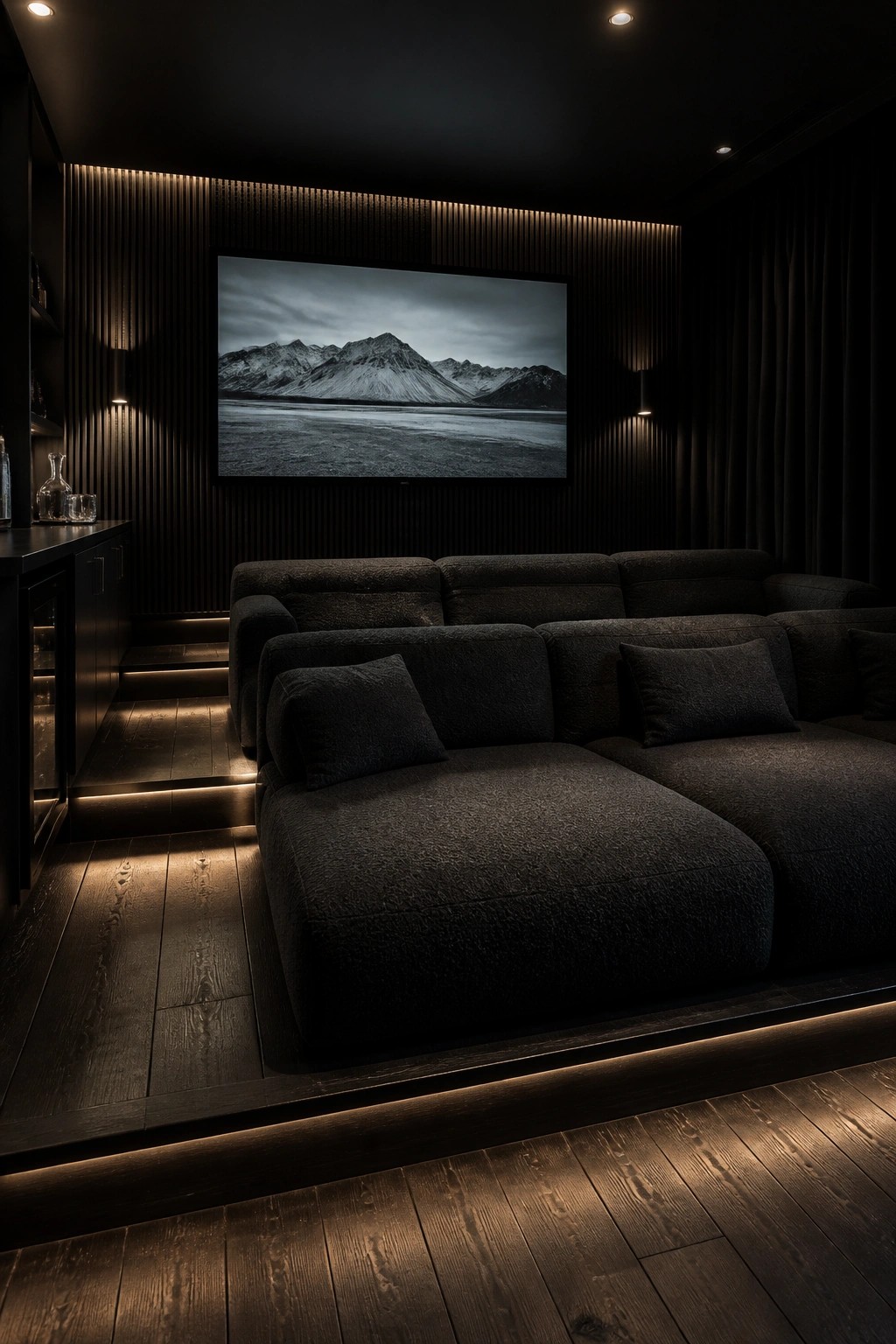
Wood slat panels give a home theater wall just enough texture to keep it from feeling flat. The vertical lines frame the screen nicely and help the room feel more finished without adding clutter or busy patterns.
This works best in darker rooms where you can hide soft lighting behind the slats. It suits both new builds and smaller remodels, though the panels need a flat surface and enough depth for the TV mount to sit cleanly.
Wood Slat Panels Behind The Tv

Wood slat panels give a media wall a clean, finished look without making the room feel too formal. The horizontal lines add texture and help the television blend into the wall rather than stand out as a big black box.
This works best in living rooms where you want warmth from natural wood but still need room for storage and display. You can run floating shelves above the tv for smaller items and keep lower cabinets or baskets for remotes and blankets. It suits both open layouts and smaller spaces that need a simple focal point.
Wood Slat Panels Behind The Screen

Wood slat panels give a home theater wall a clean look that still feels warm. The vertical lines add some texture and help the big screen stand out without needing extra decoration. Many people like how the material also softens sound a bit compared to a flat painted wall.
This works best in rooms that already have darker finishes or built-in cabinetry. Keep the slats simple and let them run straight up behind the screen so the focus stays on the movie rather than busy details.
Wood Slat Panels Behind The Television

Wood slat panels give a home theater wall a natural texture that feels warmer than a flat painted surface. The vertical lines break up the space without pulling attention away from the screen, and the material pairs easily with wood furniture already in the room.
This works best in spaces that already lean on wood tones or simple furnishings. Match the slat color closely to nearby pieces so the wall feels like part of the room instead of a separate feature.
Wood Slat Panels Behind The Tv

Wood slat panels work well behind a wall mounted television because they add texture and warmth without competing with the screen. The horizontal lines keep the wall feeling calm and structured, and the built in console below helps tie everything together into one clean surface.
This approach suits living rooms where the tv is the main focus but you still want natural materials in the space. It works best in rooms with simple furniture and neutral tones so the wood can stand out without adding clutter.
Wood Slat Panels Behind The TV

Vertical wood slat panels make a strong choice for a media wall because they add texture without overwhelming the room. The lines break up the flat surface of the wall and help the television feel more grounded instead of floating on its own.
This look works best in living rooms that double as viewing spaces rather than dedicated theaters. Keep the rest of the room simple with lighter furniture and a few plants so the wood does not feel too heavy or dark.
Vertical Wood Slats For Theater Walls

Vertical wood slat panels give a home theater wall real presence without needing a lot of extra decoration. The lines add texture and help the space feel more enclosed, which works well when you want that focused, cinematic feel.
They suit rooms that already have seating and low lighting, and they pair easily with simple sconces mounted right on the slats. Just keep the rest of the wall treatment simple so the panels stay the main feature.
Wood Slat Panels Behind The Screen

Wood slat panels give a home theater wall just enough texture and structure to make the screen feel anchored without turning the whole room dark. The vertical lines keep things simple and help the space feel a bit taller and more finished than a flat painted wall would.
This works best in smaller rooms where you want some warmth but still need the space to stay light. Keep the slats in a soft white or off-white finish and pair them with basic seating so the screen stays the main focus.
Wood Slat Panels Behind The Screen

Wood slat panels give a home theater wall a clean look while helping control sound reflections. The vertical lines keep the space from feeling flat and add some warmth without extra clutter.
This works best in rooms where the screen is the main focus. Dark wood tones hold up well with leather seating and a low media console that keeps equipment out of sight.
Wood Slat Panels With Built-In Shelves

Wood slat panels give a media wall more purpose when you build shelves straight into them. The vertical lines create a clean backdrop for the television while the recessed shelves hold books, plants, and smaller pieces without adding extra furniture. It keeps the focus on the screen but makes the whole wall feel like part of the room instead of just a surface for electronics.
This setup works best in living rooms that need both storage and a strong viewing area. Keep the shelves at different heights so everyday items stay within reach and the display stays balanced. Avoid crowding every shelf or the simple lines of the slats start to lose their effect.
Wood Slat Panels Behind The TV

Vertical wood slat panels give a TV wall some texture while keeping the focus on the screen. They work especially well when the panels run the full height and sit between built in shelves on both sides.
This setup suits living rooms that already have cabinetry or storage along the wall. It keeps the area feeling calm and organized without adding too many separate pieces.
Wood Slat Panels For Theater Walls

Wood slat panels give a home theater a clean, textured look that also helps with sound. The vertical lines break up the flat walls and reduce echo in a room that often has hard floors and glass screens.
This approach works best in smaller dedicated spaces where you want the room to feel enclosed but not closed in. Dark wood tones keep the focus on the screen, and a simple backlit edge along the top adds just enough light without glare.
Frequently Asked Questions
Q: Will wood slat panels affect how my speakers sound in the room?
A: The panels can actually improve acoustics by diffusing sound waves. Space them evenly and leave a small gap from the wall to let the wood absorb some echoes. This keeps your audio clear without extra treatments.
Q: How do I mount a TV over these slats without it looking off?
A: Attach a sturdy bracket directly to the studs behind the panels. Cut the slats around the mount area so the screen sits flush. It blends right in once you hide the cables.
Q: What happens if one panel gets scratched or damaged over time?
A: Swap out the damaged panel since they go up one at a time. Order a few extras to match the finish later.
