

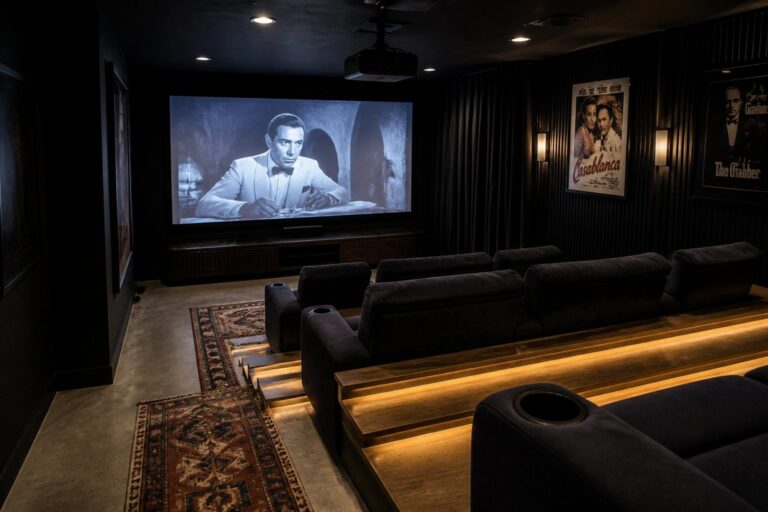
I have always noticed that a home theater only feels truly immersive once the walls and ceiling stop reflecting any light at all.
Black paint changes how sound moves around the room and makes it easier to keep the focus on the screen instead of the edges of the space.
It still has to work when the lights come back up.
In my own setup I would try out a couple of these color and lighting choices first to see how they hold up during normal evenings rather than just movie nights.
Seating layout and cable access end up mattering more than most people expect once the room is finished.
Painting The Walls And Ceiling Black
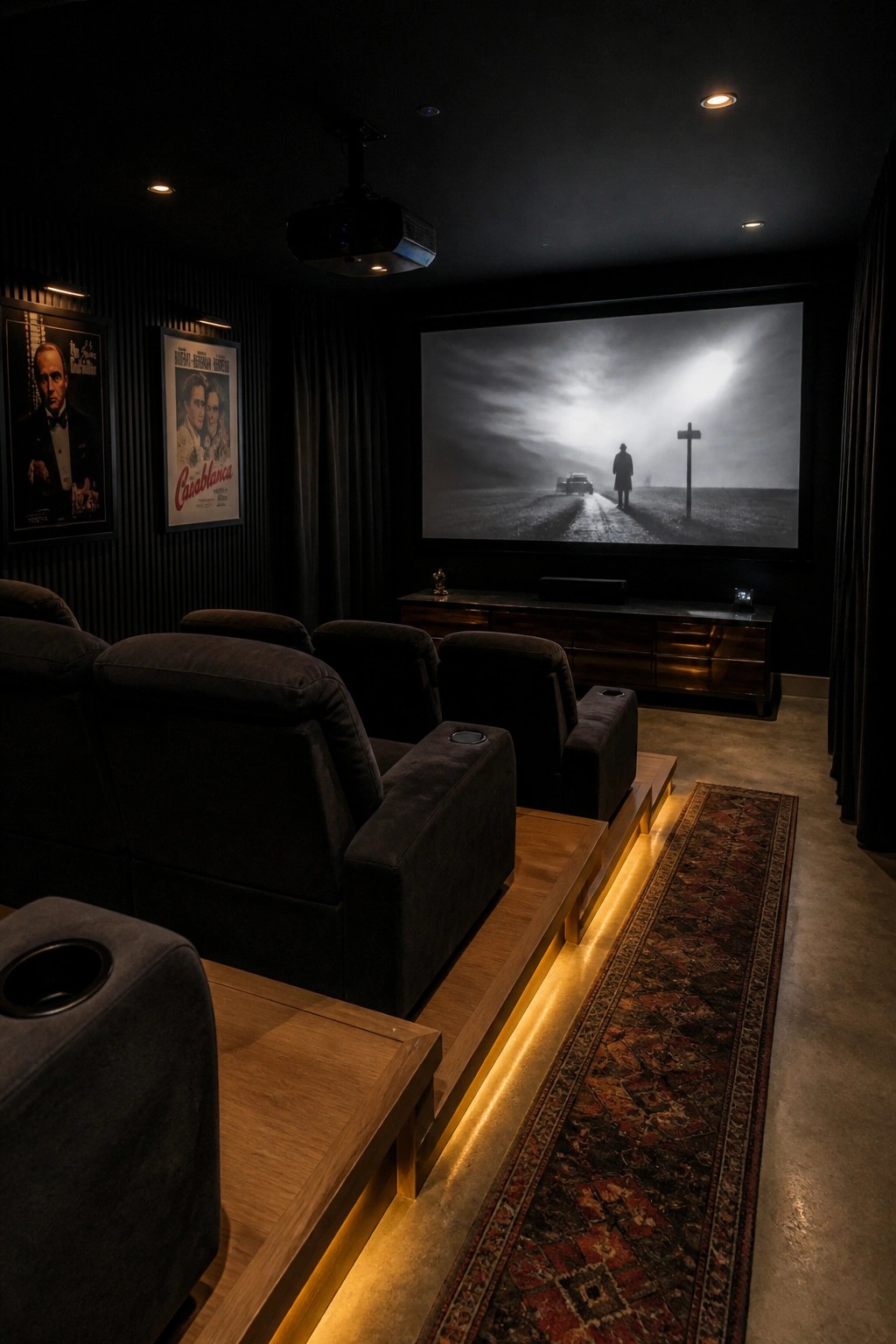
Many home theater rooms feel brighter than they should because the walls and ceiling stay light. Painting both black pulls the focus straight to the screen and makes the whole space feel more enclosed.
This approach works best in a windowless room where you can control the light. Dark seating and a low platform help everything blend so the black surfaces do not stand out on their own.
Raise the Seating on a Platform
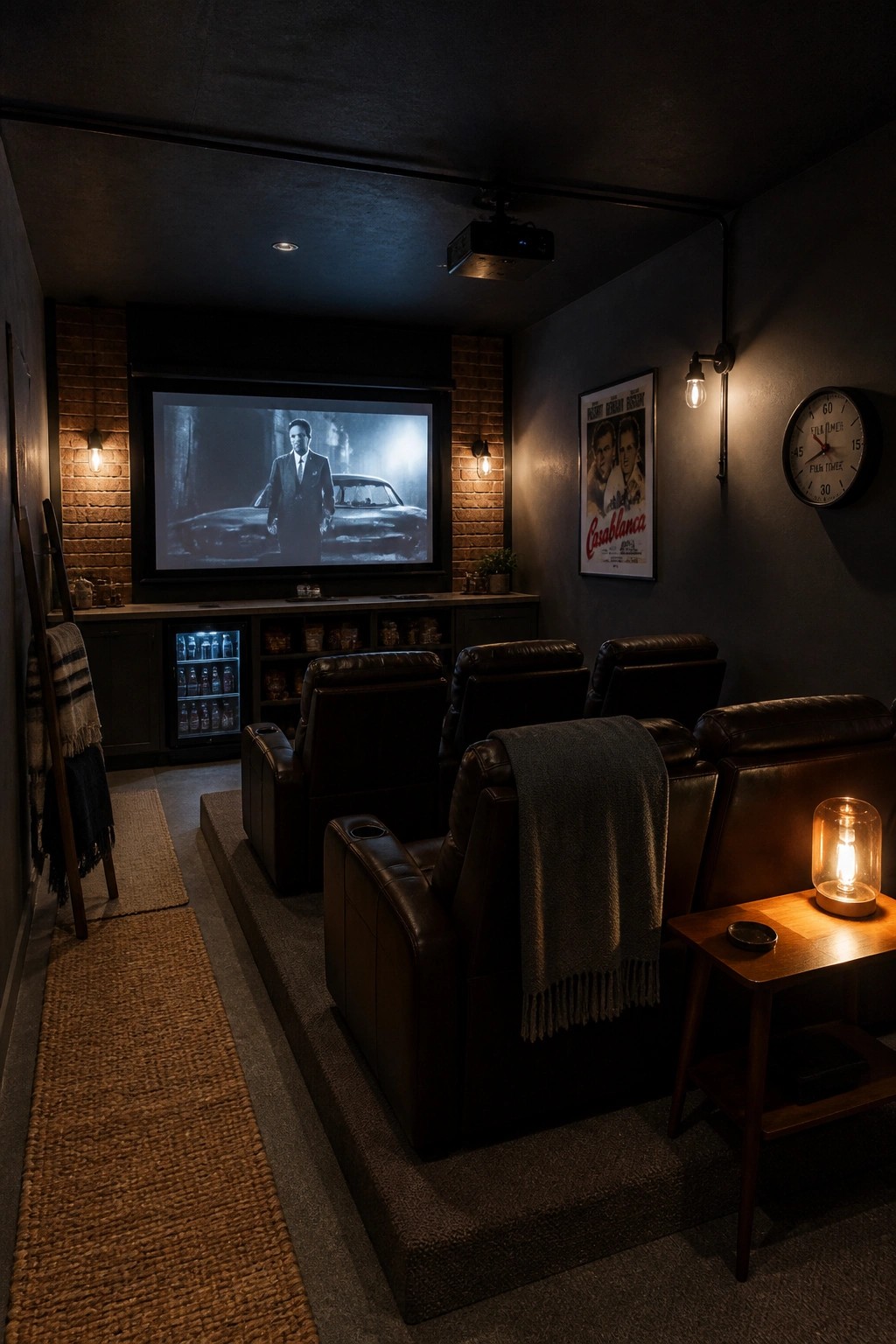
A raised platform gives the seating area a clear cinema feel and improves sight lines at the same time. In a dark room it also helps define the space so the chairs do not just sit on the floor like regular furniture.
This setup works best in basements or small dedicated rooms where you want the focus to stay on the screen. Keep the steps wide and add a simple handrail if the room stays very dark during movies.
Deep Green Velvet Seating Brings Warmth to Black Theater Rooms
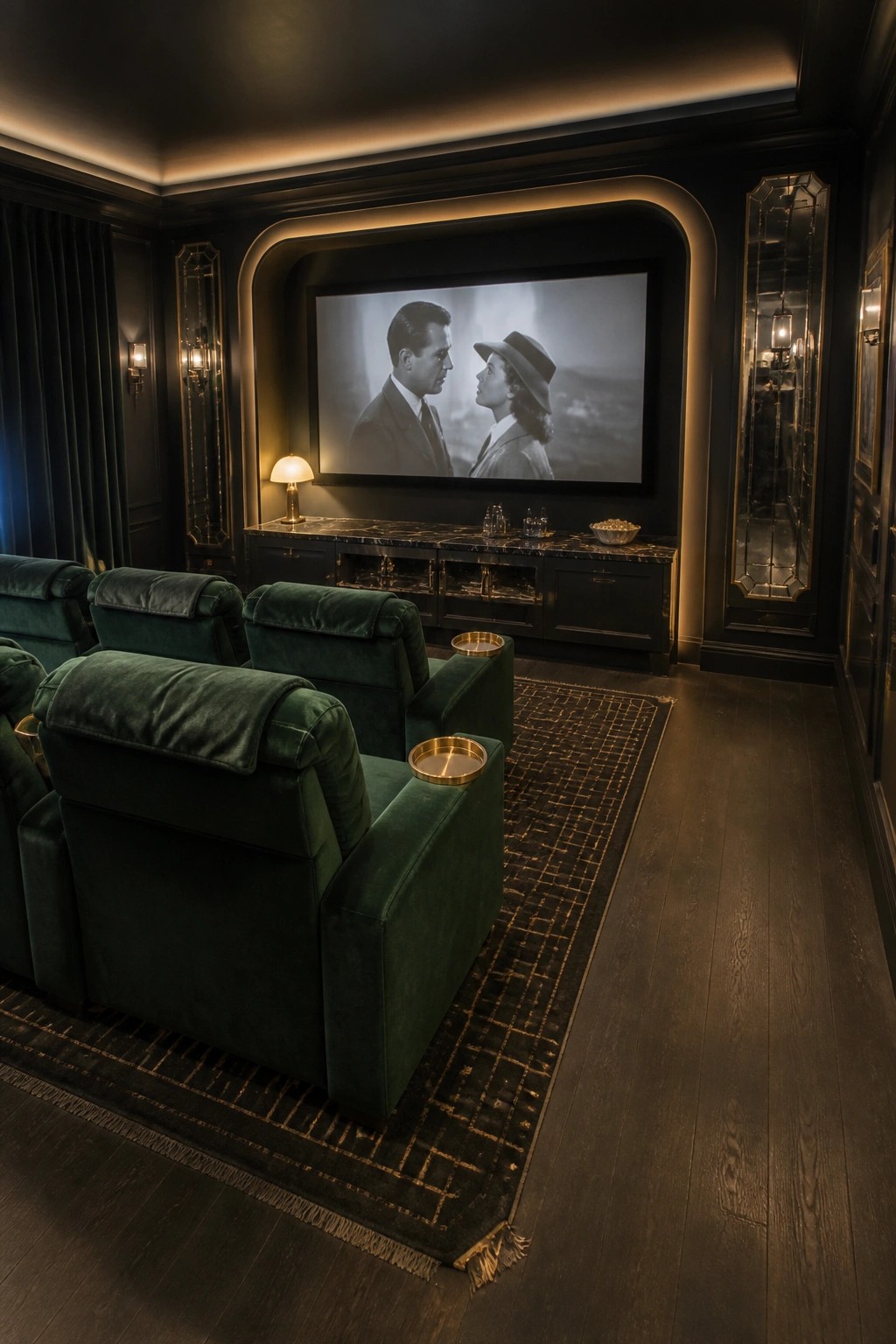
Many people paint a home theater black and stop there. Adding deep green velvet chairs gives the room texture and a little color without breaking the moody atmosphere. The fabric reflects just enough light from the screen to keep the space from feeling empty.
This choice works well in smaller rooms where seating needs to feel substantial. The velvet holds up to regular use and the green tone pairs easily with black walls and dark wood floors. Keep other colors minimal so the seating stays the main point of interest.
Black Walls And Ceiling
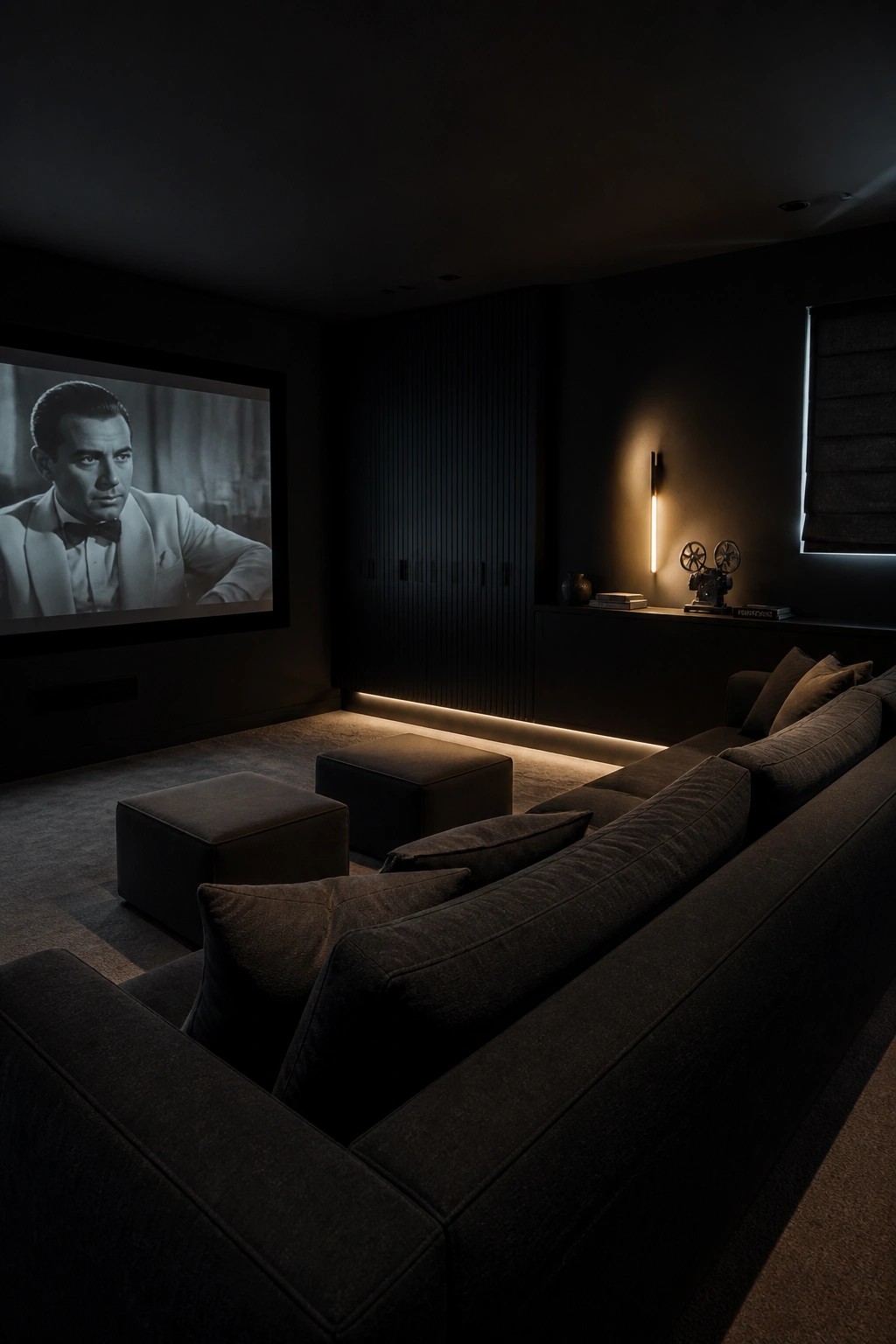
Many people go with black on both the walls and ceiling in a home theater because it reduces light bounce and keeps the screen as the clear focal point. The dark surfaces make the room feel more enclosed, which helps the viewing experience feel more like an actual theater instead of just a room with a big TV.
This approach works best in spaces where you can fully control the lighting and where the seating stays in dark fabrics or leather. It suits basements and windowless rooms especially well, though you may want to add subtle lighting along the baseboards so the space does not feel too closed in when the screen is off.
Raise the Seating Platform
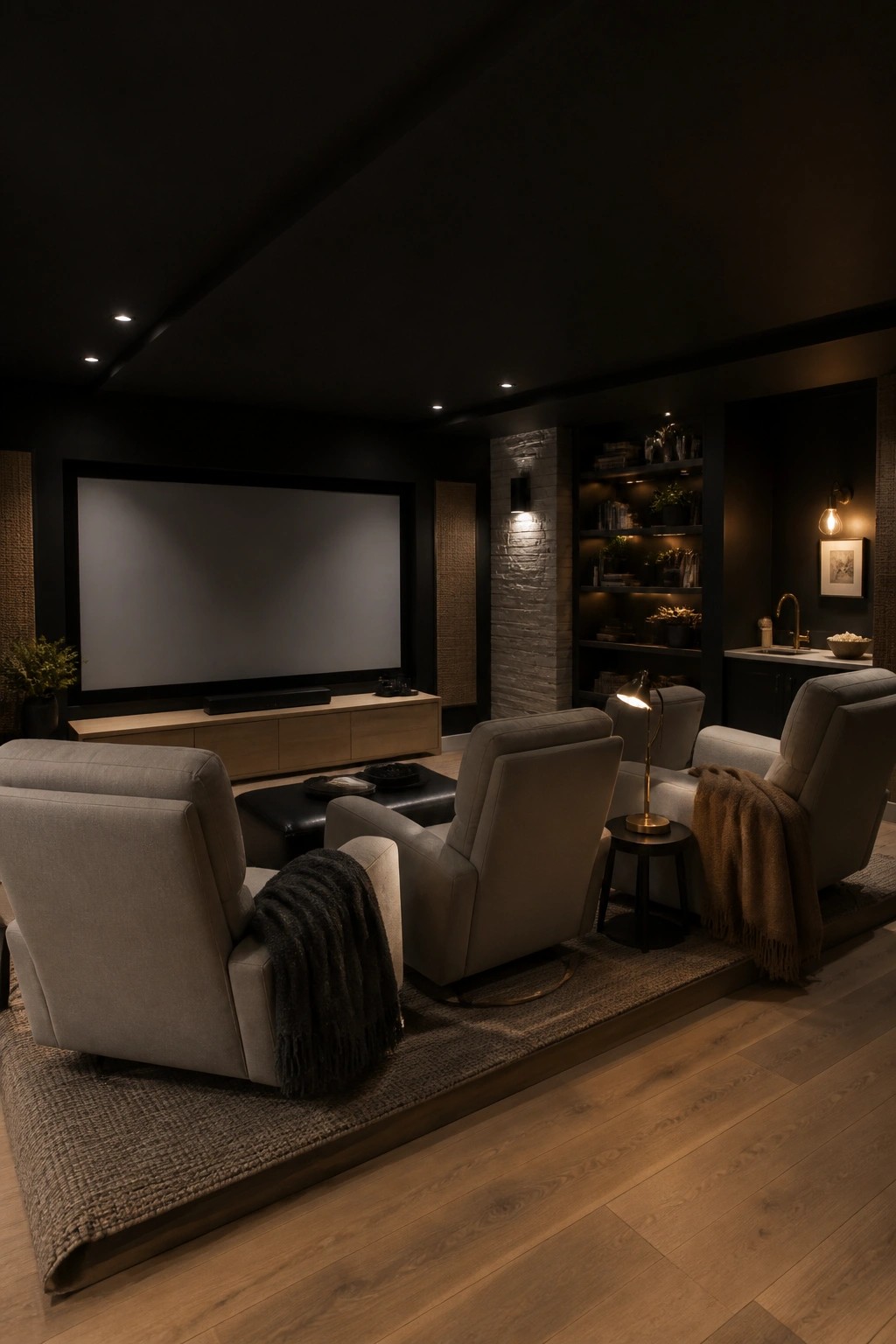
Raising the seating area on a low platform gives a home theater a more intentional layout. It sets the chairs apart from the rest of the room and makes the space feel like a dedicated spot instead of just furniture pushed against a wall.
This works best in rooms that have enough floor space to spare. Keep the platform height modest so it stays easy to step onto, and layer a large rug on top for comfort and to help control sound.
Black Walls And Ceiling For A Focused Theater Room
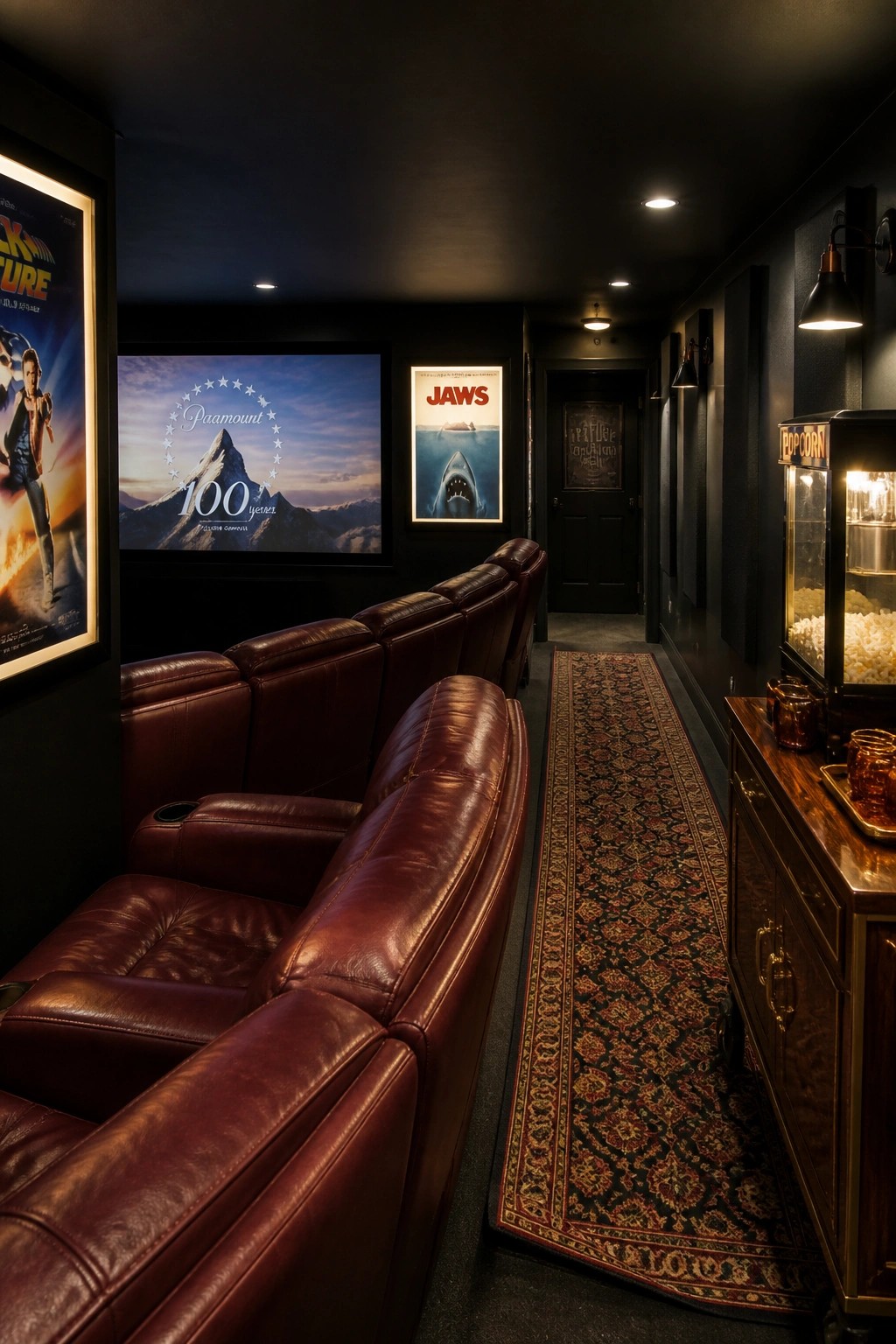
Many people go all black on the walls and ceiling when they set up a home theater. It cuts down on reflections and makes the room feel smaller and more enclosed, so the screen becomes the only thing that really stands out once the movie starts.
This works best in a dedicated space with no windows or with heavy blackout curtains. Keep the seating dark as well so the whole room stays consistent when the lights are low.
Black Walls and Ceiling for Better Immersion
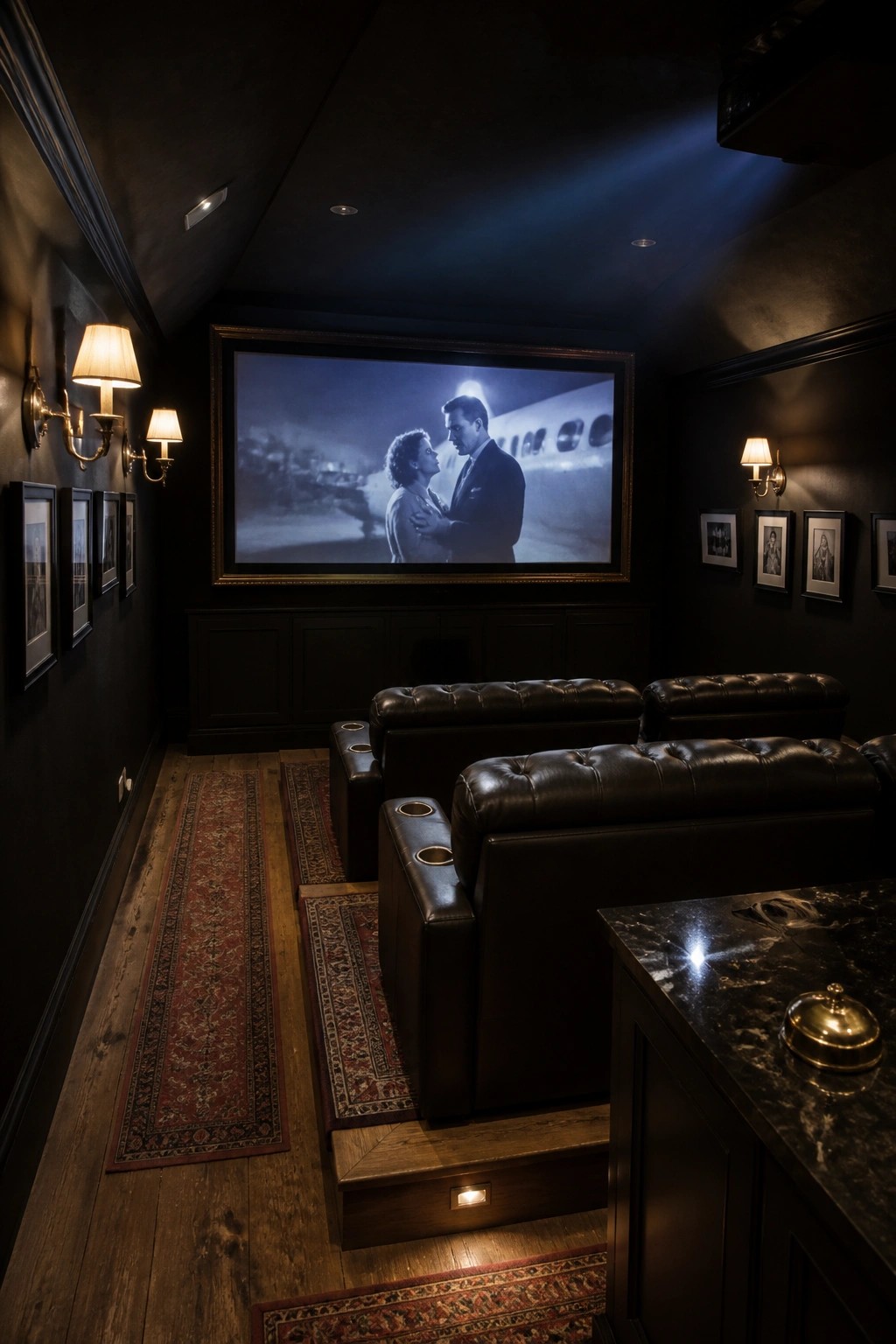
Painting the walls and ceiling black helps cut down on stray light and makes the screen feel more like the main event. It turns the whole room into a focused space instead of just a regular living room with a TV.
This works best in rooms used mostly after dark and with seating that stays low and simple. Keep lighting to a few wall sconces so the darkness stays consistent without feeling harsh.
Tiered Seating Works Well In Small Theaters
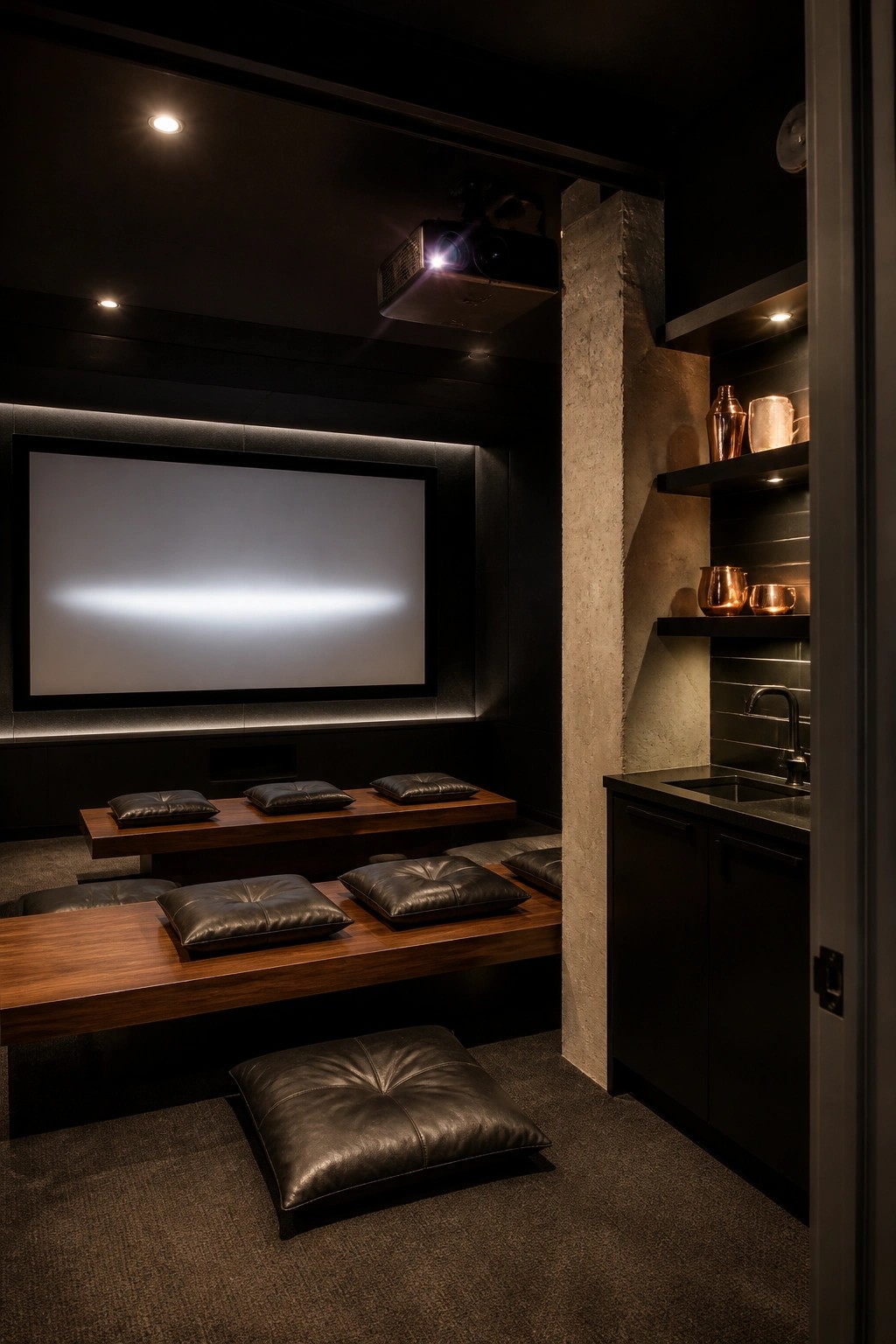
Tiered seating makes sense when you are trying to fit a real theater feel into a limited room. The stepped platforms let everyone get a clear view of the screen without needing a huge footprint or extra furniture.
This approach works best in basements or converted rooms where you can build the platforms into the space. Dark leather cushions on the wood steps add comfort while keeping the overall look simple and contained.
Black Walls And Ceiling
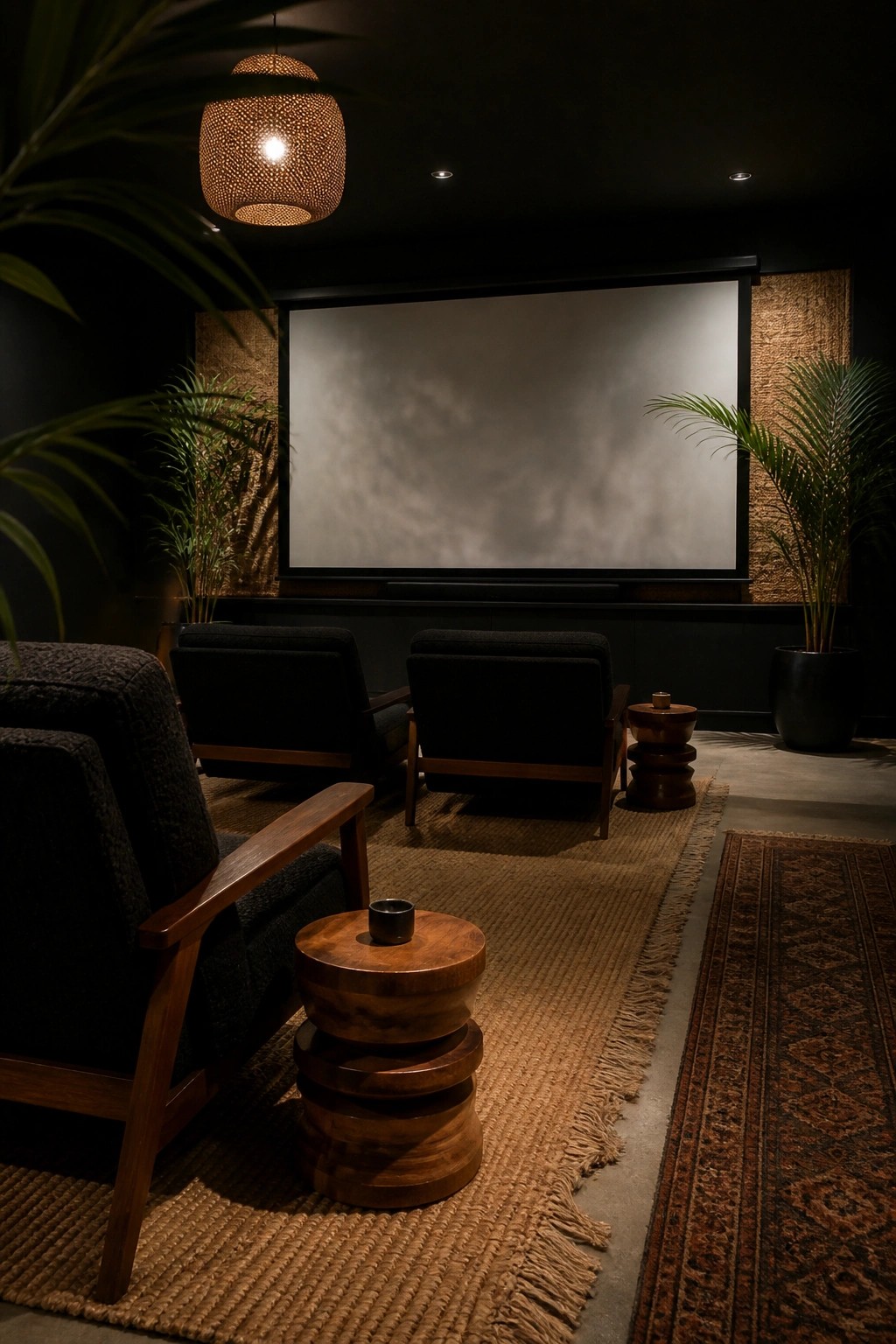
Black walls and ceiling work well in a home theater because they cut down on reflected light and keep the screen as the main focus. The room feels more enclosed and ready for viewing without extra effort.
This approach fits smaller or windowless spaces best. Pair it with textured rugs and simple wood pieces to keep the room from feeling empty.
Black Walls And Ceiling Keep The Focus On The Screen

Many home theaters feel more immersive once the walls and ceiling are painted black. The dark surfaces cut down on light bounce, so the image on screen stays sharp and the room itself fades into the background.
This approach works best in fully enclosed spaces with solid blackout options. Pair it with dark seating and minimal trim so nothing pulls attention away from the screen.
Tiered Seating On Raised Platforms
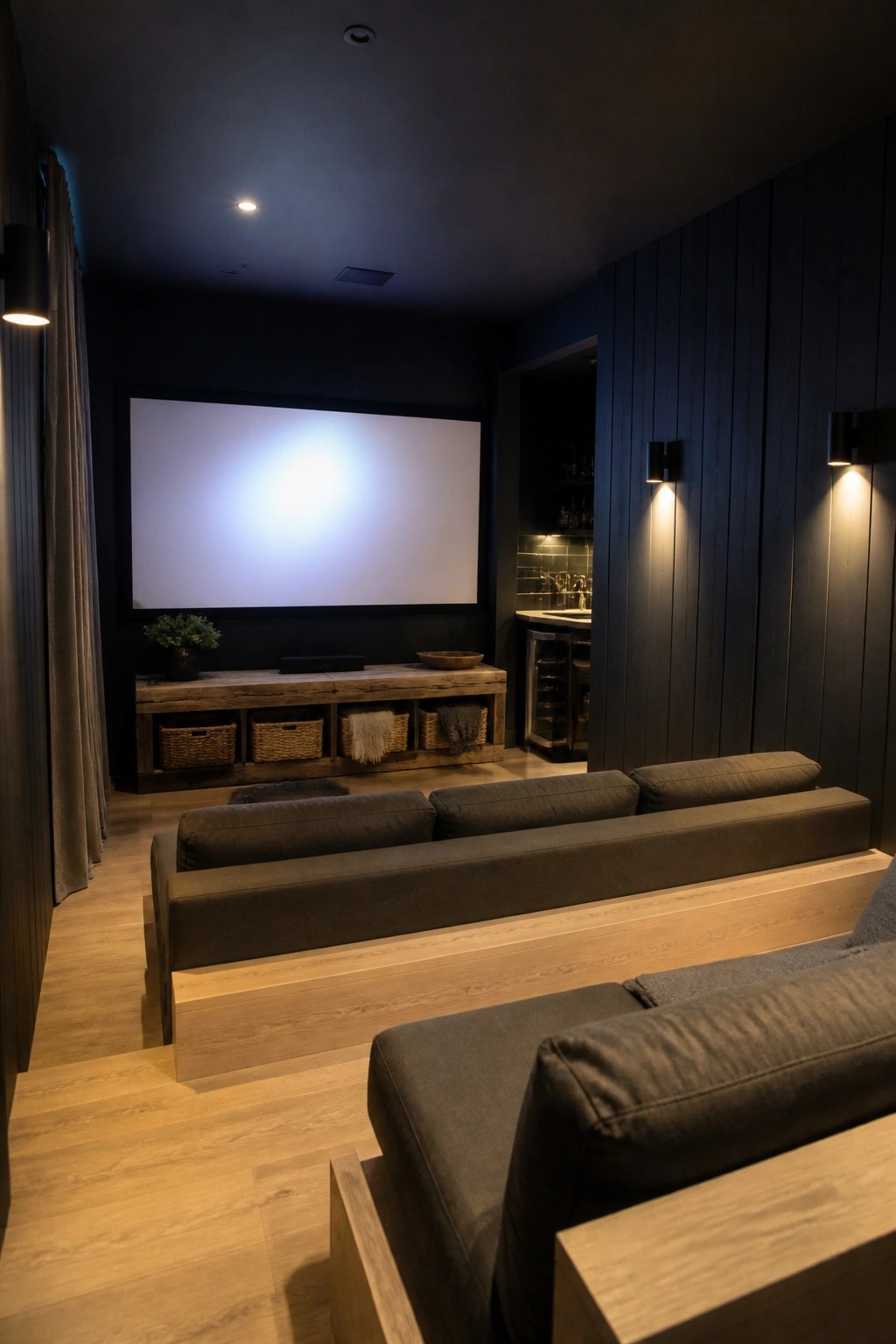
Tiered seating works well in a home theater because it gives everyone a clear line of sight to the screen. The raised platforms keep the back rows from being blocked by heads in front, which makes the room feel more like a real cinema without needing a huge space.
This setup works best in rooms that already have dark walls and ceilings, since the focus stays on the screen. It suits basements or converted spare rooms where you want a dedicated viewing area rather than a multi-use space. Just keep the platforms low enough that they do not feel like steps to climb.
Black Walls And Ceiling
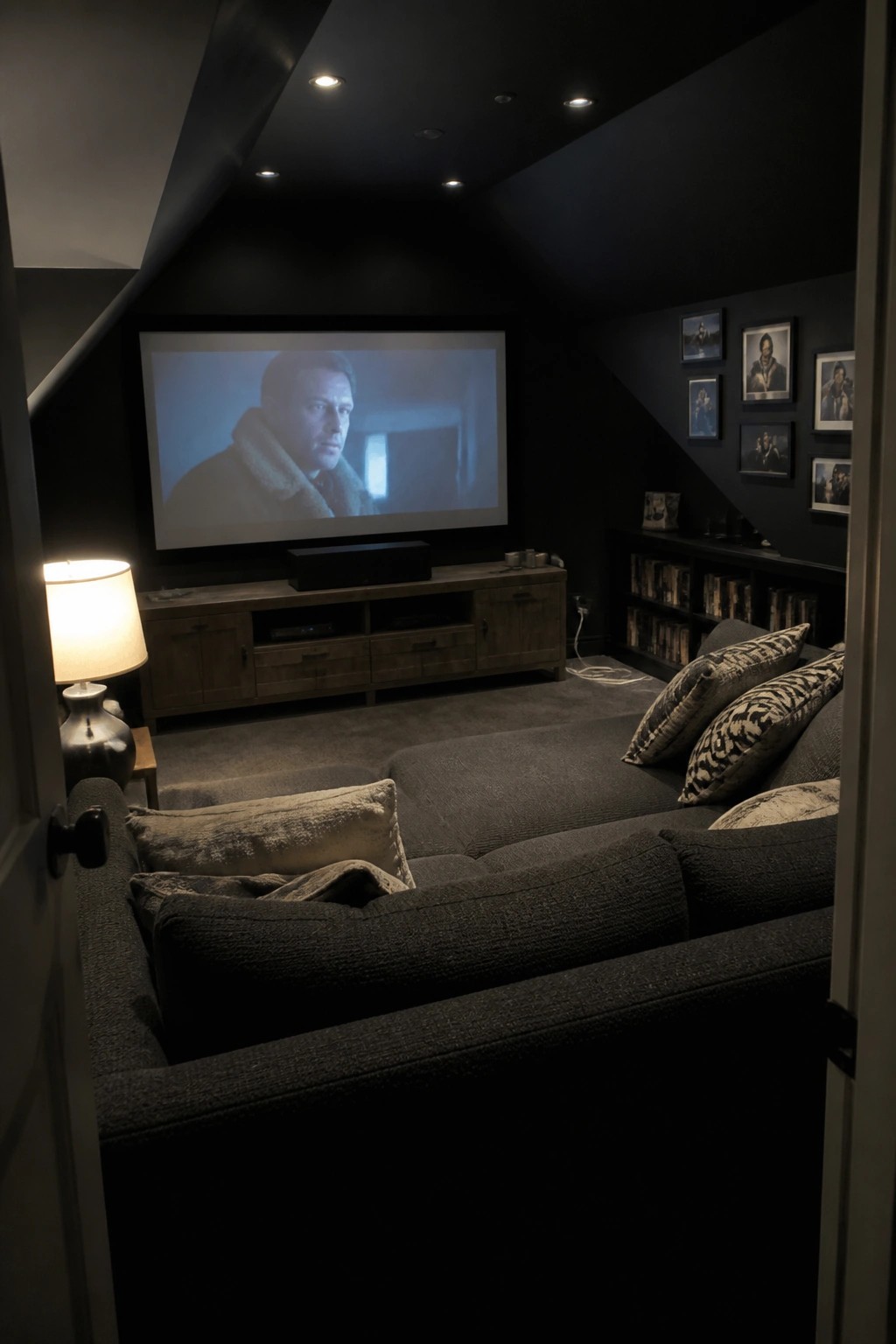
Painting both the walls and ceiling black turns a home theater into a true dark box. Light has nowhere to bounce, so the picture stays sharp and the room feels smaller and more focused than it really is.
This approach works especially well in finished attics or small bonus rooms where you can control every surface. Keep the rest of the room simple with dark seating and minimal trim so the black does not start to feel flat.
Black Walls And Ceiling For Stronger Immersion
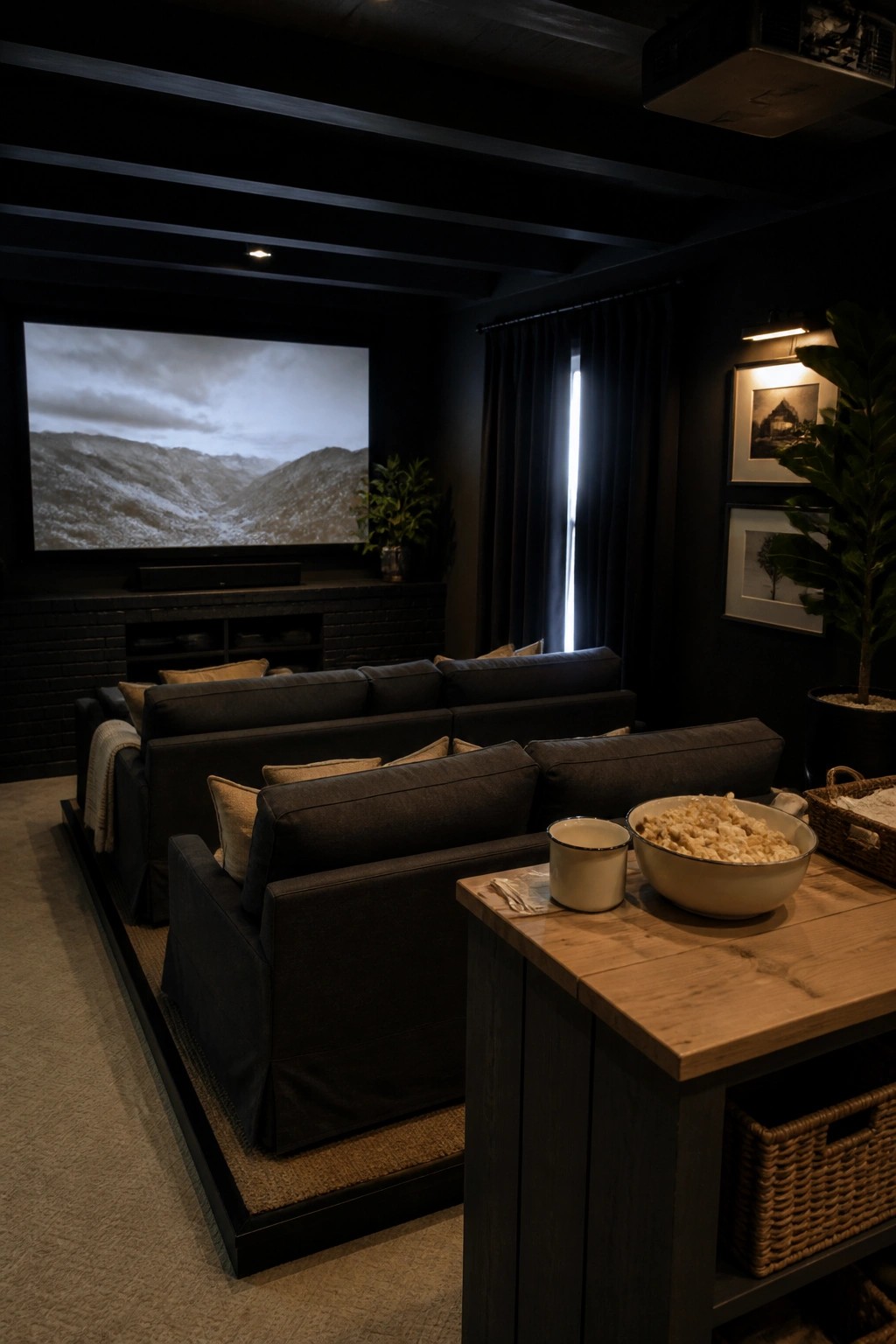
Painting the walls and ceiling black helps pull the whole room into the movie instead of letting light bounce around. The dark surfaces keep the space feeling enclosed and focused, which works especially well when the screen is the only bright thing in view.
This approach suits finished basements or rooms with few windows. Use it with simple seating and minimal trim so the black stays the main feature. Just add a few low lights near the floor for safety when the show ends.
Black Walls And Ceiling For A Real Theater Room

Painting the walls and ceiling the same deep black turns a regular room into something that feels built for movies. The color pulls everything back so the screen stands out more, and the space stops feeling like part of the rest of the house. It works especially well when you keep the rest of the room simple.
This approach suits smaller rooms or finished basements best. Add a few warm light sources, such as a low floor strip or one soft wall sconce, so the room does not go completely flat. Dark fabric chairs help the look stay consistent without adding extra shine.
Black Walls And Ceiling Keep Light From Bouncing Around
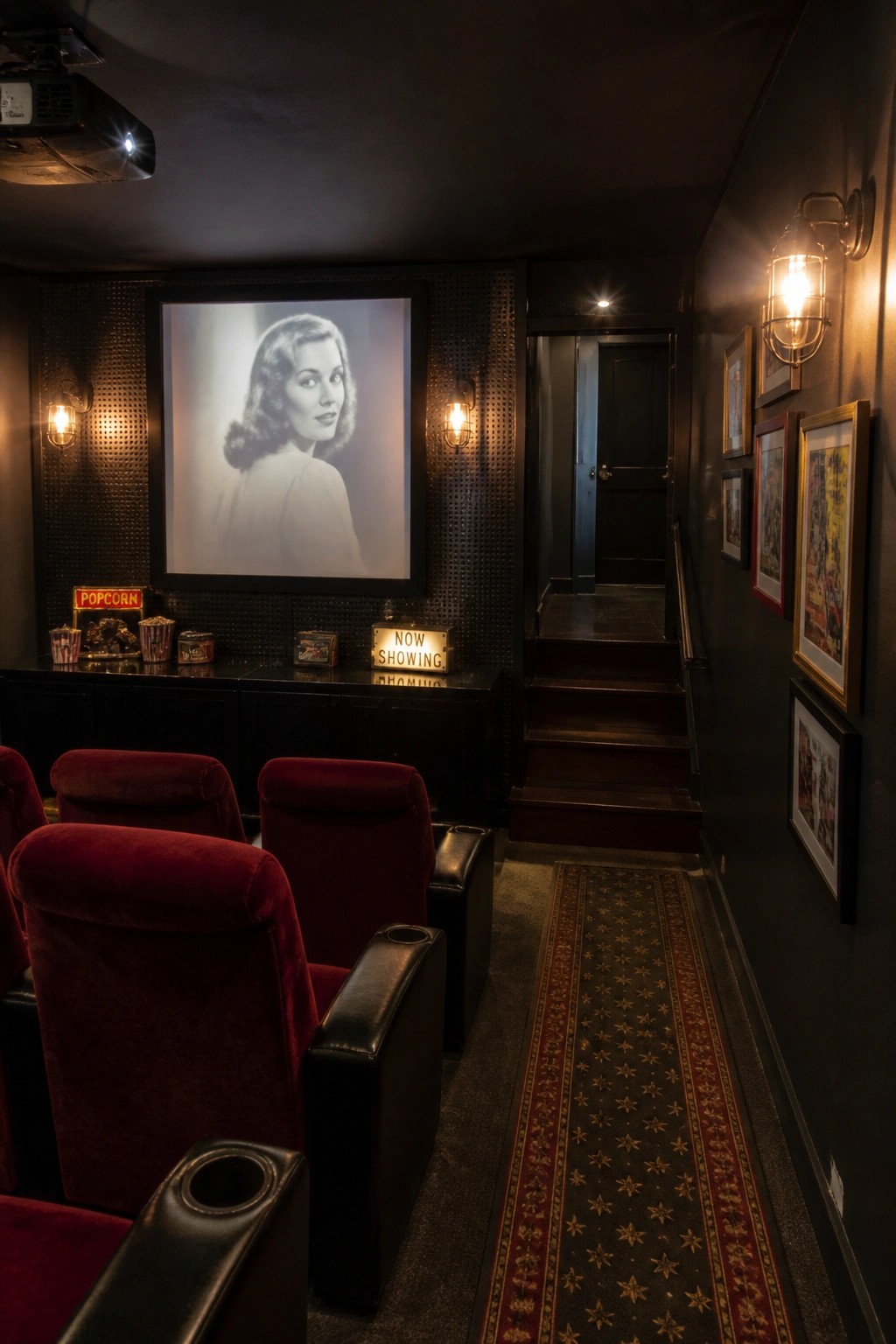
Black walls and ceiling work especially well in a home theater because they cut down on reflections and help the picture on screen stand out. The room feels more enclosed and focused, which makes movie nights feel closer to the real thing. Dark paint also hides any small imperfections in the space.
This choice works best in rooms with few or no windows, or in basements where you can control the light completely. Keep the seating and any trim dark too so nothing pulls attention away from the screen. A few lighter accents like red chairs can add just enough contrast without breaking the mood.
Black Walls And Ceiling For A Focused Theater Room
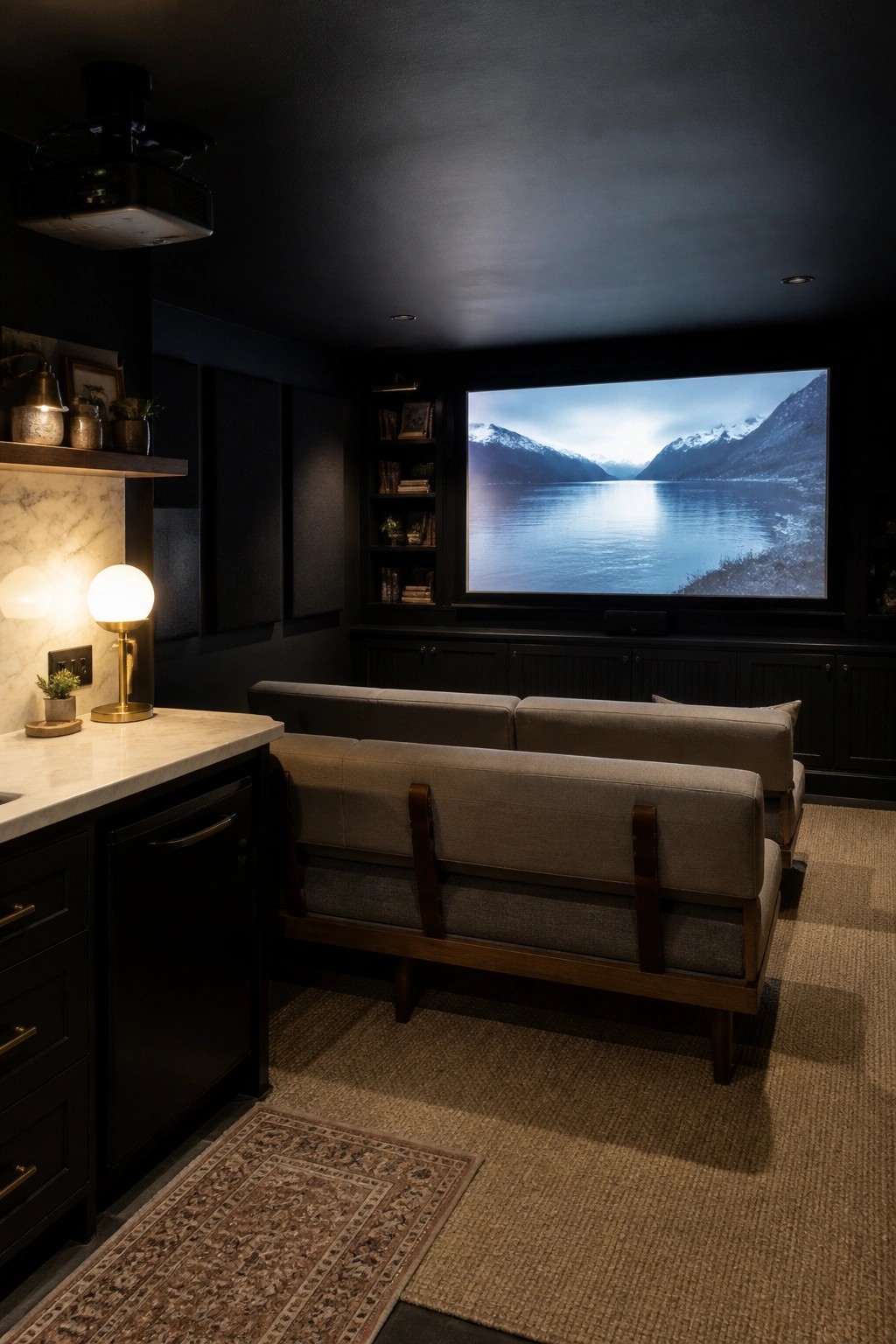
Painting both the walls and ceiling black turns an ordinary room into a real home theater. The dark surfaces reduce light bounce and keep attention on the screen instead of the room itself. This simple color choice gives the space a moody, enclosed feel without needing lots of extra details.
This approach works best in smaller or windowless rooms where you can control the lighting. Add a few warm lamps or sconces for when the projector is off so the room stays usable for other activities too.
Black Walls And Ceiling For A Focused Theater Space
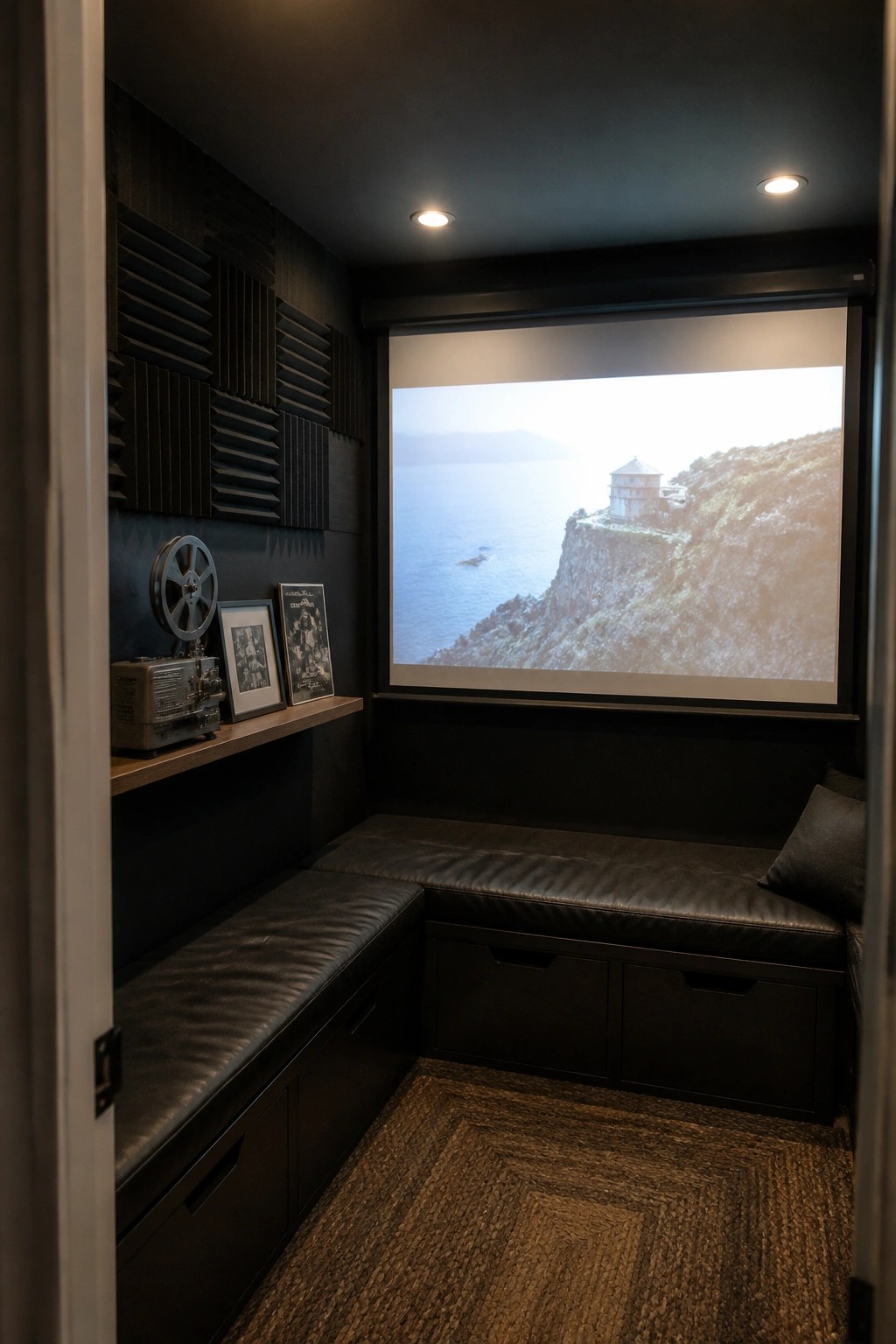
Painting both the walls and ceiling black turns a small room into a dedicated theater without needing much else. The dark surfaces reduce light bounce and keep attention on the screen, which makes the space feel more intentional even when it is tight on square footage.
This works best in basements or windowless rooms where you can control the light. Pair the dark paint with acoustic panels on one wall and simple built-in seating with storage underneath so the room stays useful for more than just movies.
Black Walls And Ceiling For A Home Theater
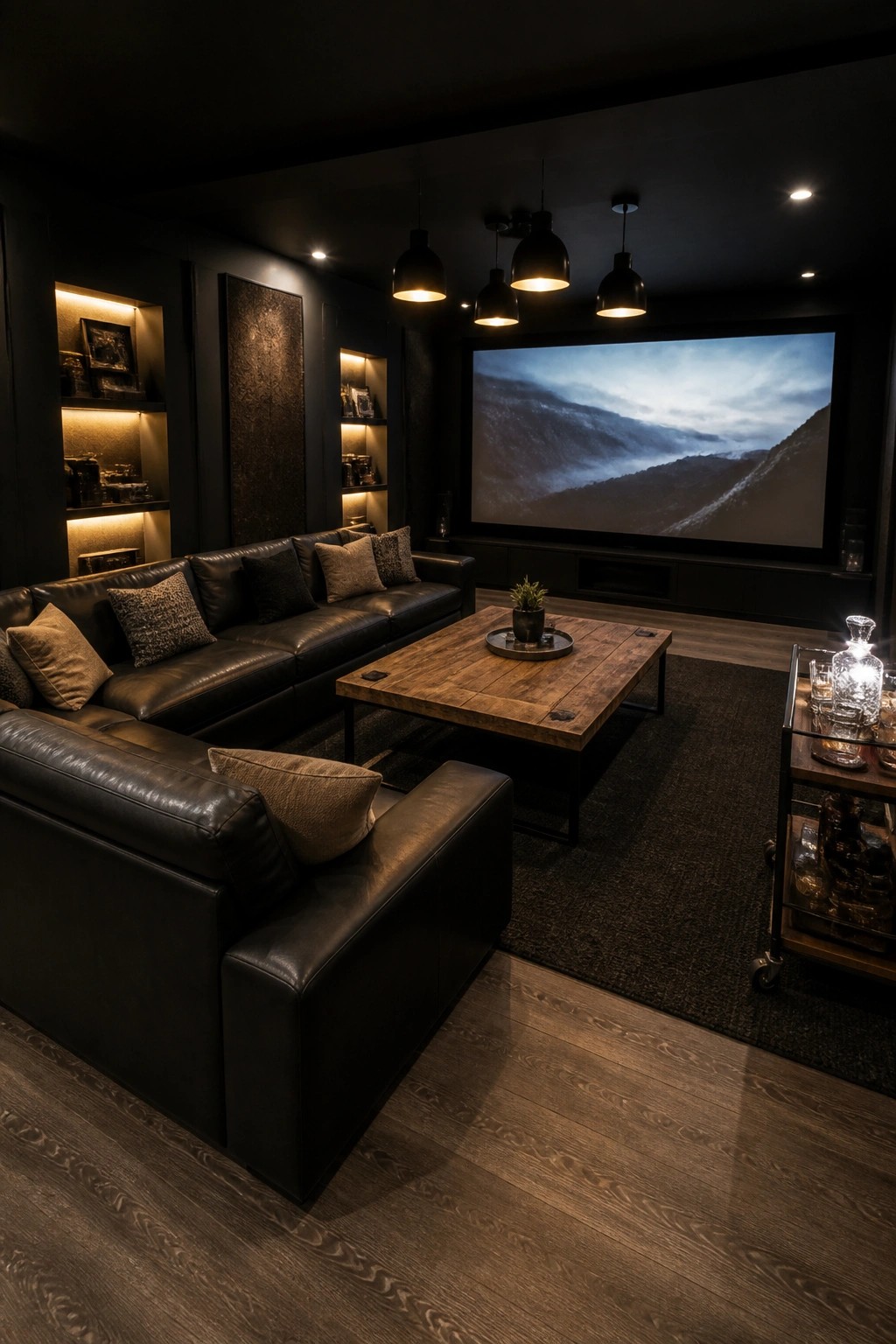
Painting the walls and ceiling black turns a regular room into a space that feels made for movies. The dark surfaces keep light from bouncing around, so the screen stays the focus and the whole room feels more enclosed without extra effort.
This works best in a basement or a room that can be fully darkened. Keep the furniture simple and low so it does not fight the walls, and add a few warm light sources only where you need them for finding seats or pouring a drink.
Painting Walls And Ceiling Black
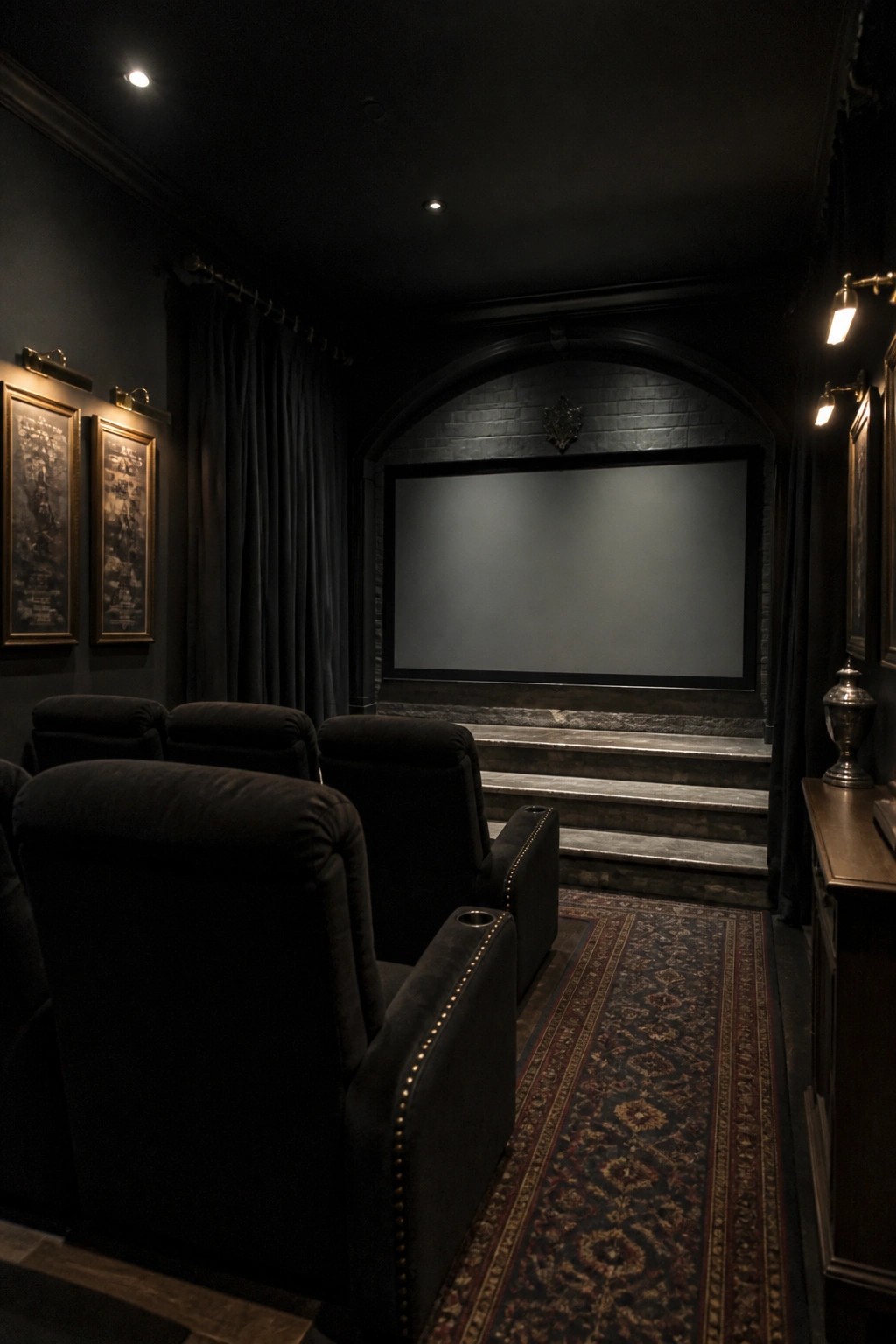
A full black treatment on both the walls and ceiling helps a home theater feel more enclosed and focused. It removes distractions and lets the screen become the main point of attention without any lighter surfaces pulling the eye away.
This approach works best in smaller or fully dedicated rooms where you can control the lighting. Pair it with dark seating and minimal trim details so the space stays consistent rather than fighting against lighter architectural elements.
Black Walls and Ceiling Pull the Room Together

A dark home theater works best when the walls and ceiling match in a deep black finish. This choice removes distractions and lets the screen take over the space. The room feels more like a real theater instead of a regular living area with a big TV.
This approach suits a dedicated room where movies are the main event. It works well with simple furniture and minimal accents so the darkness stays balanced rather than overwhelming. Keep lighting low and focused to avoid washing out the effect.
Frequently Asked Questions
Q: Will all the black make the room feel cramped? A: Dark shades pull the walls in a bit but you can counter that with hidden LED strips along the floor. Matte paint helps avoid shiny spots that draw the eye. Stick to one accent like a dark wood console to add some depth.
Q: What if the screen looks washed out against the black walls? A: Position your projector or TV so the light hits straight on without bouncing off the walls. Test a few seating spots before finalizing the layout. A simple bias light behind the screen often fixes any contrast issues.
Q: How do I clean black surfaces without streaks showing up? A: Grab a damp microfiber cloth and go over high-touch spots weekly. Avoid harsh cleaners that leave residue behind. The ceiling rarely needs much attention unless you have popcorn texture up there.
