


When I think about adding a cinema room the challenge is always making sure it does not take over the rest of the house.
Layout choices matter a lot here because the space has to work for casual evenings as well as full movie sessions.
Hidden AV gear keeps things looking balanced instead of turning the room into a control center.
That balance is what makes these setups worth a closer look.
I would probably start by checking how the cabinetry or paneling options could hide the wiring and screens in my own space.
Tiered Seating Improves Sight Lines

Tiered seating makes a big difference in a home cinema because it keeps the view clear for everyone in the room. The raised platform lets the back row sit higher without anyone blocking the screen, and it gives the space a more intentional theater layout instead of just lining up chairs on a flat floor.
This setup works best in longer rooms where you can fit two or three rows. Keep the step height low so it feels comfortable to walk through, and match the carpet or flooring on the platform to the rest of the room so the change in level does not stand out too much.
Hide The Television Behind Fabric Panels

Many people like a large screen for watching movies but prefer the room to feel calm when the television stays off. Fabric panels that slide into place over the screen keep the electronics out of sight and let the wall read as a single surface.
This setup works best in living rooms that already have built-in cabinetry along one wall. It suits homes where the main seating area faces the screen and helps the space feel more like a regular room during the day.
Built-In Storage Keeps The Gear Out Of Sight

One simple way to make a home cinema feel calmer is to hide the equipment inside low cabinets. The console here uses frosted doors and a clean wood top so the big screen stays the main thing you notice instead of boxes and wires.
This setup works best in rooms that double as living space or in homes that want a modern look without visible tech. Just make sure the cabinet has good ventilation and easy access for updates when needed.
Media Walls With Hidden Storage For Equipment

Built-in cabinetry around a screen keeps the room from looking like a dedicated theater. The wood panels and lower cabinets hide receivers, wiring, and other gear so the space still reads as a regular living area.
This setup works best in rooms that serve more than one purpose. Match the cabinet finish to the surrounding walls and trim so everything stays quiet when the screen is off.
Hide The Screen Behind Full Length Curtains

One way to keep a home cinema from feeling too technical is to cover the screen wall with a single large curtain. The fabric hides the display and any surrounding equipment while the room still reads as a finished space rather than a media room.
This works especially well in smaller or multi-use rooms where you want the seating and lighting to stand out instead. Dark, heavy fabric helps the curtain blend with the walls so the focus stays on comfort rather than technology.
Built-In Mirrors That Hide The Screen
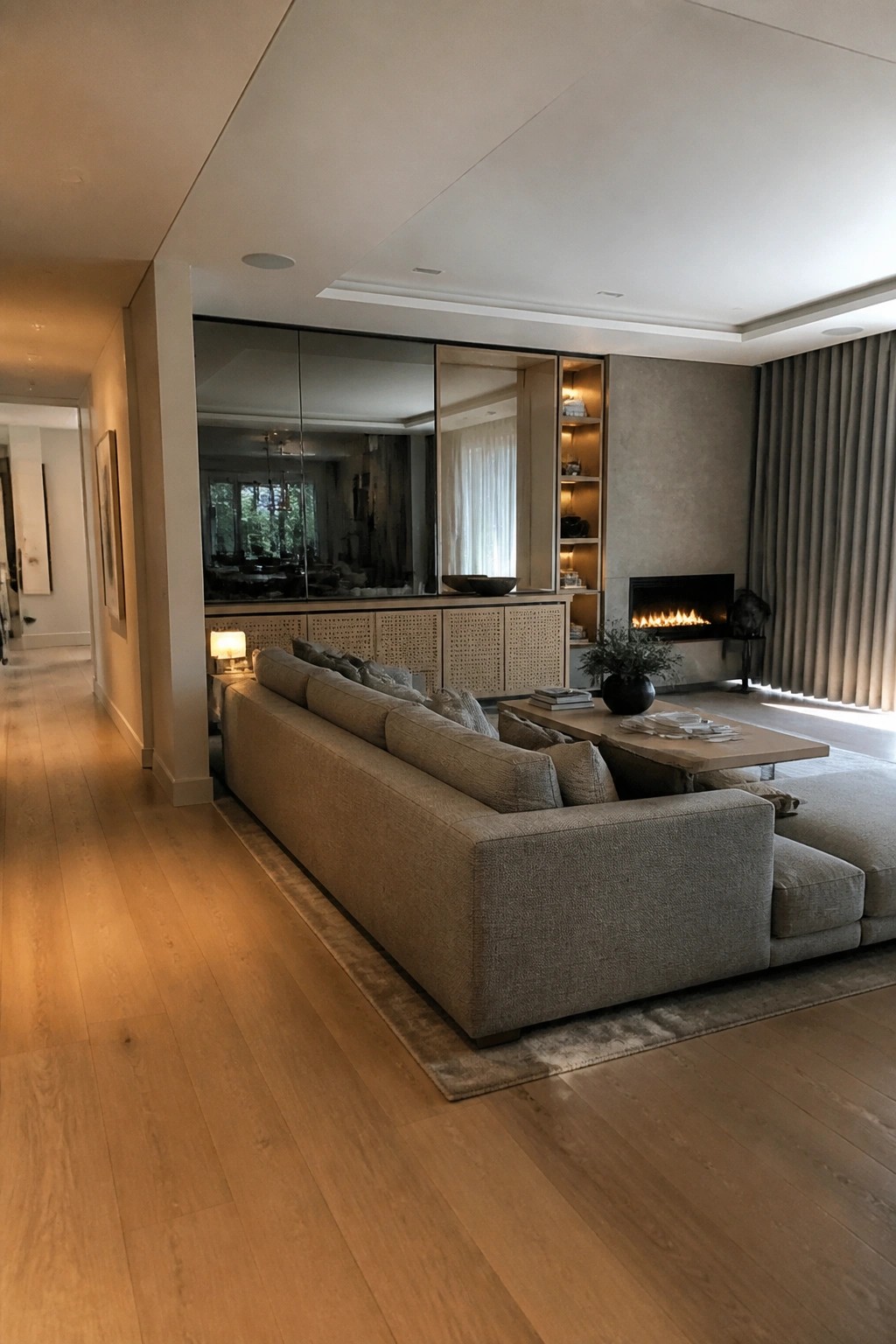
Mirrored cabinetry works well when you want a living room to double as a home cinema without looking like one. The reflective panels keep the television and speakers out of sight while still letting the wall feel like part of the room instead of a blank screen.
This setup suits open-plan homes where the same space needs to stay calm during the day. Keep the cabinet depth shallow enough for the gear you actually need and add soft-close doors so the room stays quiet when the equipment is tucked away.
Built-In Cabinetry Keeps Media Equipment Hidden

Many rooms gain a calmer feel when all the AV gear stays out of sight behind closed doors. A long run of low cabinets along one wall gives you plenty of space for receivers, players, and wiring without adding extra furniture that breaks up the lines of the room.
This setup works best in spaces that already favor clean surfaces and simple materials. Size the cabinets to match your equipment needs and add ventilation slots so nothing overheats. It suits homes that want a relaxed look rather than a dedicated theater setup.
Raised Platforms For Theater Seating
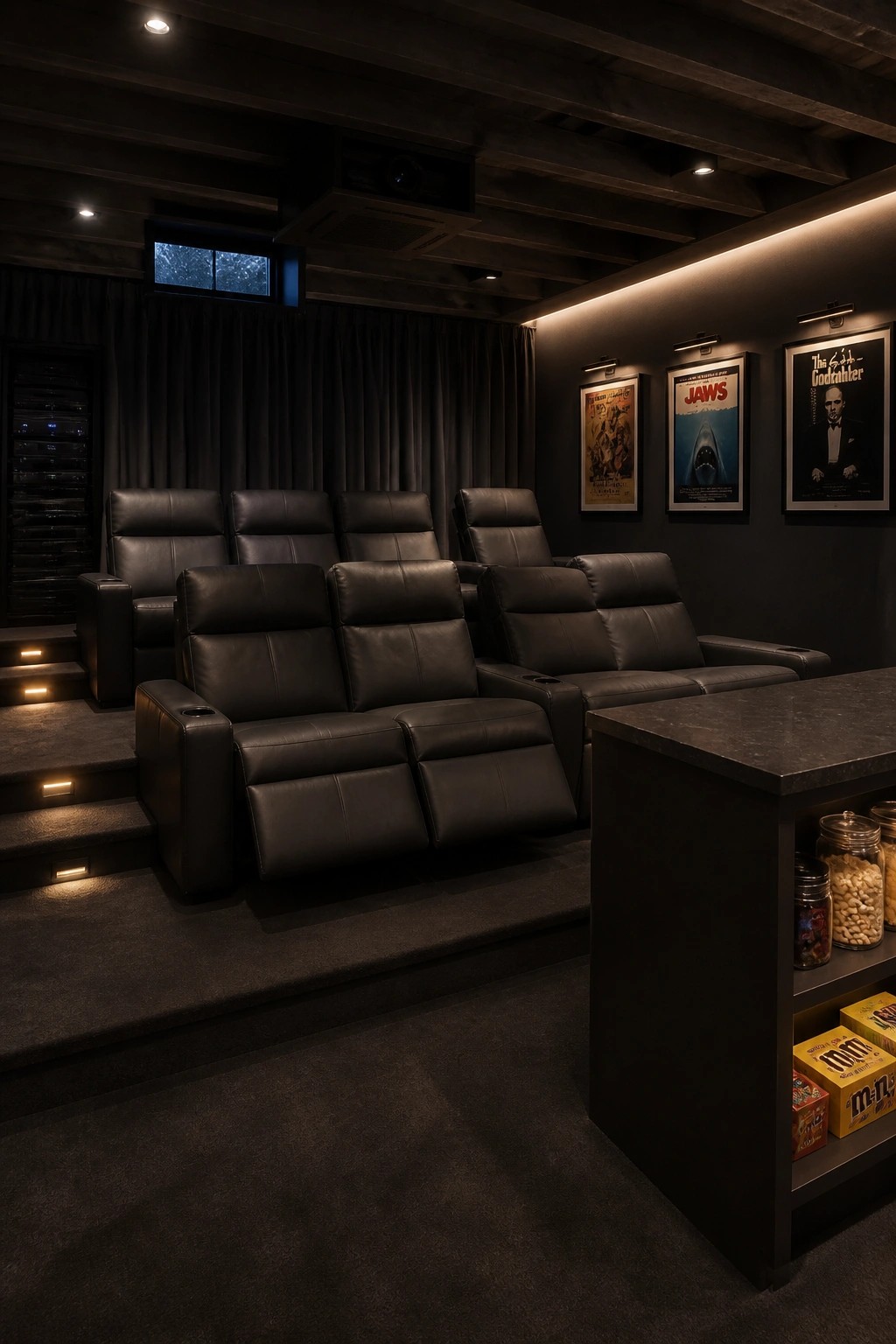
A raised platform makes a big difference in a home cinema because it gives every seat a clear view of the screen. The steps also create a natural separation between the seating area and the rest of the room, which helps the space feel more like a real theater without needing much extra decoration.
This layout works especially well in basements or converted attic rooms where you have the height to build a low platform. You can run cables and place equipment underneath the raised section so nothing clutters the main floor. Keep the steps lit with small recessed lights for safety when the room is dark.
Built In Cabinetry That Keeps The Screen And Sound Hidden

Many people want a large screen for watching movies but do not want the room to feel like a dedicated theater. Building cabinetry around the display lets the screen sit flush with the wall while the speakers stay behind perforated panels that match the finish.
This approach works best in living rooms that also serve as everyday spaces. Match the cabinet doors to the wall color and keep the hardware minimal so the focus stays on the seating and furnishings rather than the equipment.
Cabinetry That Keeps AV Gear Out Of Sight

One way to keep a cinema room from looking like a stack of electronics is to tuck the equipment into a built-in cabinet right under the screen. The cabinet can be sized to match the width of the screen and finished to blend with the rest of the room so nothing stands out.
This approach works best in spaces that already have wood trim or built-ins, since the cabinet can be made to match. Make sure the doors or panels allow airflow, and plan the depth so the gear fits without pushing the screen too far forward.
Hide The Equipment Behind Matching Panels

One of the simplest ways to keep a home cinema looking clean is to hide the AV gear completely. In this room the equipment sits inside a tall cabinet that blends into the wall using the same vertical slats as the rest of the room. Nothing sticks out, so the screen stays the main focus and the space feels calm instead of technical.
This approach works best in smaller dedicated cinemas where every surface shows. Match the panel style and color to the surrounding walls so the doors disappear when closed. Just make sure the cabinet has good ventilation and easy access for updates.
Built-Ins That Keep The Gear Out Of Sight

One simple way to make a home cinema feel finished is to wrap the screen in built-in cabinetry. The woodwork here creates a clean frame while hiding the wiring and components behind doors and inside the shelves.
This setup works best in rooms that serve more than one purpose. It keeps the space looking calm even when the screen is off and suits homes that want the tech to blend into the rest of the furniture rather than stand out.
Low Cabinets That Keep AV Gear Out of Sight

A low console that runs along the base of a daybed can hold a soundbar and other equipment without turning the room into a media space. The cabinet doors with mesh panels let sound pass through while hiding the rest of the gear inside.
This approach works best in guest rooms or lounges that double as a cinema spot now and then. Keep the console height modest so the screen stays the main focus and the furniture still feels like normal seating.
Built-Ins Keep The Gear Out Of Sight

Many people want a home cinema that does not look like one during the day. Built-in cabinetry solves this by hiding the screen, speakers, and other equipment behind panels or doors so the room still feels like a normal living space.
This approach works best in rooms that serve more than one purpose. Keep the visible surfaces simple, leave easy access for maintenance, and make sure any open shelves are used sparingly so the clean look holds up.
Built-In Cabinetry Around The Screen

One way to keep a home cinema feeling clean is to build the screen right into a wood cabinet wall. The wood gives the room structure and warmth while the doors and drawers below hold all the equipment out of view. It works especially well in spaces that already lean rustic or traditional.
This approach suits homes where you want the room to double as a regular living space when the screen is off. Keep the cabinet depth shallow enough that the seating can sit close without crowding the room, and make sure the wood finish matches any other trim or flooring so the whole wall reads as one piece.
Media Consoles That Hide AV Equipment

A low wooden console works well in a home cinema because it keeps the room looking clean while still giving you a place to store all the gear. The perforated doors let sound and heat pass through, and pull-out drawers make it easy to reach remotes or cables without cluttering the surface.
This setup suits rooms where you want the focus on the screen rather than on tech. It works best in spaces with enough wall length for the console to sit centered under the display, and it helps if you already plan to run wiring behind the wall or through the floor.
Velvet Seating In Home Cinemas

Velvet seating gives a home cinema that classic theater feeling without trying too hard. The deep color and soft texture make the room feel warmer and more inviting, especially when you have multiple rows set up for guests. It also holds up well over time and adds a bit of richness that plain fabric or leather often lacks.
This works best in rooms that already have some traditional details like wood trim or drapery. Keep the rest of the space fairly simple so the seating stands out, and make sure the rows are deep enough for real comfort during long movies. Avoid placing it in very bright or casual family rooms where the look might feel out of place.
Built-Ins That Hide The Screen

Built-in cabinetry works well when you want a media space that does not look like one. The large flat panel sits flush with the wall and blends into the shelving above it, so the room still feels calm even when the screen is not in use. This approach keeps wires and equipment out of view while still giving you room for books and simple decor.
It works best in smaller homes or guest rooms that need to serve more than one purpose. Keep the cabinet doors simple and match the wall color so the whole wall reads as one surface. Avoid overcrowding the shelves, since the goal is to keep the focus off the tech.
Add A Built-In Bar To Your Cinema Room

A built-in bar makes the room feel more complete because you can grab a drink or refill without stepping out during a movie. It also gives the space a dedicated spot for storage so bottles and glasses stay out of the way when not needed.
This setup works well in rooms that already have some length to them. Place the bar along a side wall so it does not block views of the screen, and keep the cabinet finishes simple so they blend with the rest of the room.
Built-In Cabinets Hide The AV Equipment

A long low console with closed storage lets you keep a television in the main seating area without turning the room into a tech zone. All the boxes, wires, and remotes stay out of sight, and the wall vents handle sound without adding extra speakers on shelves.
This setup works well in open living spaces that need to feel calm during the day. Match the cabinet finish to nearby wood tones so the unit reads as regular furniture rather than media storage.
Wall Panels That Hide Speakers and Wiring

Many home cinemas end up looking cluttered once the screen and speakers go in. Using wall panels that match the surrounding stone or plaster lets the equipment sit behind the surface so the room still reads as a finished living space instead of a theater.
This works best in rooms that serve more than one purpose or in homes that favor a quieter look. Keep the panels slightly textured or framed so they register as design rather than obvious covers, and make sure any doors or vents stay accessible for service later.
Built-In Cabinetry That Hides The Gear

One simple way to make a home cinema feel less like a theater is to build the equipment into the walls and cabinetry. A projector tucked into the ceiling and a screen set flush with the surrounding panels keep the tech from taking over the room when it is not in use.
This setup suits homes where the space needs to work for both movie nights and everyday living. Just allow for proper airflow in the cabinets and plan the wiring early so nothing has to run across the floor later.
Built-In Cabinetry For Hidden Equipment

Many home cinemas now rely on long built-in cabinets to keep receivers, players, and wiring out of sight. The clean front lets the room feel like a regular lounge rather than a tech space.
This approach suits open layouts or smaller rooms where you still want seating and storage without extra furniture. Make sure the cabinet doors allow airflow and that any vents or remotes stay easy to reach.
Mount The Projector On The Ceiling

Mounting the projector overhead is one of the simplest ways to keep a home cinema looking tidy. It removes the need for a low table or stand in the middle of the room and leaves the floor clear for seating and rugs.
This setup works best in spaces with exposed ceilings or beams where the unit can tuck in without drawing attention. Plan the wiring early so cables run along existing pipes or behind walls instead of hanging down.
Built-In Cabinetry Keeps AV Equipment Hidden

One way to keep a home cinema feeling calm is to tuck the AV gear into low built-in cabinets along the base of the screen wall. This setup hides the receivers, players, and wiring while still giving you easy access when you need it.
It works best in rooms where you want the television to be the only obvious piece of tech. Choose doors that blend with the wall color and leave a bit of open space inside the cabinets so the equipment can stay cool.
Frequently Asked Questions
Q: Where do I keep the remotes if the gear stays hidden away? A: Tuck a slim universal remote into a drawer built into the armrest or side table. Sync it once so it handles power, volume, and sources without extra buttons showing up around the room.
Q: What if a speaker or receiver needs fixing later on? A: Build small access doors into the cabinet backs or wall panels during construction. Mark their spots on your install notes so any tech finds them fast and leaves the surfaces untouched.
Q: Does hiding the screen and speakers hurt the picture or sound? A: Mount the screen in a recess that drops down only when needed and place speakers behind fabric that lets audio through. Test the angles once the room is finished so everything lands where you sit.
