


When planning a home theater the layout of the walls and how they handle sound ends up shaping whether the room feels immersive or just loud.
I learned this the hard way after setting up a basic system and realizing every surface was reflecting noise back at us.
Acoustic panels change that.
They let you keep the design simple while making the audio actually work for the space.
In my own attempts I would start by testing a few panel placements before committing to the full setup.
Dark Acoustic Panels for Home Theaters

Dark acoustic panels work well in home theaters because they cut down on echo while giving the room a contained, focused feel. The textured surface helps sound stay clear during movies without needing extra treatments scattered around the space.
This setup works best in rooms with limited natural light or in basements where you want to control both noise and mood. Keep the panels on the main side walls and combine them with simple wood storage to avoid a heavy or closed-in look.
Vertical Wood Slats On The Media Wall

Vertical wood slats give a media wall both texture and sound control at the same time. They break up the flat surface behind the screen while helping reduce echo in the room, which matters when the space doubles as a living area and a place to watch movies.
This works best in rooms that already use light woods and soft neutrals. Keep the rest of the furniture low and simple so the slatted wall stays the main feature, and make sure the panels run from floor to ceiling for a clean, built-in look.
Acoustic Panels Cover the Walls in a Home Theater
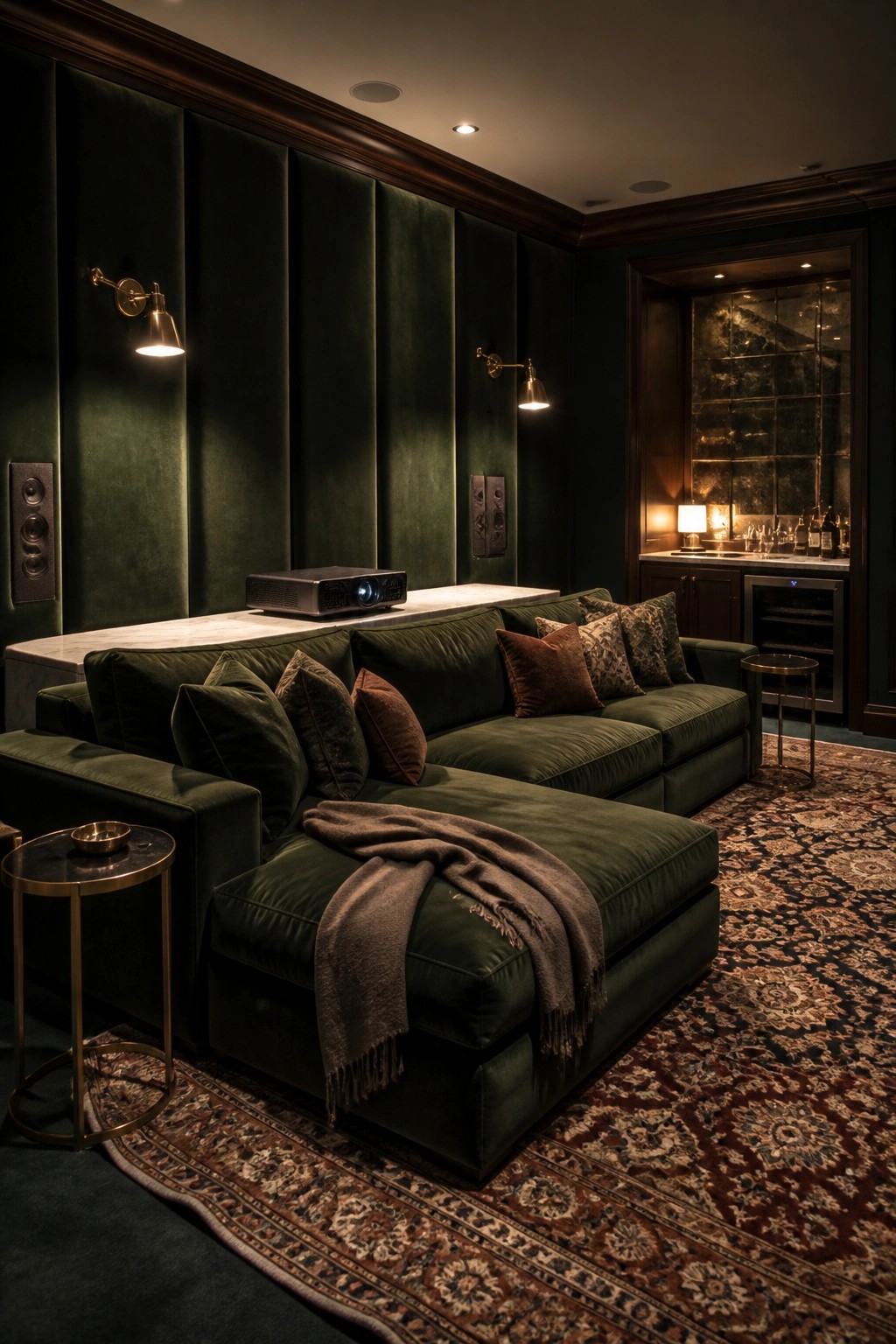
Acoustic panels do more than control sound when they cover an entire wall. The fabric adds texture and a finished look that feels intentional, especially in a room built mainly for watching movies.
This works best in smaller dedicated spaces where you want the walls to stay simple and quiet. It suits setups with a projector and built in seating, and it gives you a way to bring in color without adding more furniture or art.
Vertical Wood Slats On Theater Walls
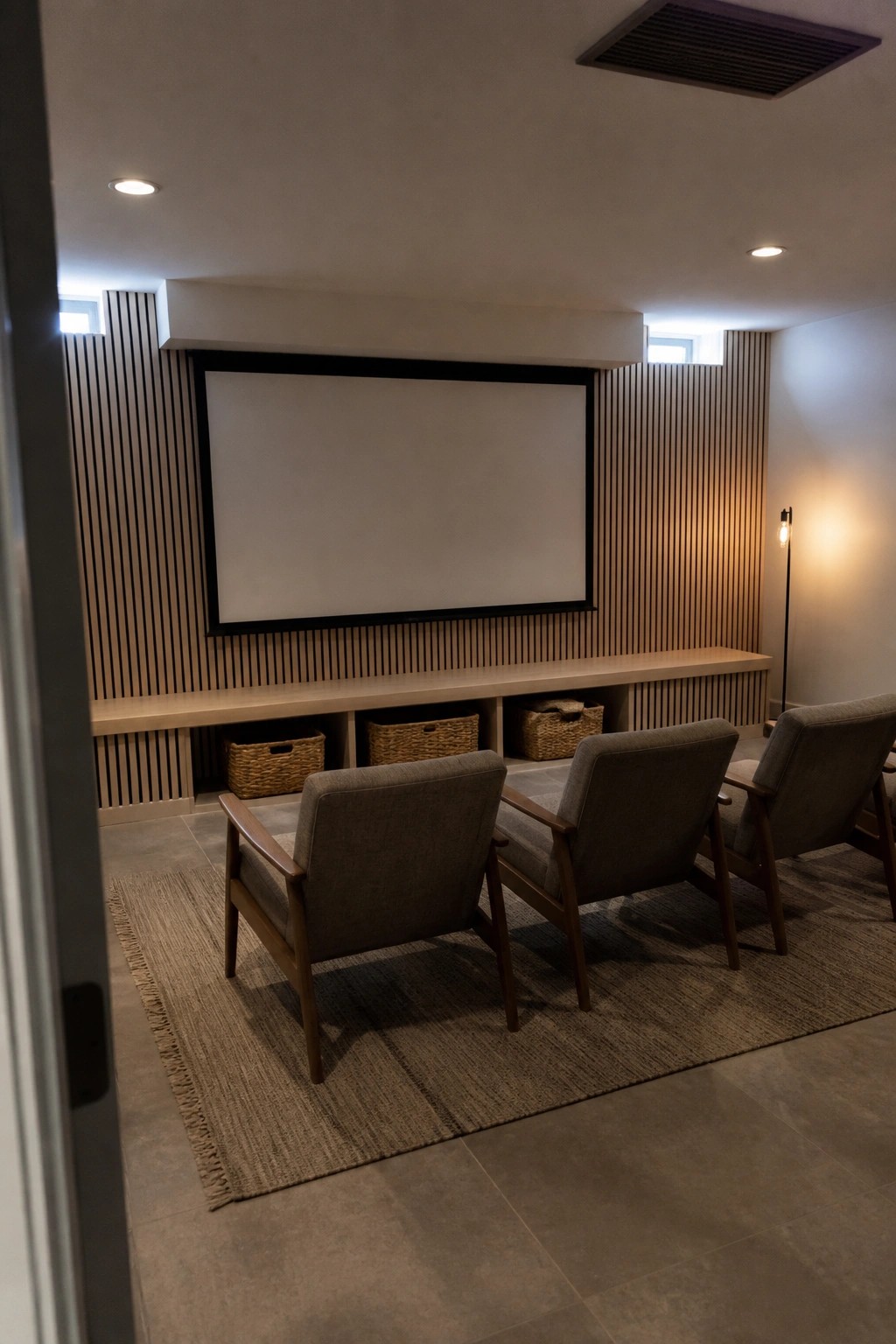
Vertical wood slats give a home theater a simple way to handle sound without covering the walls in fabric or foam. They break up reflections while adding texture that feels warmer than a flat painted surface. The look stays clean even when the screen is off.
This approach works best in rooms where you already plan to build in seating or storage along the back wall. The slats can run floor to ceiling or stop at a ledge, which helps hide baskets or equipment. They suit basements and bonus rooms that need both sound control and a finished look.
Acoustic Panels Behind The TV

Many living rooms benefit from adding fabric panels right behind the television. The material softens sound reflections and creates a quiet spot for watching without needing a full dedicated theater setup.
This idea fits best in rooms that already have built-in shelving on either side. Keep the panels in a solid color so the TV stays the main focal point while the texture adds interest without clutter.
Acoustic Panels As A Feature Wall
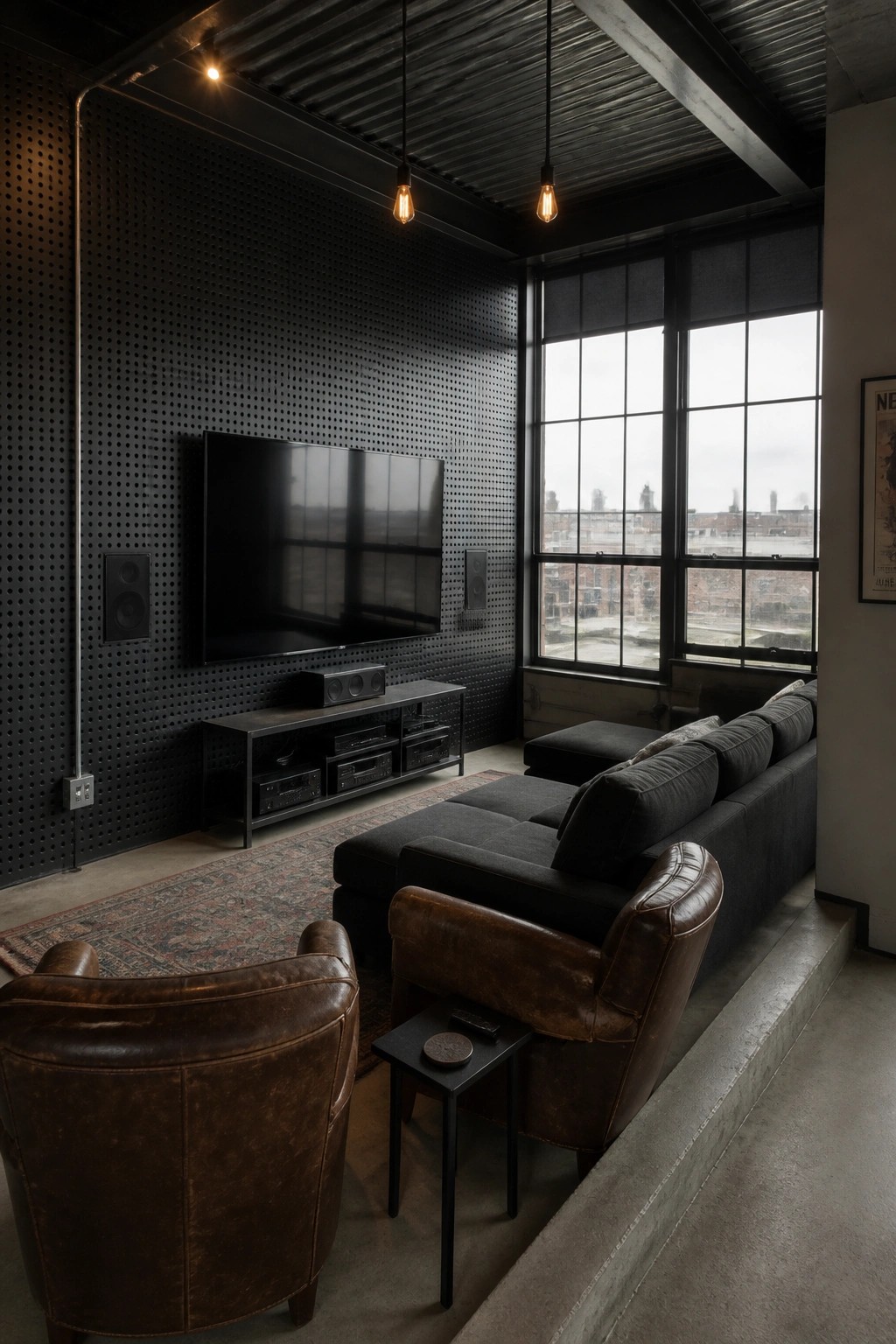
Many people like covering the main wall in a home theater with black perforated panels. It handles sound reflection without needing extra treatments, and the texture keeps the space from feeling flat or echoey.
This works best in rooms with high ceilings or industrial details. Mount the TV and speakers directly on the panels, then keep the rest of the furniture dark and simple so the wall does the main job.
Fabric Panels For Sloped Walls In Small Theaters
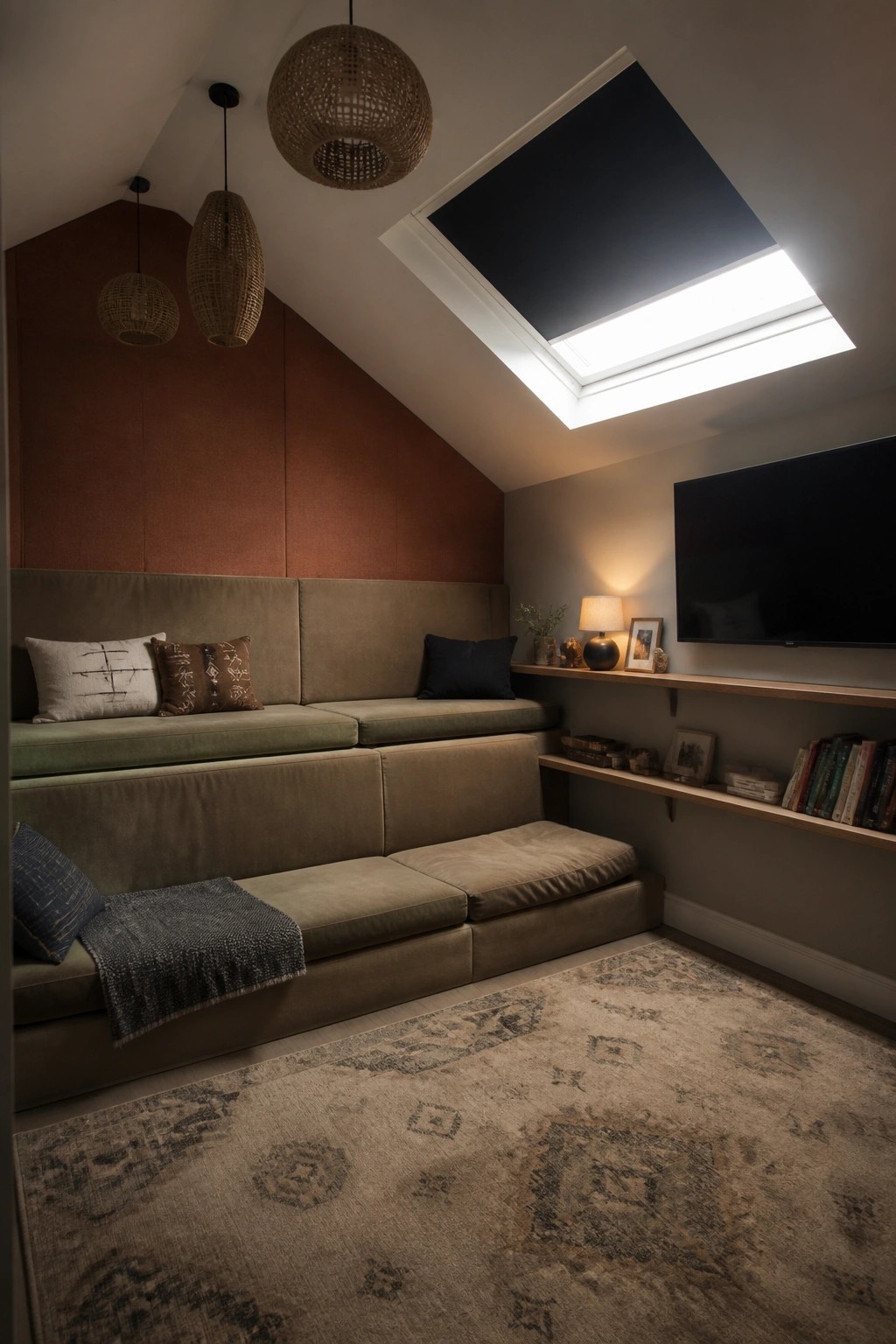
Many home theaters get tucked into attic spaces or rooms with angled ceilings. Covering those sloped surfaces with fabric panels cuts down on echo while giving the room a softer, warmer feel that makes long movie nights more comfortable.
This works best in compact setups where you already have built-in seating along the walls. Keep the fabric tone close to the upholstery so everything blends without extra trim or molding. It also leaves room for a simple TV mount and a few floating shelves instead of heavy cabinetry.
Vertical Wood Slats For Sound Control
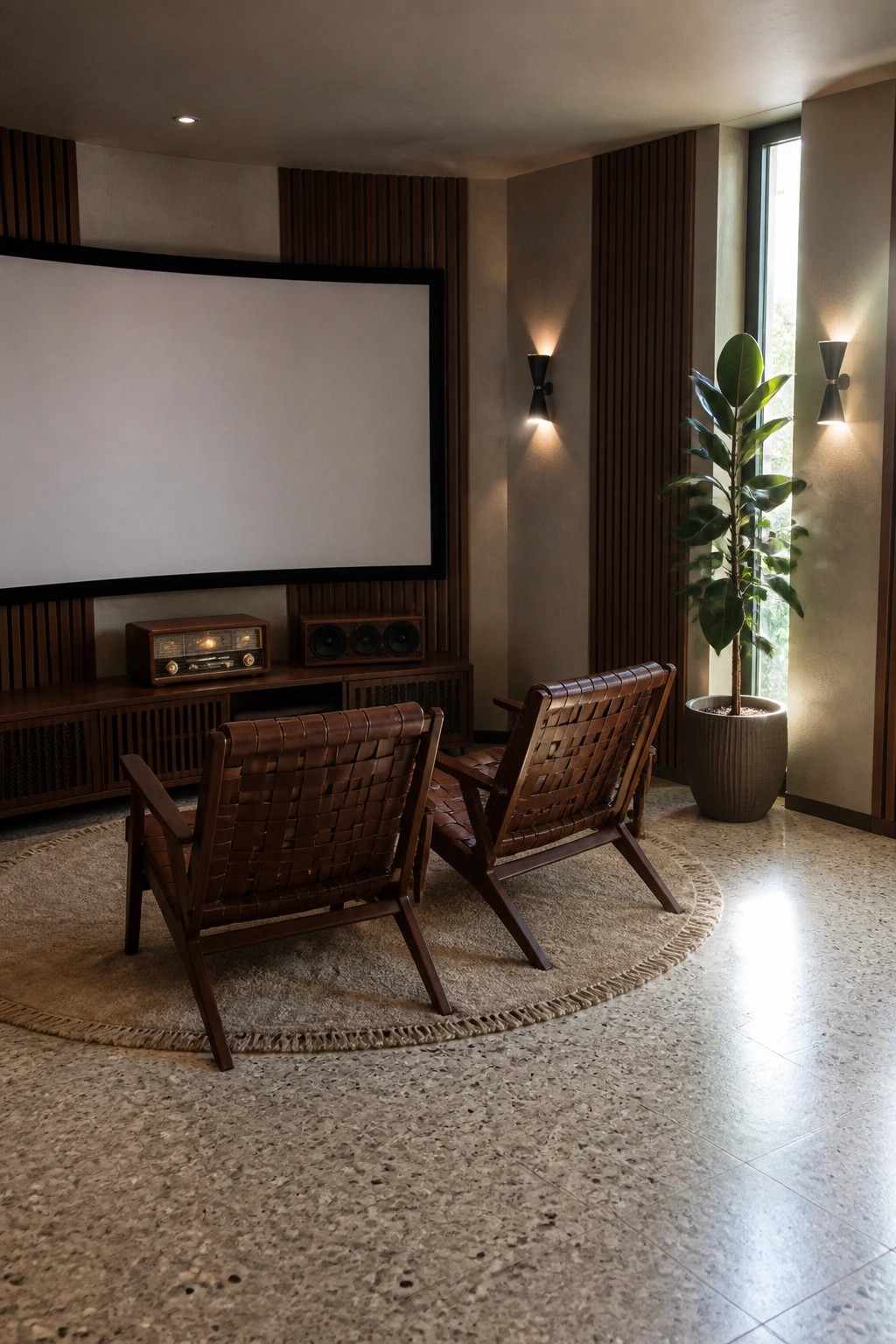
Vertical wood slats give a home theater a simple way to handle sound without turning the walls into plain fabric panels. They break up flat surfaces and help reduce echoes while keeping the room feeling warm and finished.
This approach works well when the screen sits on the main wall and seating faces it directly. Keep the slats in a matching tone with the console and chairs so the whole space stays cohesive rather than busy.
Acoustic Wall Panels Around The Television

Acoustic wall panels work well when placed directly behind the screen because they give the whole setup a finished look without extra trim or molding. The padded texture also helps cut down on echo, which matters more than most people expect in a smaller media room.
This approach suits homes where the television stays on one main wall and you want to avoid a cluttered feel. Keep the panel color close to the surrounding walls so the screen stays the center of attention.
Illuminated Acoustic Panels For Theater Rooms
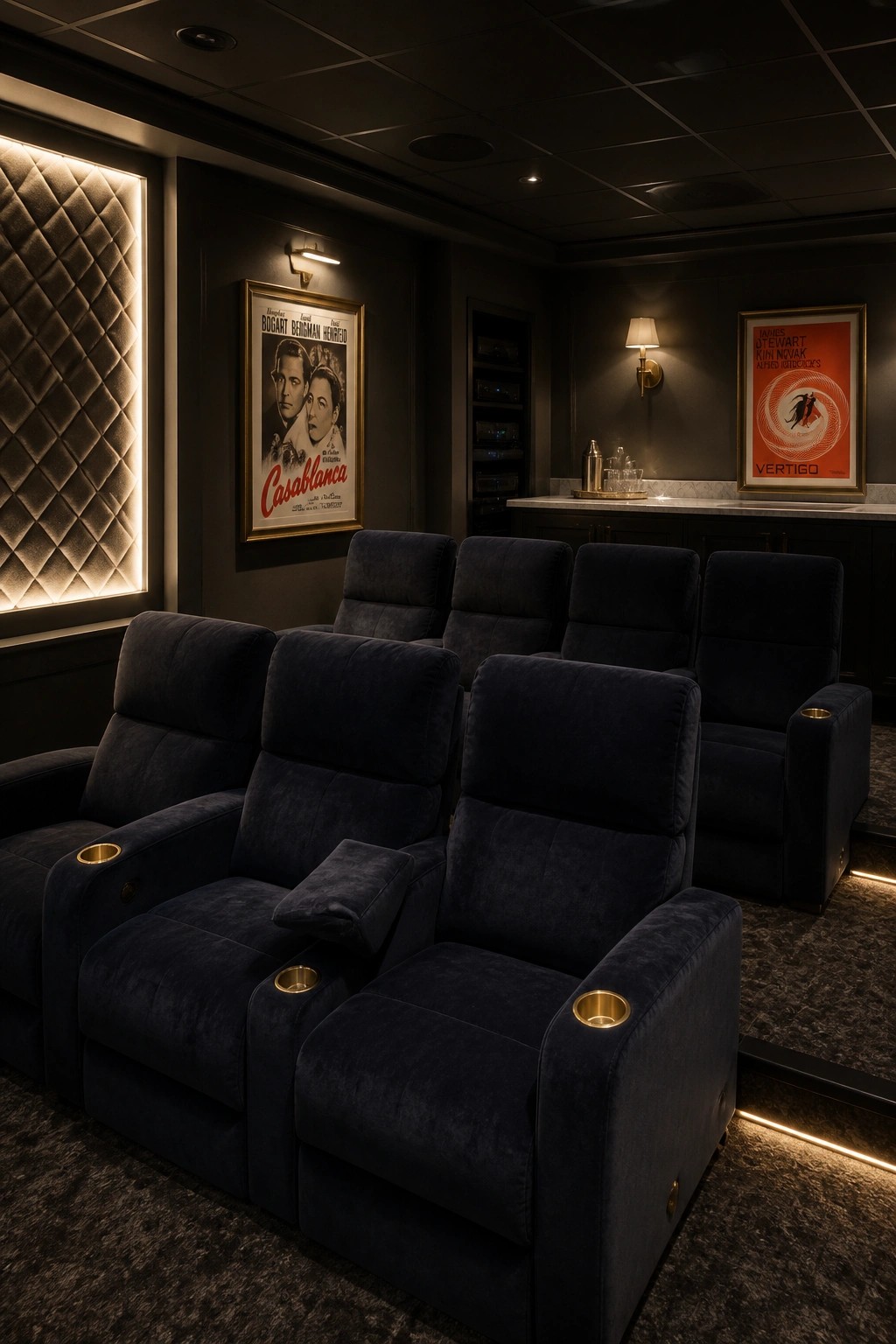
One idea that works well here is mounting acoustic panels with lighting tucked behind them. The light softens the look of the panel and gives the room a gentle glow without adding more fixtures that could reflect on the screen.
This setup works best in rooms where you already plan to keep the walls fairly dark. Make sure the fabric lets the light through evenly and leave a small gap behind the panel so the bulbs stay cool and the diffusion stays smooth.
Wood To Frame The Screen Wall
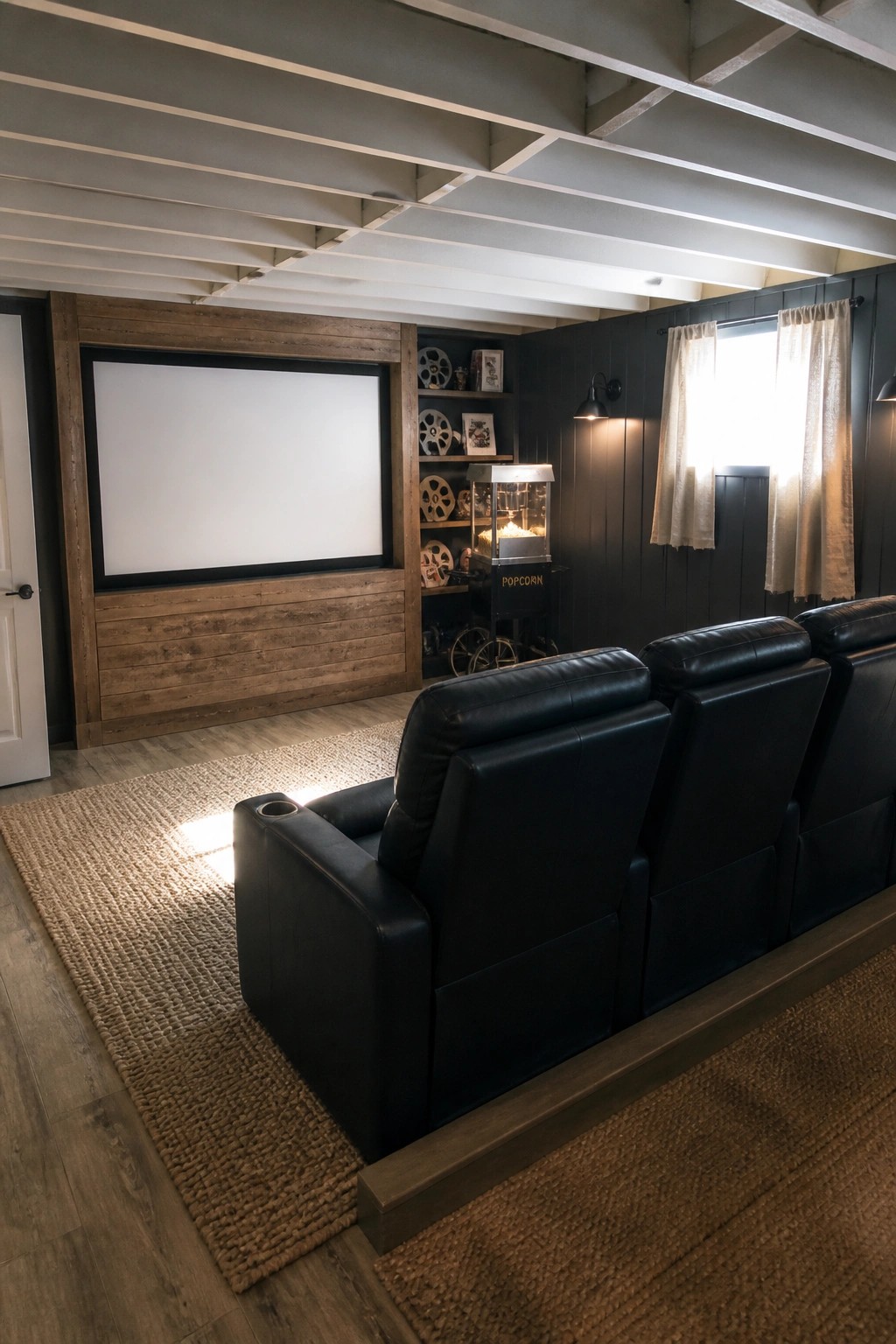
Many home theater rooms end up with a big blank wall that feels unfinished once the screen goes up. Adding wood paneling around the edges gives the screen a built-in look and helps the whole space feel more like a real room instead of just a media setup.
This approach works especially well in basements or converted bonus rooms where you want some warmth without losing the dark, focused atmosphere. Keep the wood tone simple and let the paneling stop at the screen border so the projector image stays clean.
Low Seating Leaves Walls Clear For Acoustic Panels

Many home theater rooms end up with big chairs or sofas that take up floor space and block the walls. Using low cushions on tatami instead keeps everything simple and open. The walls stay mostly clear, which makes it much easier to install acoustic panels without fighting around furniture.
This layout works best in smaller rooms or homes that already lean toward a calm, minimalist feel. You still get a comfortable spot for watching, and the panels can cover more surface area so the sound stays clean and controlled.
Geometric Acoustic Panels On The Feature Wall

Many home theaters end up with flat walls that do little for sound. Geometric acoustic panels fix that by adding texture and shape while cutting down on echoes at the same time. The raised pattern draws the eye to the screen area without needing extra decor.
This approach works well in smaller or medium rooms where you want the wall to do most of the work. Stick to a dark color on the panels and keep the rest of the space simple so the texture stays the main focus rather than competing with other elements.
Vertical Acoustic Panels For Home Theaters

Vertical wood panels give a home theater both sound control and a simple finished look. They break up the wall without adding clutter, and they work especially well when the room already has dark tones and leather seating.
This works best in rooms where you want to hide equipment behind a console while keeping the focus on the screen. Keep the panels narrow and evenly spaced so the sound stays balanced and the wall does not feel too busy.
Striped Panels Behind The Tv
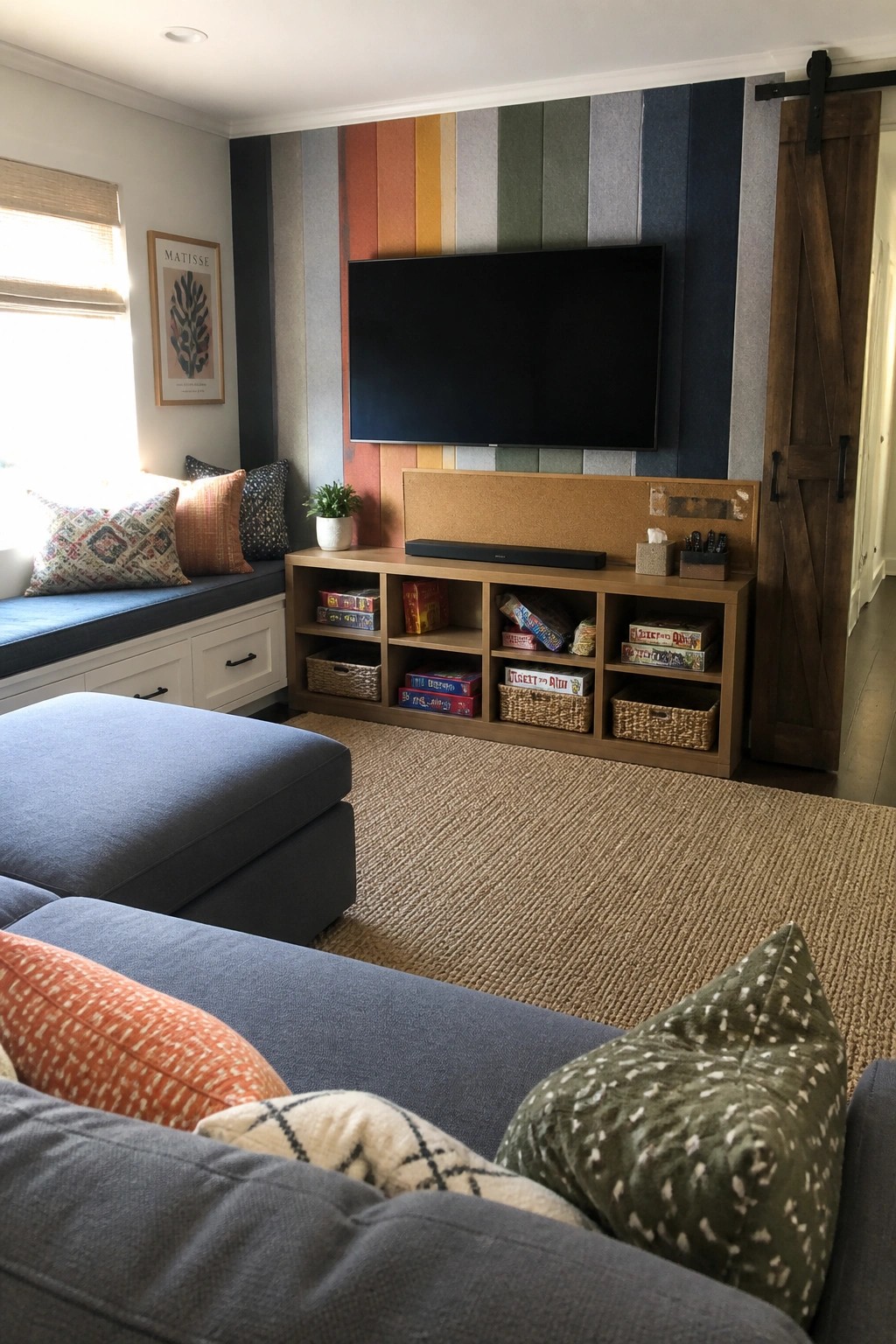
A striped wall treatment works well behind a television because it adds color and breaks up a big blank surface. The vertical lines also help reduce sound reflection in a room that gets used for movies and games.
This idea suits family rooms that need to stay practical while still feeling put together. Stick with a mix of soft and brighter tones so the stripes stay interesting without taking over the rest of the space.
Acoustic Panels on the Viewing Wall

Vertical acoustic panels on the wall behind the screen help control sound reflections in a home theater. They keep audio clear even in a long narrow room while giving the space a finished look that blends with the seating.
This approach works well in smaller dedicated theaters where you need to manage echo without adding bulk. Dark panels like these pair easily with deep blue seating and keep the focus on the screen rather than competing with it.
Wood Slat Panels For Theater Acoustics
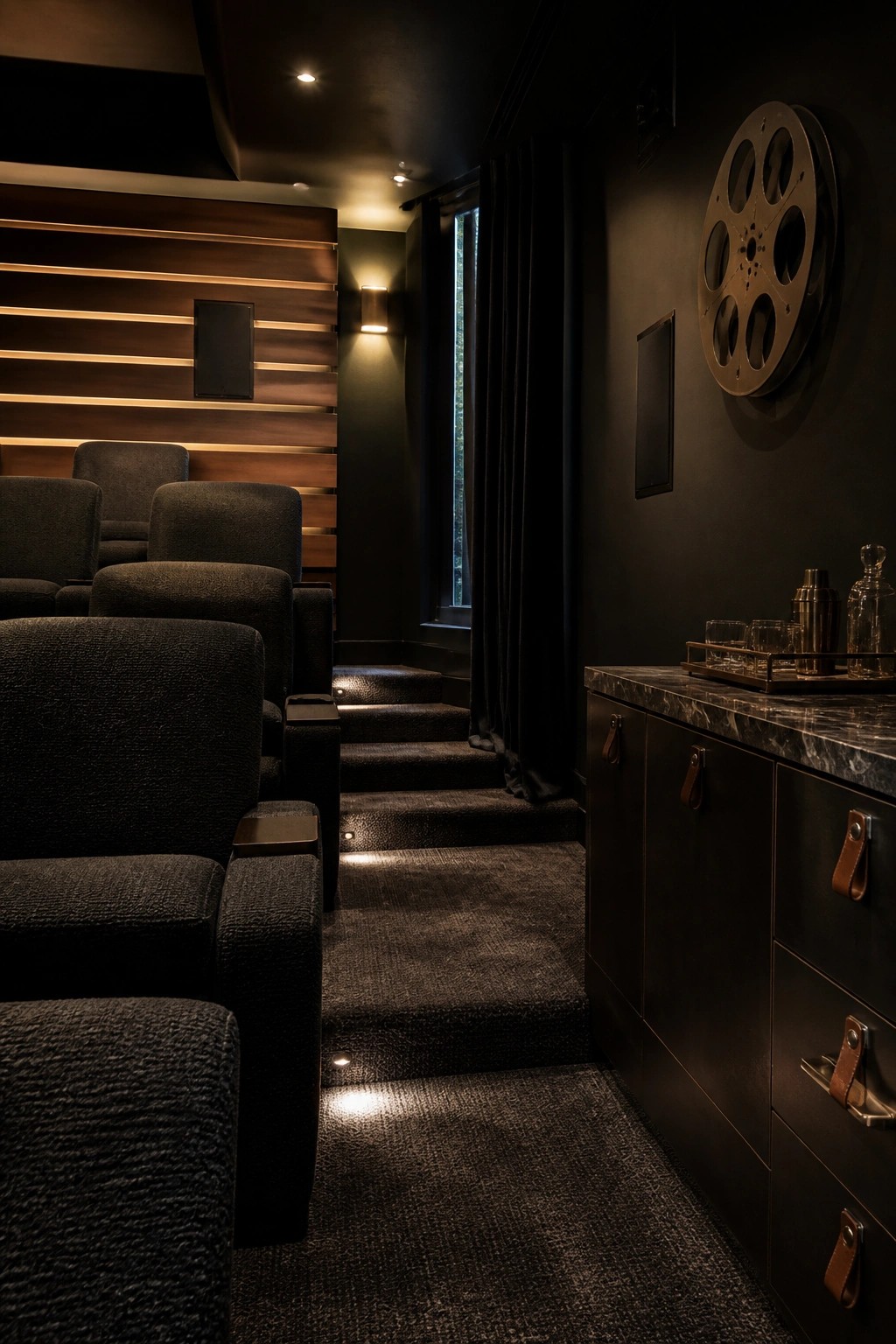
Horizontal wood slat panels work well on the main wall in a home theater because they absorb sound while adding texture without making the room feel busy. The narrow gaps and solid sections help reduce echo, which matters more than most people expect when the space is small and enclosed.
This idea suits rooms that stay dark most of the time and already have dark seating and carpet. Keep the rest of the walls simple so the slats stay the focus, and add small recessed lights along the base to keep the floor path visible without extra fixtures.
Acoustic Panels As A Feature Wall

Many home theaters use acoustic panels on one main wall to handle sound while adding some texture. The vertical lines break up the flat surface and keep the room from feeling like a plain box.
This approach works well in narrower rooms where you want the panels to serve as both sound control and a simple background. Keep the rest of the space light with basic seating and minimal furniture so the panels stay the focus without overwhelming the layout.
Wood Wall Panels For Acoustic Control
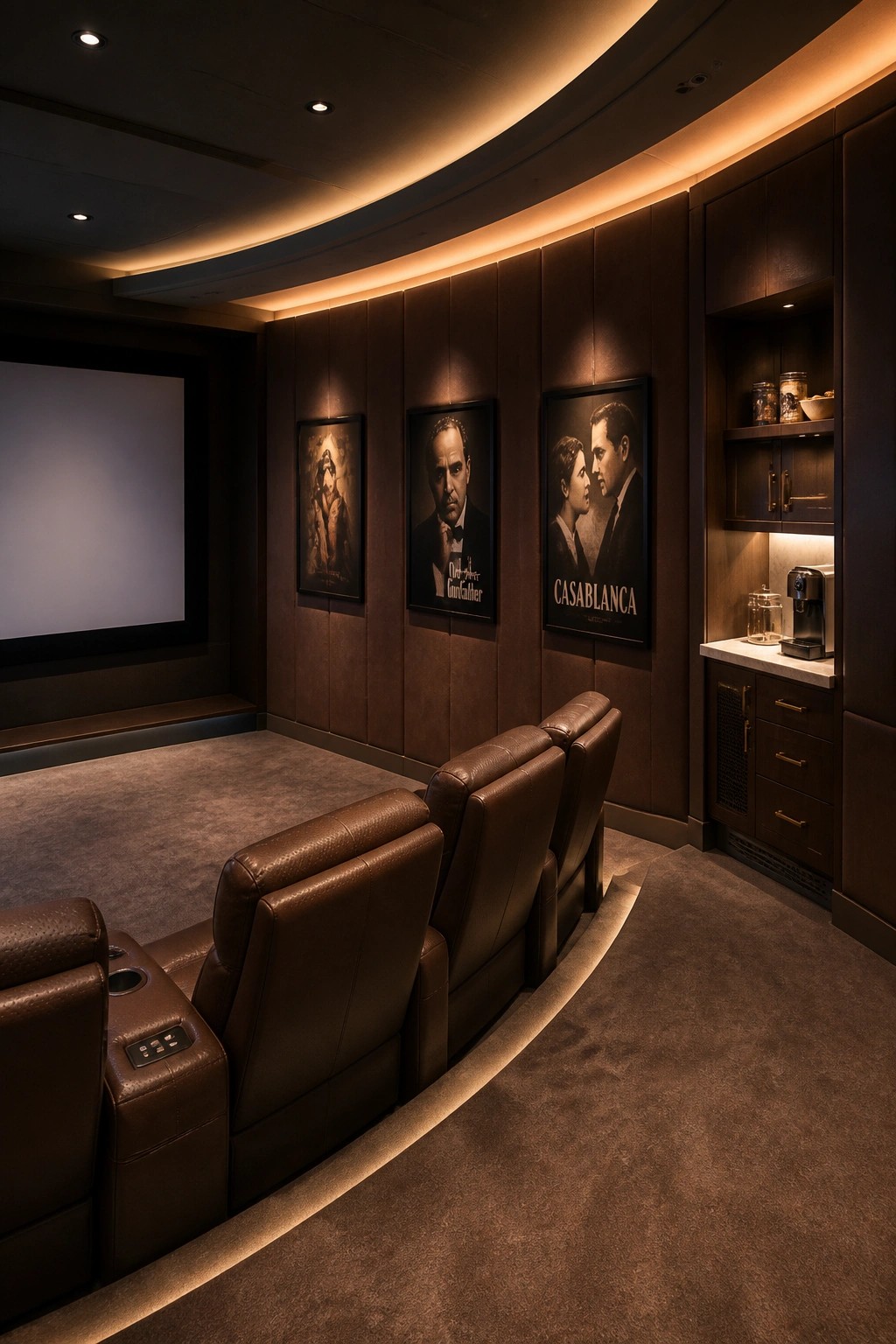
Wood wall panels give a home theater room a solid base for sound control without making the space feel cold or technical. The vertical grain adds warmth and helps break up sound reflections, which keeps dialogue clear and music balanced during movie nights. Many people like how the material lets them hang framed posters directly on the surface without extra mounting hardware.
This choice works best in rooms that already have a traditional or classic lean, since the wood pairs easily with leather seating and built-in cabinetry. Keep the panel depth consistent around the room so the acoustics stay even, and avoid glossy finishes that can create unwanted glare on the screen.
Frequently Asked Questions
Q: Where should the panels go if I want clearer dialogue in my movies?
A: Place the first ones on the wall right behind the screen. Add more at ear level on the side walls to catch reflections. This setup keeps voices sharp without extra gear.
Q: Can I cover just part of the walls or does it have to be full coverage?
A: Start with two or three panels on the main reflection spots. You will hear the difference right away in how tight the sound feels. Add more later if the room still echoes during loud scenes.
Q: What if my windows break up the wall space I planned to use?
A: Hang the panels around the windows instead of trying to cover them. Heavy curtains on the glass help fill the gaps. The sound stays balanced as long as you hit the main bounce points.
