

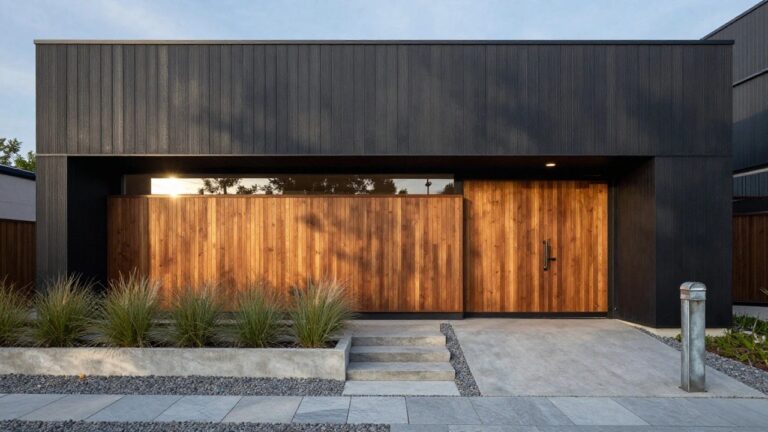
When you drive by a house, that front facade grabs your attention right away and says more about the place than anything else. I’ve noticed over the years that bold modern ones work best when they mix strong materials like concrete and glass with simple rooflines that don’t fight the street view. They stand out without trying too hard. The entries especially catch my eye, since a well-placed door or window grouping can shift how the whole front reads from flat to dynamic. A few of these facades make me want to sketch out tweaks for my own block, testing how they’d hold up in everyday light and weather.
Charred Wood Siding with Natural Timber Entry
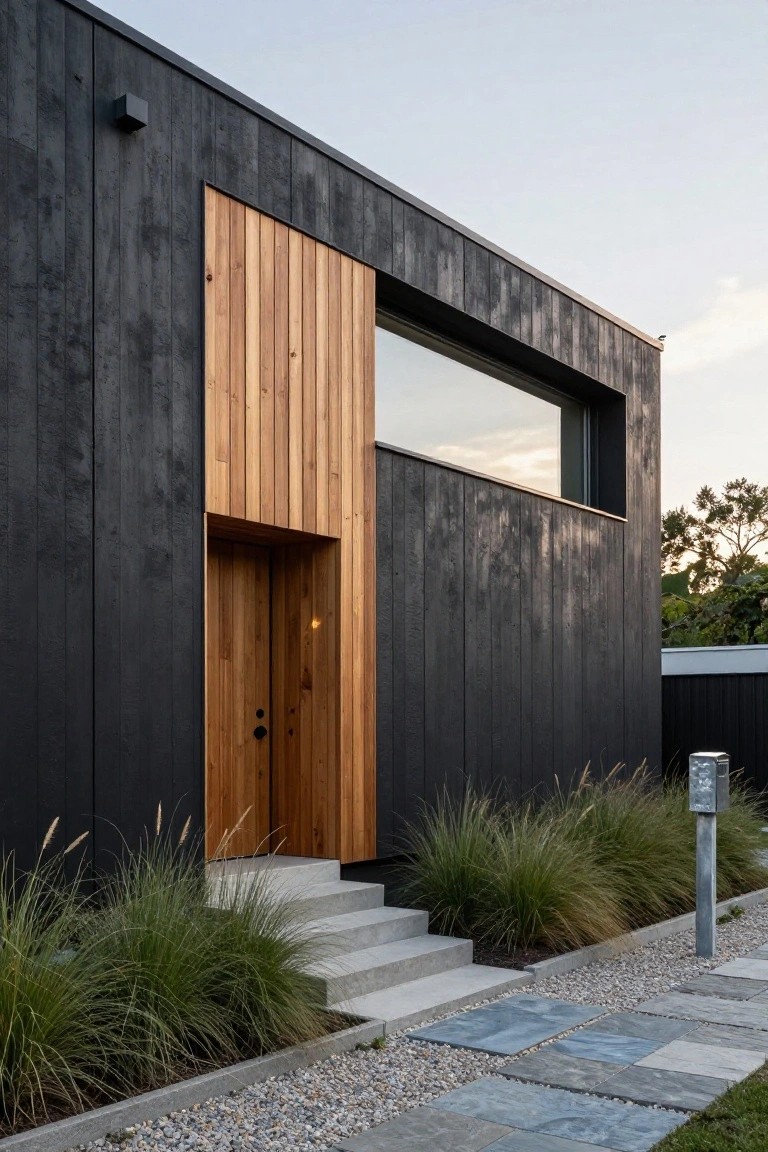
Dark charred wood covers most of this house exterior. It gives a strong, modern feel that’s tough and low-key. Then the entry switches to natural timber for the door and a tall panel beside it. That simple contrast pulls your eye right to the front door. Makes the whole facade less boxy.
This works well on flat, simple house shapes where you want some warmth up close. Use it for a contemporary home in a wooded spot or open lot. The grasses and plain steps keep things easy. Just plan to reseal the charred siding now and then. It holds up but needs care.
Wood Panel Frames the Front Entry
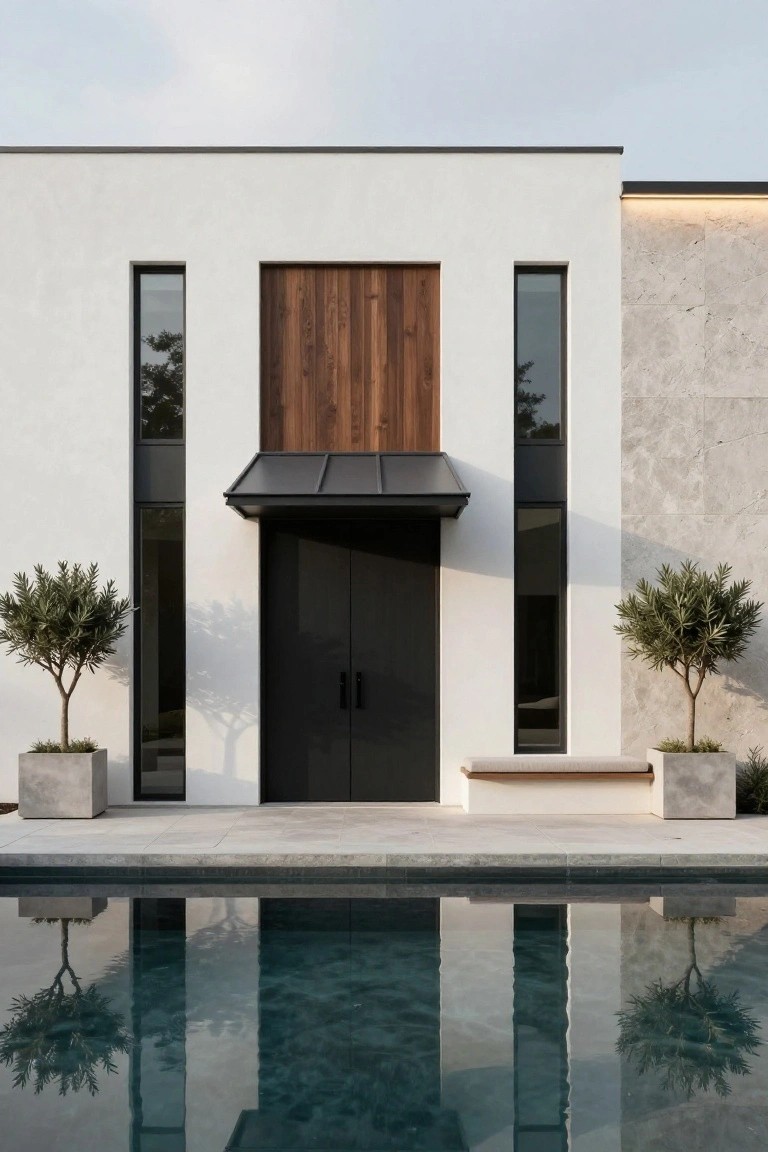
A clean white facade like this gets a lot from that tall wooden panel sitting right above the double doors. It adds a bit of natural warmth to all the stark white and pulls attention exactly where you want it, at the entrance. The black awning overhead keeps things sharp and modern, while the slim windows on the sides stay out of the way.
This setup fits best on flat, simple house fronts where you need one strong focal point. Use it for contemporary homes or updates to plain stucco exteriors. Pick a durable wood like walnut that holds up outside, and keep the scale big enough to read from the street.
Corten Steel Cladding for Modern Homes
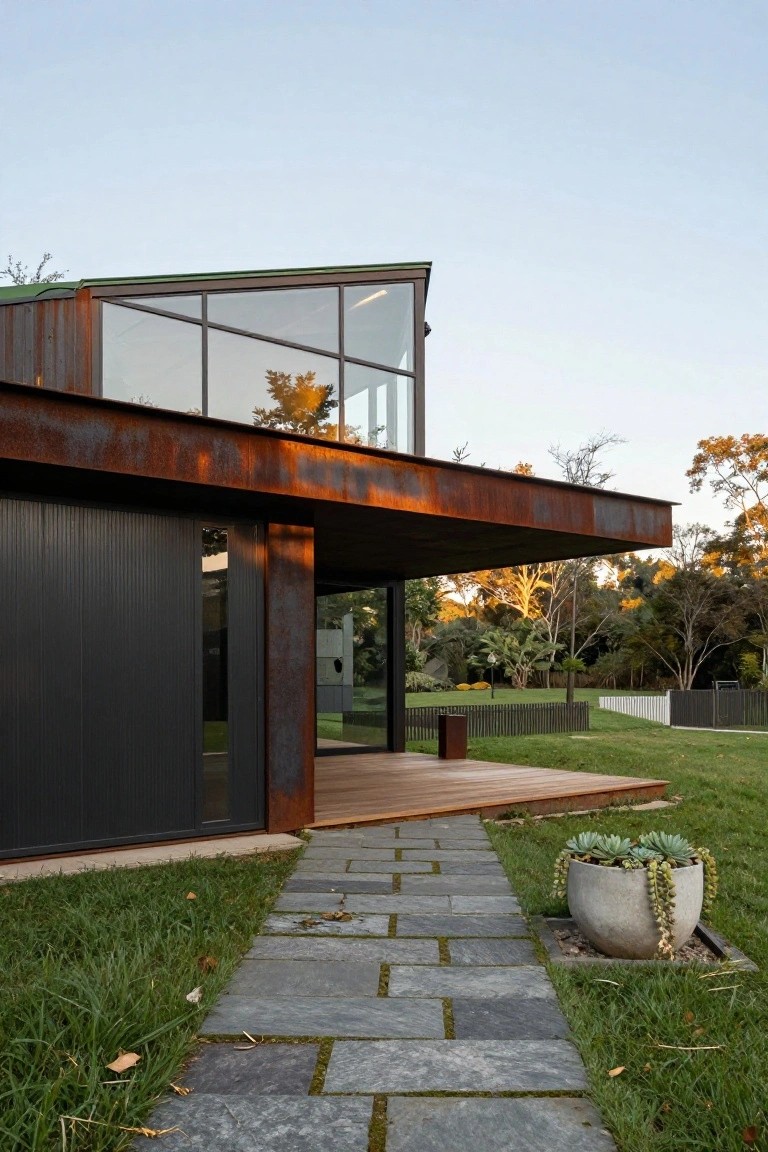
Corten steel gives this house a rugged, weathered look that feels right at home in a natural setting. The rusty patina on the walls catches the light just right, especially with those big glass panels letting views inside and out. It adds real character without trying too hard.
You can use corten steel on side walls or accents where it won’t overwhelm the whole facade. It suits homes on larger lots with trees or fields nearby, since the color ties in over time. Just make sure it’s sealed at first to control the rust, and it holds up well in most weather.
Black Facade with Vertical Wood Slats
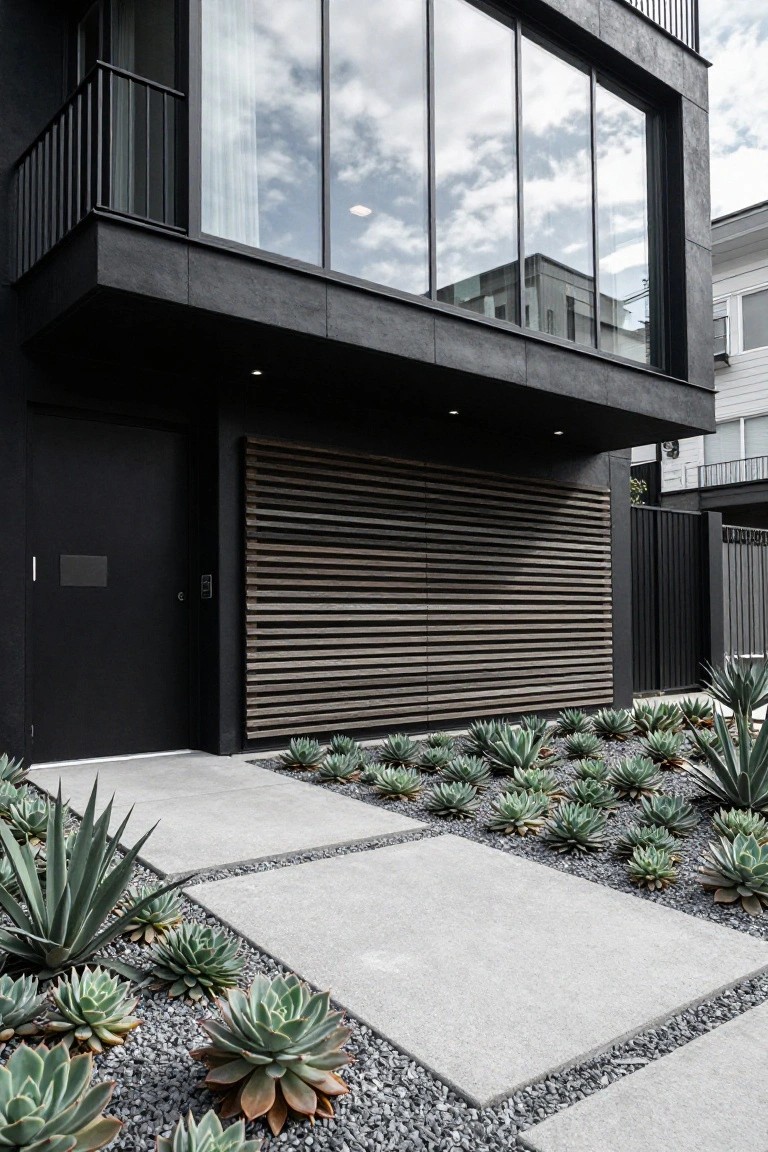
This house pulls off a strong modern look with its all-black exterior. The matte black walls and door set a bold tone right away. Then vertical wood slats on the garage side add just enough texture without softening things too much. It keeps the facade clean and private while hinting at warmth inside.
You can try this on a new build or a dark-painted update to an older home. It works best in sunny spots where the black absorbs heat but the slats let light filter through. Pair it with simple gravel and tough plants like agaves along the path. Just make sure the wood is treated for weather so it doesn’t fade fast.
Wood Accents on a Clean White Facade
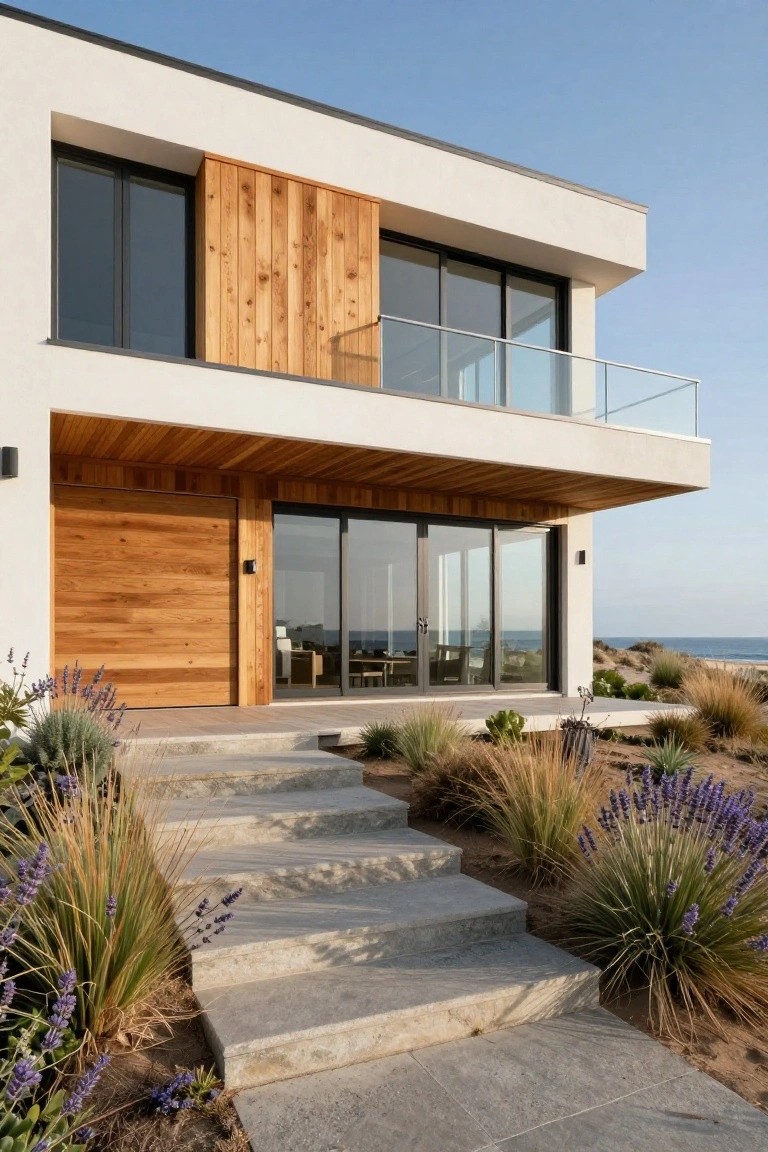
White walls give a modern house that sharp, crisp look. But adding wood cladding, like the vertical cedar panels here on the garage and balcony, brings in some real warmth. It cuts the plainness without overwhelming things. You get contrast that makes the place feel alive, especially with big glass doors pulling in the view.
This setup works great on beach houses or anywhere sunny. Stick the wood where it counts, like around entries or upper levels, and keep the white dominant. Pair it with simple steps and low plants at the base. Skip busy patterns. It keeps upkeep easy and holds up to salt air if you seal the wood right.
Wooden Entry Canopy Adds Bold Appeal
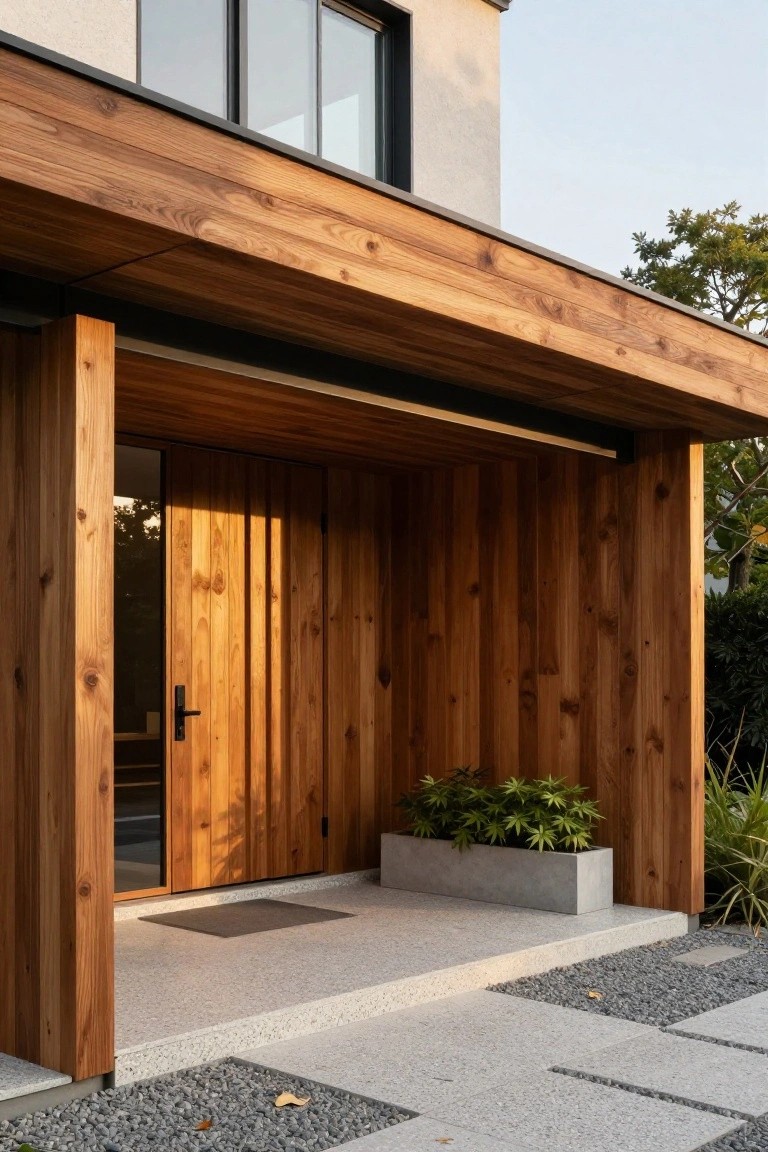
A simple wooden overhang wraps this modern house entry, using vertical timber planks and beams to pull you right in. The rich wood tone contrasts nicely with the crisp white stucco and black-framed glass nearby. It turns a basic front door into something that feels solid and thoughtful, especially with that single potted plant tucked beside it.
This setup works best on homes with flat or low roofs, where you want to soften sleek lines without going overboard. Go for durable cedar or ipe on the canopy and door, and keep the path clean with gravel or concrete. Suits suburban lots… just seal the wood well to handle rain.
Recommended Products

Waterproof Interior & Exterior Wall Panels: Upgrade any space with 100% waterproof WPC slat wall panels designed for both indoor and outdoor use. Ideal for exterior wall panels, facade cladding, accent walls, and commercial applications.

REAL 3D Brick Stone Look - Made of high-quality EPS material, this wall panel provides a REALISTIC FEEL at a fraction of the cost. Thanks to it's surface structure, you do not feel the artificial effect of applying Dundee Deco wall tiles. Whether brick, rock, or stone look, the cladding of the wall panels is always elegant and durable.
Dark Stone Entry Tower
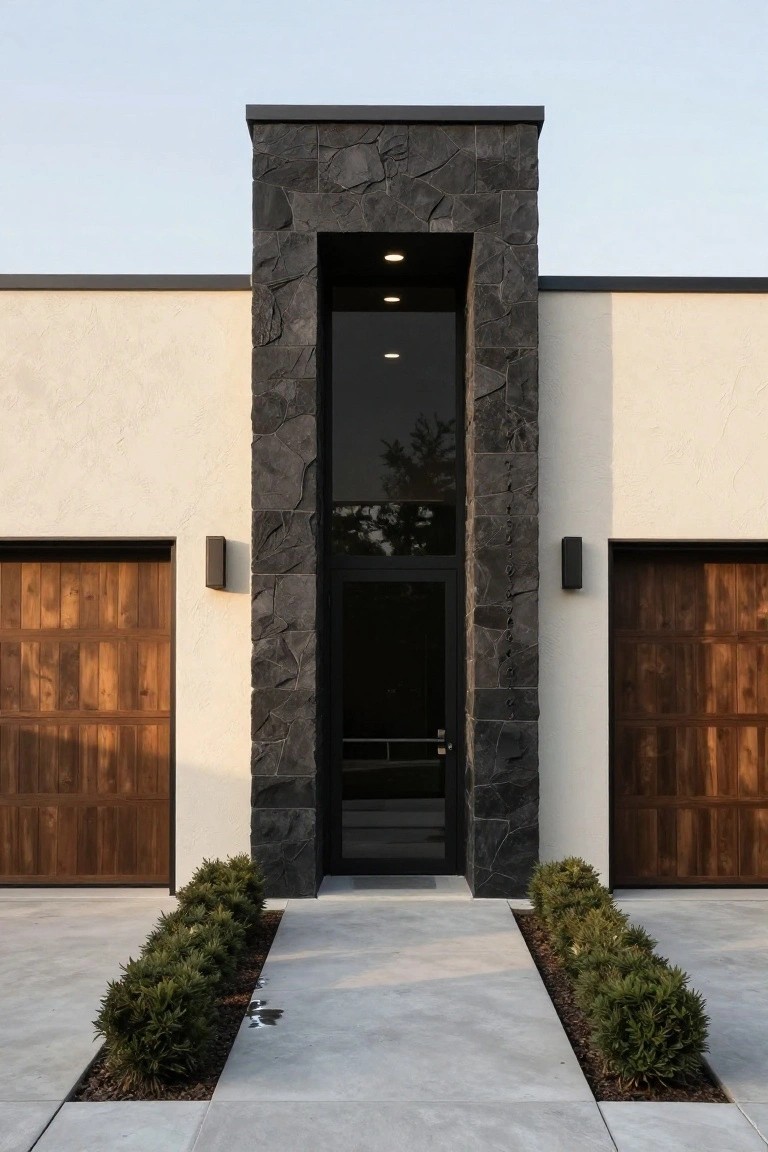
This facade uses a tall black stone tower right in the center to pull everything together. The dark rough stones stand out strong against the light beige walls and warm wood garage doors. It gives the house a modern edge without feeling cold. That vertical line draws your eye up and makes the entry feel important.
You can pull this off on a straightforward rectangular home like this one. Keep the tower narrow and glass-fronted for light inside. It works best where you want curb appeal that lasts. Just make sure the stone scale matches your house height… too small and it gets lost.
Gable Porch Facade in White Siding
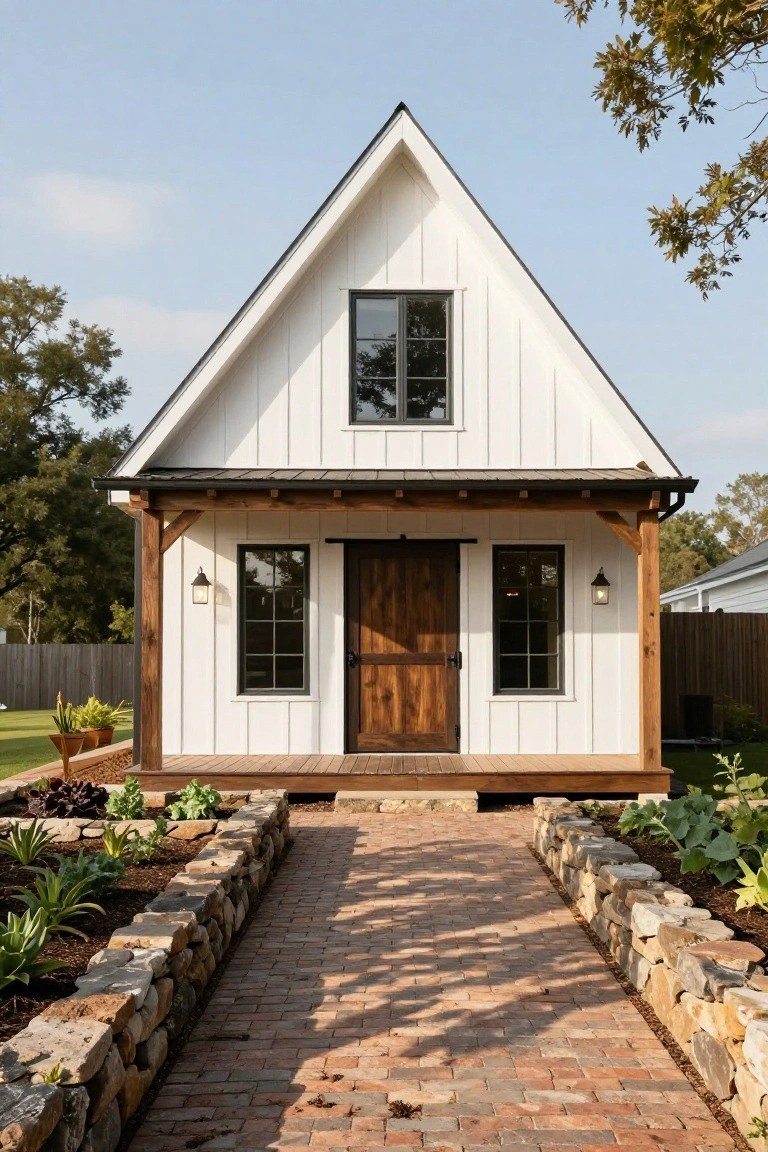
A tall gable roof paired with clean white board-and-batten siding gives this little house a strong, upright presence. Dark metal roofing and black window frames keep the lines sharp and modern. Then the wooden porch wraps around the front, with a big sliding barn door at center. It pulls the eye right to the entry without much fuss.
This setup works well on smaller homes or backyard builds where you want curb appeal without overwhelming the yard. Stick to simple plants along a brick path to let the facade do the talking. Avoid too many colors on the siding. It suits casual neighborhoods, maybe with a modern farmhouse feel.
Minimalist Black and White Facade
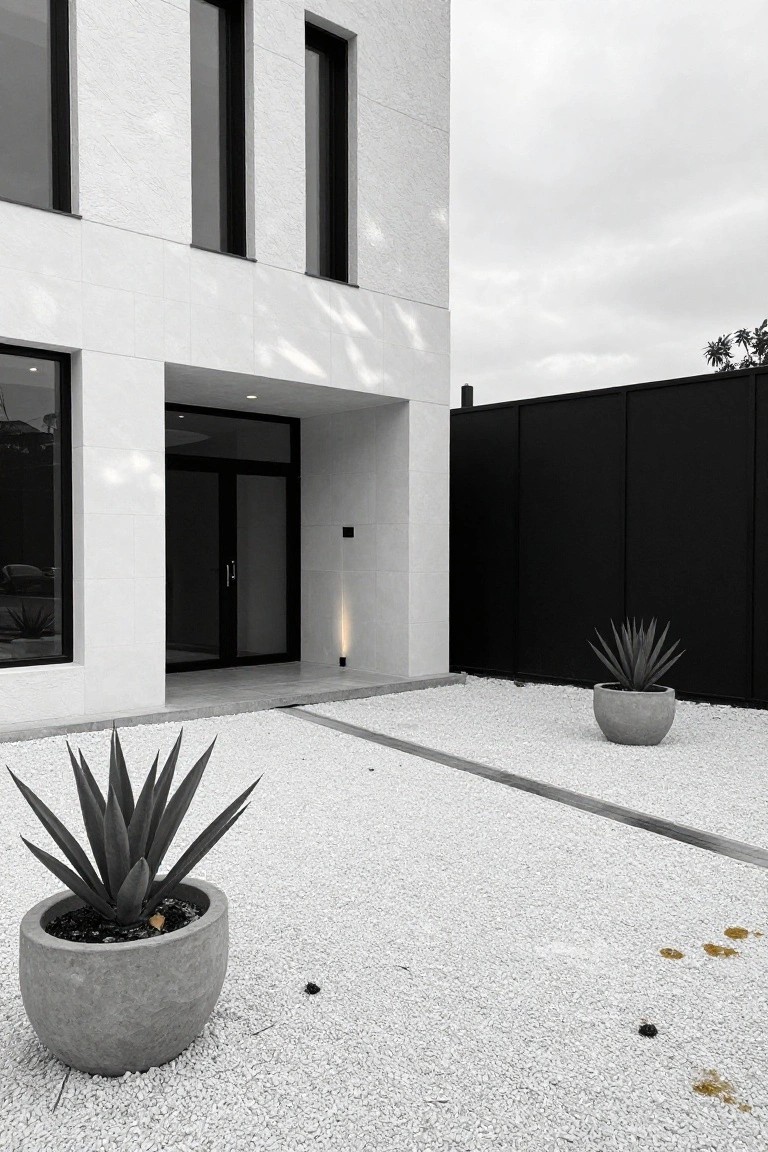
This front pulls off a strict black and white look that feels fresh and strong. White stucco walls cover most of the surface, with black frames around the tall windows and entry doors cutting sharp lines. A simple gravel path leads right up to it, keeping things open and easy.
It works best on boxy modern homes where you want curb appeal without much planting or color. The black fence on one side adds privacy. Just watch the scale. Those big agave pots help break up the white gravel, so don’t skip some kind of plant accent or it might feel too empty.
Dark Wood Siding with Metal Roof
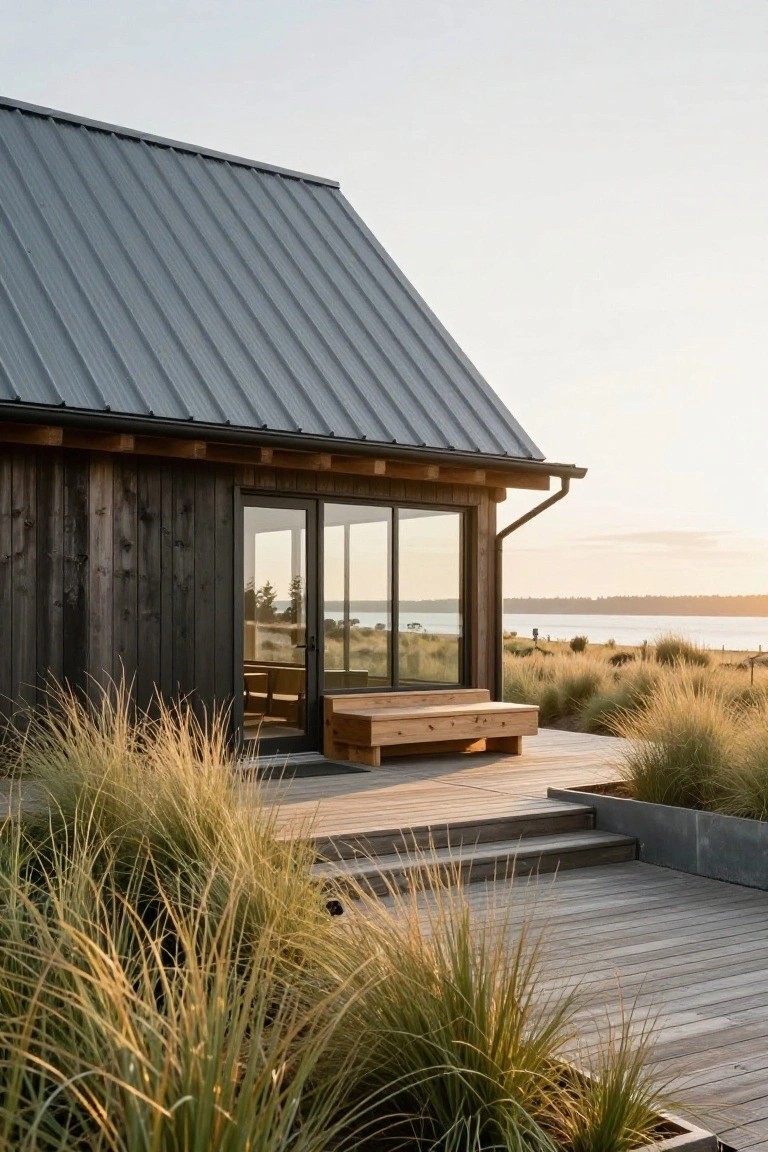
This facade pairs blackened timber walls with a simple standing-seam metal roof. The dark wood feels rugged and ties right into the dunes and grasses nearby. That metal roof keeps things sharp and modern without overpowering the wood’s texture. It’s a look that holds up to wind and salt air.
Put this combo on a cabin or small modern home in a coastal spot or open field. Treat the wood to last, and keep the lines clean. A bench right by the glass doors helps draw folks closer… practical too.
Exposed Concrete Facade with Dark Accents
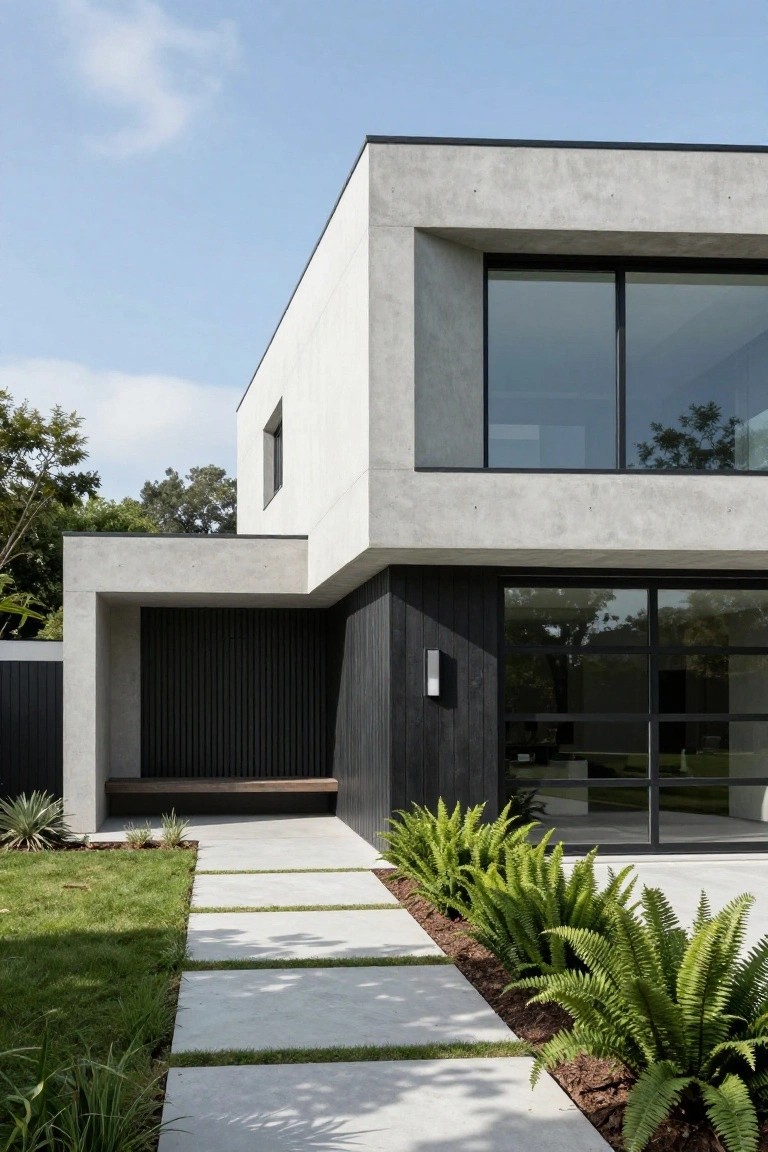
Houses like this one lean on raw concrete for that strong, no-fuss look. The gray walls wrap around the corners and frame big glass windows, making the whole thing feel solid but open. Then the black wood panels kick in at the entry, adding just enough texture to break up the mass.
You can pull this off on a modern build where you want curb appeal without too much upkeep. It suits warmer climates since concrete holds up to sun and rain. Stick to clean lines in the yard, like a simple path and low plants… keeps the focus on the house.
Wood and Brick Facade Contrast
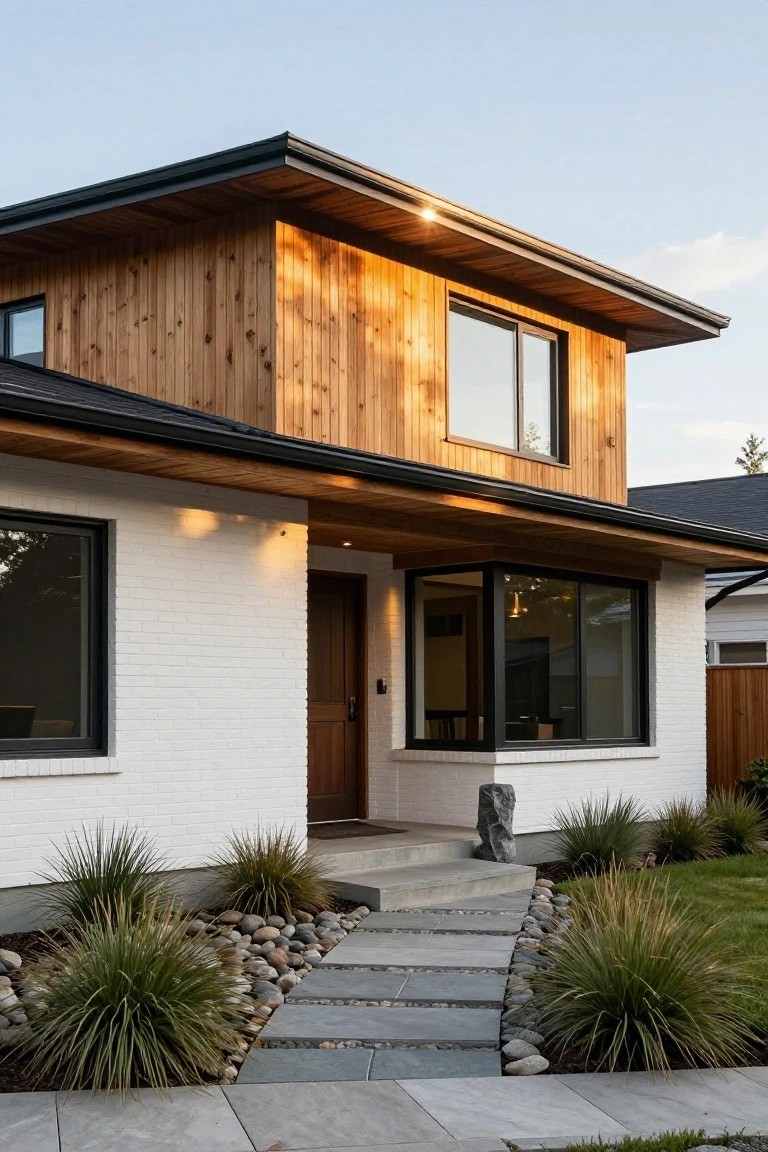
This front uses cedar wood siding up top against a white brick base down low. That mix gives the house a grounded modern look. Warm tones from the wood play off the crisp brick. Black-framed windows keep things sharp without overwhelming the street view.
You can pull this off on ranch-style or two-story homes aiming for midcentury vibes. Seal the wood well to handle weather. Pair it with simple paths like the slate steps here. It suits milder climates best. Skip it if your area gets heavy snow.
Rough Stone Facade Packs a Punch
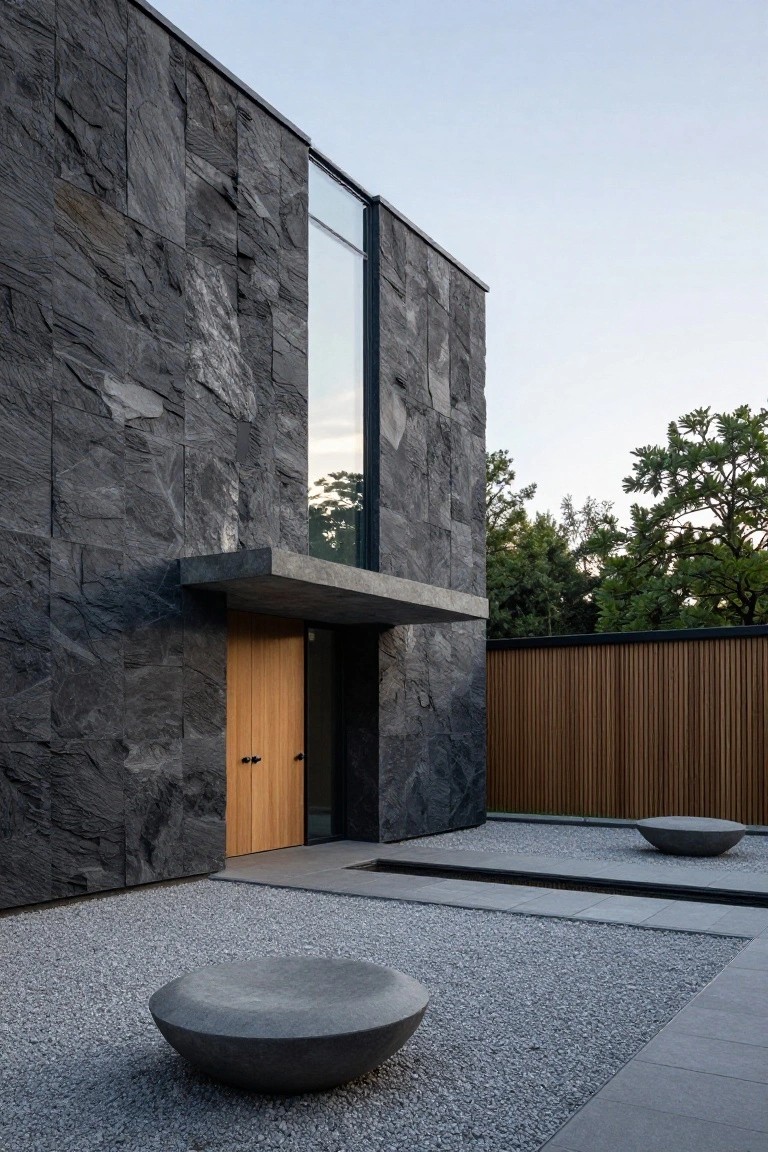
Houses like this one go all in on dark, textured stone for the main walls. It gives off a solid, rugged feel that hits you as soon as you pull up. Here, the rough slabs cover most of the front, with just a wooden door tucked under a plain concrete overhang for entry. A tall glass strip nearby pulls in some light, but the stone stays the star.
This approach works best on modern homes that need to stand out without much fuss. It’s low upkeep and fits wooded spots or urban edges where you want the architecture to lead. Skip busy landscaping. Just gravel and a few boulders up front keep eyes on the walls.
Black Accents Sharpen White Facades
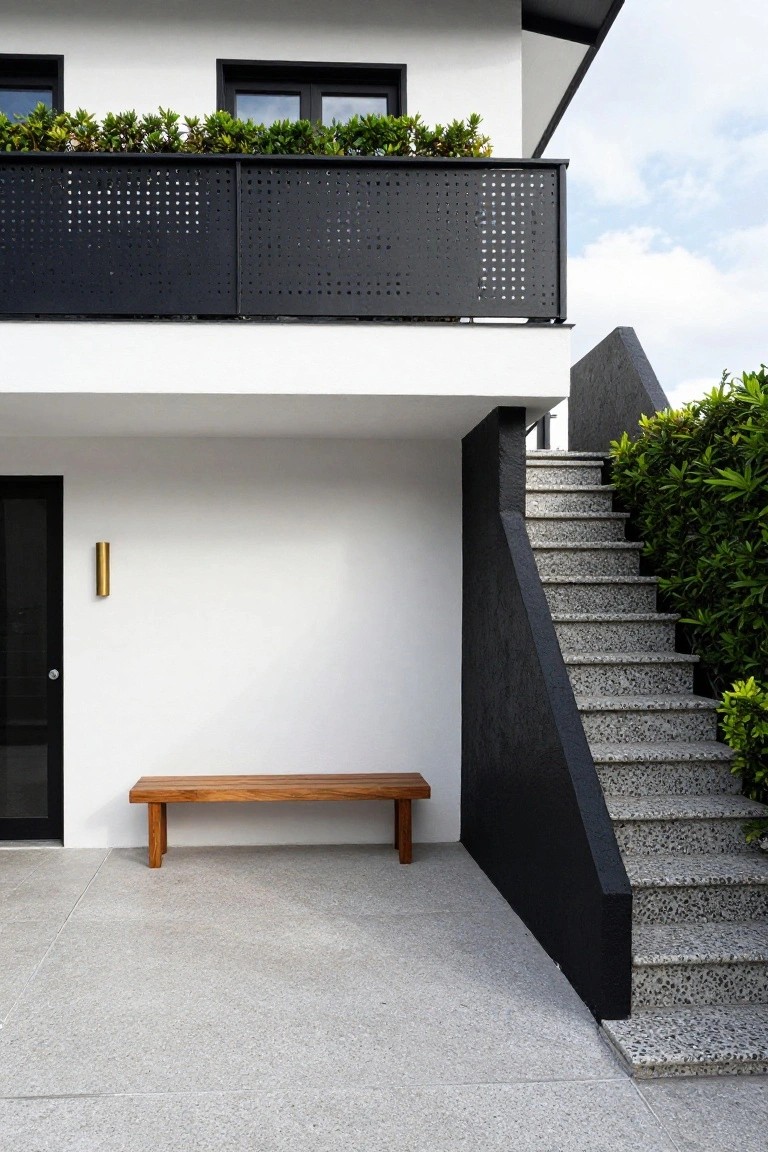
Houses with plain white walls can sometimes feel too plain. But adding bold black details changes that fast. Here the perforated metal balcony railing stands out crisp against the white, giving the whole side a modern edge. That simple wood bench by the door keeps it from going too cold.
This setup suits homes on smaller lots or anywhere you want clean lines with punch. Use matte black on railings, frames, or trim, then echo it in stairs or paths. Stick to one warm wood piece for balance. It pulls together quick if your architecture is straightforward.
Exposed Timber Beams on Dark Siding
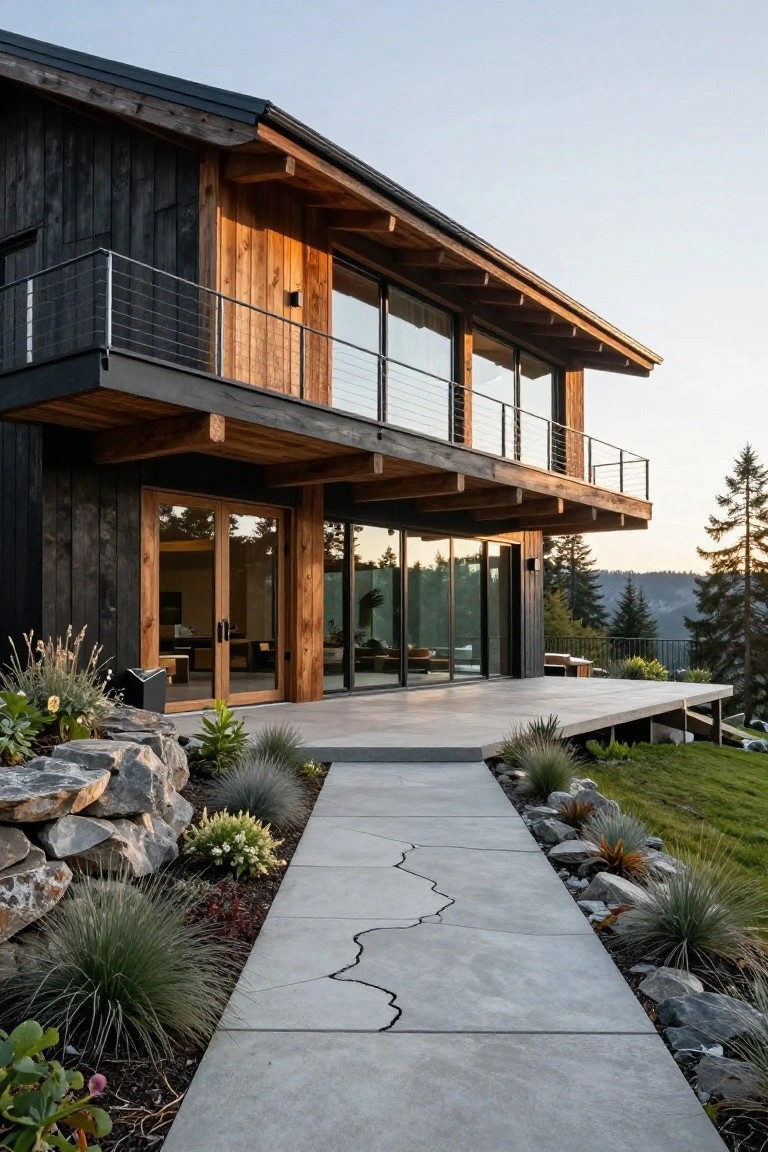
Homes like this one pull off a strong look by setting exposed timber beams against dark siding. The black charred wood keeps things sleek and modern. Those warm wood beams add just enough contrast to make the whole facade pop without overdoing it. It’s a simple way to blend sharp lines with natural feel.
You can try this on sloped lots where the house needs to stand out against trees. It works best for two-story designs with some overhang, like the cantilevered upper level here. Just make sure the beams are substantial enough to balance the dark base, or it might look off.
Breeze Block Screens for Facade Texture
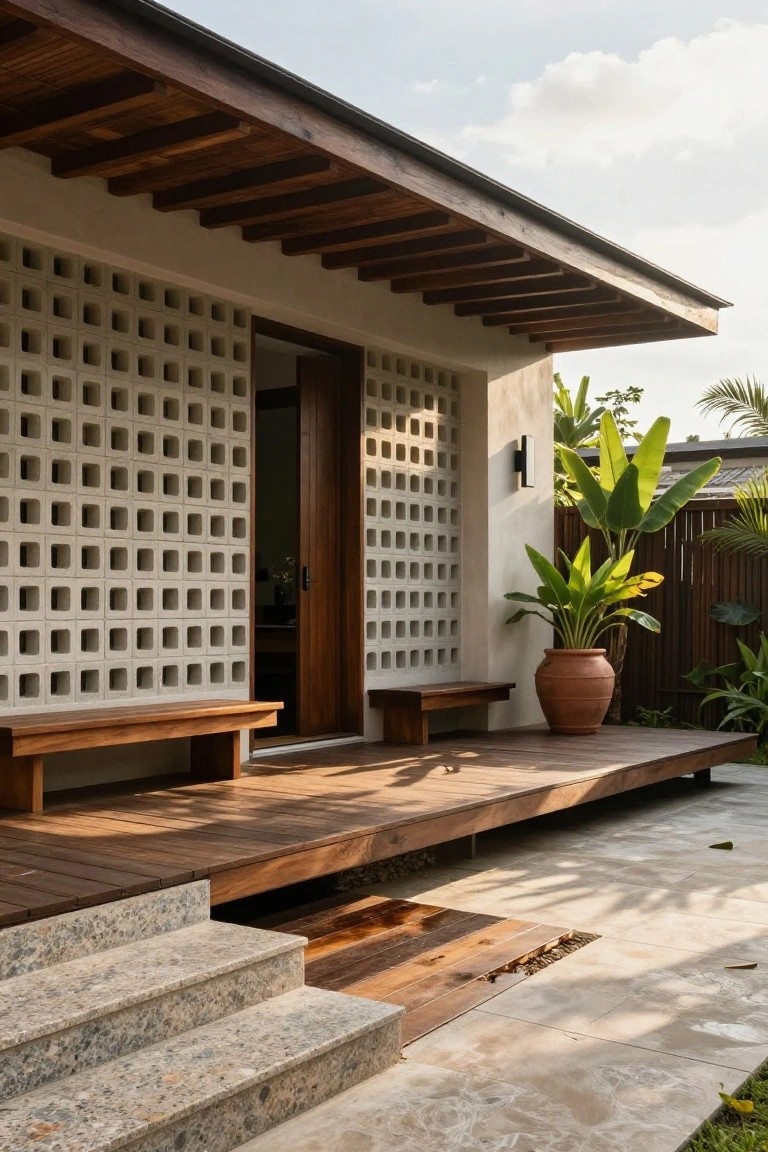
Breeze blocks, those old-school concrete screens with square cutouts, show up here on the side of the entry. They let light filter through while keeping direct views out, which makes the front of the house feel private yet open. Paired with simple wood benches and a plain wooden door, the blocks add real texture without much fuss. It’s a quiet way to give a flat wall some interest.
This works best on homes in warm spots, like tropical or coastal areas, where you want shade and airflow. Use them around doors or windows on a stucco or plaster base. Just keep the blocks light-colored to stay modern, and don’t overdo the pattern, or it can look busy. Good for ranch-style or low-slung houses aiming for that easy modern look.
Dark Facade with Copper Accents
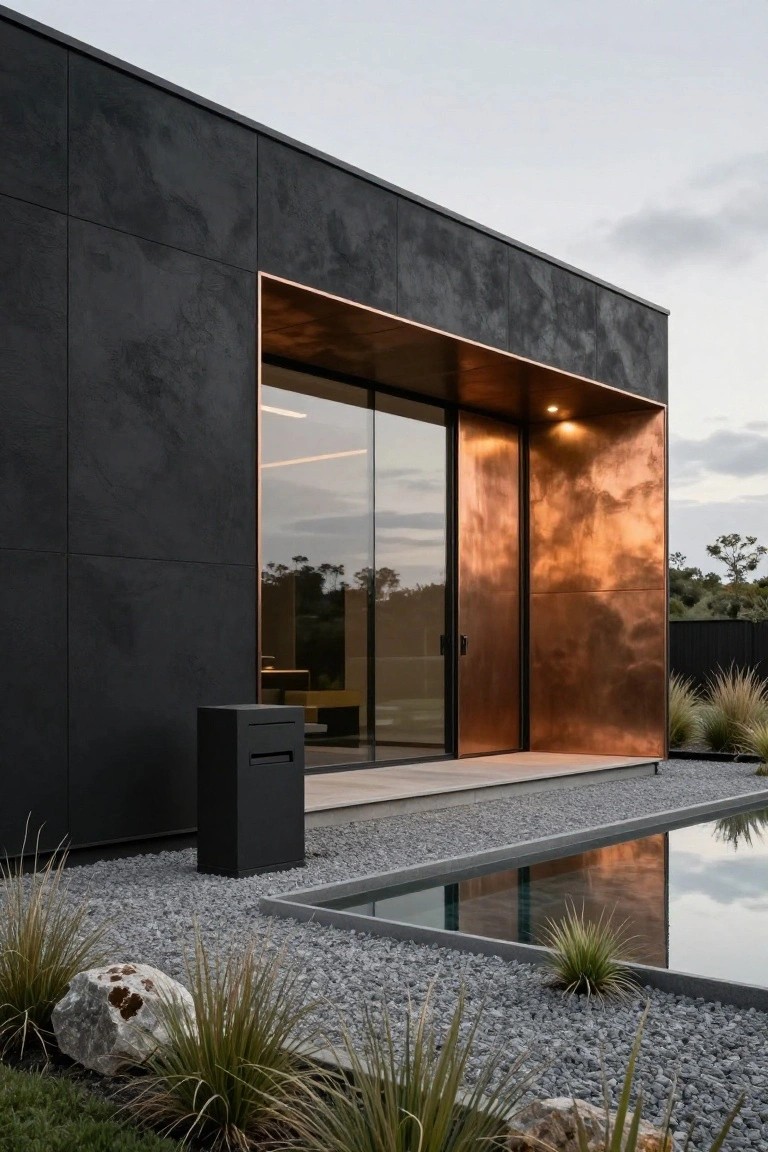
A dark, textured black cladding covers this modern house, but copper panels frame the entry doors and add a warm glow right where it counts. That simple contrast turns a plain dark front into something striking, especially as the copper picks up the evening light.
Try this on homes that need curb appeal without bright colors. It works well in natural settings with trees or open land nearby. Just focus the copper on edges or frames to avoid overwhelming the look, and let it weather for a lived-in patina over time.
Vertical Green Wall on Dark Brick
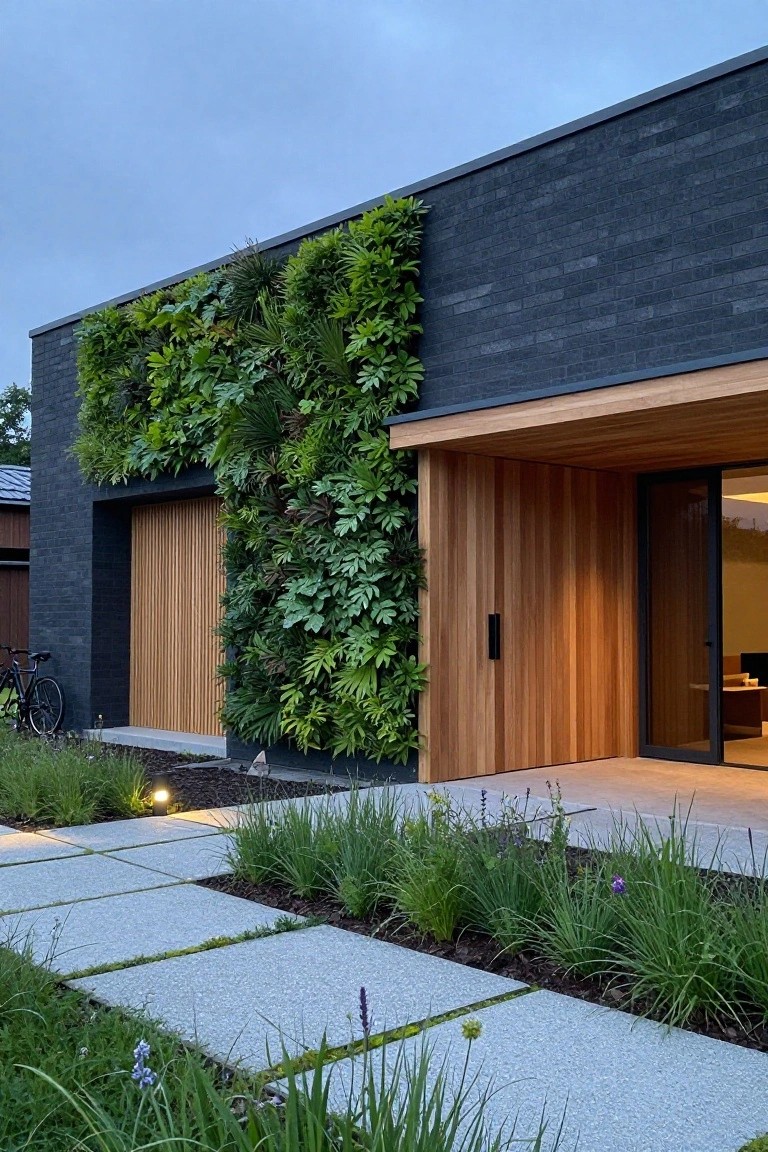
A vertical garden wall like this one covers part of the facade in lush plants. It stands out against the black brick, giving the house a fresh, alive look right away. The dark wall stays sleek and modern. But the greenery adds that natural touch without overwhelming things.
You can try this on a side wall or near the entry, especially if your home has a simple brick or concrete base. It works best in milder climates where plants thrive with some watering setup. Just pick tough varieties that handle partial shade. Keeps the front bold yet easy on the eyes.
Frequently Asked Questions
Q: Can a small house pull off one of these bold modern facades?
A: Scale everything down to fit your footprint. Use sharp window frames and a single punchy color on the door to grab eyes without overwhelming the space. It works wonders on cozy homes.
Q: What’s the fastest way to get that bold first impression on a budget?
A: Grab matte black paint and slather it on your front door and trim. Toss out bulky planters for sleek metal ones. You see the modern punch right away.
Q: How do you make sure a bold facade won’t clash with the neighborhood?
A: Peek at nearby houses for shared elements like brick bases. Layer in one wild feature, say a cantilevered overhang, on top. Neighbors notice the edge but nod along.
Q: My house looks dated. Where do I even start with a modern update?
A: Rip off the old siding and nail up slim horizontal panels. That clean sweep sets the bold tone. Build from there with lights and hardware.
