


I have found that bathrooms often end up feeling cramped or chilly because the shower zone was planned last without enough thought for how steam and airflow actually move through the room.
Adding a steam system changes the daily routine in small but steady ways once the enclosure keeps the heat where it belongs instead of letting it escape into the rest of the house.
In my own place I tried moving the controls and seating closer to the entry side of the shower and noticed right away how much easier it became to use the space without stepping out into cooler air.
Most people realize too late that ventilation needs to match the steam output or the walls stay damp long after the shower ends.
That detail shapes whether the room stays comfortable over time.
Add a Built-In Bench to the Shower

A built-in bench gives you a place to sit while the steam builds up. It turns the shower into something you can actually linger in instead of just standing through a quick rinse.
This works best in steam showers that already have enough floor space. Keep the bench material simple and water-friendly so it holds up over time without extra fuss.
Comfortable Seating for Longer Steam Sessions

A bench gives you a spot to sit while the steam fills the space, which makes longer sessions feel less tiring. It also creates a natural spot to rest a towel or keep your feet off the floor during a quick rinse.
This works best in showers that already have enough depth to avoid crowding the walkway. Match the bench material to the surrounding tile so it reads as part of the structure rather than an add-on, and keep a recessed niche close by for bottles and accessories.
Matching the Shower Bench to the Surrounding Tile

A built-in bench gives you a solid place to sit while the steam fills the space. It turns the shower into something you can actually linger in instead of just standing through a quick rinse.
This works best in bathrooms with enough floor space to add the bench without crowding the rest of the shower. Choose a material that matches the floor or walls so it stays comfortable and holds up to constant moisture.
Warm Wood Seating for Tiled Steam Showers

A built-in bench gives you a spot to sit while you shower, which makes the whole space feel more comfortable and useful. It also softens the look of all that tile with a bit of wood that stays warm underfoot.
This setup works best in showers that have enough depth to keep the bench out of the main spray. Pick a sealed hardwood and keep the bench simple so it does not crowd the space or collect water.
Skylights Over Steam Showers

A skylight placed directly above the shower brings natural light deep into the space and keeps the room from feeling closed in during a long steam session. It pairs well with steam systems because the extra light makes the heat feel less heavy and more like an open spa experience.
This setup works best in bathrooms with roof access above and good ventilation to manage moisture. Homeowners on upper floors or in single-story homes with flat roofs often find it easiest to add. Make sure the skylight glass is rated for humid environments so it stays clear over time.
Built-In Niches Keep Showers Organized

Many showers feel cluttered when bottles and supplies sit out in the open. A built-in niche solves that by creating a recessed spot for storage right where you need it. The curved shape adds a bit of softness without making the space feel busy.
This works best in bathrooms that already lean toward a simple or natural style. Keep the niche at a reachable height and match the material to the rest of the shower so it blends in. Avoid making it too deep or it can collect water.
Deep Shower Layouts With Integrated Seating

A built-in bench gives the shower a more usable layout and makes longer showers feel easier. It turns the space into something closer to a steam room setup where you can actually sit and relax instead of standing the whole time.
This works best in showers that already have some depth so the bench does not get in the way of daily use. It suits homes that want simple spa touches without adding extra furniture or clutter.
Wood Details In Dark Tiled Showers
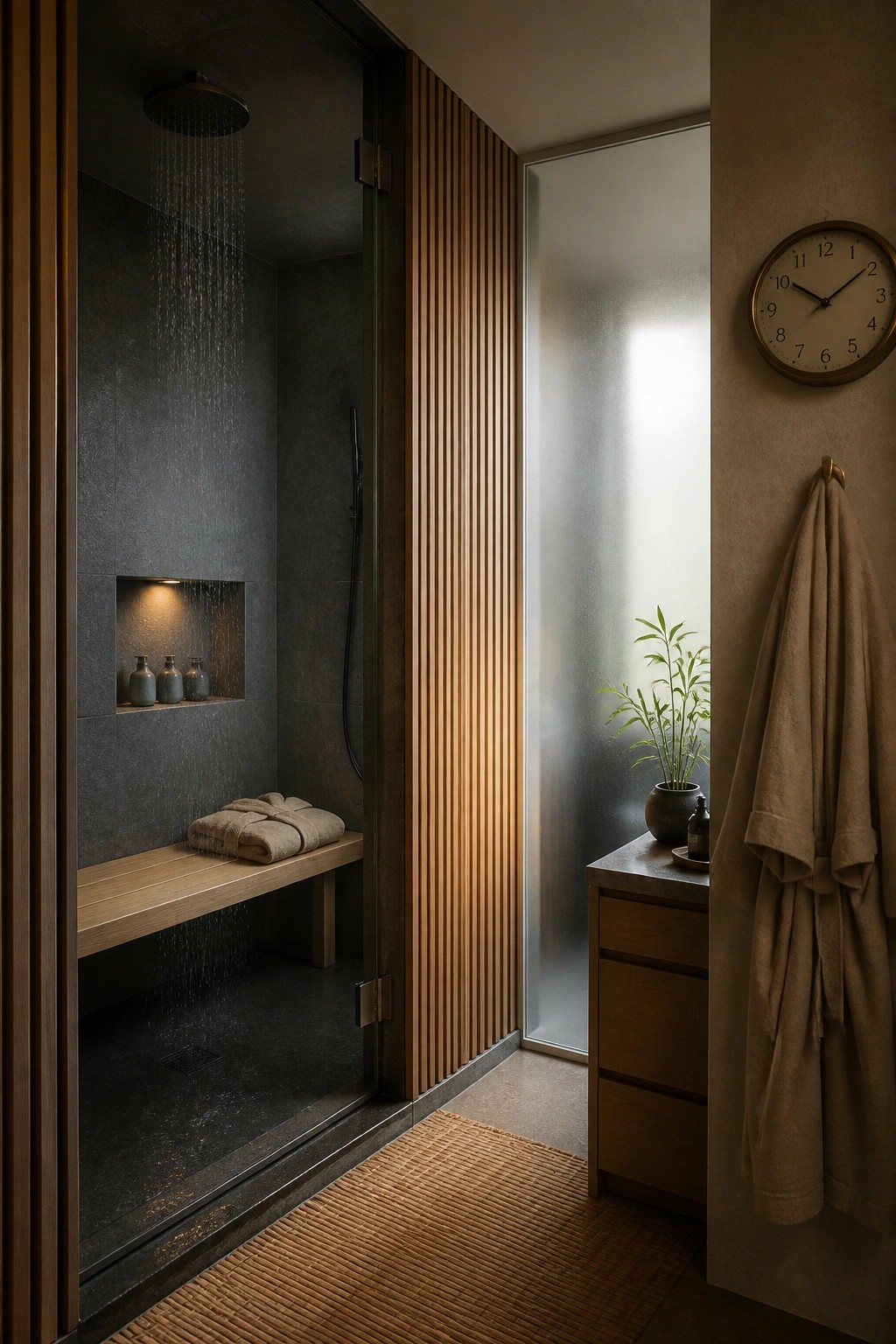
Dark stone showers can feel heavy on their own. Adding wood in the form of a bench or vertical slats brings warmth and breaks up the darkness without losing the calm mood.
This works best in smaller bathrooms where you want a grounded spa feel rather than something bright and airy. Use sealed wood only where it will not stay wet for long, and keep the rest of the room simple so the contrast stays clear.
Marble Steam Shower Niches With Wood Accents

Recessed niches are one of the simplest ways to add storage to a steam shower without cluttering the space. They let you tuck away bottles and soaps so the marble surfaces stay clean and open, which is part of what gives these showers their spa feel.
They work especially well in larger showers where you can place a few at different heights. Wood accents at the back of the niche add a bit of warmth against stone, and they pair nicely with brass fixtures. Just make sure the niches are sealed properly and set at a slight angle so water drains out.
Curved or Straight Seating Along the Shower Wall

A built-in bench turns a steam shower into something you can actually sit in and enjoy for longer. It gives the space a relaxed feel without needing extra furniture or clutter.
This idea works best in showers that have enough width for a gentle curve or straight seat along one wall. Seal the wood well and keep the rest of the surfaces easy to clean so the bench stays practical over time.
Marble Shower Benches With Sloped Surfaces
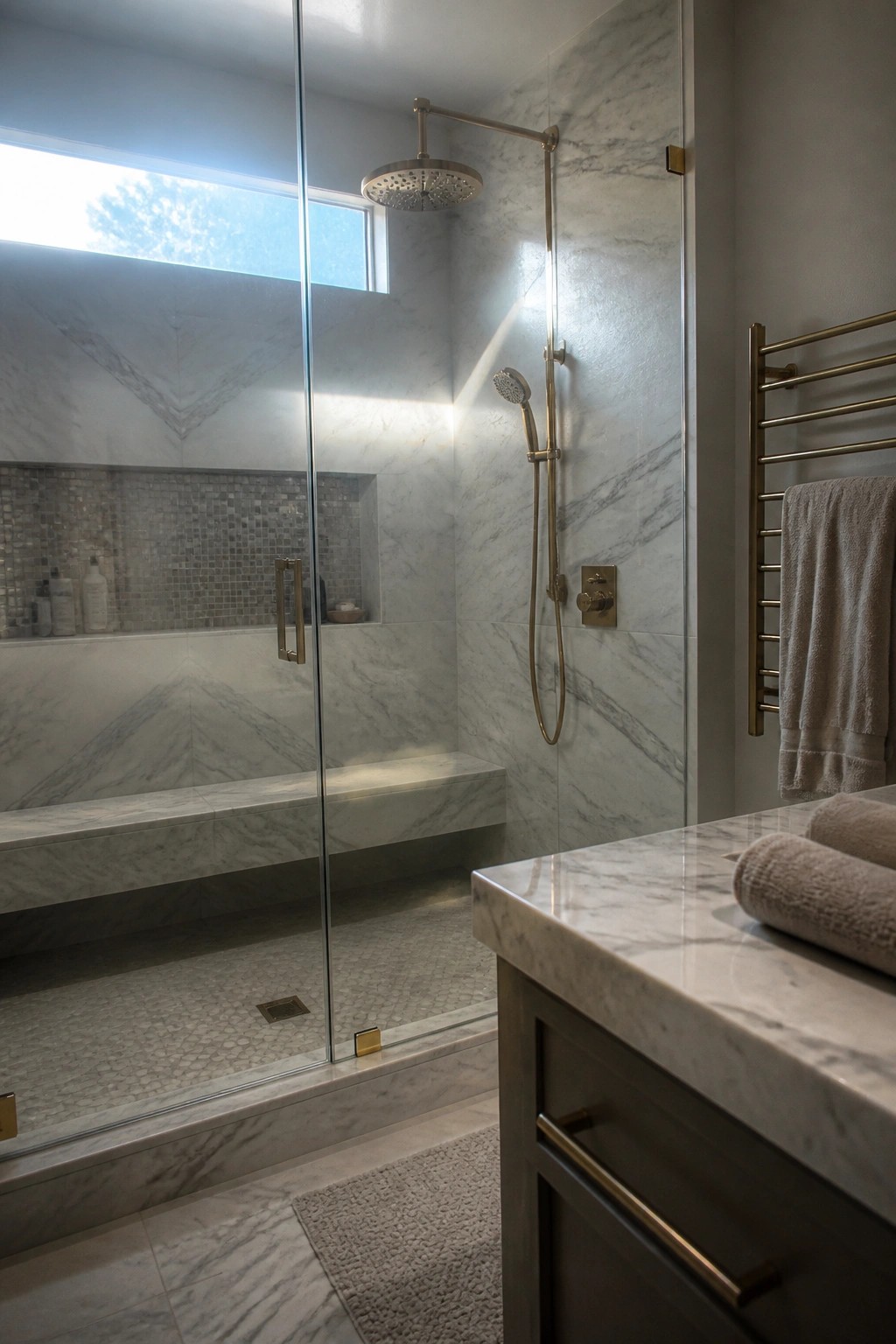
A bench inside the shower gives you a place to sit and enjoy the steam without standing the whole time. It turns the space into something more useful for longer sessions, especially when the walls and seat are all the same marble.
This setup works best in showers that already have some depth and good drainage. Keep the bench height comfortable and slope the surface slightly so water does not pool.
Everyday Steam Shower Seating With Removable Comfort

A bench inside the shower makes the whole space more practical, especially in a steam setup where people often want to sit and relax. It turns the shower from a quick rinse spot into something you can actually spend time in without standing the whole time.
This works best in larger showers where you have room for a built-in ledge along one wall. Use a material that handles moisture well and add a cushion only if it can be removed or dried easily. It suits homes that already have a steam system or plan to add one later.
Compact Steam Showers With Easy-Reach Seating
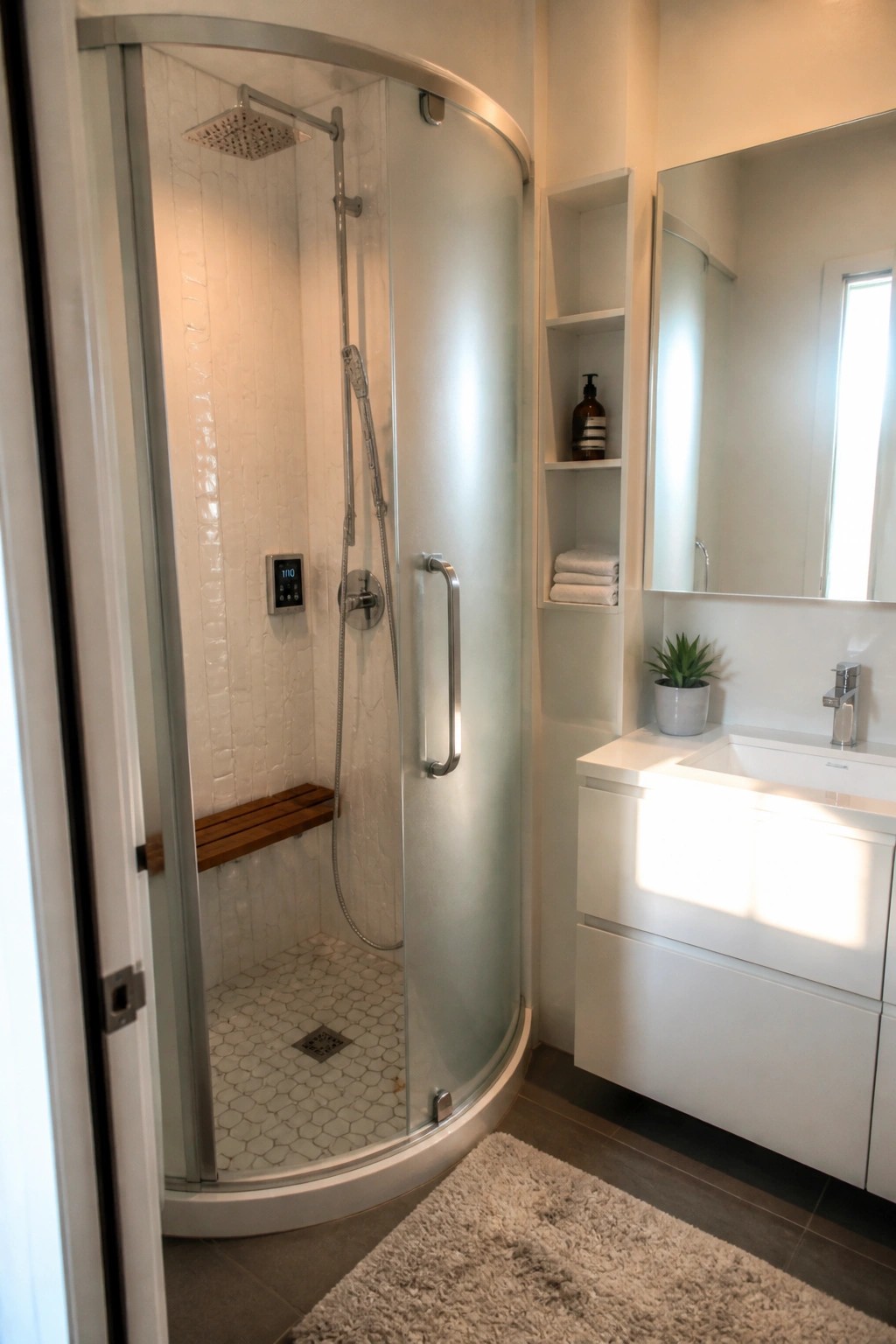
A bench inside the shower gives you a place to sit while the steam builds up. It makes the whole setup feel more like a place to linger instead of just a quick rinse spot.
This idea works best in smaller bathrooms where you want the steam experience without needing a full separate room. Choose a material that handles moisture well and keep the controls easy to reach from the seat.
Simple Side-Wall Seating for Better Steam Flow

A bench inside a steam shower gives you a place to sit and stay longer without standing the whole time. It turns the space into something more usable for actual relaxation instead of just quick rinsing.
This works best in showers that already have enough floor space along one wall. Pick a moisture resistant wood and keep the bench low and simple so it does not crowd the room or block the steam flow.
Wood Bench Accents in Light-Tiled Walk-In Showers
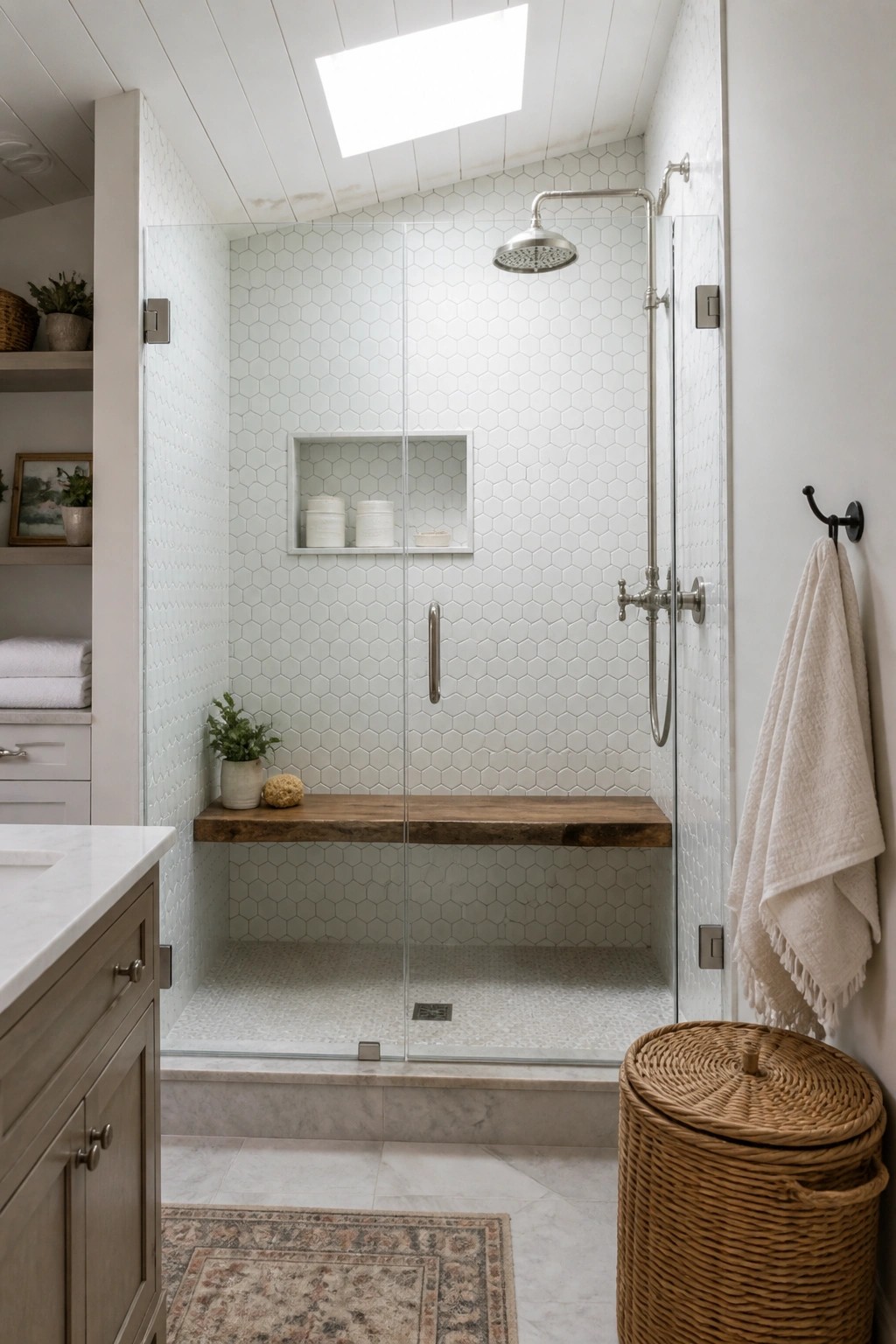
A bench inside the shower gives you a place to sit while rinsing off or just taking a longer soak. It turns the space into something that feels more usable day to day without adding much extra cost or complication.
Wood works well here because it brings a bit of warmth against all the tile. This idea suits bathrooms that already have room for a walk-in setup and works best when the bench stays simple and the surrounding tile stays light.
Teak Shower Benches for Relaxed Daily Use

A bench inside the shower gives you a place to sit while the water runs or steam builds up. It turns the space from something you hurry through into a spot where you can actually slow down for a few minutes.
This idea works best in showers with a bit of extra floor space. Use a wood that handles moisture, like teak, and keep the bench simple so it does not crowd the area.
Side-Wall Teak Seating for Steam Showers

A bench inside the shower gives you a place to sit while the steam does its work. It makes longer sessions more comfortable, especially when the goal is relaxation rather than just a quick wash.
This works best in showers that have enough floor space so the bench does not get in the way. Teak or similar moisture-resistant wood holds up well, and placing the bench on a side wall keeps it mostly out of the direct spray.
Dark Stone Steam Showers With Integrated Seating

A built-in bench gives you a place to sit and enjoy the steam without standing the whole time. It turns the shower into more of a resting spot, especially when paired with dark stone that helps keep the warmth in the space.
This works best in bathrooms that already have enough floor area to add the seating without crowding the room. Plan the waterproofing and drainage around the bench early, since it needs to hold up to daily use and frequent steam sessions.
Stone Showers With Built-In Benches

Many showers feel more useful when they include a simple bench. It gives you a place to sit while the water runs, which makes the whole experience feel less rushed and more like something you want to stay in for a while.
This setup works especially well in smaller bathrooms where you already plan to use natural stone on the walls and floor. The wood bench adds a little softness against the hard surfaces and keeps the space from feeling too stark. Just make sure the bench sits low enough to be comfortable and is sealed properly so it holds up to constant moisture.
Seated Steam Showers With Handheld Sprayers

A bench inside the shower gives you a place to sit and enjoy the steam without having to stand the whole time. It turns a quick rinse into something closer to a steam session, which is especially useful if you like longer showers or want to add a handheld sprayer for rinsing while seated.
This setup works best in showers that have enough depth for the bench along one wall without crowding the space. It suits homes where the shower is already a focal point, and the bench can be tiled to match the rest of the surround so it feels like part of the original build rather than an add-on.
Sealed Wood Seating for Wet Steam Shower Areas

A bench inside the shower gives you a spot to sit and relax while the steam fills the space. It makes the whole experience feel more intentional instead of rushed, especially during longer sessions.
This setup works best in bathrooms where you already have the room for it and want a simple way to improve daily use. Sealed wood holds up well in a wet area, and the bench stays useful without taking over the floor space.
Steam Shower Seating With Nearby Storage
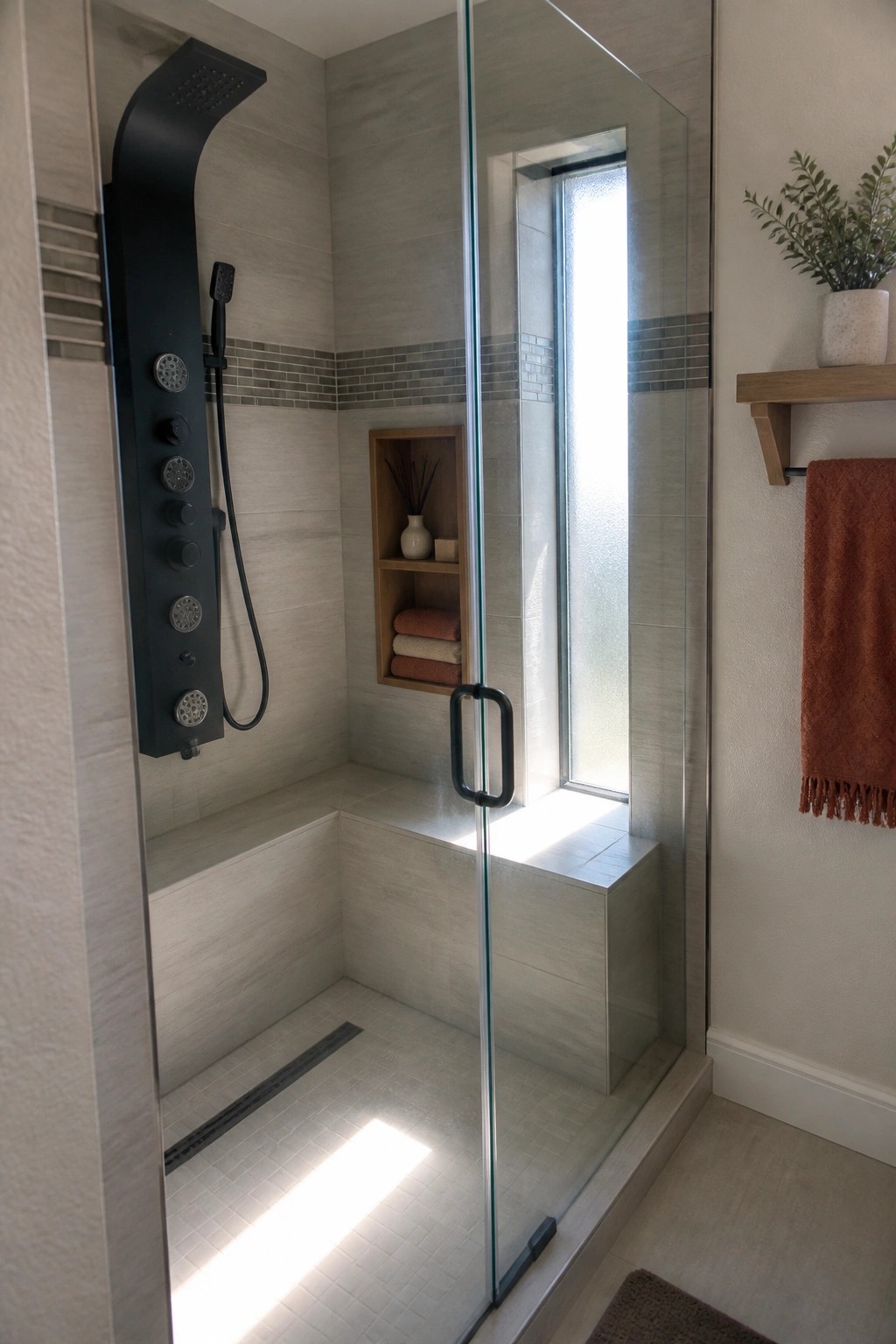
A built-in bench gives you a place to sit and enjoy the steam without needing to stand the whole time. It turns the shower into a more usable space for longer sessions and makes it easier to shave or just rest.
This setup works best in showers that have enough width for the bench along one wall. Pair it with a recessed niche nearby so towels and products stay off the floor and within reach.
Recessed Niches Keep The Shower Looking Clean

A lot of showers end up cluttered with bottles lined up on the floor or hanging from racks. Recessed niches cut into the wall give you a place to store everything out of the way while keeping the space open and easy to clean.
This setup works well in smaller bathrooms or narrow layouts where you do not want extra hardware taking up room. Just make sure the niches sit at a comfortable height and get sealed properly so water does not collect inside them.
Frequently Asked Questions
Q: Can I add steam to my existing shower or does it need a complete overhaul?
A: You can often retrofit a steam unit into a well-sealed shower space. Start by checking the enclosure for leaks and adding proper ventilation. This keeps the project simpler than a full rebuild.
Q: How often do steam shower systems need maintenance?
A: Clean the steam generator monthly with a vinegar solution to prevent buildup. Wipe down surfaces after each use to avoid mold. Regular checks like this keep everything running smoothly without much effort.
Q: Is a steam shower worth it if I only shower quickly most days?
A: Even short sessions benefit from the steam for relaxation. You can run it just long enough to warm up the space before stepping in. Many people find it transforms their routine without adding much time.
Q: Should the steam control go inside or outside the shower?
A: Place the control outside for easy access. This avoids any moisture issues on the panel.
