

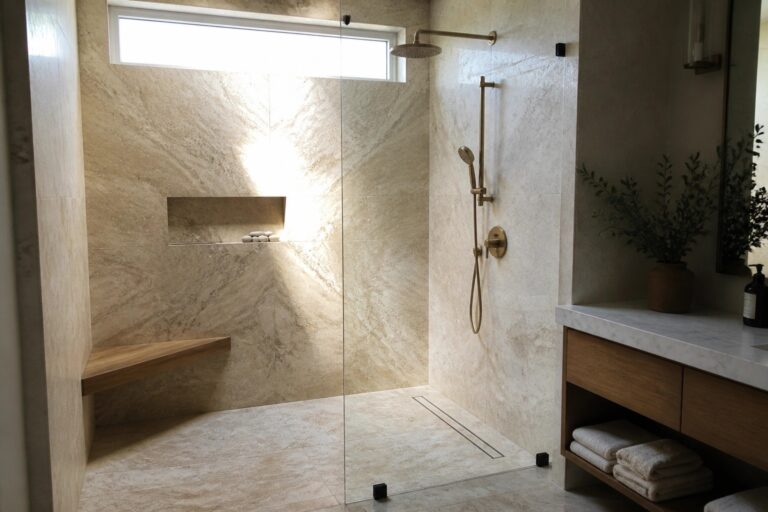
I often notice that the shower sets the tone for how calm a bathroom actually feels once you step inside it every morning.
Travertine and other natural stones seem to hold up well while giving the space a quieter texture that does not compete with everything else in the room.
The way the stone edges are finished can make or break whether the shower feels like part of the bathroom or an add on.
I tested a simple shelf detail in my last bathroom update and it turned out to be the one thing that made the space function without extra clutter.
Many of these material pairings are worth considering if you want the room to age gracefully instead of needing updates every few years.
Built-In Benches In Travertine Showers

A bench inside the shower turns the space into something you can actually use instead of just stand in. The wood seat against the stone walls adds a simple resting spot without breaking up the clean look of the travertine.
This setup works best in showers that have enough length to run the bench along one wall. Keep the rest of the fixtures minimal so the bench feels like a natural part of the room rather than an added feature.
Pebble Floors With Travertine Showers

Many showers feel more grounded when the floor uses small stones instead of the same large tiles on the walls. The change in texture helps the space feel less flat and gives a simple nod to natural materials without adding extra color.
This approach works best in showers that already have a good slope for drainage. It suits homes that want a calm look but still need the floor to handle water well. Keep the pebbles in a light neutral tone so they blend with the travertine rather than compete with it.
Travertine Bench With Matching Stone Walls
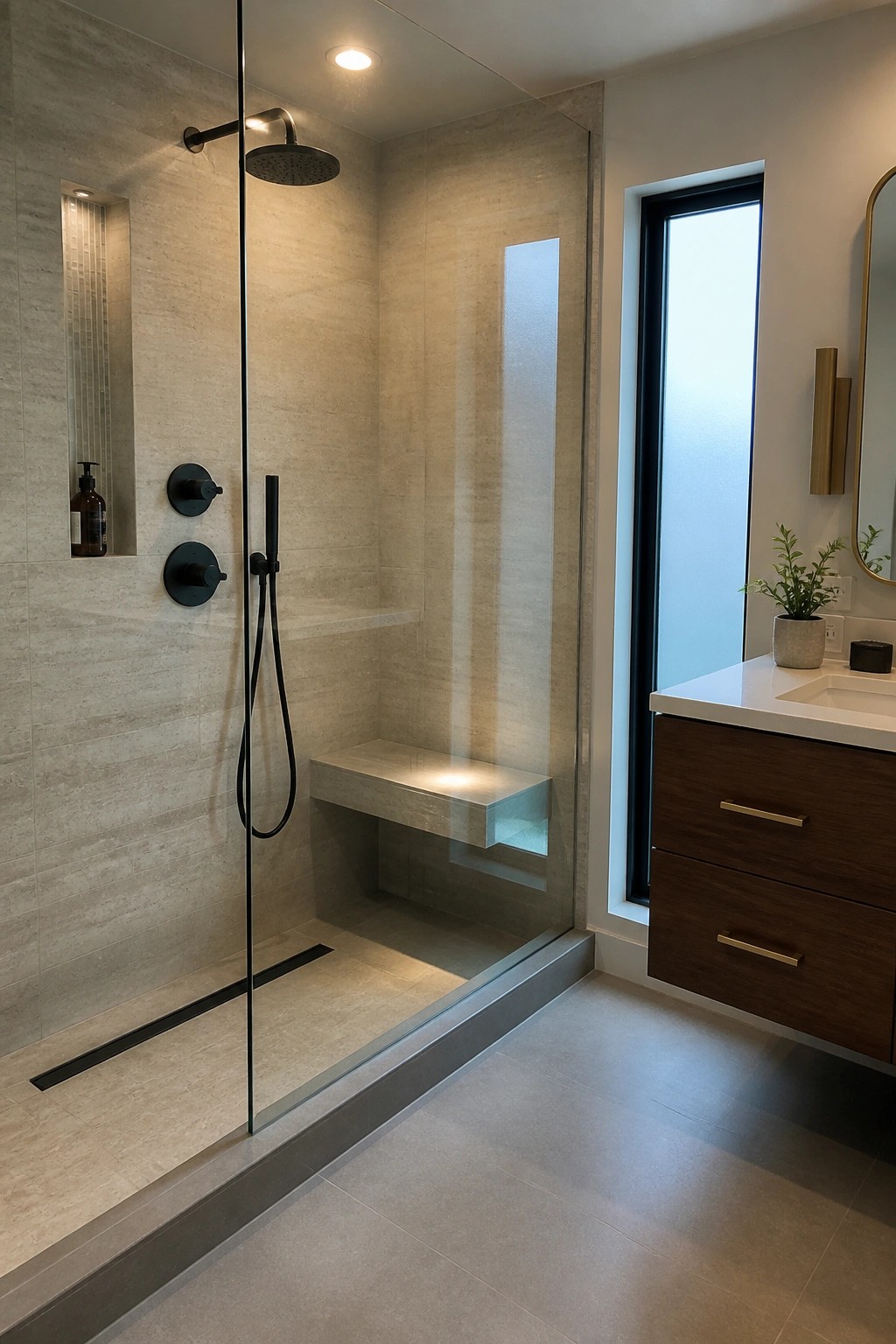
A built-in bench made from the same travertine as the walls keeps the whole shower feeling calm and connected. It adds a place to sit without bringing in separate furniture that could break up the look or collect clutter.
This setup works best in bathrooms where you want the shower to feel like a simple extension of the room rather than a separate wet zone. Just check that the bench sits at a comfortable height and that the stone gets sealed well since it will see regular water.
Travertine Arches In Shower Design

Travertine gives a shower a quiet, grounded look that feels more like a natural nook than a tiled box. The arched opening helps frame the space and keeps the stone as the main material from floor to ceiling.
This works best in bathrooms where you want the shower to feel like part of the room instead of a separate wet zone. Keep the bench simple and the fixtures dark so the stone stays the focus without extra contrast.
Long Travertine Bench Along the Shower Wall

A long bench made from the same travertine as the walls and floor keeps the shower feeling calm and connected. It gives you a place to sit while adding storage space for soap or towels without extra furniture.
This works best in showers that have enough room for a bench to run along one wall. It suits homes that want a simple, low-maintenance setup that still feels finished.
Travertine Walls With Pebble Flooring
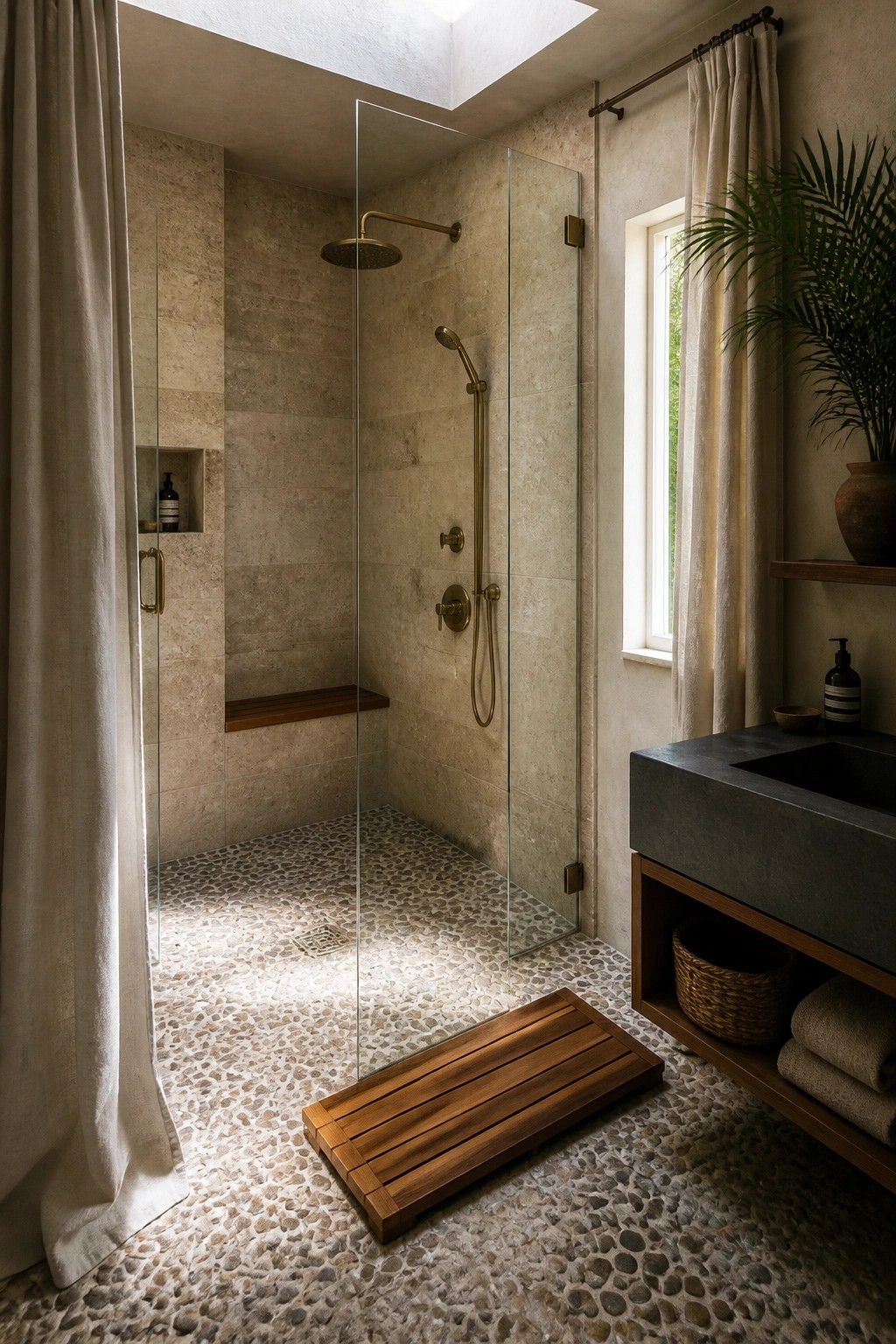
Travertine gives shower walls a soft, warm surface that feels natural and steady. When the floor switches to small pebbles instead of more stone, the space picks up texture and a quiet contrast that keeps the room from feeling flat.
This setup works best in bathrooms that already lean on natural materials and want a simple spa feel. It suits homes where the shower gets daily use, since the pebbles add grip without needing extra rugs or mats.
Adding a Floating Bench to a Stone Shower
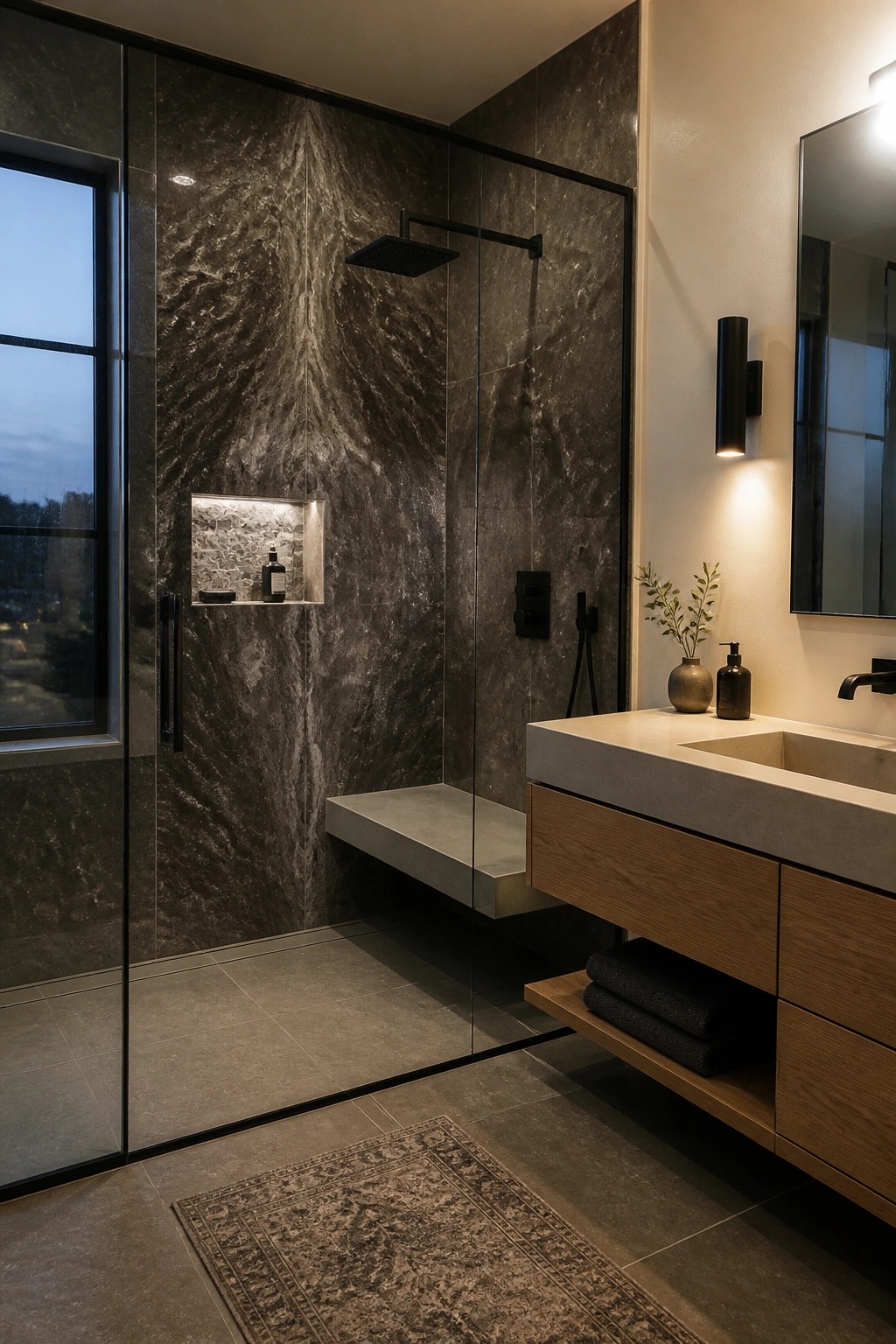
A floating bench inside a natural stone shower adds a practical spot to sit without making the space feel crowded. The bench stays out of the way during daily use and gives the whole enclosure a more finished look that still feels calm.
This works best in bathrooms where you want seating but need to keep the floor clear for cleaning. Pair it with a simple recessed niche so soap and bottles stay organized without extra shelves cluttering the walls.
Travertine Steam Showers

Travertine works especially well in steam showers because the stone handles the heat and moisture without looking cold or clinical. Many people choose it when they want the shower to feel like a quiet place to linger rather than just a quick rinse spot.
A herringbone floor helps with traction once things get damp, and it pairs easily with the larger wall tiles. This setup suits bathrooms that already use natural stone elsewhere and gives the whole room a calmer, more consistent feel.
Travertine Tiles Create a Calm Shower

Travertine works well in showers because it brings a soft, natural texture that feels steady and quiet. The light tone keeps the space bright, and the gentle variations in the stone help the room feel connected rather than busy.
This approach suits smaller bathrooms or anyone who wants a simple spa feel without extra pattern or color. It pairs easily with wood accents like a bench or shelf, and it looks best when the same stone runs across the floor and walls for a steady look. Just seal the stone well in wet areas.
Bookmatched Travertine Shower Walls

One way to keep a shower feeling calm is to let the stone do the work with a bookmatched pattern. The veining lines up across the tiles so the wall reads as one quiet surface instead of a busy grid.
This approach suits bigger showers where the full panel can be seen at once. Keep the bench and niches simple so they do not fight the stone, and use a smaller pattern like pebbles on the floor to add texture without competing.
Matching Travertine Shower Bench for Added Comfort
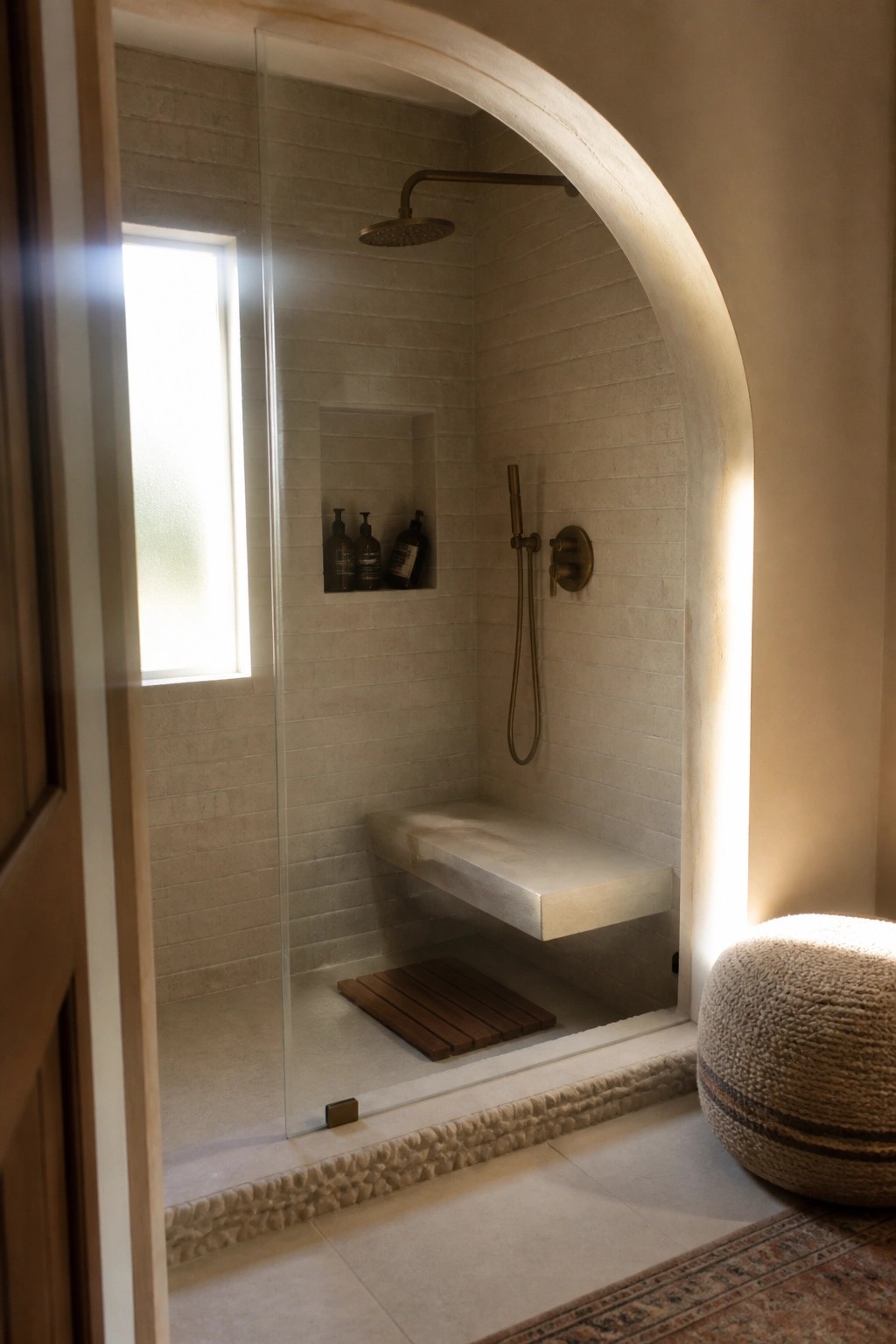
A bench cut from the same stone as the walls gives the shower a steady place to sit without breaking up the material. It feels practical for washing or just resting, and the single surface keeps the whole space simple.
This setup works best in showers that already have some depth, so the bench does not crowd the floor. It suits bathrooms where the rest of the room uses natural stone too, since the bench can match the floor or walls without extra trim or different finishes.
Wood-Accented Travertine Shower Bench

A built-in bench makes a travertine shower more practical. It gives you a spot to sit while washing or shaving, and the wood adds a bit of warmth against the stone.
This works best in showers that have enough floor space. Keep the bench low and simple so the travertine stays the main feature.
Full-Length Travertine Bench Integrated Into the Shower
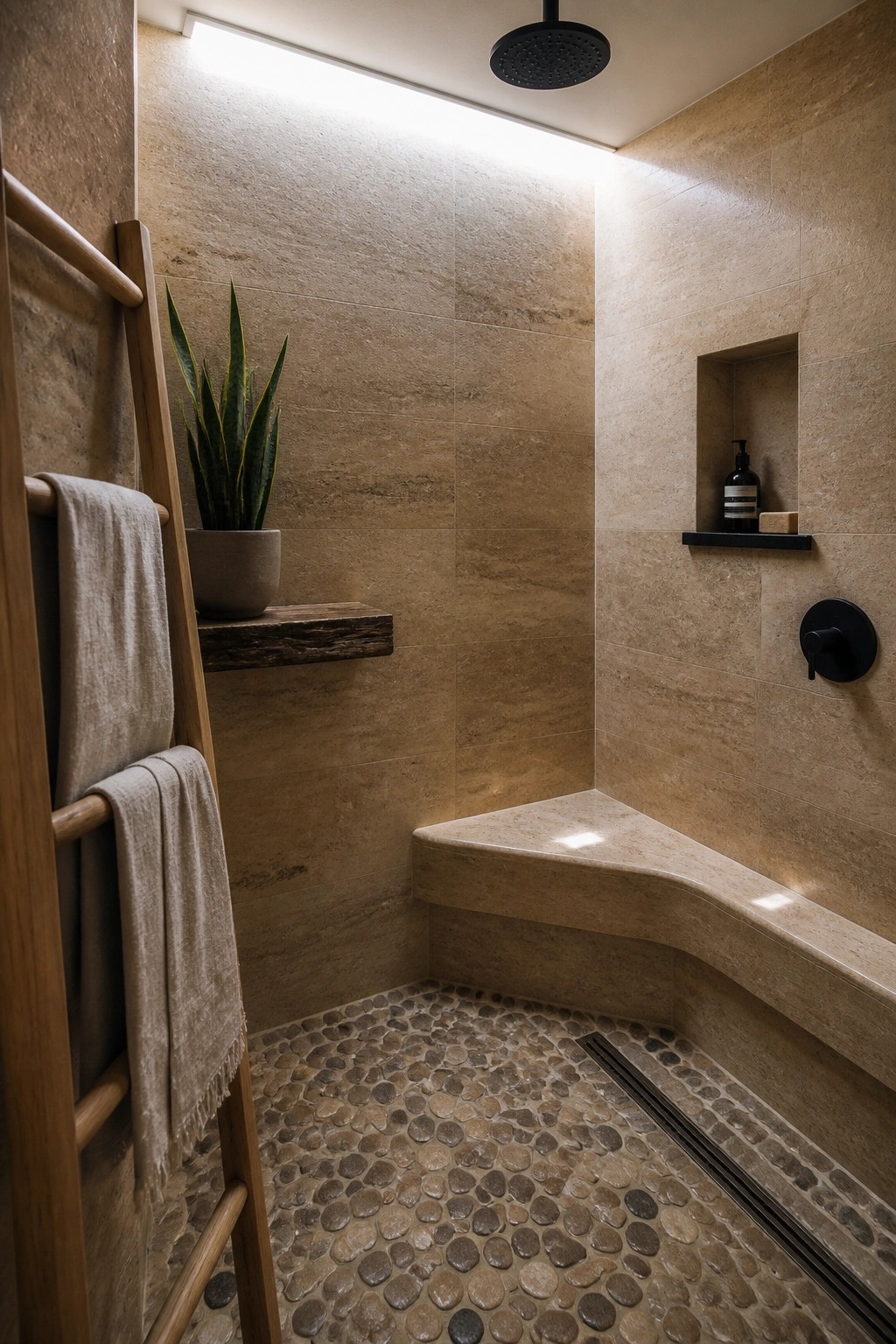
A built-in bench made from the same stone as the walls keeps the shower feeling calm and simple. It gives you a place to sit without adding extra pieces that can clutter the space or break up the clean look of the travertine.
This works best in larger showers where the bench can run along one or two walls. Use the same tile or slab material so it blends in, and keep the rest of the surfaces fairly plain so the bench feels like part of the structure rather than an add-on.
Travertine For A Consistent Shower Look
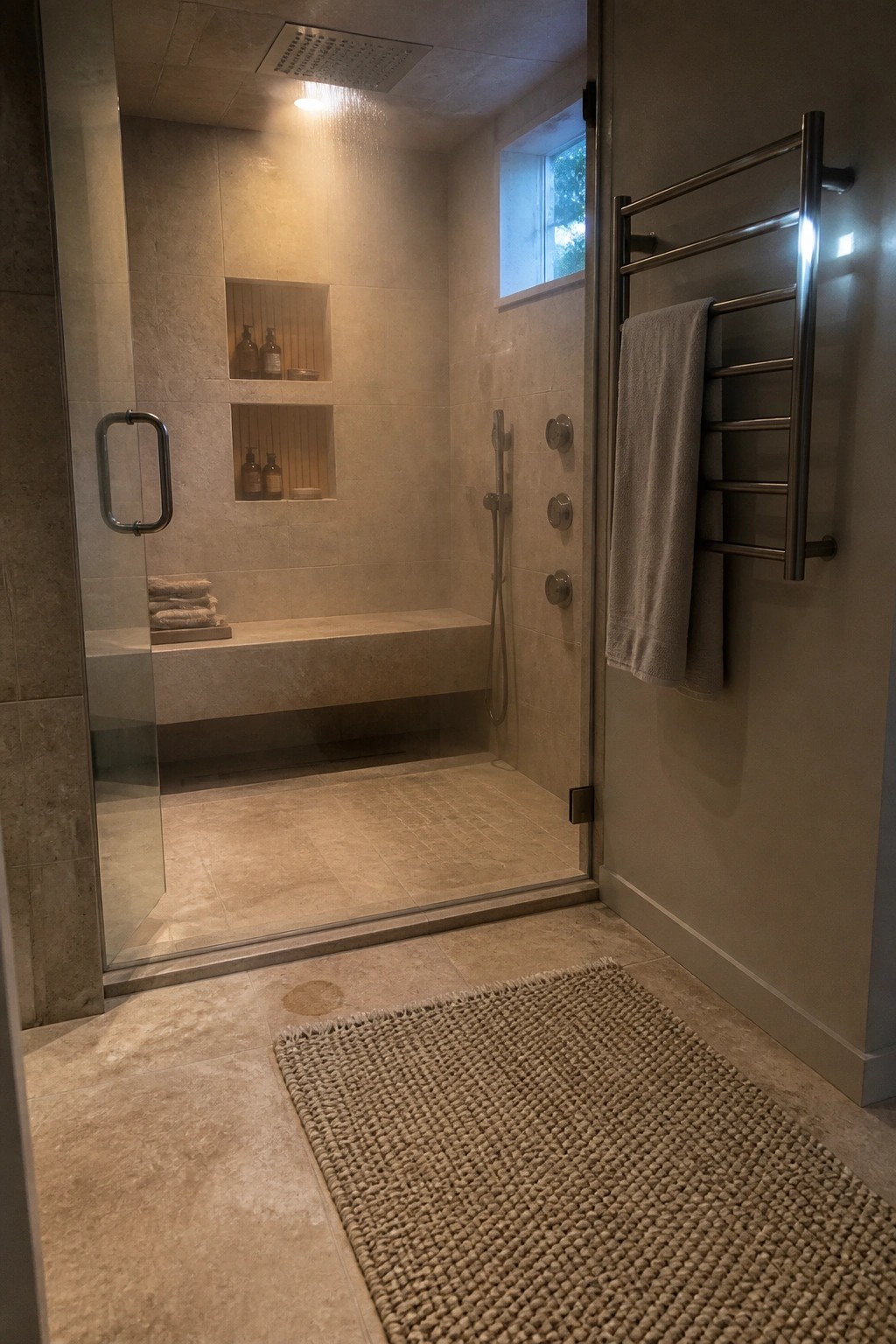
Travertine works best when the same stone runs across the walls, floor, and bench without breaks. This approach keeps the shower feeling calm and simple rather than busy with different materials.
It fits homes that want a quiet spa style without much pattern or color change. Just seal the stone well and size the bench so it is actually comfortable to sit on.
Seamless Travertine Bench With Matching Stone Surround
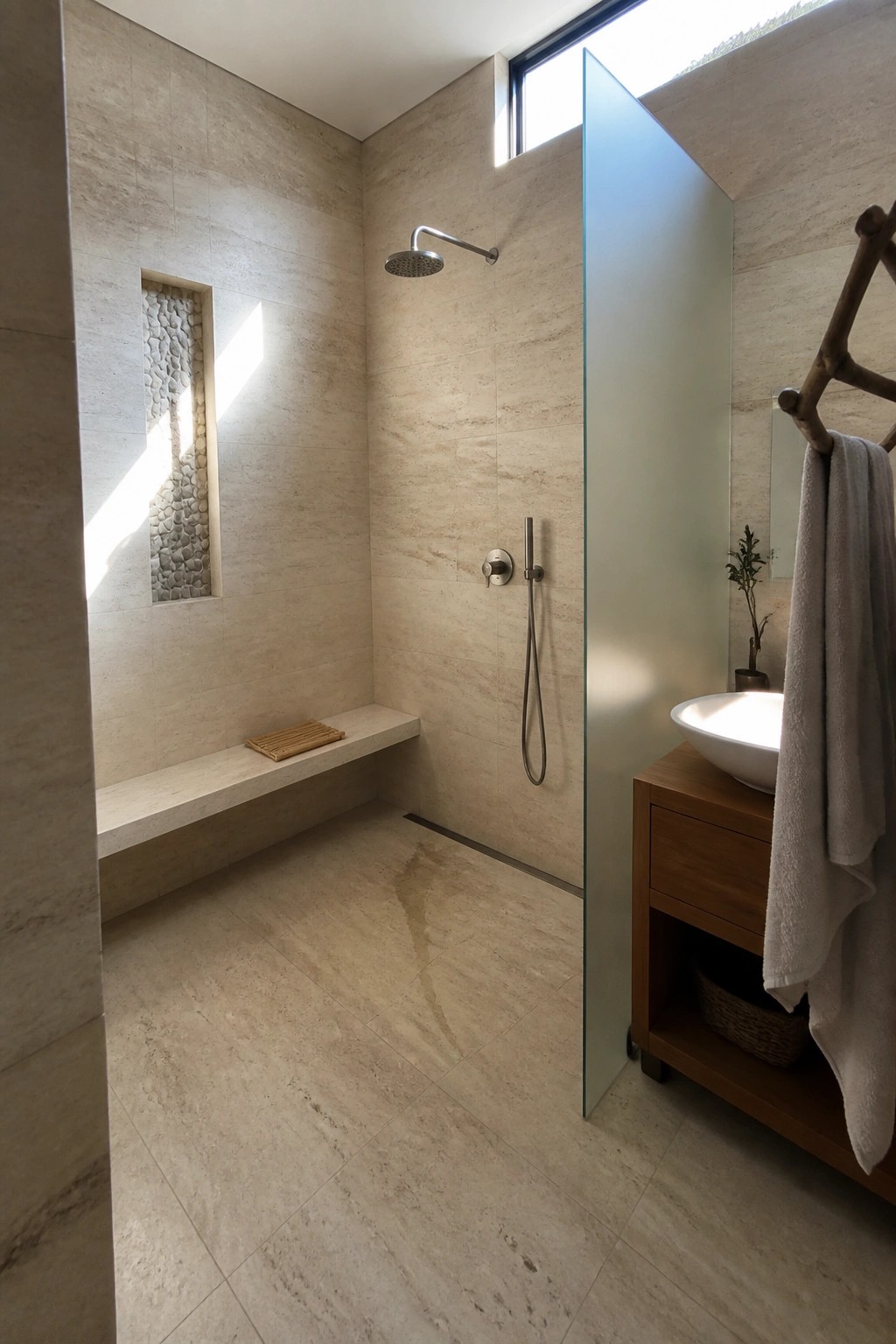
A bench built into the shower wall makes the whole space feel more usable and calm. It gives you a spot to sit while rinsing off or just taking a longer shower, and the travertine carries through so nothing feels added on later.
This setup works best in showers that have a little extra depth. Keep the bench the same thickness as the surrounding stone so it blends in, and use a simple mat or wood slats on top if you want extra comfort. It suits homes that already lean toward natural materials and want the shower to feel like a steady part of the room instead of a separate zone.
Space-Saving Travertine Bench With Matching Floor

A bench built into the shower wall gives people a place to sit without crowding the floor space. It pairs naturally with travertine because the stone stays warm and provides a solid surface that does not feel cold or slippery.
This works best in showers that are at least five feet wide so the bench does not block movement. Keep the bench height around eighteen inches and use the same travertine on the seat and floor so the whole area feels like one material.
Relaxed Travertine Shower Seating With Simple Niches

A bench inside the shower gives the space a more relaxed feel and makes it easier to sit while rinsing off or shaving. Travertine already brings a soft, natural look, so the bench adds comfort without needing much else to make the room work.
This idea fits best in larger showers where you have room for the bench along one wall. Keep nearby niches simple and low so towels and bottles stay within reach and the whole setup stays practical day to day.
Recessed Niches in Travertine Showers

A recessed niche gives you storage without cluttering up the shower. In a travertine space it keeps the look clean while still giving a spot for bottles and soap. The stone around it stays consistent, so the whole surface feels calm and connected.
This detail works best in showers that already use large natural stone tiles. It suits bathrooms where you want fewer fixtures on the wall and a bit more breathing room. Keep the niche depth practical so it holds what you actually use every day.
Curved Travertine Shower Bench With Wood Seat

A curved bench adds real comfort to a shower without breaking up the flow of the stone. The wood top brings a bit of warmth against the cool travertine, and the curve keeps the whole space feeling open rather than boxed in.
This works best in larger showers where you have room for the bench to sit along the back wall. Keep the stone consistent on the floor and walls so the bench reads as a simple addition rather than a separate feature. Just make sure the wood is sealed well for moisture.
Full-Material Travertine Bench for a Cohesive Shower

A built-in bench made from the same stone as the walls and floor keeps the shower feeling calm and connected. It gives you a place to sit without adding separate furniture that can break up the look.
This works best in showers that have enough depth to avoid crowding the standing area. It suits homes where people want simple daily comfort along with a consistent material throughout the space. Seal the stone well since it will stay damp.
Frequently Asked Questions
Q: How do you clean travertine without ruining the surface?
A: Wipe down the stone with a mild soap and water mix after each use. Skip any acidic cleaners since they etch the travertine quickly. A soft cloth works best to avoid scratches.
Q: Is travertine too slippery for a shower floor?
A: Honed travertine gives better grip than polished versions. Add a bath mat in the wettest spots if you want extra safety. Many people find it fine once they get used to the texture.
Q: How often should you seal travertine in a shower?
A: Apply sealer every year for most showers. Check by dropping water on the surface to see if it beads up. Reapply when the water starts soaking in instead.
