


I have noticed over the years that the finish on shower fixtures ends up mattering more than the layout drawings suggest once steam and daily use set in.
Brushed brass tends to hide water spots better than chrome while still reflecting enough light to keep a smaller bathroom from feeling closed in.
That difference shows up fast in real homes.
I usually test a few fixture heights against how I actually reach for things before finalizing a plan because small adjustments prevent awkward stretches later on.
Some of these setups make me want to check how the same hardware would look against my own tile choices before making any changes.
Brushed Brass Fixtures In Light Tiled Showers

Brushed brass fixtures stand out in a shower like this because they add a quiet warmth to all the light tile and white surfaces. The finish keeps the space from feeling too stark while still letting the simple tile pattern do most of the work.
This approach works best in bathrooms that already have a calm, neutral base. It suits homes that want a little luxury without extra color or busy details, and it stays easy to live with over time.
Brushed Brass Fixtures Warm Up Dark Showers

Brushed brass fixtures stand out in a dark tiled shower because they bring a softer tone that keeps the space from feeling too cold. The finish pairs easily with wood accents and helps the hardware read as a deliberate choice rather than an afterthought.
This works well in bathrooms that already use deeper wall colors or stone. Keep the rest of the fixtures consistent so the brass does not compete with other metals, and choose a finish that will age evenly with regular use.
Brushed Brass Fixtures With Soft Green Tiles
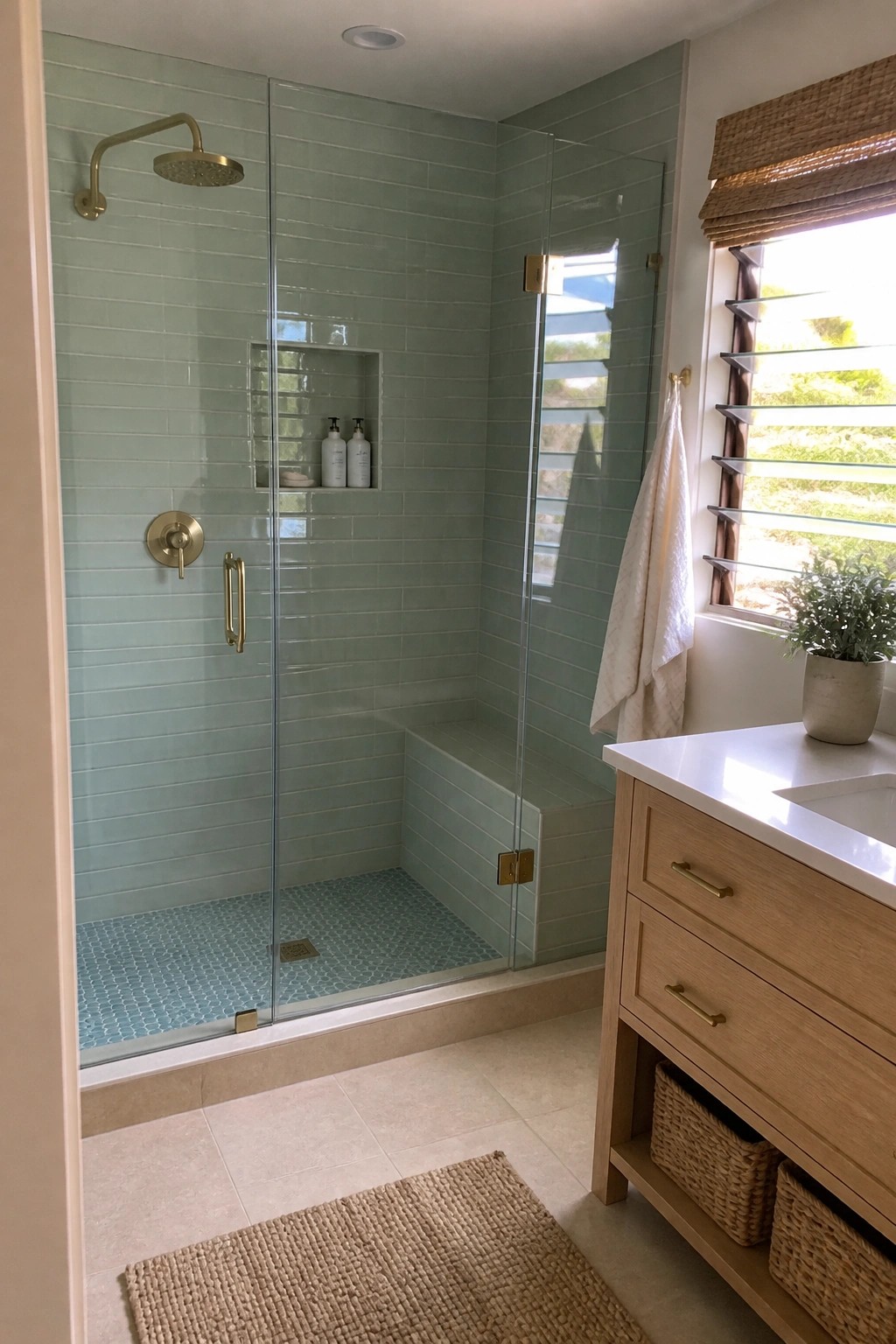
Brushed brass fixtures give a shower a warmer touch when the tile runs cool. The gold hardware stands out just enough against the light green walls and floor without making the space feel busy.
This combination works best in bathrooms that stay fairly light and neutral overall. Keep the brass to the main pieces like the shower head and handles, and let the tile do most of the work so the look stays calm rather than flashy.
Brushed Brass Fixtures For Marble Showers
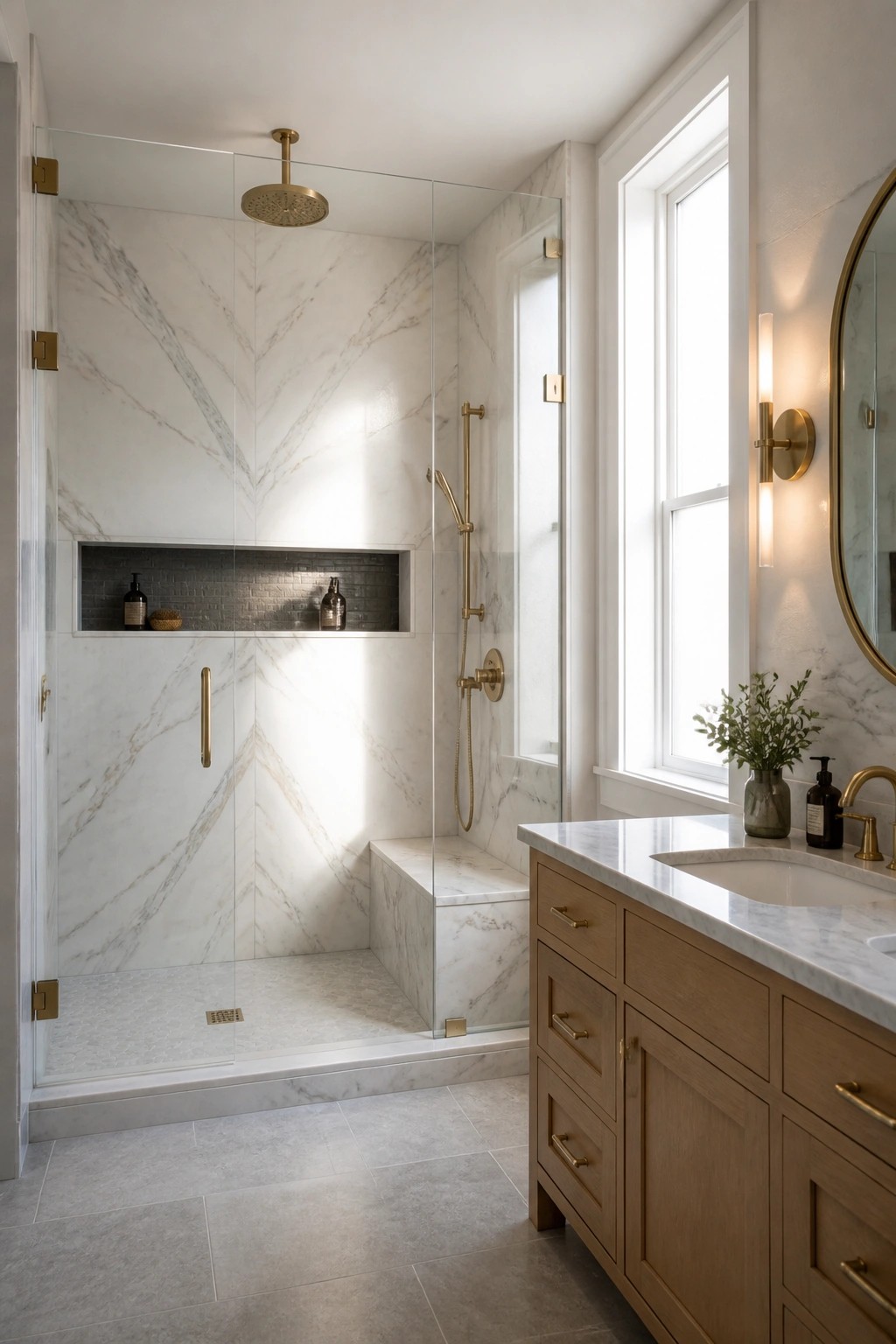
Brushed brass fixtures bring a soft warmth to marble showers that can otherwise feel a bit cold. The gold tone stands out nicely against the white stone and helps tie the shower to other finishes in the room.
This approach works best in bathrooms that already use some wood or natural textures. It suits homes that want a clean look without everything feeling too bright or stark.
Brushed Brass Shower Fixtures With White Tile
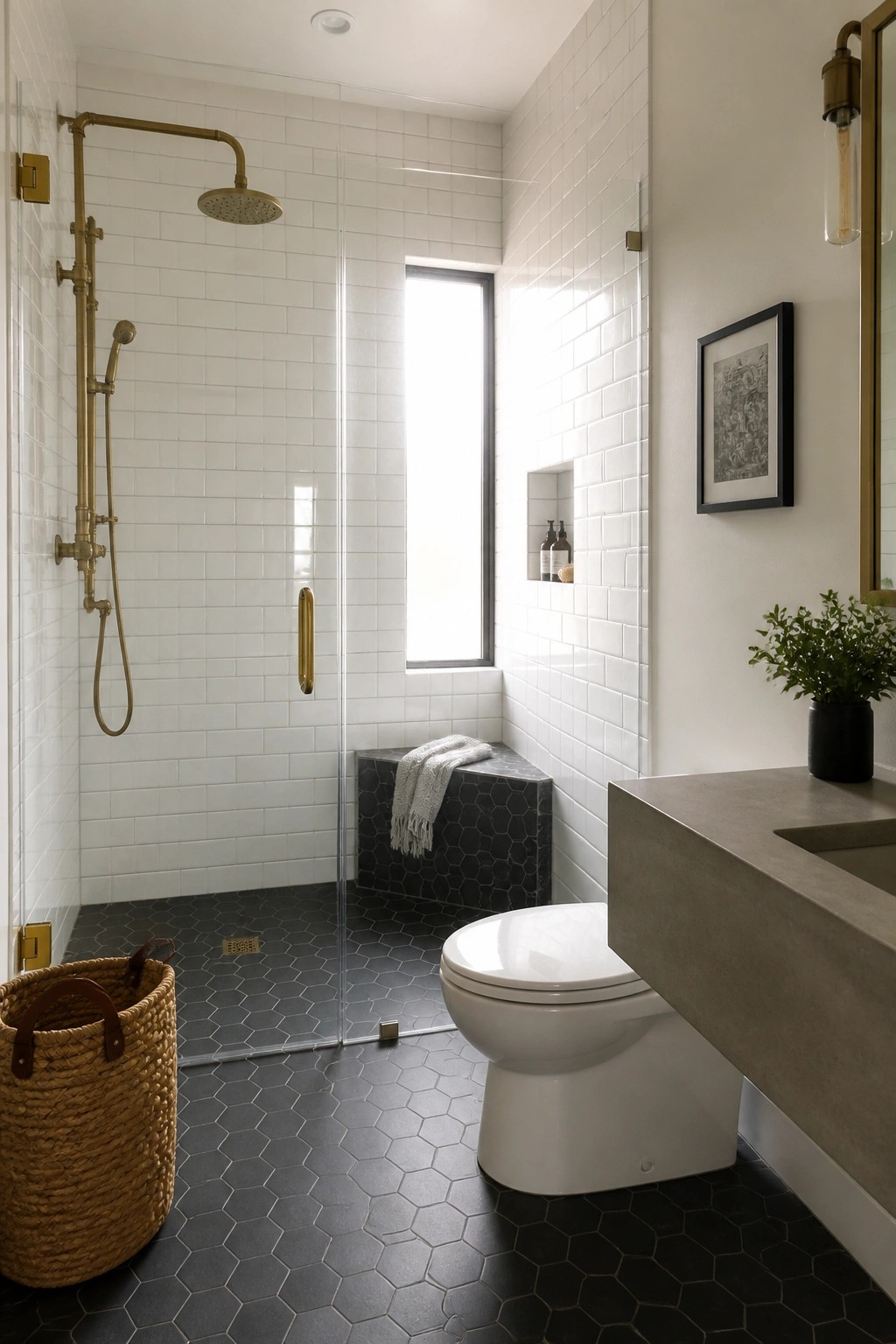
Brushed brass works well in a shower because it adds a bit of warmth without overpowering the clean look of white tile. The finish feels softer than chrome and stands out nicely against both light walls and darker floor tiles. Many people choose it when they want the hardware to feel like a deliberate choice rather than an afterthought.
This approach suits smaller bathrooms where you want one material to carry some visual weight. It pairs best with simple layouts and minimal hardware so the brass stays the focus. Keep the rest of the finishes fairly neutral if you want the fixtures to read as a clear accent.
Brushed Brass Fixtures In White Showers

Brushed brass fixtures give a white tiled shower just enough warmth. The gold tone stands out against the clean vertical tiles and marble details without making the space feel busy.
This approach works best in bathrooms that already lean light and simple. Keep the rest of the finishes neutral so the brass becomes the main accent rather than competing with other colors or patterns.
Brass Fixtures With Exposed Brick

Brushed brass fixtures stand out more when set against an exposed brick wall in the shower. The metal picks up light while the brick brings texture and a bit of warmth that plain tile rarely matches.
This approach works well in bathrooms that already have some industrial or natural character. Keep the rest of the room fairly simple so the shower wall does not compete with too many other finishes.
Chevron Tile In The Shower

A chevron pattern on the shower walls brings a steady rhythm to the space without making it feel busy. The black and white tiles give the room enough contrast that the brushed brass fixtures stand out clearly instead of blending into a plain background.
This approach works best in bathrooms that already have darker floors or wood tones, since the pattern keeps the shower from looking flat. It suits smaller rooms especially well because the angled lines add movement while the brass hardware keeps the overall look grounded.
Brushed Brass Fixtures With White Subway Tile

Brushed brass works nicely in a shower like this because it adds warmth without breaking up the clean look of the white tile. The finish feels soft rather than flashy, so the whole space stays bright while the hardware still stands out.
This approach suits smaller bathrooms or guest baths where you want the shower to feel open but not cold. Keep the rest of the room simple with light wood and minimal extras so the brass can do its job without competing.
Brushed Brass With Vibrant Tile

Brushed brass fixtures bring a nice warmth to showers that use strong tile colors. The contrast keeps the space from feeling too cool or flat, especially when the tile runs across multiple walls.
This approach works best in smaller bathrooms where the shower is the main feature. It suits homes that already lean modern or slightly eclectic, as long as the other hardware stays in the same finish.
Brushed Brass Fixtures With Stone Tiles

Brushed brass stands out nicely against large stone tiles in a shower. The finish adds a little warmth that keeps the whole space from feeling too cold or flat.
This works best in bathrooms that already use neutral tones and natural textures. Stick to simple shapes for the fixtures so they do not compete with the tile.
Brass Fixtures On Dark Stone Showers

Brushed brass fixtures stand out well against dark stone tile because the warm tone catches light without overpowering the room. The contrast keeps the shower from feeling flat while still looking clean and simple.
This approach works best in bathrooms that already use a strong wall color or material. It suits homes that want the hardware to read as a clear accent rather than disappearing into the tile.
Brushed Brass Fixtures Against White Subway Tile

Brushed brass brings a quiet warmth to a shower that white tile alone can sometimes lack. The fixtures catch the light without feeling flashy, and the narrow floral strip running down the wall keeps the look from turning too plain.
This works best in smaller bathrooms or guest spaces where you want a touch of character without crowding the room. Pair the brass with soft wall colors and simple hardware elsewhere so the shower stays the main focal point.
Built In Benches In The Shower

A built in bench turns a shower into something more useful on busy mornings or long days. It gives you a spot to sit while washing or shaving and works especially well when the rest of the space uses simple materials like concrete.
This idea fits best in larger walk in showers where you have room to add the bench without crowding the area. Keep the bench the same material as the walls so it blends in, and let brushed brass fixtures bring in a bit of warmth.
Dark Floors Against Light Shower Walls

A dark floor paired with light walls gives a shower some weight without closing it in. The contrast keeps the space feeling open while still looking intentional, especially when the fixtures are in a warm metal like brushed brass.
This setup works best in smaller or medium bathrooms that need a bit of definition. Keep the walls simple so the floor becomes the anchor, and make sure the brass has enough contrast to stand out clearly against both tones.
Brushed Brass With Green Shower Tile

Brushed brass fixtures stand out nicely against deep green tiles because the warm metal tone softens the cool color without fighting it. The finish also picks up light in a quiet way that feels more lived in than polished chrome.
This approach works well in bathrooms that already use wood tones or natural textures elsewhere. Keep the rest of the palette simple so the brass and tile become the main pairing. A small recessed shelf in a darker tone can add contrast without pulling attention away from the fixtures.
Brushed Brass Against Dark Marble

Brushed brass fixtures stand out especially well when set against dark marble in a shower. The warm tone of the metal softens the heavy look of the stone and keeps the space from feeling too cold or closed in. This mix works because the brass catches light without overpowering the darker surfaces.
This approach suits bathrooms that already lean toward deeper colors or moody finishes. It pairs best with simple layouts where the fixtures can be the main accent rather than competing with busy tile patterns or extra trim. Keep the rest of the hardware consistent so the brass reads as a deliberate choice instead of scattered highlights.
Brushed Brass Fixtures In A White Tiled Shower
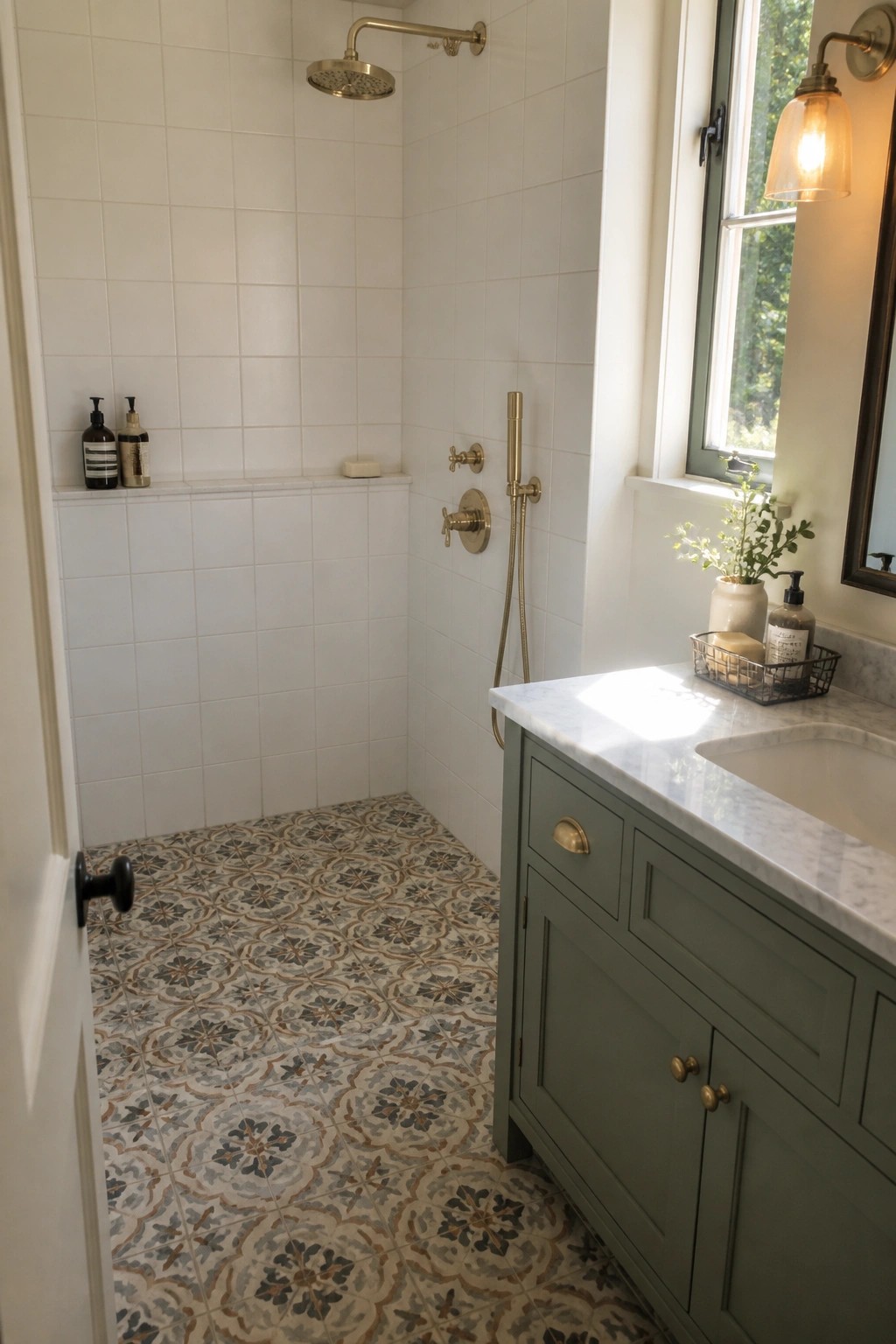
Brushed brass adds a quiet warmth to a white tiled shower without making the space feel busy. The metal stands out nicely against the clean lines of the tile and gives the room a bit of character that plain chrome often lacks.
This approach works best in smaller bathrooms where you want one material to carry the interest. Keep the tile simple and let the brass hardware handle the contrast so the whole area stays easy to clean and balanced.
Brushed Brass Fixtures With Green Tile

Brushed brass fixtures bring a warm note to showers that lean on cooler colors like green tile. The finish catches the light just enough to stand out against the herringbone pattern without taking over the whole space.
This approach works well in compact showers or when you want simple contrast. It suits homes that already use natural materials like stone floors and wood accents, and it holds up better than polished brass in a wet area.
Brushed Brass With Light Tile And Wood

Brushed brass fixtures bring a quiet warmth to bathrooms that use lots of light tile and wood. The finish picks up the tones in the wood vanity and softens the look of the large gray tiles without adding any extra color. Many people like this mix because it feels finished but still calm.
This approach works well in bathrooms that already have wood cabinetry or built-in benches. It suits homes that lean transitional or modern farmhouse, and it holds up nicely when the rest of the room stays neutral. Just keep the other metals to a minimum so the brass stays the main accent.
Frequently Asked Questions
Q: How do I clean brushed brass fixtures so they stay looking fresh? A: Wipe them down with a soft cloth and warm water after most showers. A drop of mild soap clears any soap scum without fuss. Stay away from anything with bleach or scrubbing pads.
Q: What tile colors pair well with brushed brass in these showers? A: Soft beige or warm gray tiles let the brass stand out without competing. Marble works if you keep the veining subtle. Cool blues tend to fight the tone.
Q: Will brushed brass hold up in a busy household shower? A: Solid pieces last years with regular use. Just avoid strong chemical cleaners that wear the surface. Many swap them only during a full remodel.
