


I often find that showers feel more inviting when the tile choices soften the overall look instead of making everything stark and reflective.
Wood-look options in warm tones can help a bathroom feel more connected to the rest of the house in a quiet way.
Many people overlook how the material underfoot affects the daily experience of getting ready.
The right balance matters most.
I keep coming back to layouts that use these tiles to create a sense of calm without overdoing the luxury details.
Wood Look Tile In The Shower
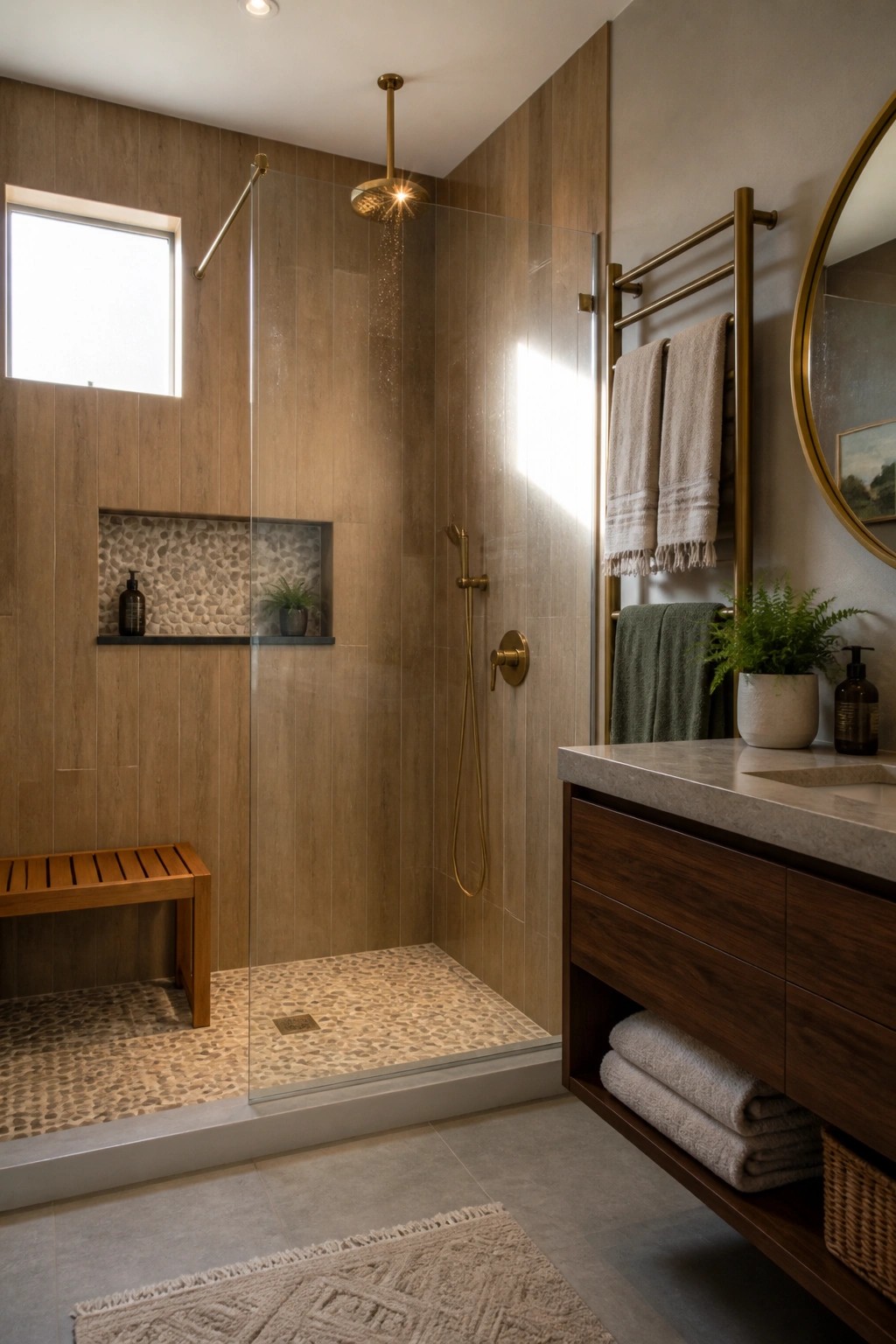
Wood look tile can make a shower feel warmer than the usual cool tones. It gives the space that natural grain without any worry about moisture damage, and it holds up well in a wet zone.
This approach works best when the rest of the bathroom already uses similar earth tones. Keep the fixtures simple so the tile stays the main feature, and consider adding a small textured accent only where it will not compete.
Wood Look Tile In A Herringbone Pattern

Herringbone wood look tile gives a shower walls that add texture and keep the whole space from feeling cold or flat. The pattern breaks up the surface nicely and works well with warm floor tiles to pull the room together.
This approach suits bathrooms that need a natural look without worrying about real wood holding up to moisture. It works best in homes with simple fixtures and built in seating so the tile can be the main feature without crowding the space.
Built-In Benches In The Shower

A built-in bench turns a shower into something you can actually use for sitting, whether that means shaving legs or just taking a longer rinse. The wood-look tile helps the bench blend in so the whole stall feels like one steady surface instead of a bunch of separate pieces.
This setup works best in a larger walk-in shower where you have wall space to spare. It suits homes that want the bathroom to feel calm and practical at the same time. Just pick a cushion that can handle moisture and plan for a drain that keeps water from pooling under the seat.
Wood Look Tile Across The Shower Floor

Wood look tile works well when it moves straight from the bathroom floor into the shower. The same material keeps the warm tone going without a sudden change in look or feel. It makes the whole space feel more pulled together.
This choice suits smaller bathrooms where you want things to stay simple and connected. Use a herringbone layout if you want some texture underfoot, and pick a tile that handles water and has enough grip.
Built-In Benches In Wood Look Tile Showers

A built-in bench adds a practical spot to sit without breaking up the flow of the shower. The wood-look tile on the walls helps the bench blend in and keeps the whole space feeling warm instead of cold and clinical.
This works best in showers that have a little extra depth so the bench does not crowd the standing area. It suits homes where people want a simple upgrade that feels finished without needing a lot of extra fixtures.
Light Wood Look Tile For A Brighter Shower
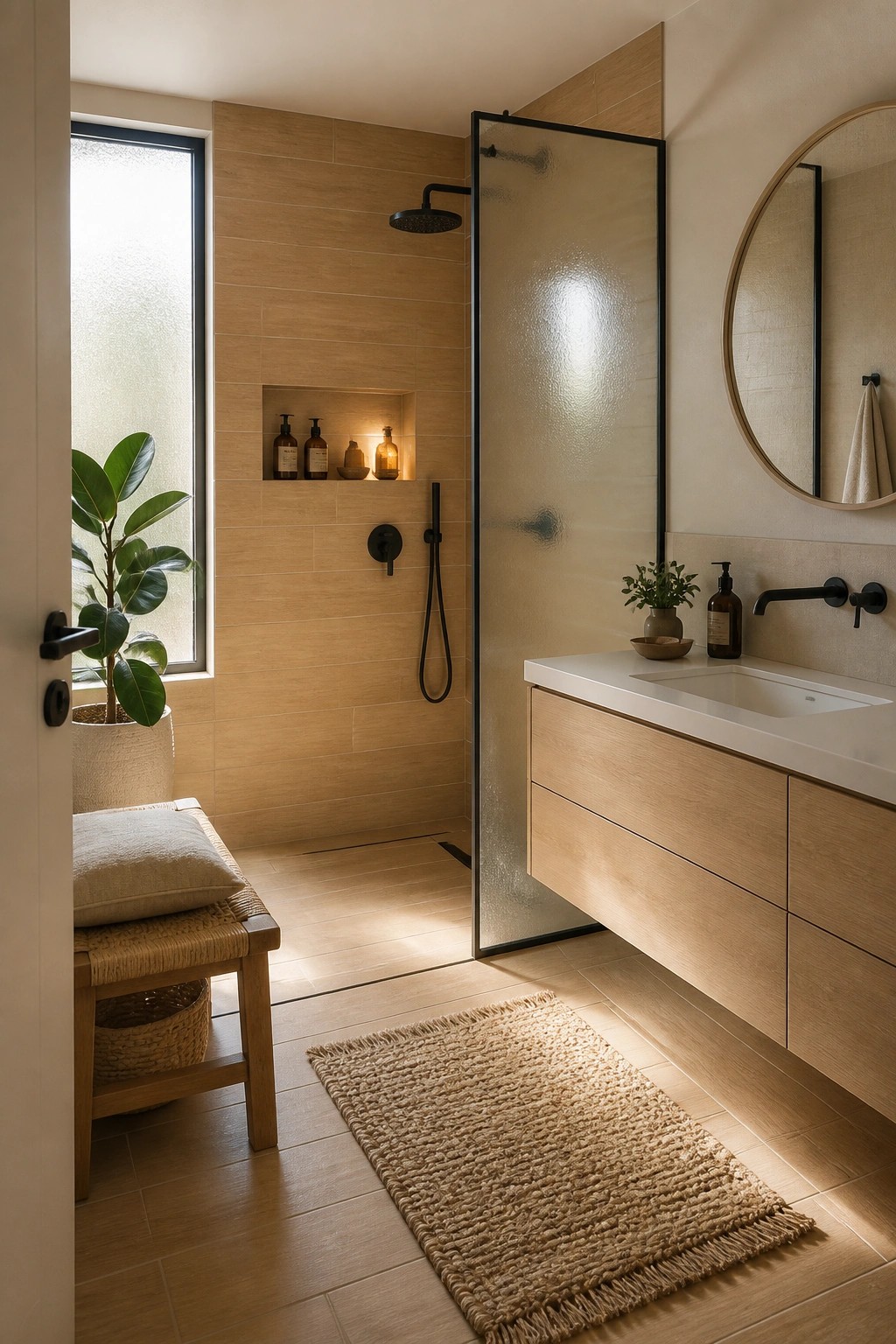
Wood look tile gives the shower a warmer feel than the usual cool tones people often pick. It creates a natural look that still holds up to daily water use without any of the maintenance real wood would need.
This approach works best in smaller bathrooms or homes that lean toward simple, calm spaces. Keep the rest of the room light with wood accents on the vanity or bench so the tile does not feel too heavy.
Wood Look Tile For Shower Floors

Wood look tile gives a shower the same warmth real wood would provide while staying practical around water. Many people choose it when they want the bath to feel less cold and more like the rest of the house. The herringbone layout on the floor helps the material read as wood rather than just another tile.
This works best in homes that already use wood tones elsewhere so the shower does not feel like a separate zone. Keep the rest of the materials simple so the floor stays the main source of warmth. Copper or bronze fixtures pair easily with it and do not compete.
Light Wood Look Tile With Pebble Floor Accents
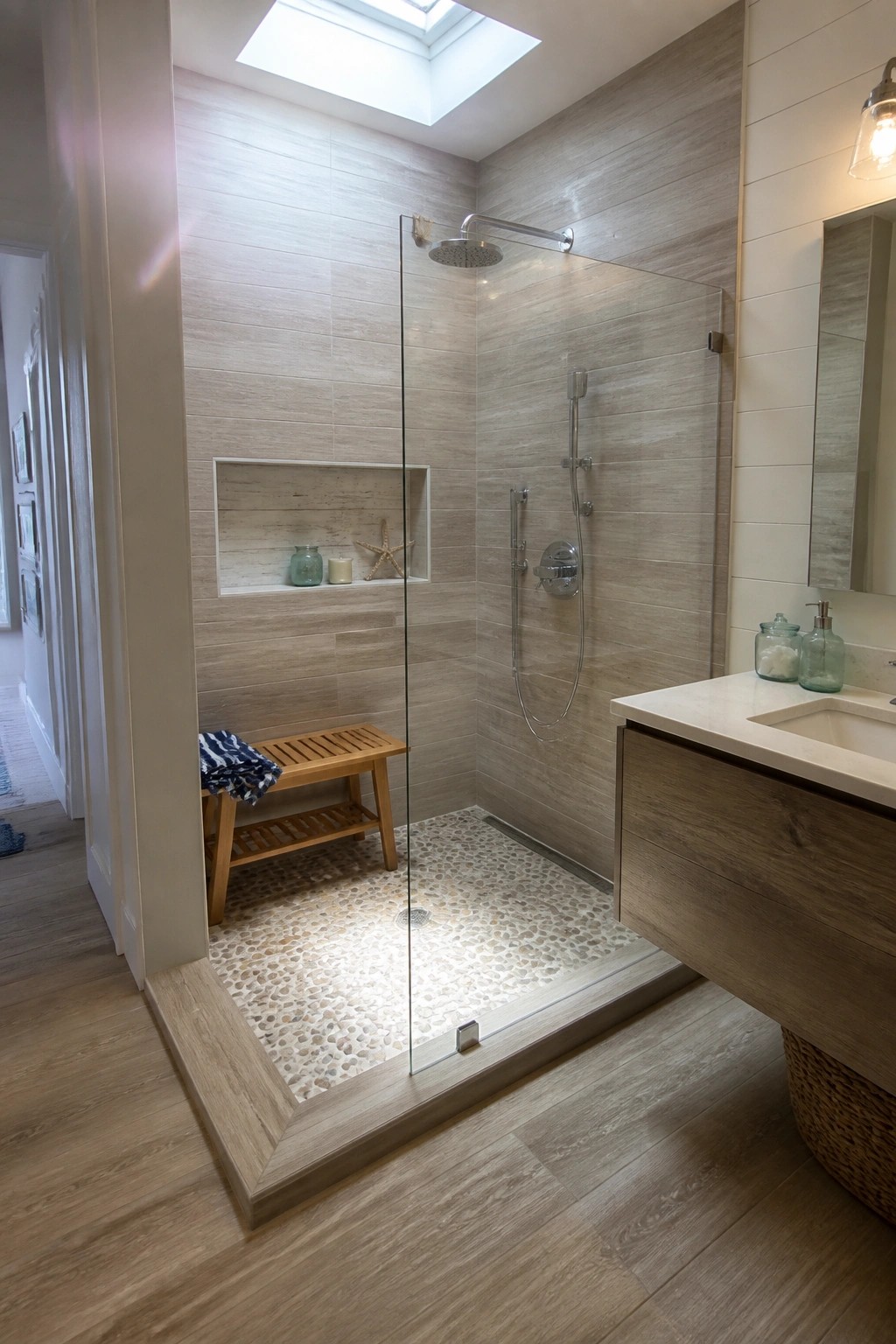
Wood look tile works well in showers because it gives the space a warmer feel without the worry that comes with real wood. The light tones keep things bright while the grain pattern adds a bit of texture that plain tile often lacks.
This approach suits smaller bathrooms or guest baths where you want something low maintenance but still comfortable. Pair it with a simple floor like pebble tile if you want contrast, and keep the rest of the room fairly neutral so the tile stays the focus.
Wood Look Tile Adds Warmth To The Shower

Wood look tile works well in showers because it gives the space a softer, natural feel while staying practical in a wet area. The vertical layout on the walls helps the room feel taller without any extra trim or details.
This choice suits homes that want a cozy bathroom without moving away from easy care materials. It pairs nicely with built in storage so the space stays clean and simple.
Vertical Wood Look Tile In Showers
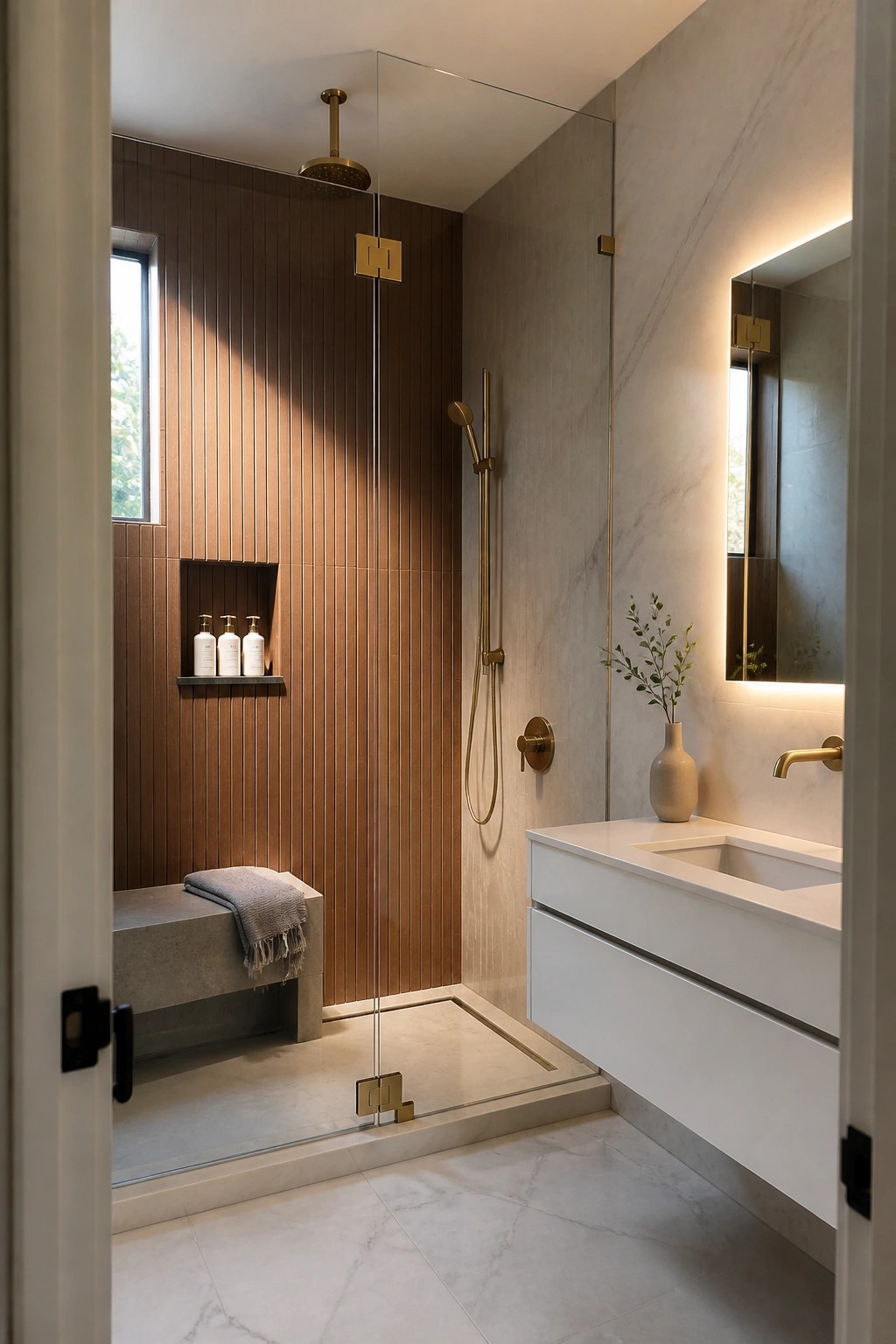
Many people like vertical wood look tile because it brings a natural tone into the shower without the worry of real wood getting wet. The lines run up and down, which helps the space feel taller and a bit more open while still keeping things warm and enclosed.
This works well in smaller bathrooms that need some softness. It pairs easily with simple fixtures and a built in bench if you want a place to sit or store bottles. Just make sure the tile has a good matte finish so it does not look too shiny next to other surfaces.
Wood Look Tile For A Warmer Shower
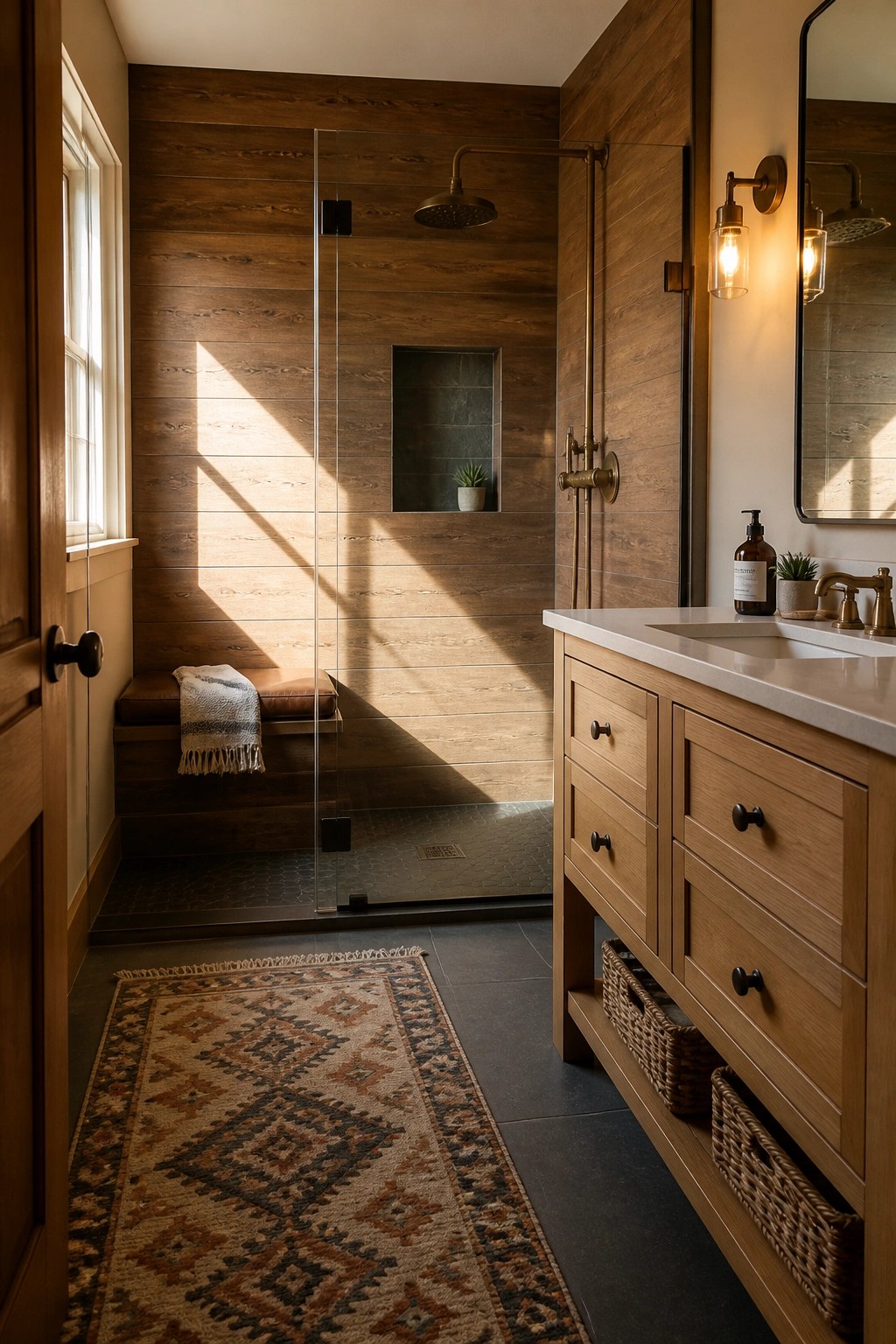
Wood look tile works well in showers because it softens the usual hard surfaces and makes the space feel less cold. The vertical planks give the walls some movement without needing extra color or pattern.
This approach suits smaller bathrooms that already have wood tones elsewhere. It pairs best with simple metal fixtures and a built in bench so the room stays calm and easy to keep clean.
Wood Look Tile Across Shower Walls, Floors, And Bench

Wood look tile works well in showers because it adds that natural grain and softness without worrying about moisture damage. It keeps the space feeling calm and connected instead of cold and clinical.
This approach suits bathrooms that need a bit more warmth, especially when the rest of the room already leans neutral. Stick with the same tile on the walls, floor, and bench so the look stays consistent and easy to clean.
Wood Look Tile Continued Beyond The Shower Door

Many bathrooms stop wood look tile at the shower door. Continuing the same tile onto the shower walls helps the whole space feel more connected and less chopped up.
This approach works best in smaller baths where you want the room to read as one material instead of separate zones. Keep the fixtures dark and simple so the wood tones stay the focus.
Wood Look Tile Warms Up the Shower

Wood look tile gives a shower that softer, grounded feel many people want in a bathroom. It cuts the chill of typical tile while still handling moisture well, and the grain adds just enough texture to keep things interesting.
This works best in bathrooms that already lean warm or rustic, especially when paired with copper or bronze fixtures. Keep the rest of the space simple so the tile can carry the look without competing with too many patterns or colors.
Vertical Wood Look Tile For A Taller-Looking Shower

Wood look tile works well in showers because it gives the space a softer, warmer look than plain ceramic while holding up to daily use. The vertical layout here helps the room feel taller and ties the shower area to the rest of the bathroom without needing extra materials.
This choice suits bathrooms that already lean on neutral tones and simple fixtures. It works best when the tile is sealed properly and paired with good ventilation so the finish stays clean over time.
Built-In Benches in Showers

A built-in bench turns a shower into a more usable space. It gives you a spot to sit while rinsing off or shaving, and it pairs naturally with wood-look tile that already softens the look of the room.
This works best in showers that have enough floor space for the bench to sit along one wall. Keep the bench material simple so it blends with the tile rather than competing with it.
Recessed Niches Keep Shower Items Within Reach

Built-in niches are a simple way to add storage to a shower without adding clutter. The wood-look tile already brings warmth to the space, and the niches fit right into the wall so everything stays neat and easy to reach during a shower.
They work best in smaller bathrooms where floor space is limited. Keep the trim simple and match the shelf depth to the bottles you use most often so the look stays clean.
Wood Look Tile In Showers
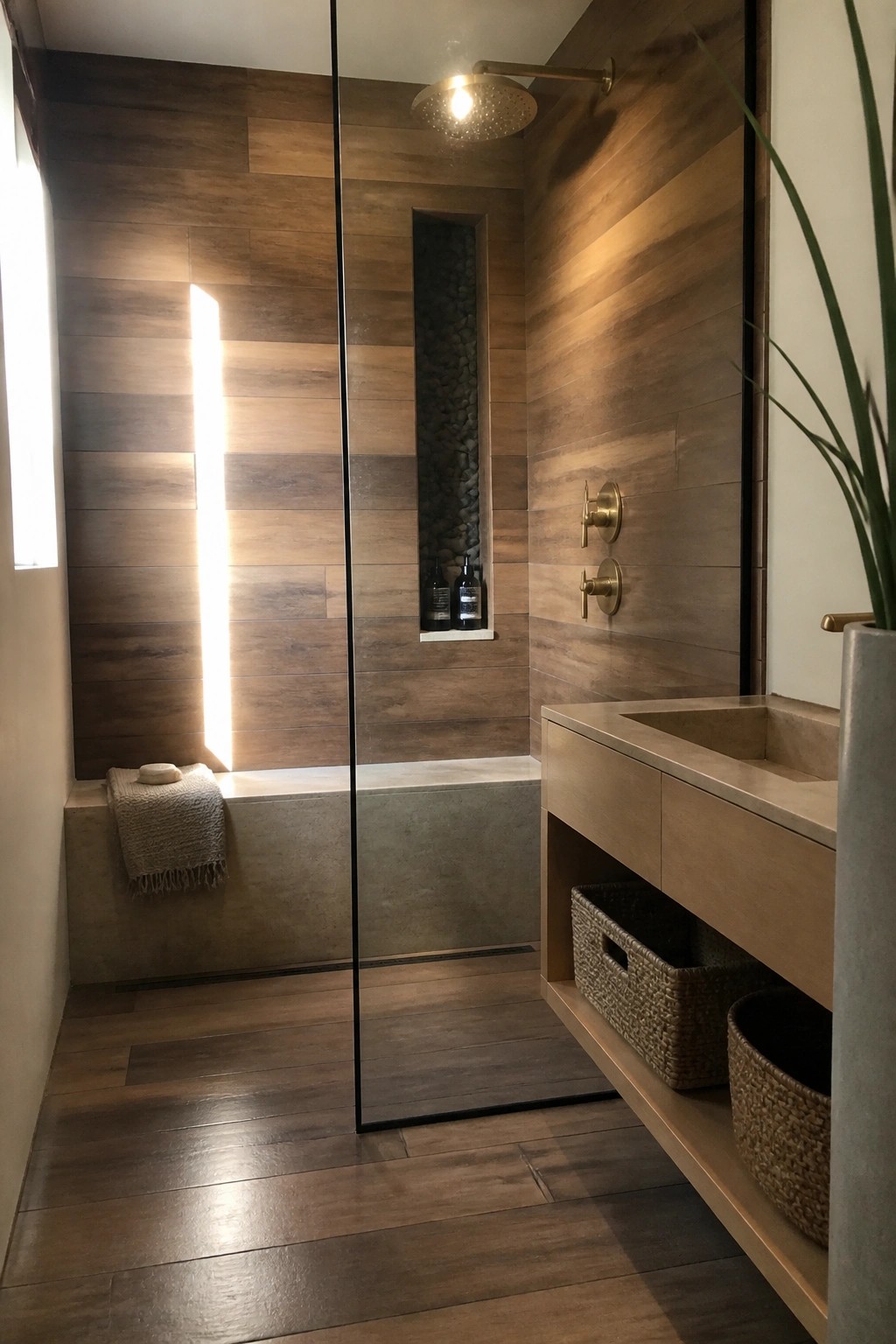
Wood look tile gives a shower the kind of warmth that feels natural rather than cold or clinical. The soft brown tones and wood grain pattern make the space feel more like a finished room than a wet zone.
This works best in smaller bathrooms where you want the shower to blend with the rest of the space. Keep the layout simple with a built in niche and a low bench so the tile stays the main feature without extra clutter.
Shower Benches Built From Matching Tile

Wood look tile showers feel warmer when you add a bench made from the same material. It turns a plain wall into a useful spot to sit without breaking up the look of the room.
This works best in showers that have enough depth for a seat. It suits homes that want a simple, low maintenance setup that still feels finished and comfortable.
Built-In Benches In Wood Look Showers

A built-in bench gives the shower a more practical and comfortable spot to sit. With wood look tile on the walls, the bench blends in nicely and keeps the space from feeling cold or purely functional. It turns the shower into a place where you can actually linger a bit.
This setup works well in larger showers where there is room for seating without crowding the floor space. Use a water-safe cushion or top material so it holds up over time. It fits best in homes that want a warm, spa-like bathroom without adding a lot of extra fixtures.
Wood Look Tile With A Built In Bench

Wood look tile works well in showers because it gives the space a warmer feel than plain ceramic or stone. The vertical layout on the walls helps the room feel taller too. Adding a bench right inside makes the shower more practical for everyday use.
This setup works best in bathrooms that already lean toward natural tones and simple materials. It suits homes where people want a spa like shower without dealing with real wood or extra maintenance. Just keep the bench low and the tile finish consistent so everything stays easy to clean.
Herringbone Wood-Look Tile For Shower Walls
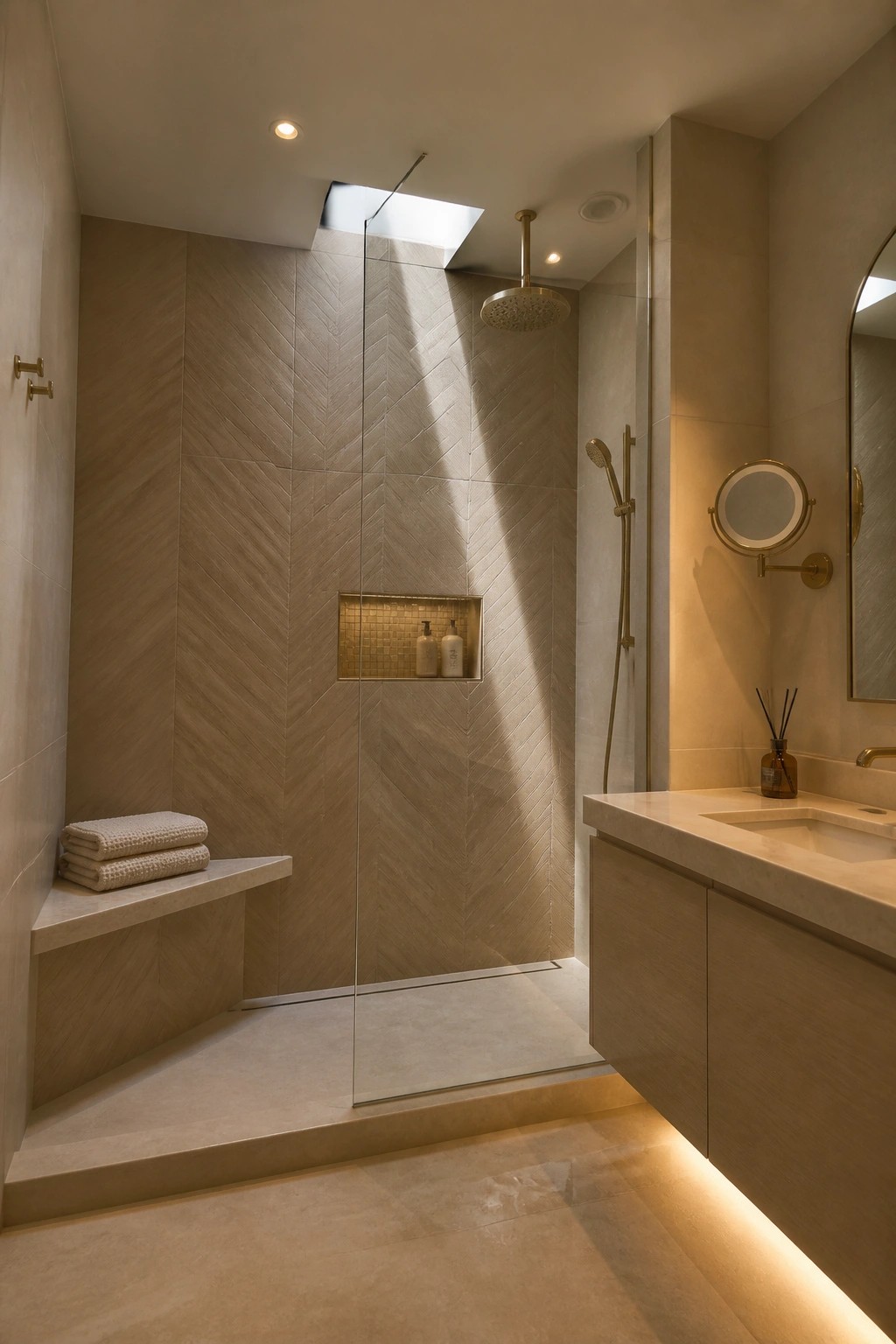
Wood-look tile in a herringbone layout adds texture and warmth to a shower without the risks that come with real wood. The pattern breaks up the large wall planes and keeps the space from feeling flat or sterile even when everything else stays in the same neutral range.
This approach works best in bathrooms that already lean warm and simple. It pairs easily with a built-in niche and a light floor so the eye stays on the walls rather than on extra fixtures. Just make sure the tile has a proper matte finish and sealed grout if you want it to hold up over time.
Wood Look Tile Brings Warmth To Shower Walls

Wood look tile works well in showers because it gives the space a softer, more natural feel than plain ceramic or stone. The vertical grain helps the room feel taller and connects the shower area to the rest of a warm-toned bathroom without needing extra color.
This approach suits smaller or medium bathrooms where you want the shower to blend in rather than stand out as a cold box. It pairs nicely with a built-in bench or niche for storage, and it holds up fine as long as the grout and sealant are done right.
Frequently Asked Questions
Q: Will wood-look tile stay safe to stand on when it gets wet every day? A: Pick a tile with a textured surface made for showers. Add a bath mat for extra grip during quick rinses.
Q: How do I stop the warm tones from feeling too dark in a small bathroom? A: Use lighter wood-look planks on the floor and save the deeper shades for one accent wall. This keeps the space open while still giving that cozy feel.
Q: Do I need to treat wood-look tile differently than regular ceramic after installation? A: Clean it weekly with a pH-neutral soap and skip harsh scrubbers. A quick wipe-down after showers keeps the finish looking fresh without extra steps.
