

When I look at a house from the street, the front door and the way it sits within the facade often decide whether the whole place feels balanced or slightly off.
Oversized entryways can anchor the exterior if the scale lines up with the roofline and windows around it, but they can also make everything else feel smaller if the proportions miss.
It rarely works by accident.
The materials and trim details end up mattering more than I used to think once the door gets that large, because they have to hold their own against the rest of the siding and stone.
I usually sketch a few options against photos of my own house before I decide anything permanent.
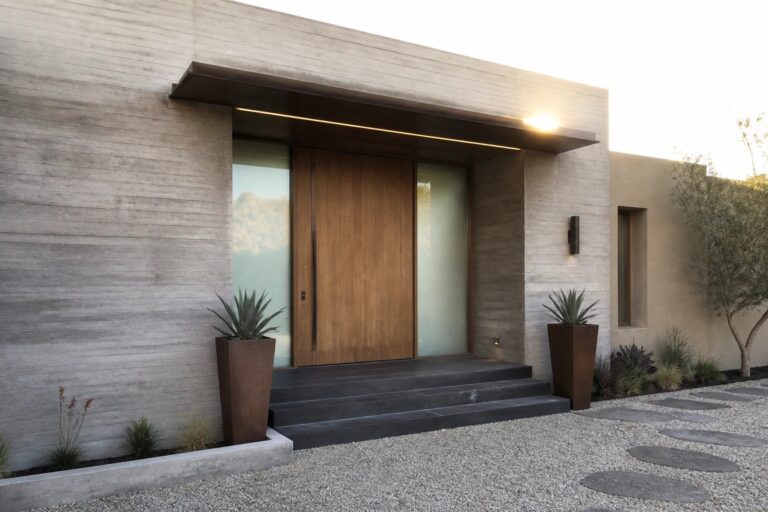
Large Wood Doors With Glass Sidelights

A big front door made of wood can anchor the whole entrance without needing much else. Placing glass panels right beside it keeps the entry bright and open while the wood adds weight and warmth that plain glass alone would miss.
This works well on homes with simple concrete or stucco walls. Keep the overhang deep enough to hold a strip of lighting so the door stays visible after dark and the scale feels intentional rather than just oversized.
Arched Entries With Tall Columns
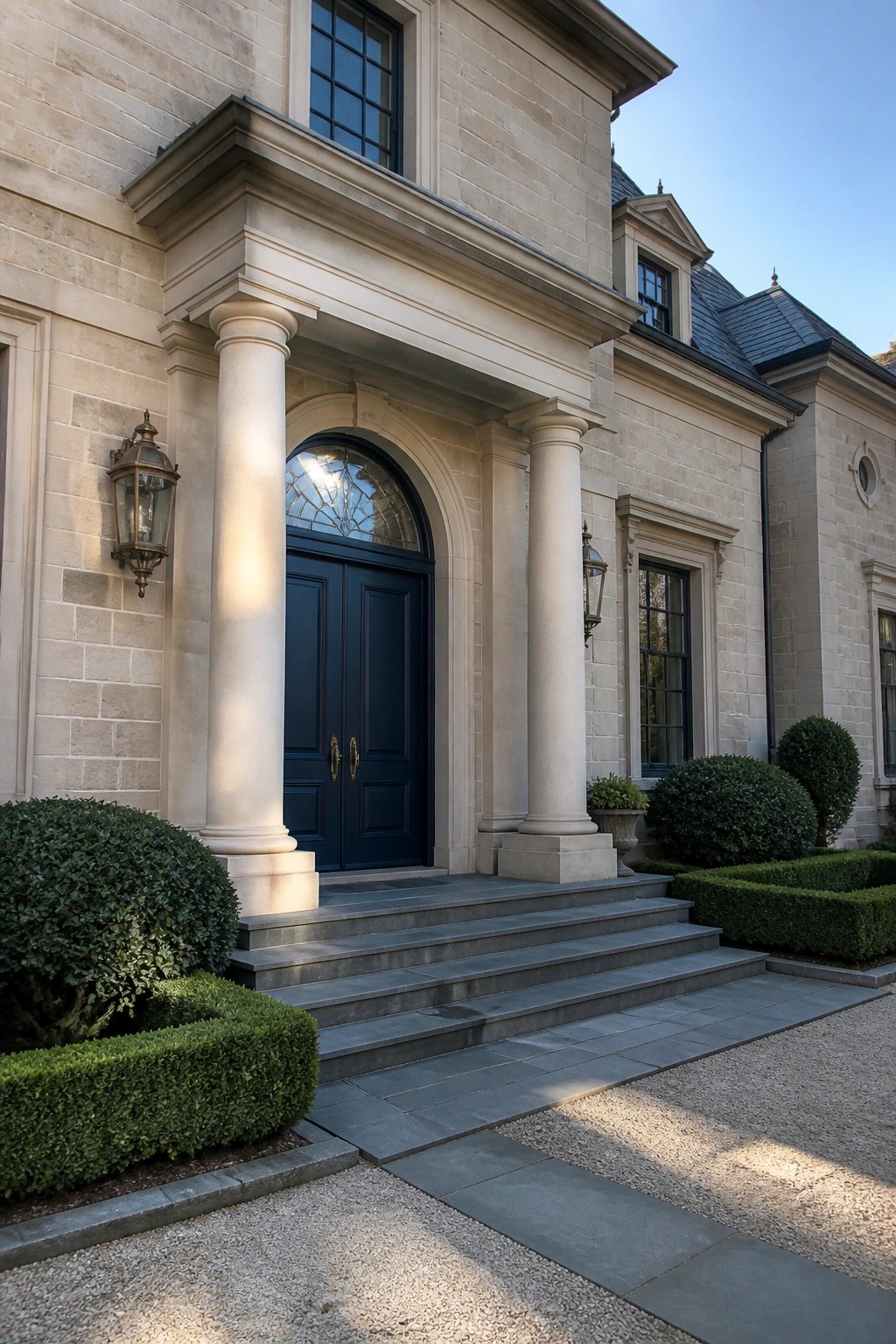
An arched doorway framed by a pair of tall columns gives the front of a house real weight and presence. The curve softens the strong vertical lines of the columns while the scale of the opening makes the entrance feel substantial rather than ordinary.
This look works best on stone or masonry homes that already have some classical detailing. Keep the columns in proportion to the door so the whole composition stays balanced instead of looking oversized.
Oversized Arched Doors On Wood Exteriors
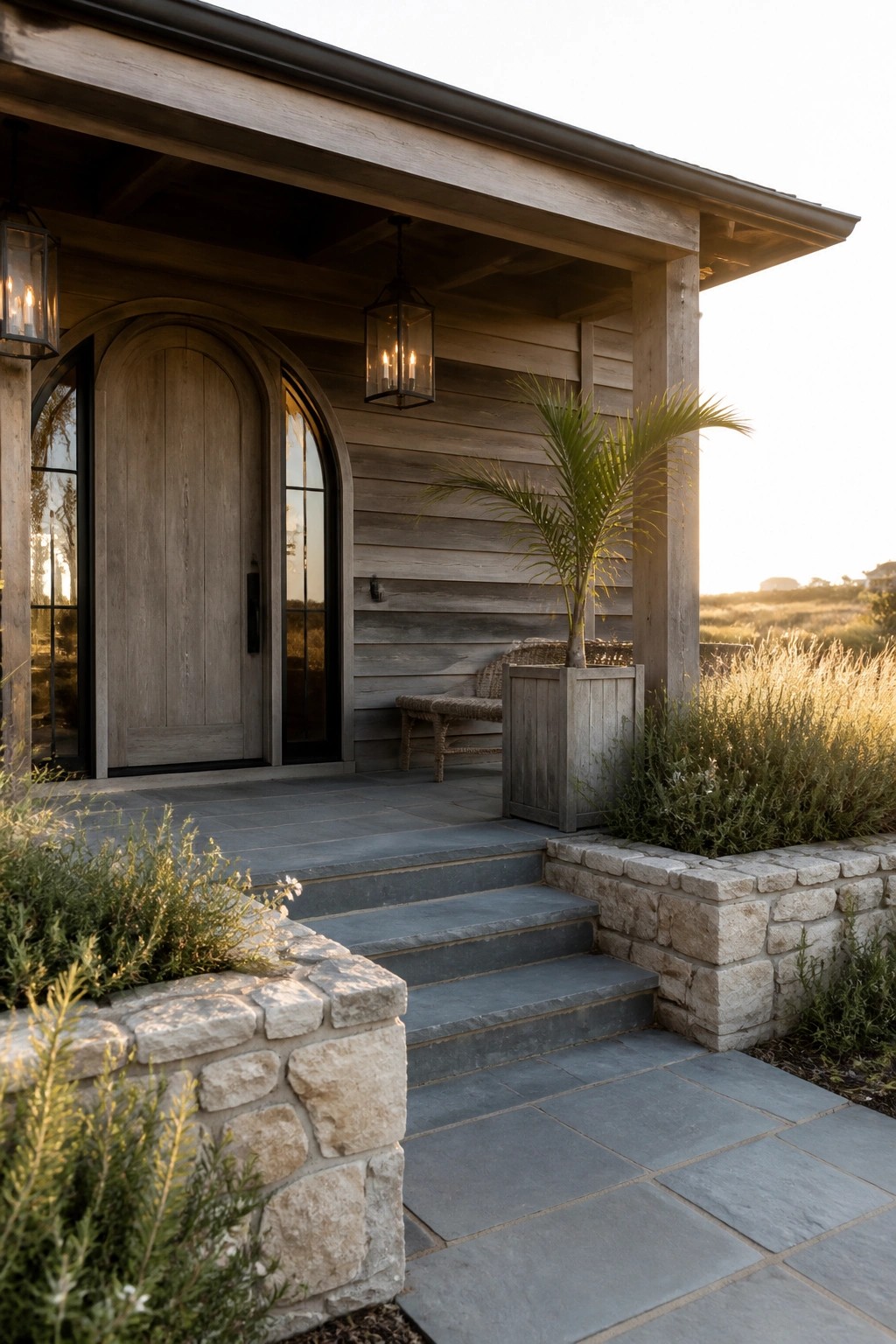
An oversized arched front door gives a house a clear focal point without needing extra trim or decoration. The curve breaks up the flat lines of the siding and makes the entry feel more open right away.
This works best on homes with natural wood exteriors where the goal is to keep things simple and grounded. Use a dark frame to let the wood tones stand out, and make sure the door size matches the scale of the porch so it does not look added on later.
Oversized Wooden Doors for the Entry
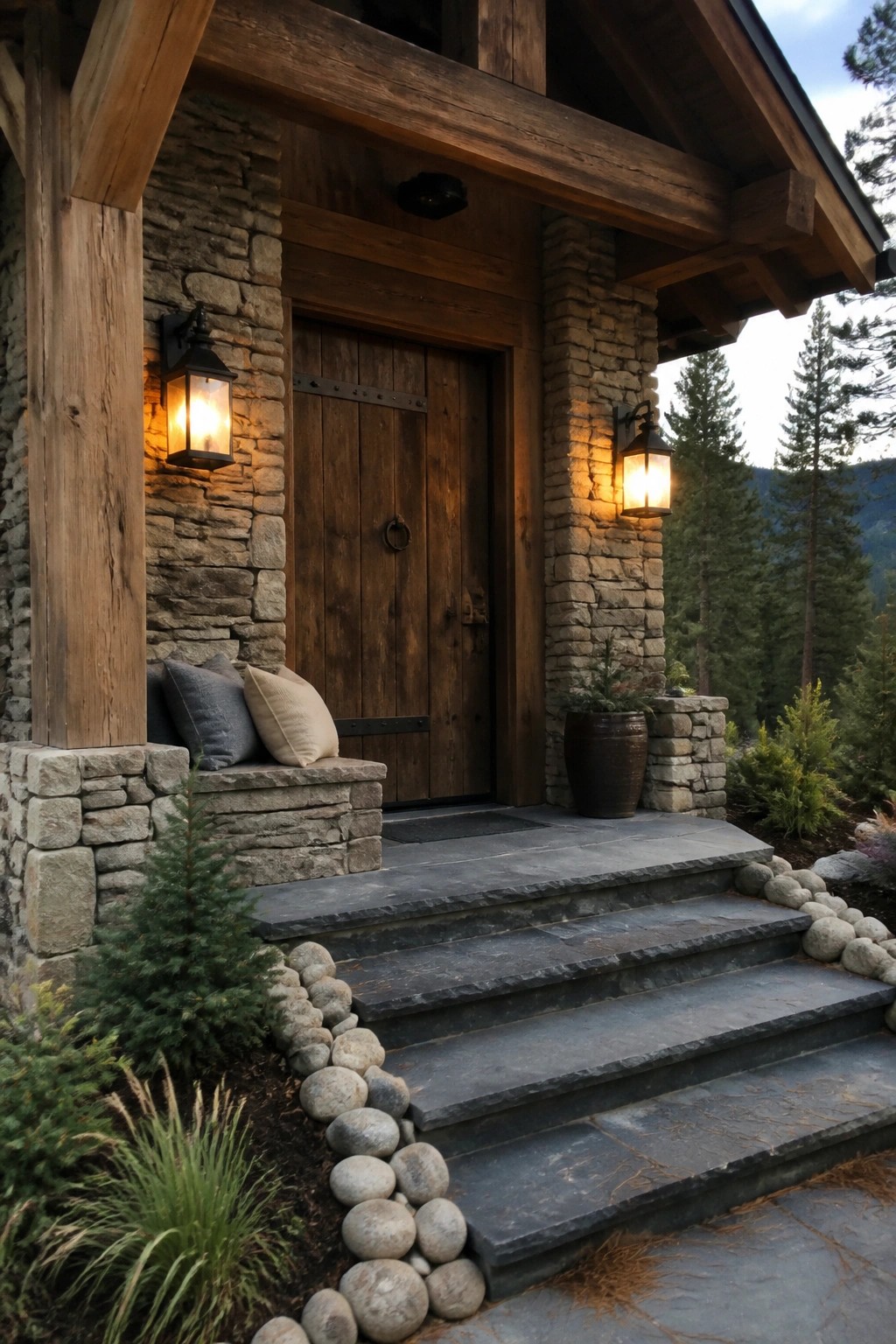
A big wood door stands out right away when the rest of the entry stays simple. Stone columns and heavy beams frame it without competing, so the door itself becomes the main feature people notice first.
This approach suits homes that already use natural stone and timber. Keep the hardware minimal and make sure the door height matches the scale of the surrounding walls so the whole entry feels balanced rather than oversized for its own sake.
Oversized Black Doors On Dark Brick Homes
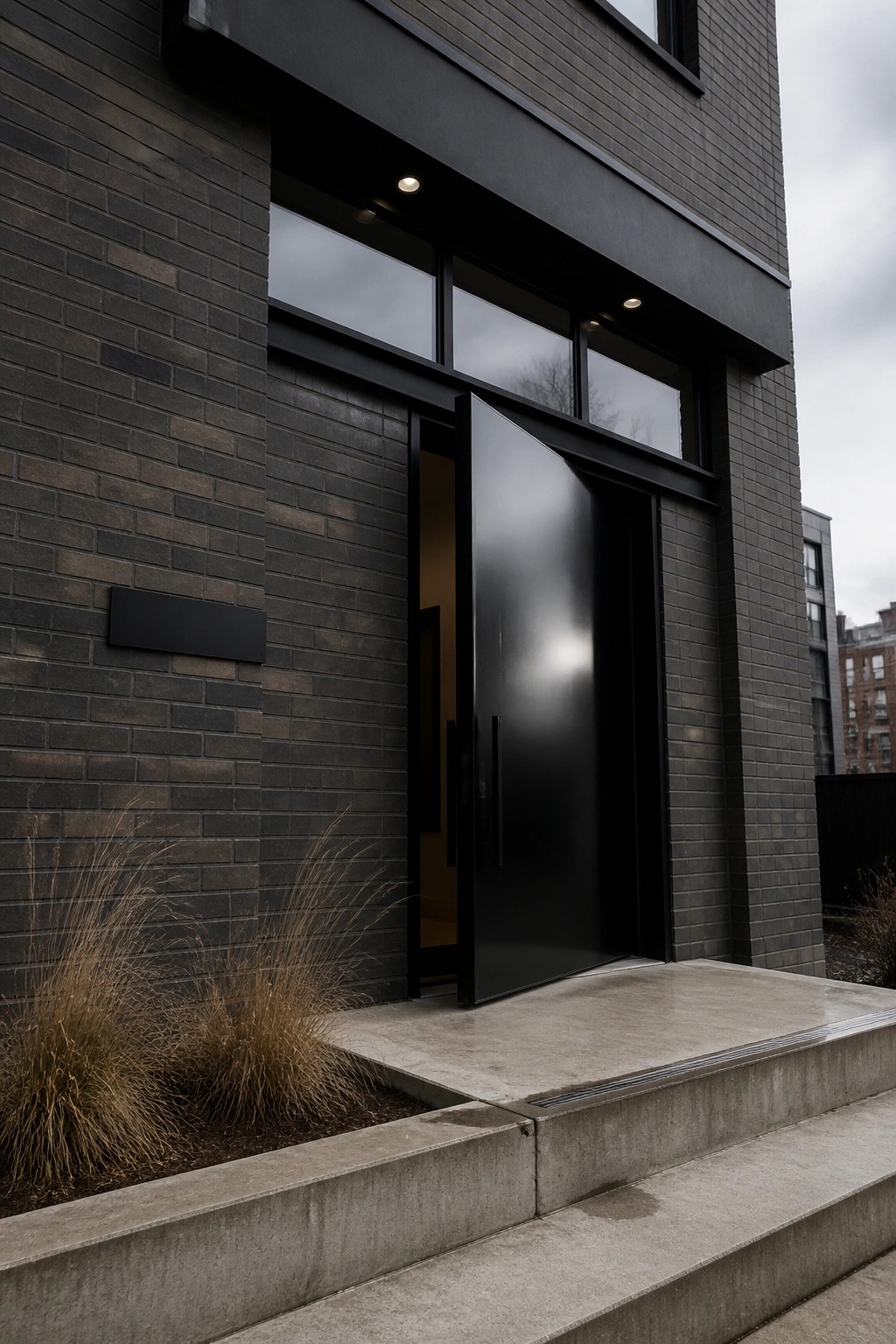
A large black door can give a home a strong modern look even when the rest of the facade stays fairly simple. The dark finish helps the door stand out against the textured brick while keeping the overall color scheme low key.
This approach works best on homes with dark or neutral materials already in place. It suits contemporary styles and makes the entry feel more substantial without adding extra trim or details.
Oversized Arched Doorways
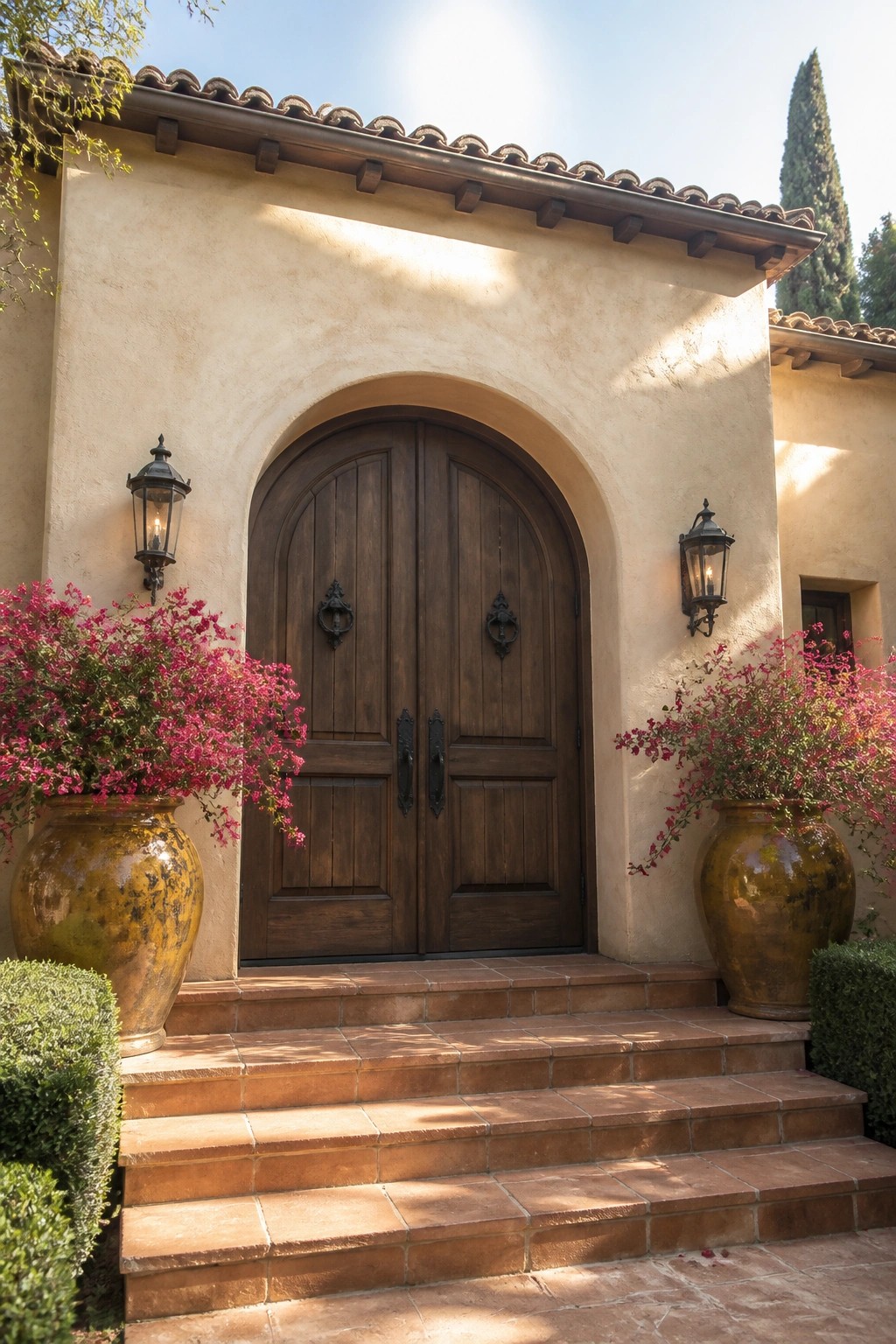
An oversized arched doorway gives the front of a house real presence. The curve softens the wall above while the double doors below create a clear focal point that feels balanced rather than showy.
This kind of entry works best on homes with simple stucco or plaster walls. Keep the doors solid and the hardware understated so the scale reads as intentional instead of overdone.
Wood Siding to Frame the Entry Door

Vertical wood siding placed right next to the front door gives the whole entry a clean, solid feel. It makes the door look larger and more intentional without adding extra trim or decoration.
This works best on homes with simple shapes and modern lines. Keep the wood tone consistent so the siding and door read as one material choice rather than two separate elements.
A Large Wood Door Gives the Entry Real Weight

A big solid wood door changes how the whole front feels. It looks substantial on its own and makes the house seem more grounded without needing extra trim or decoration.
This approach works best on homes with a porch or covered entry that can handle the scale. Keep the frame and columns simple so the door stays the main focus.
Oversized Front Doors Add Presence
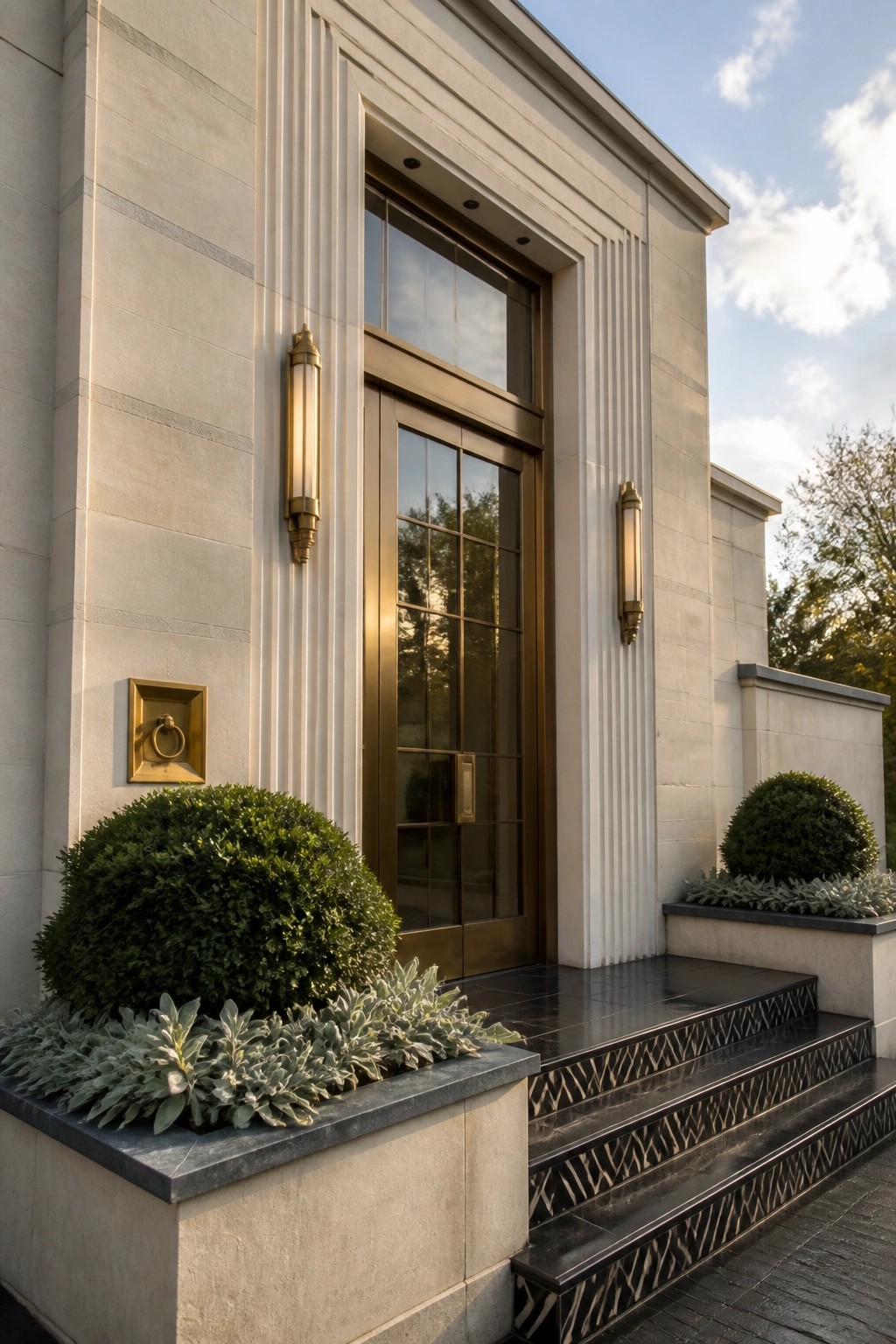
An oversized front door changes how a house feels from the street. It makes the entry look more substantial and gives the whole facade a clear focal point that smaller doors often lack.
This works best on homes with enough height around the opening to support the scale. Pair the door with simple flanking details like wall sconces so the size itself does the main work.
A Portico Makes The Entry Feel Larger
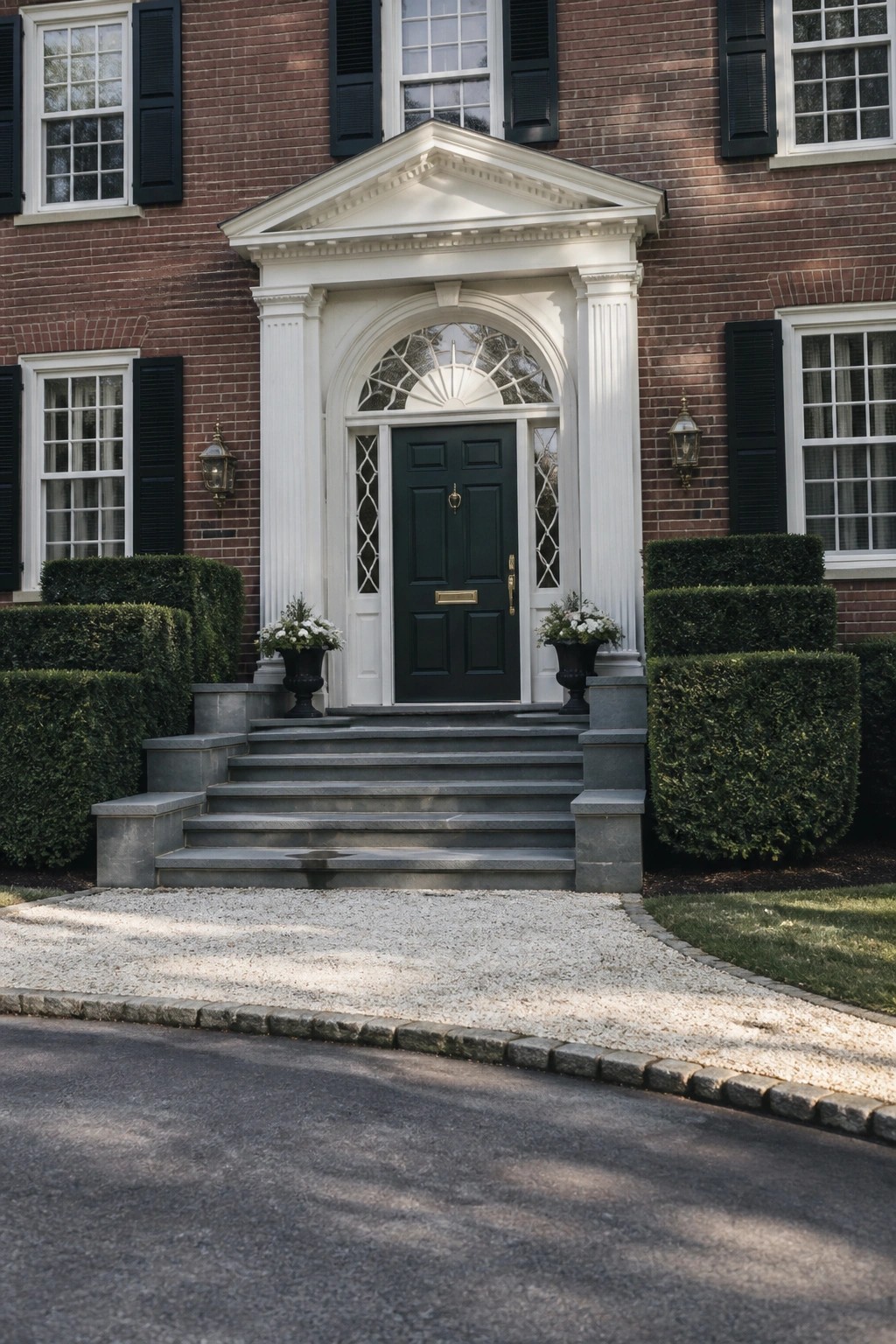
A portico with full columns and a pediment gives the front door real weight on the facade. It turns a standard doorway into something that reads as the main feature of the house instead of just another opening in the brick.
This works best on traditional homes where the white trim can stand out against darker masonry. Use a deep door color and keep the surrounding planting low so the structure stays the focus.
Oversized Doors Under a Pergola
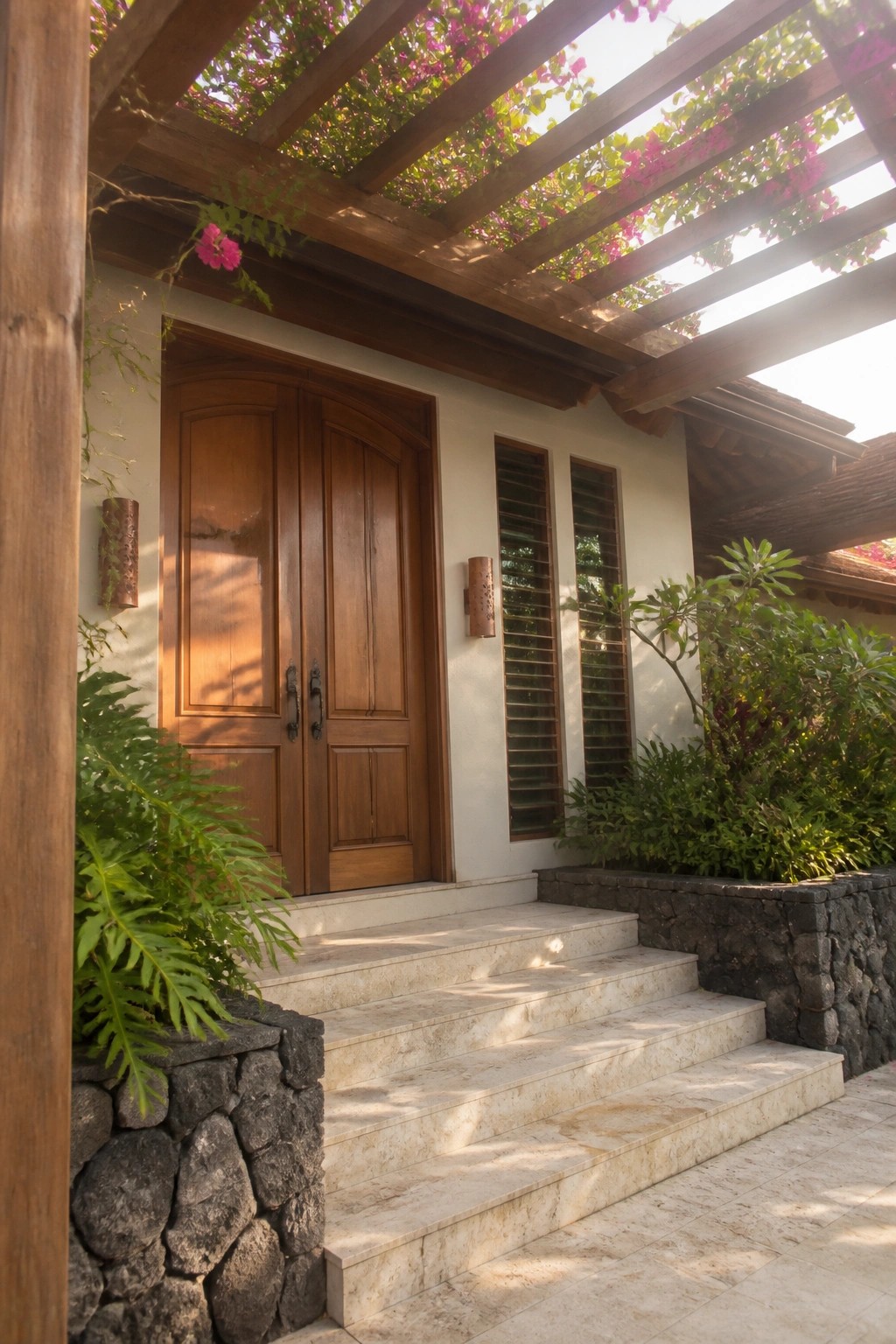
A pergola over the front doors adds useful shade while giving the entry more depth. The wood beams break up the wall height and let vines climb across, which keeps the whole area from feeling too stark or exposed.
This setup works best on homes with warm climates or strong sun. Match the wood tone to the doors and keep the planting simple so the structure stays the main feature rather than competing with too much foliage.
Oversized Glass Doors For The Front Entry
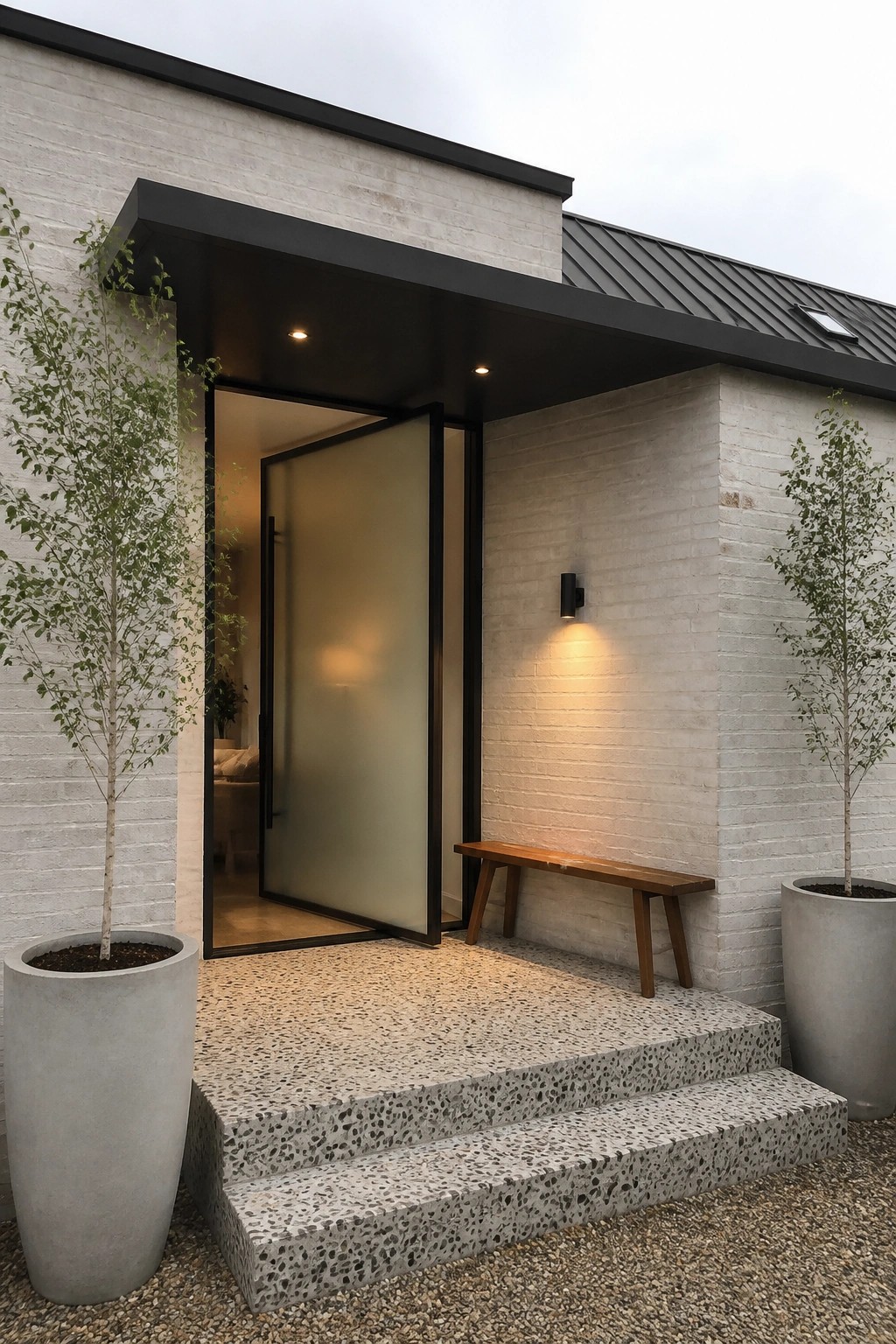
An oversized glass door gives the front of a house real presence without needing extra trim or decoration. The scale alone makes the entrance feel more substantial, and the frosted panel still keeps some privacy while letting light through.
This approach works best on homes with simple wall planes and clean rooflines. Pair it with a dark frame to define the opening, and keep the surrounding details low so the door stays the main feature.
Oversized Arched Entries
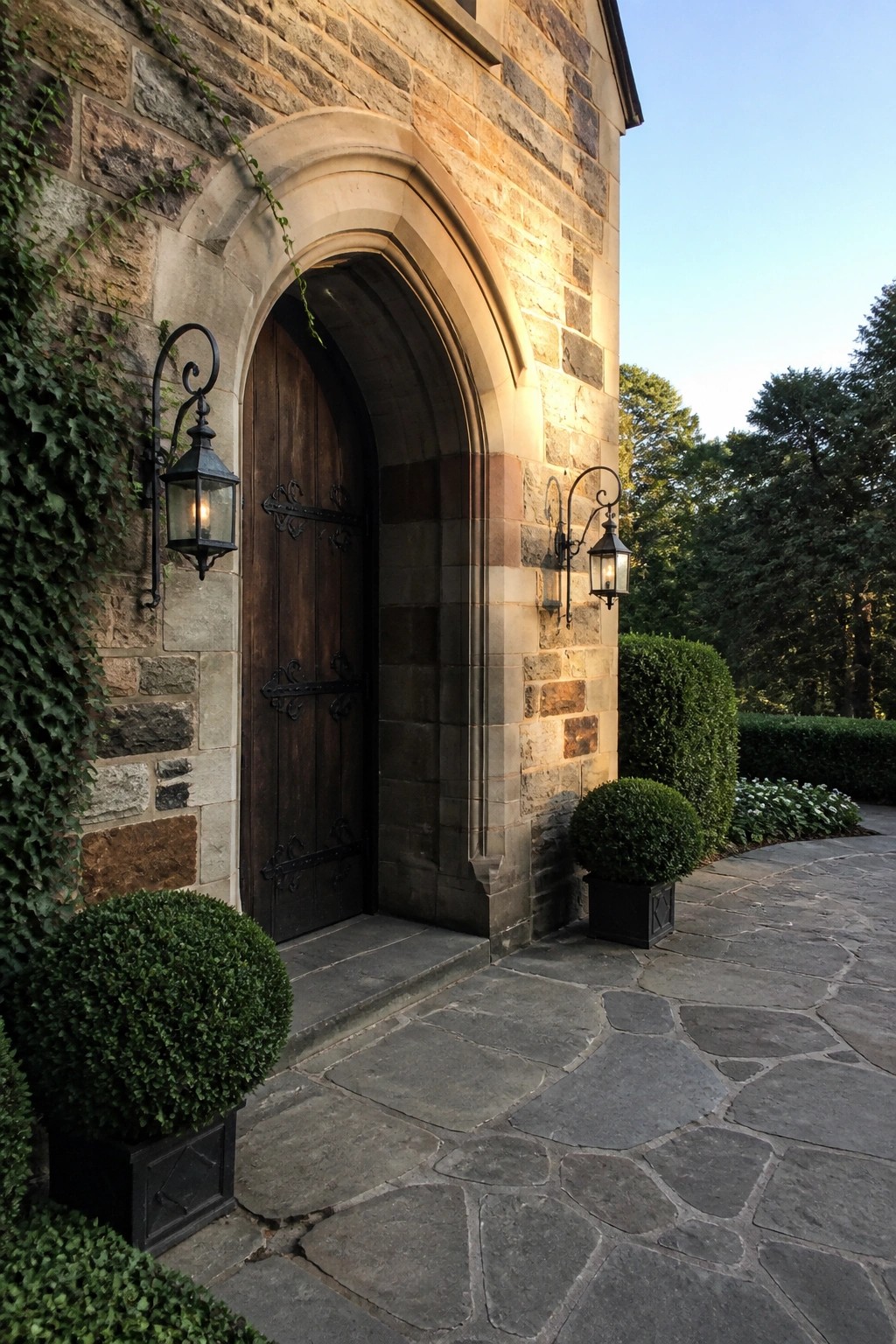
An oversized arched doorway adds presence to a house without extra ornament. The curve draws the eye upward and makes the entrance feel more substantial than a standard rectangular door.
This approach works best on masonry homes where the arch can be built right into the stone or brick. Keep the door itself simple in a dark wood or painted finish so the shape does the main work.
Recessed Niches Beside the Front Door

Recessed niches work well when you want an entry to feel bigger without adding bulk to the facade. They give the doorway breathing room and create natural spots for lighting or simple accents that draw attention to the scale of the door itself.
This approach suits homes with clean walls and a fairly formal front. Place the niches at the right height so any lighting inside stays soft and even, and avoid filling them with too many objects. One or two larger pieces keep the look balanced.
Oversized Barn Doors For The Front Entry
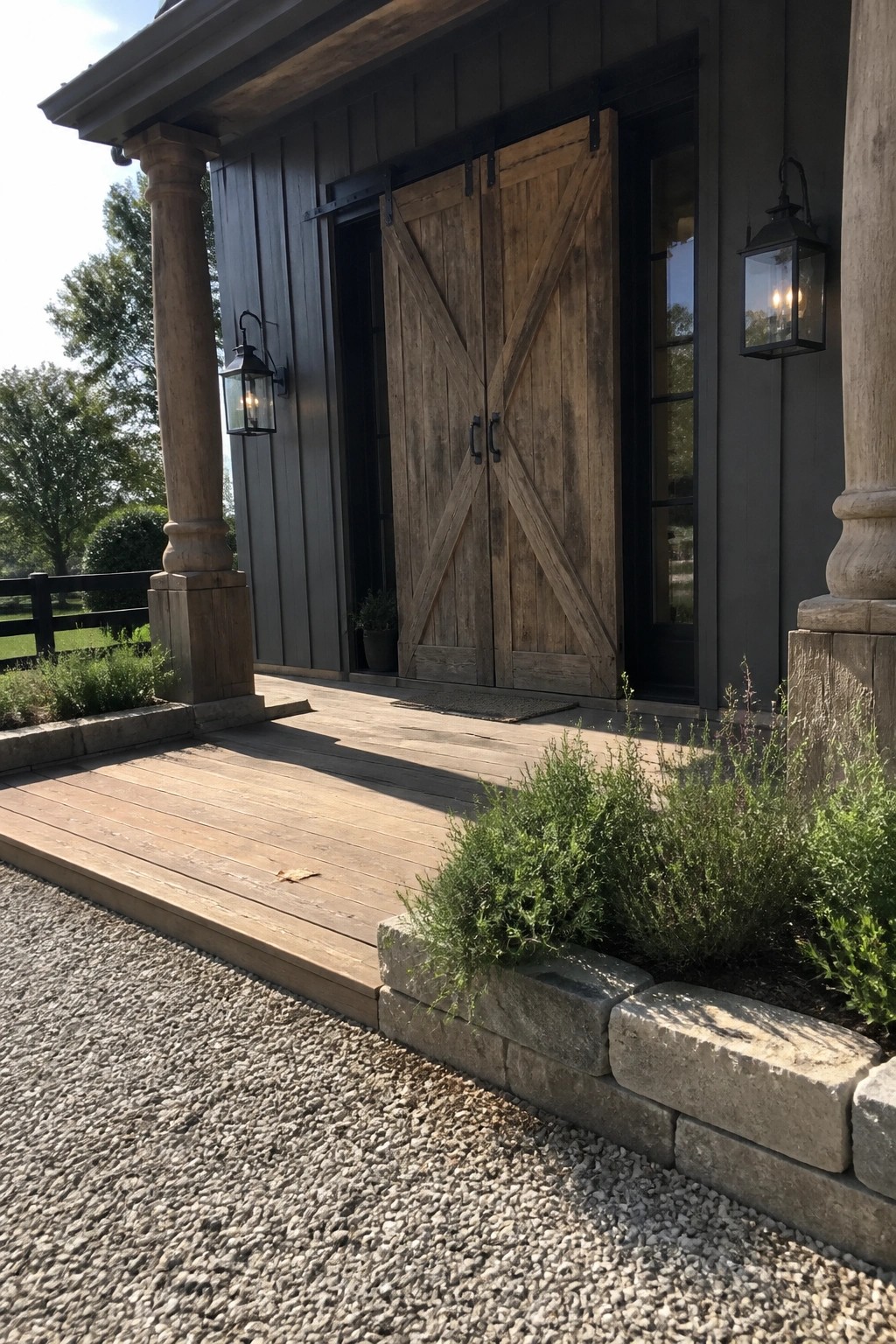
Large barn doors give a front entrance real presence without needing extra trim or decoration. The wood feels substantial next to darker siding and the simple X pattern keeps the look clean while still showing texture.
This approach works best on homes that already lean farmhouse or rustic. Pair the doors with a covered porch and matching hardware so the scale feels right rather than overwhelming the rest of the facade.
Oversized Glass Entry Doors
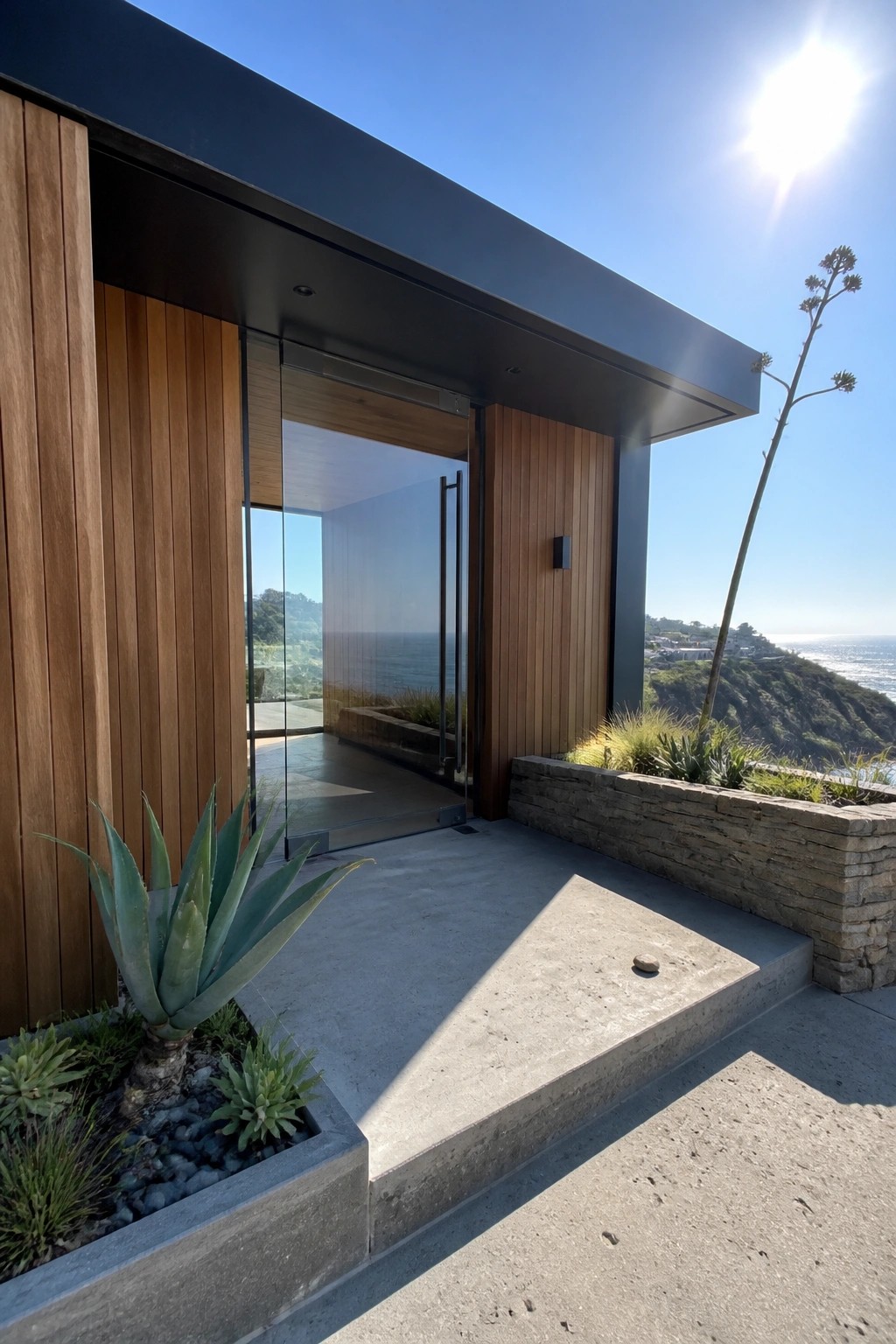
Many homes use oversized glass doors at the front to open the entry up and pull in more light. The clean lines and full height make the doorway feel less like a barrier and more like a direct path into the house.
This works best on modern builds where the goal is to connect the entry with the surrounding views. Pair the doors with simple siding and a low concrete step so the focus stays on the glass rather than extra trim.
Oversized Arched Doors Under Steep Gable Porches
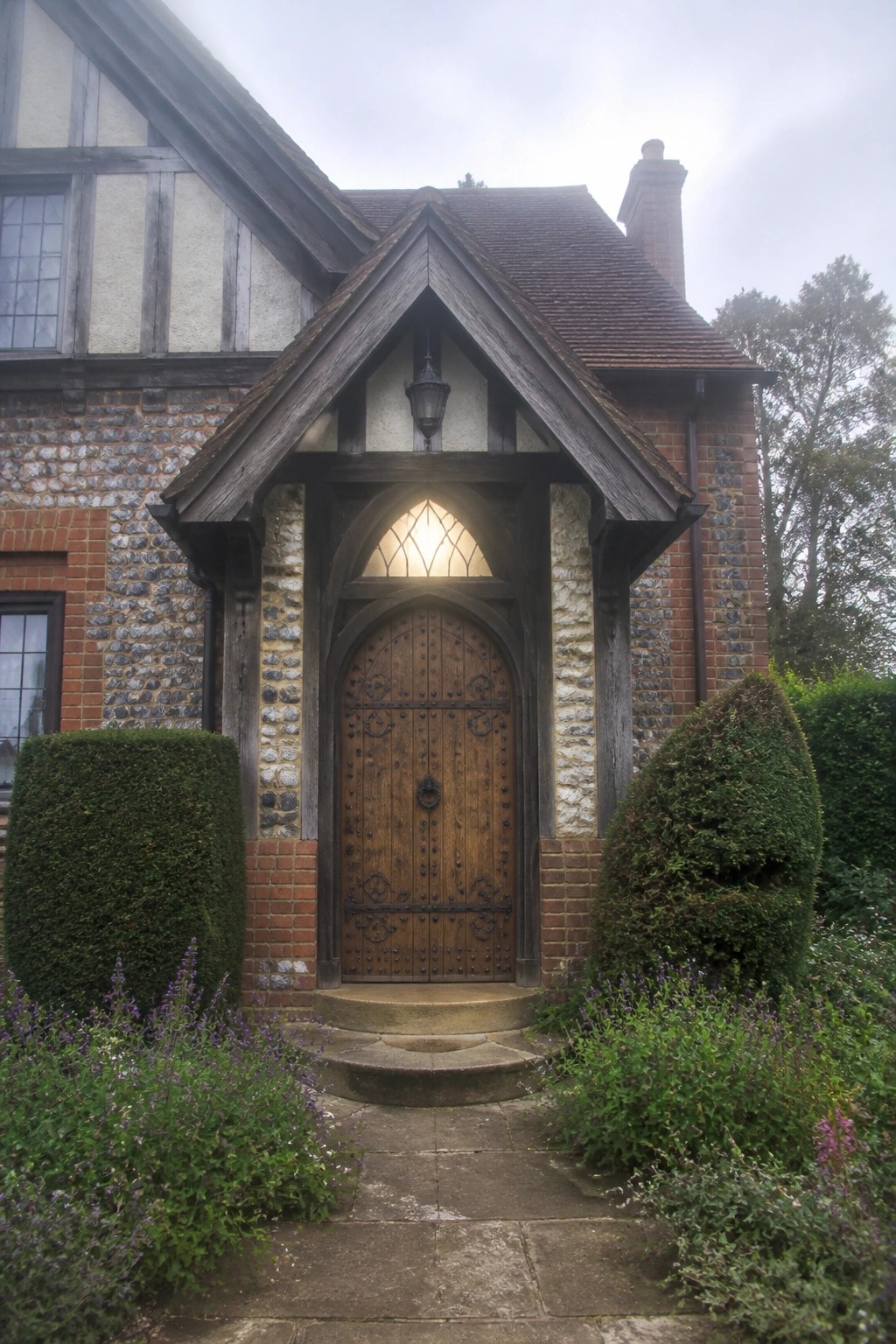
An oversized arched door gains real presence when it sits under a steep gable porch. The pointed roofline adds height and draws the eye upward, so the whole entry feels more substantial without needing extra decoration. This approach works especially well on homes that already have some traditional brick or stonework.
It suits older-style houses or new builds that want a classic look. Keep the wood tones dark and the hardware simple so the scale of the door stays the main feature. Avoid this if your rooflines are already very busy, since the strong vertical shape can start to compete.
Large Dark Wood Entry Doors
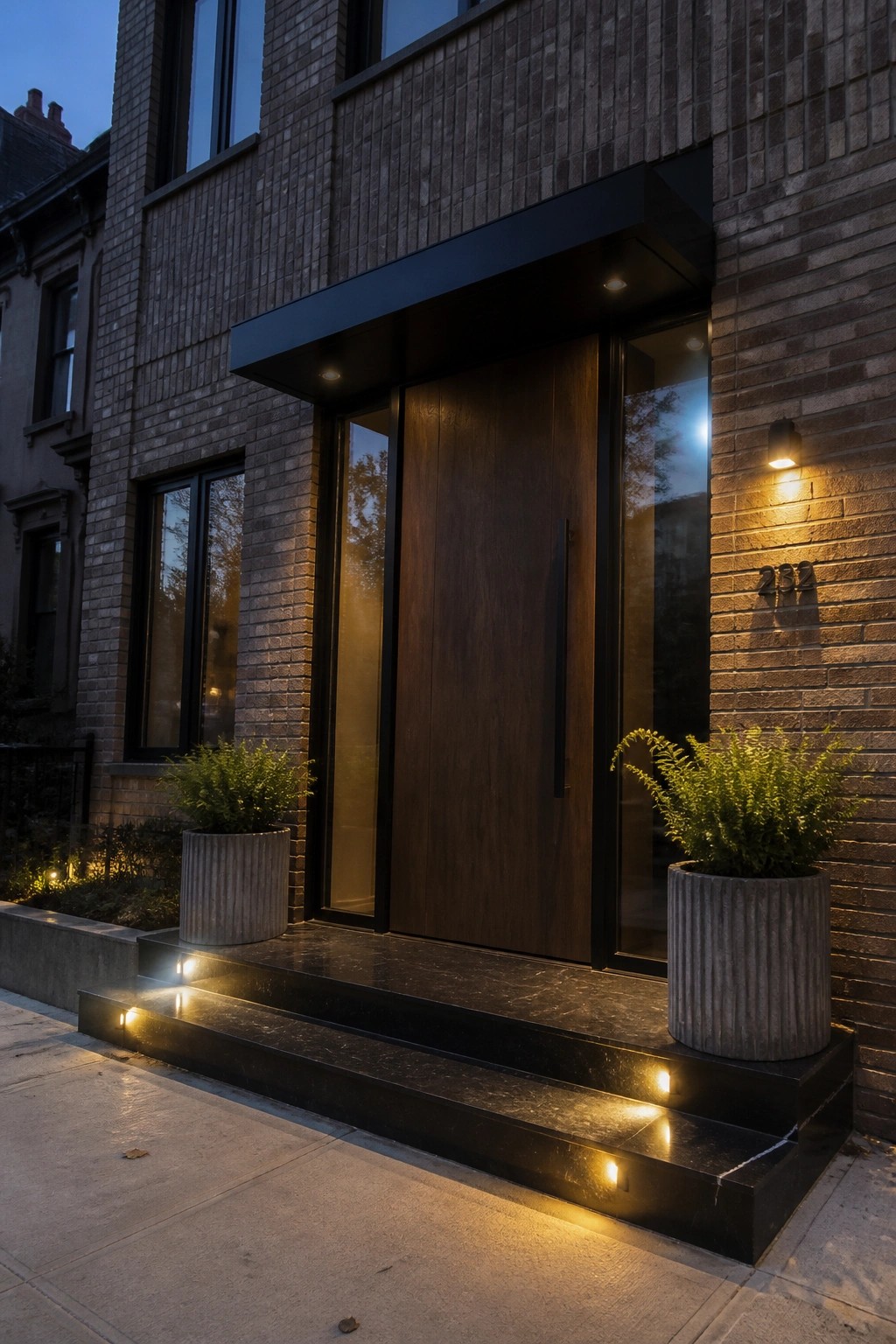
A big front door changes how the whole house feels from the street. Dark wood keeps the look solid and simple, while the side glass panels let in light without adding fussy trim.
This works best on brick homes where the contrast stands out. Keep the steps low and lit so the entry stays easy to use at night.
Stone Framing For Oversized Entry Doors
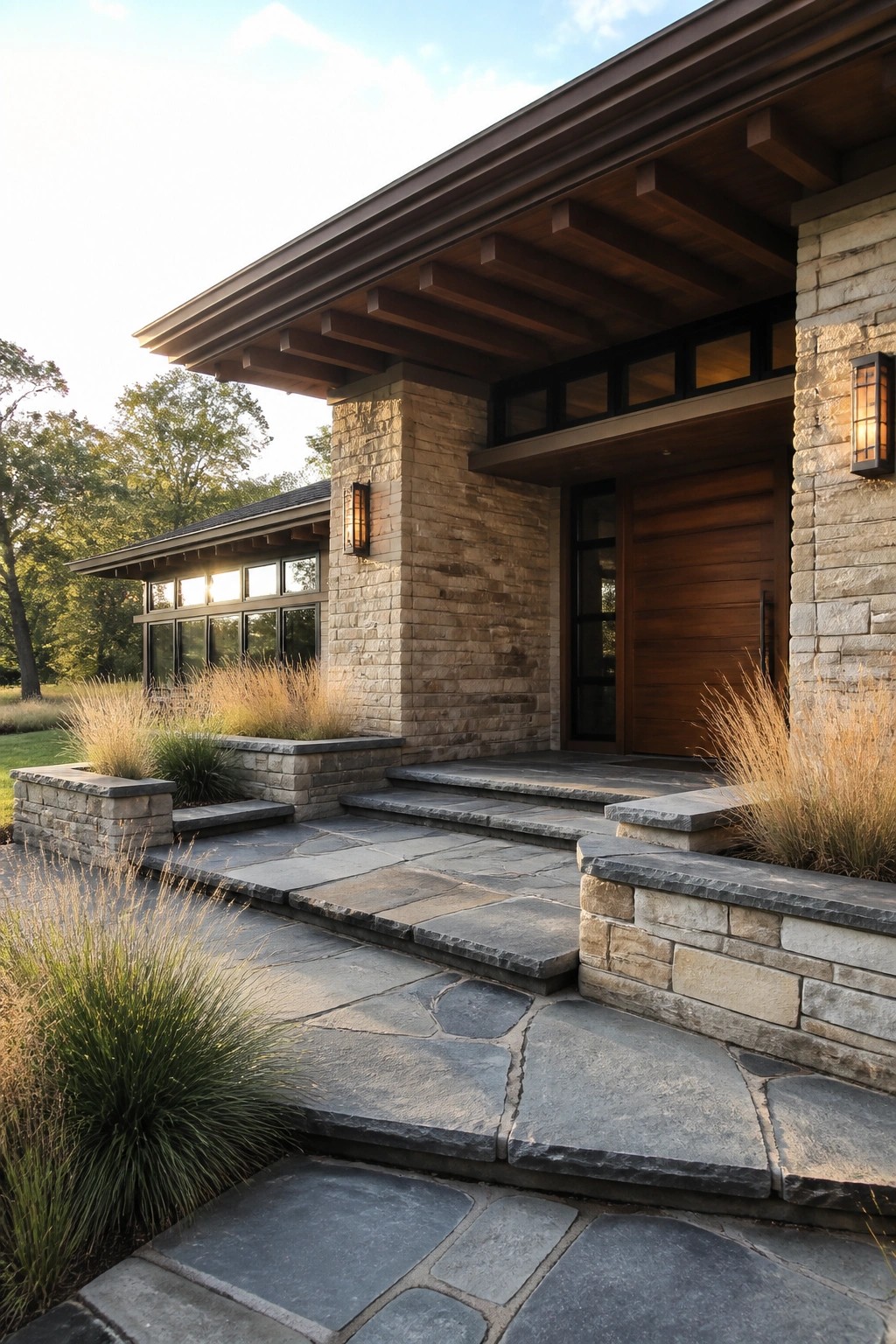
Stone around a large front door gives the whole entrance more weight and makes the door feel like the main event. The rough texture next to the smooth wood creates a simple contrast that still reads as solid and welcoming.
This works best on homes that already use natural materials or sit in a landscape with trees and grass. Match the stone color to the surroundings and keep the overhang deep enough to protect the door without hiding it.
Oversized Arched Entries With Metal Doors
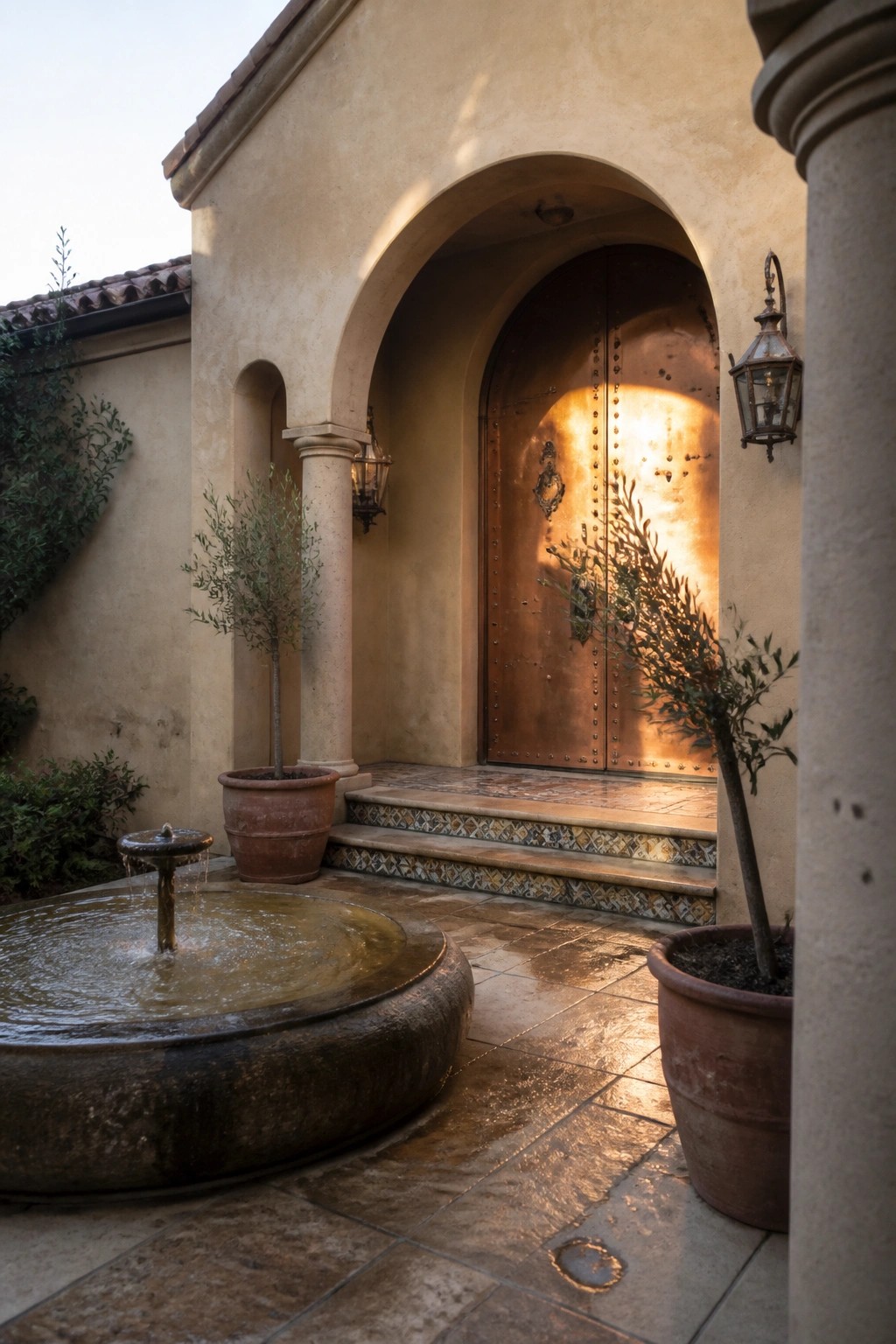
An oversized arched entryway stands out because it gives the front of the house a clear focal point. The rounded shape softens the wall plane while the metal doors add weight and texture that flat panels rarely match. This combination works especially well on stucco homes where the contrast feels natural rather than forced.
The look suits Mediterranean or Spanish revival houses best. Keep surrounding plantings simple so the doors remain the main feature, and check that the arch height lines up with the roofline. Too small an arch and the effect gets lost. Too large and the rest of the facade can feel out of balance.
Large Metal Doors For Bold Front Entries
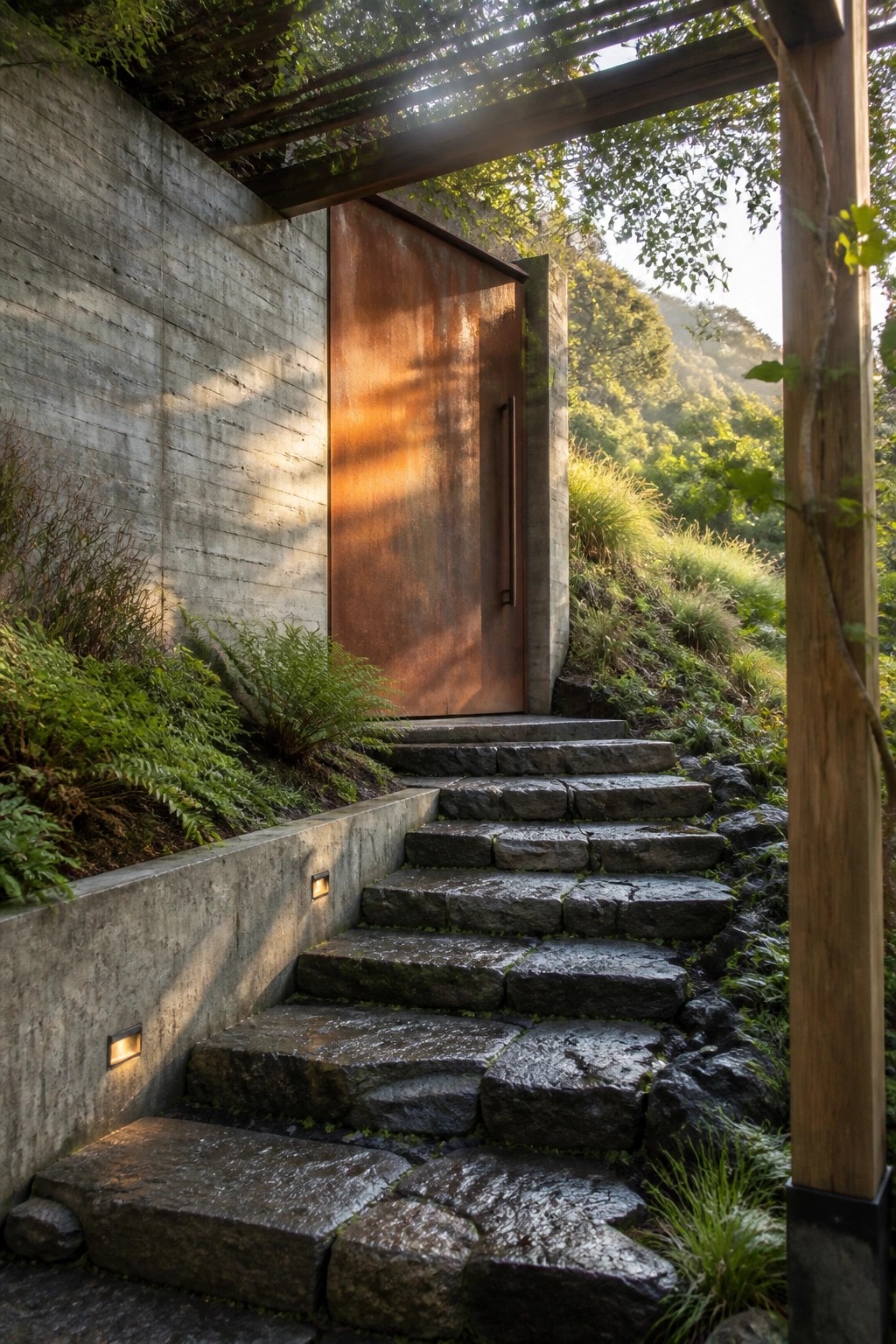
A large metal door gives an entry real presence because the scale and finish do the work without extra trim or decoration. The weathered surface catches light in a way that makes the doorway feel substantial and grounded.
This approach suits homes with simple concrete or stone walls and natural landscaping nearby. Keep surrounding details minimal so the door stays the main focus and does not compete with too many other textures.
Large Sliding Doors Open Up The Entry
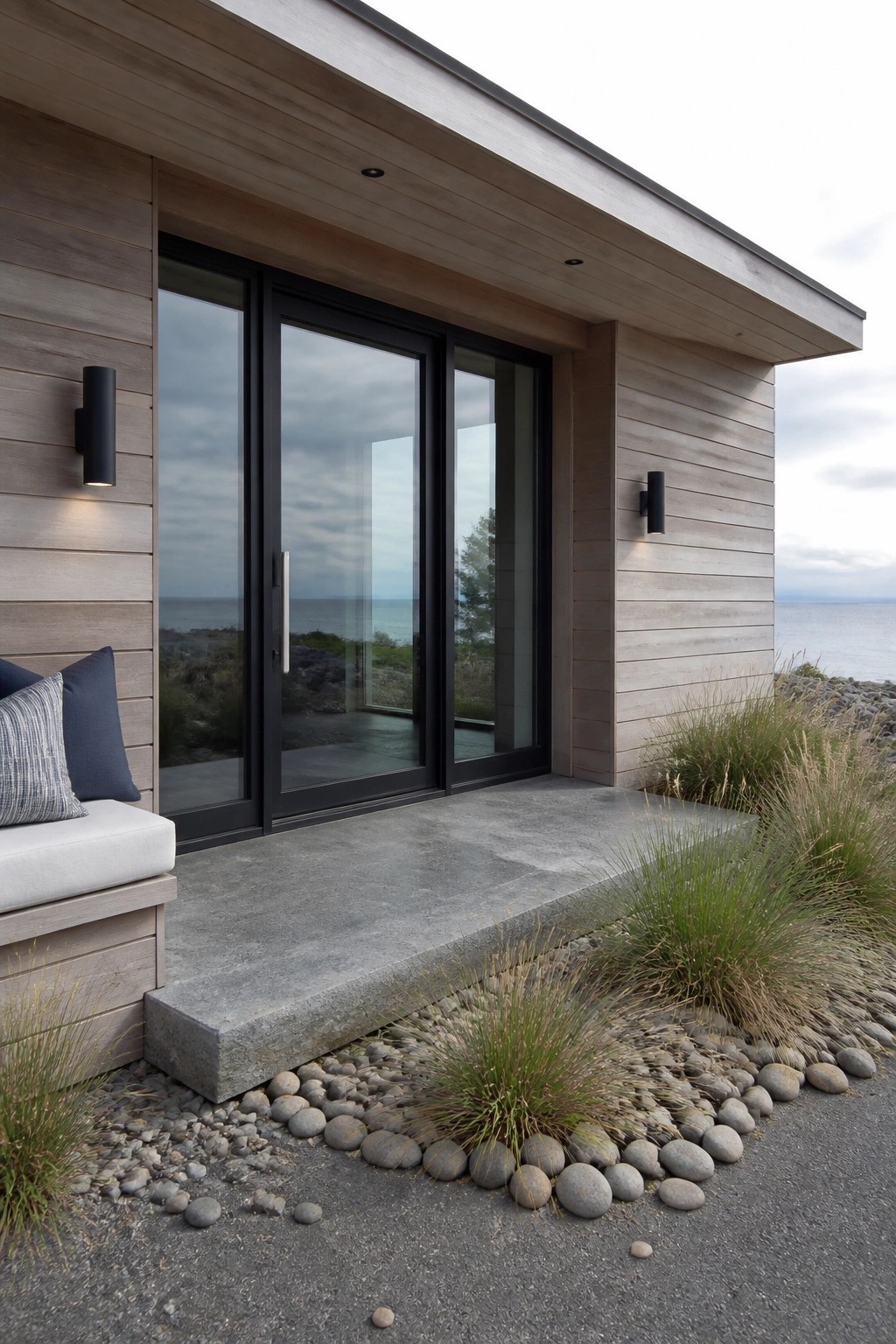
Many homes now use wide sliding glass doors in place of a single front door. The bigger opening makes the entry feel more generous and lets the outside view become part of the arrival.
This works well on houses that sit close to a natural setting. Keep the frames dark and simple, and pair them with wood siding so the doors stand out without extra trim or decoration.
Frequently Asked Questions
Q: What if my front opening is not wide enough for one of these doors? A: You can often widen the frame with some carpentry work. Check with a contractor to see what is possible without changing the whole wall. Many people do this to get the look they want.
Q: Are these big doors harder to keep clean and maintained? A: Wipe them down regularly with mild soap and water. Check the hinges and seals once a year to avoid issues later. Wood versions might need a fresh coat of sealant every few seasons.
Q: Does a larger door let in more cold air during winter? A: Choose one with solid insulation and tight seals. Proper installation makes the biggest difference here.
