

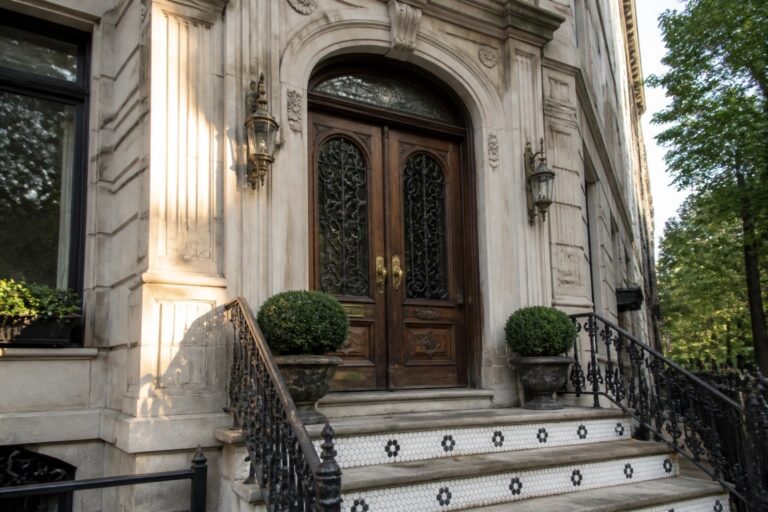
I have always noticed that the front door sets the tone for an entire house before you even step inside. European architecture often brings in details like carved wood or wrought iron that add depth to a facade in ways flat modern doors cannot. When I think about updating my own entry I wonder which of these ornate styles would actually hold up to daily use without feeling overdone. Materials matter more than people realize because a heavy oak door with classic paneling can change how the whole front reads from the street. Some ideas are worth trying on a smaller scale first.
Double Doors With Decorative Ironwork
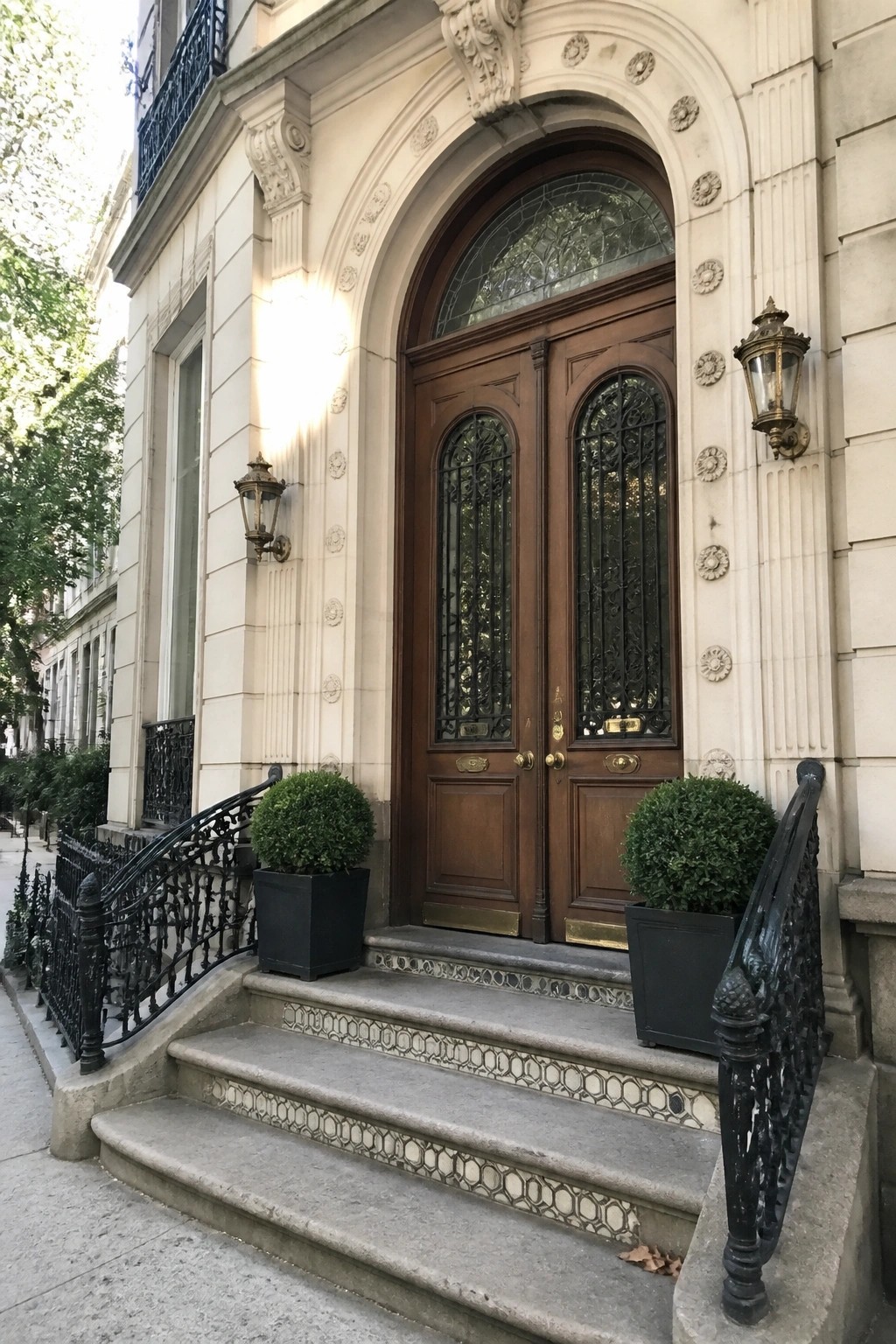
Double doors give an entry more presence than a single door ever could. The width and symmetry make the whole front feel balanced and substantial, especially when the doors carry some detail like the metal grilles seen here.
This choice works best on homes with stone or masonry around the entrance. Keep the finish on the wood fairly natural so the ironwork reads clearly, and avoid adding too many other accents that might compete with the doors themselves.
Stone Arches Around Ornate Entry Doors
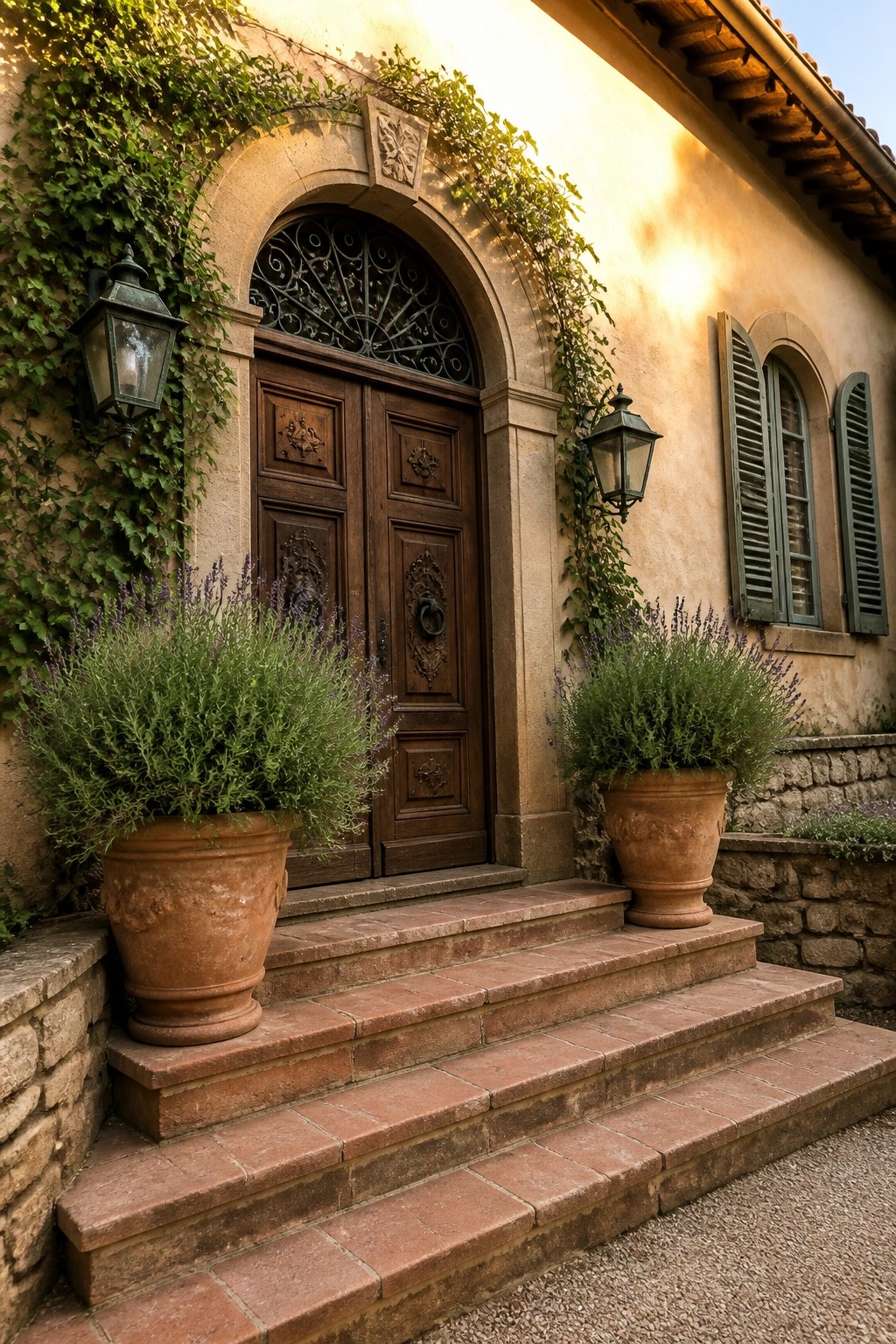
Ornate carved doors gain a lot from a simple stone arch overhead. The contrast between the dark wood and the rough stone makes the door feel more grounded and permanent. Vines growing up the sides add softness without covering the details.
This approach suits older style homes or new builds that want a European look. Keep the vines trimmed so they do not block the door swing or hide the hardware. Terracotta pots on either side can help tie the whole entry together without adding too much.
Studded Wooden Doors
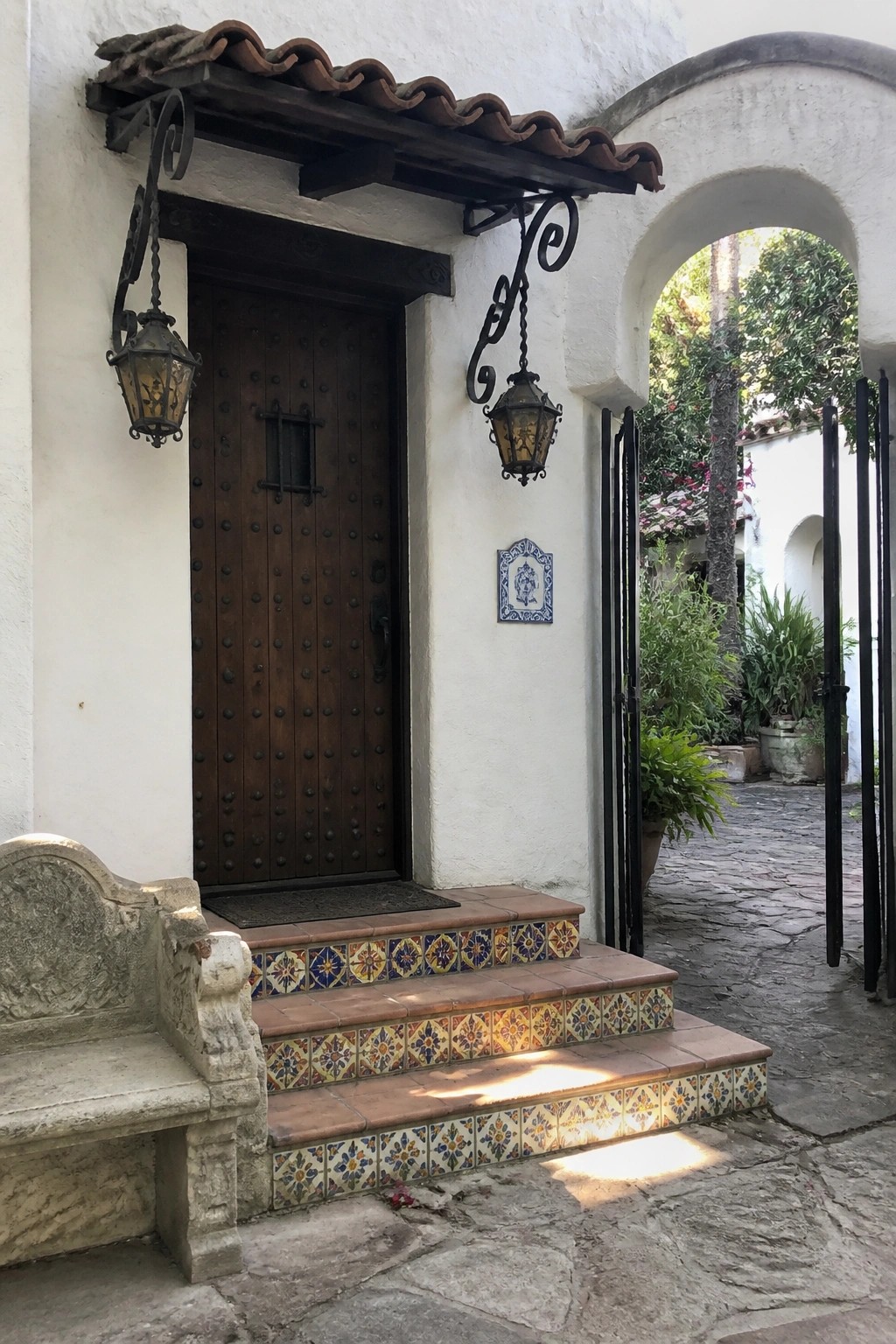
A heavy wooden door covered in metal studs brings a strong European feel to the front of a house. The dark wood and simple iron details stand out against plain walls and make the entry feel solid and lasting.
This works best on homes with stucco or light stone exteriors. Keep the rest of the entry simple so the door remains the main feature, and add matching lanterns if you want extra warmth at night.
Classical Columns For A European Style Entry
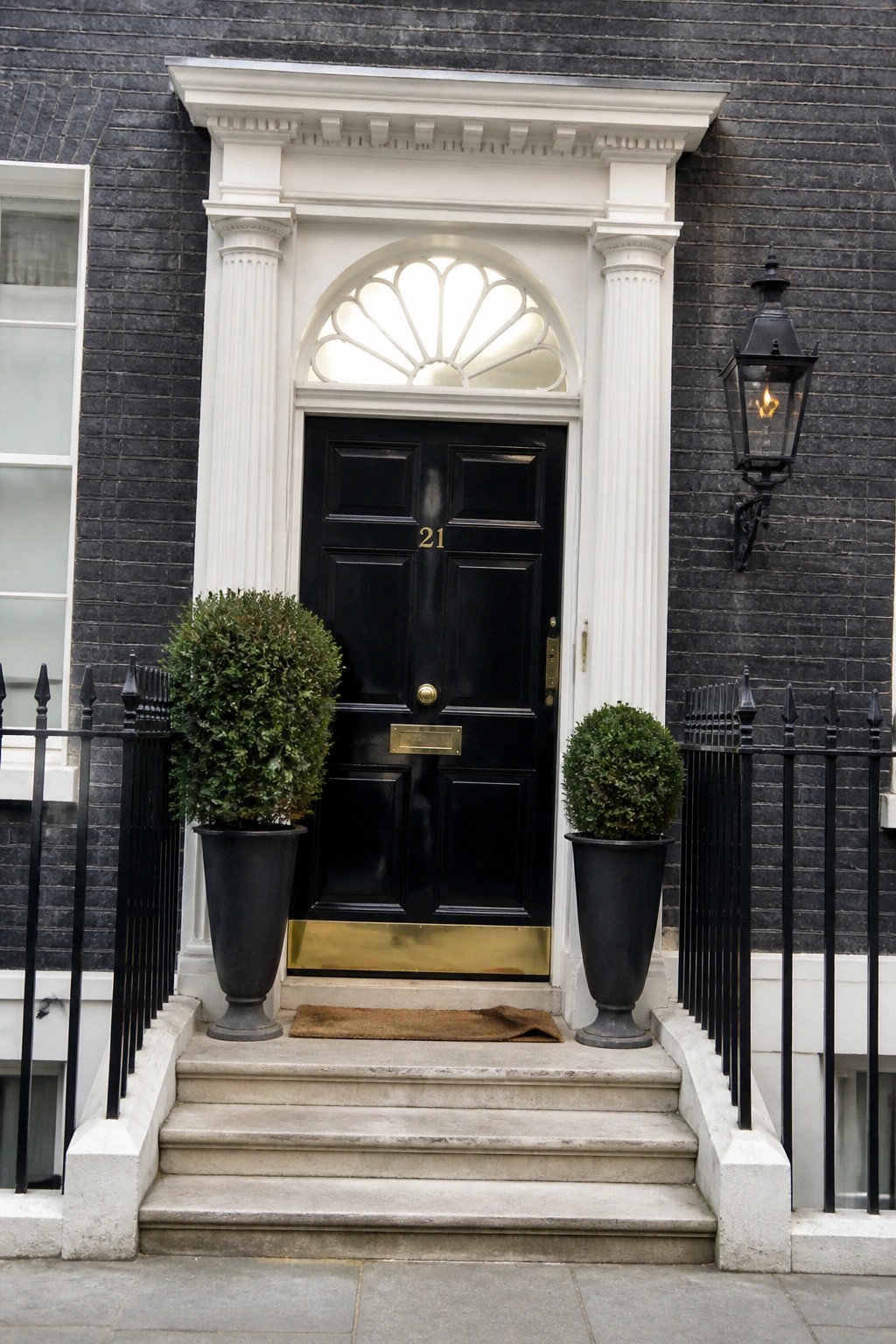
Many homes borrow from older European buildings by placing columns on either side of the front door along with a curved window above it. This simple move adds height and a formal touch that makes the entrance feel more established.
It suits brick houses that already have some traditional character. Keep the columns in a light color so they stand out against the darker door and wall, and make sure they match the scale of the doorway so the whole front does not look overcrowded.
Arched Doors Add Character To Brick Exteriors

An arched door stands out right away on a brick house. The curve softens the straight lines of the masonry and the extra hardware gives it a finished look that feels more intentional than a plain rectangle.
This style works best on homes that already lean traditional or European. Keep the color rich and the hardware simple so the door becomes the main detail without fighting the rest of the facade.
Carved Stone Around the Door
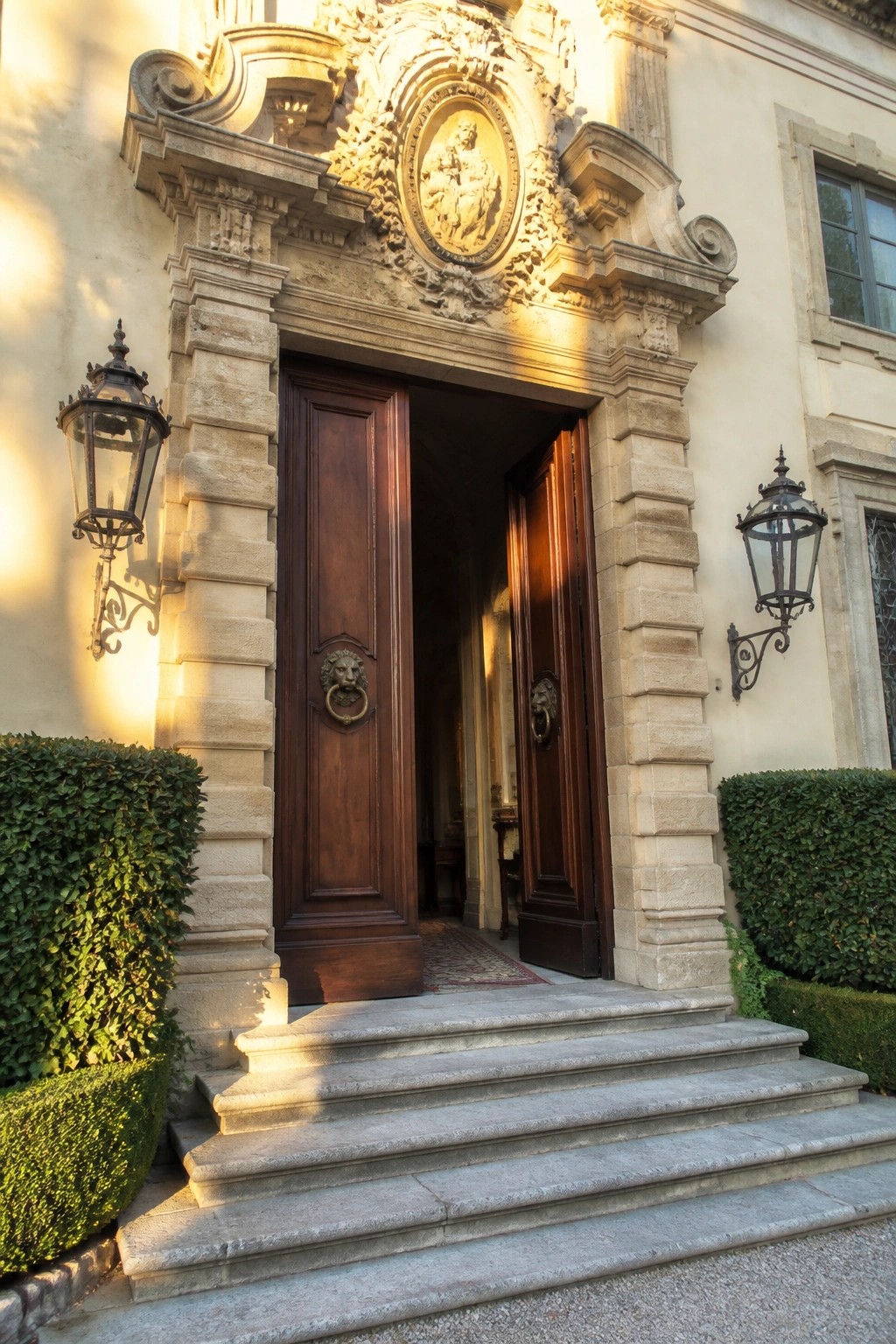
One way to give a front door more weight is to frame it with carved stone. The relief work above the opening adds depth and makes the whole entrance feel more finished without needing extra color or trim.
This works best on homes with some classical lines already in place. Match the scale of the carvings to the door size, and keep the rest of the facade simple so the stone does not compete.
Dark Doors Against Pale Stucco
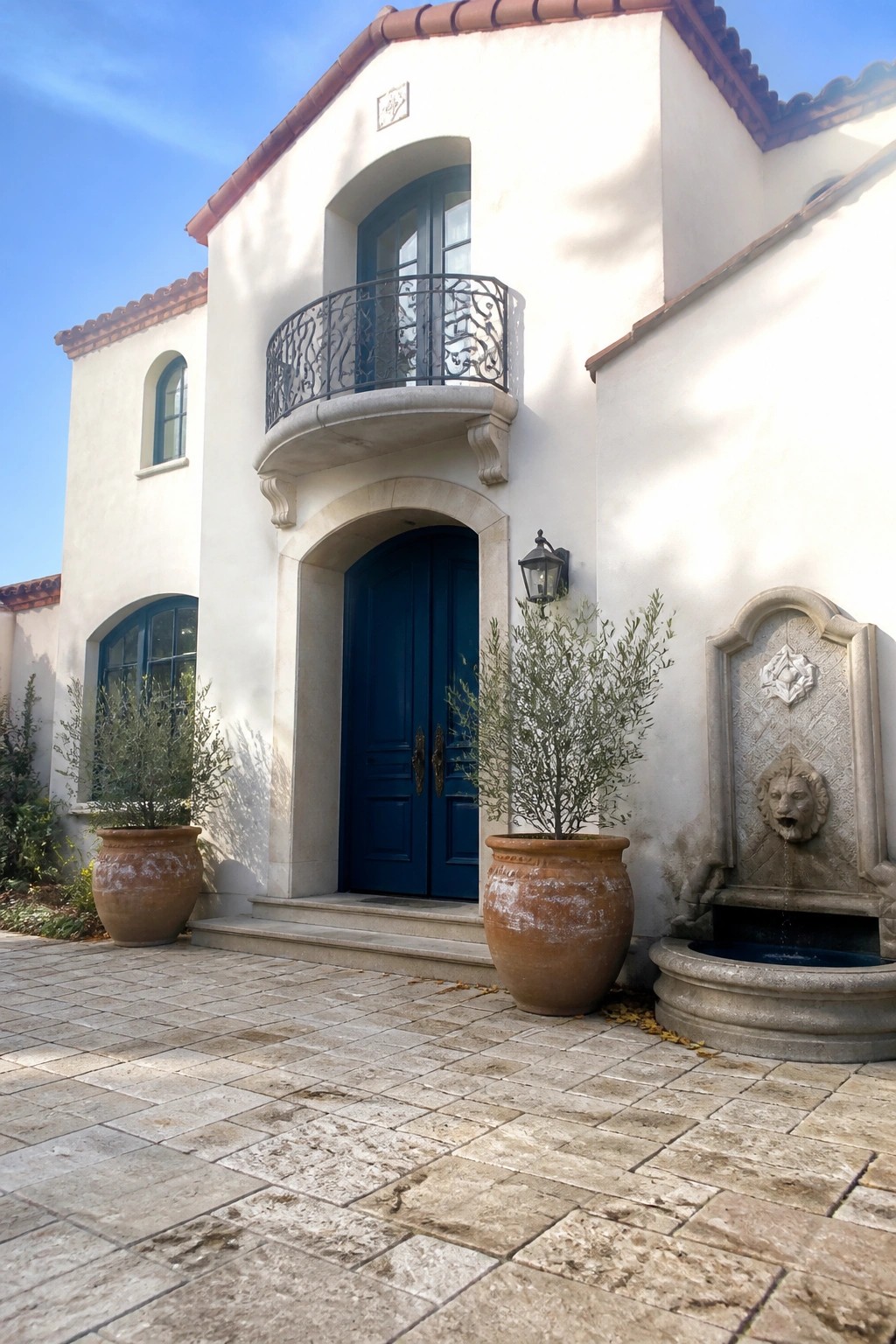
A deep blue door gives a light stucco exterior a clear focal point. The strong color stands out against the pale walls and makes the entry feel more defined without extra trim or ornament.
This works best on homes with simple wall surfaces and arched openings. Choose hardware that stays modest so the door color remains the main feature.
Carved Surrounds Around Entry Doors

A carved stone or plaster frame around the door gives the whole entry a finished European look without needing a lot of extra decoration. The detail stands out against a simple wall color and makes even a modest door feel more substantial.
This works best on homes with some age or on new builds that want a classic touch. Keep the door color soft so the carving stays the main feature, and make sure the scale matches the height of the opening.
Heavy Studded Doors For European Entryways

A studded wooden door like this one gives an entry real presence without needing extra trim or decoration. The dark wood and iron details stand out against the lighter plaster and timber framing, which is a common approach in older European homes. It works because the door itself becomes the main feature rather than competing with other elements.
This style suits Tudor or cottage homes best, where the architecture already leans traditional. Keep the hardware simple and the door proportions generous so it does not look added on later. Smaller homes can still use the idea if the door is scaled to fit the opening without overwhelming the facade.
An Ornate Front Door Can Anchor The Whole Look

An ornate front door works well when it becomes the clear focal point of the entrance. The gold finish and carved details stand out against the marble frame and pull attention straight to the doorway. This approach gives the facade character without needing extra decoration everywhere else.
It fits homes with classical lines or stonework already in place. Keep the rest of the entry fairly simple so the door does the work. Watch the scale though. A door this bold can feel off if the surrounding architecture is too plain or small.
Painted Doors On Stone Facades
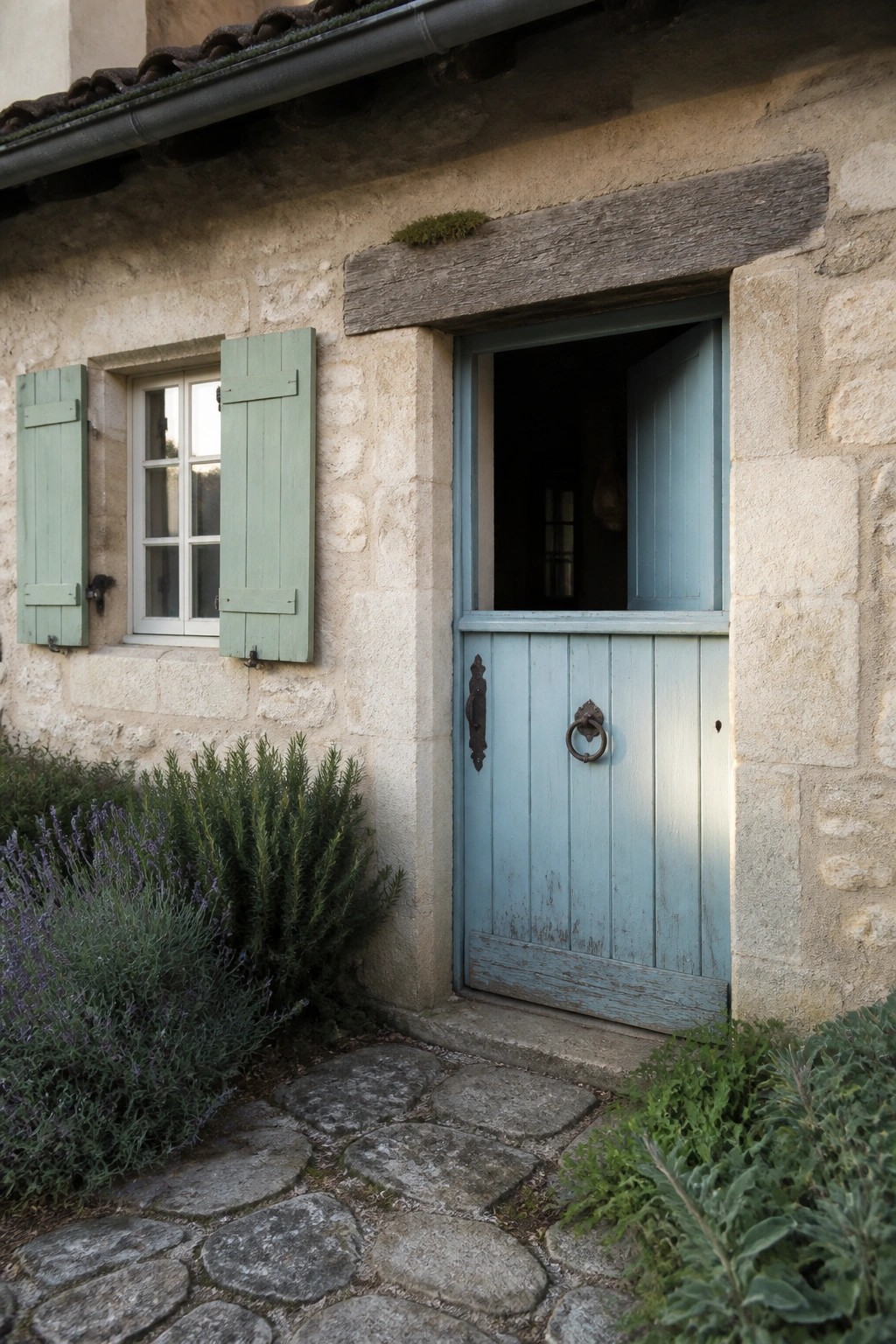
A painted door adds a quiet point of color to a stone exterior without needing extra trim or hardware. The light blue shade here feels fresh against the rough wall and makes the entry easy to spot right away.
This approach works best on homes with simple lines and natural materials. Pick a muted color that still stands out, and keep the surrounding details plain so the door stays the main focus. It suits older cottages and houses in cooler regions where stone is already the main material.
Classical Porticos for a Formal Entry
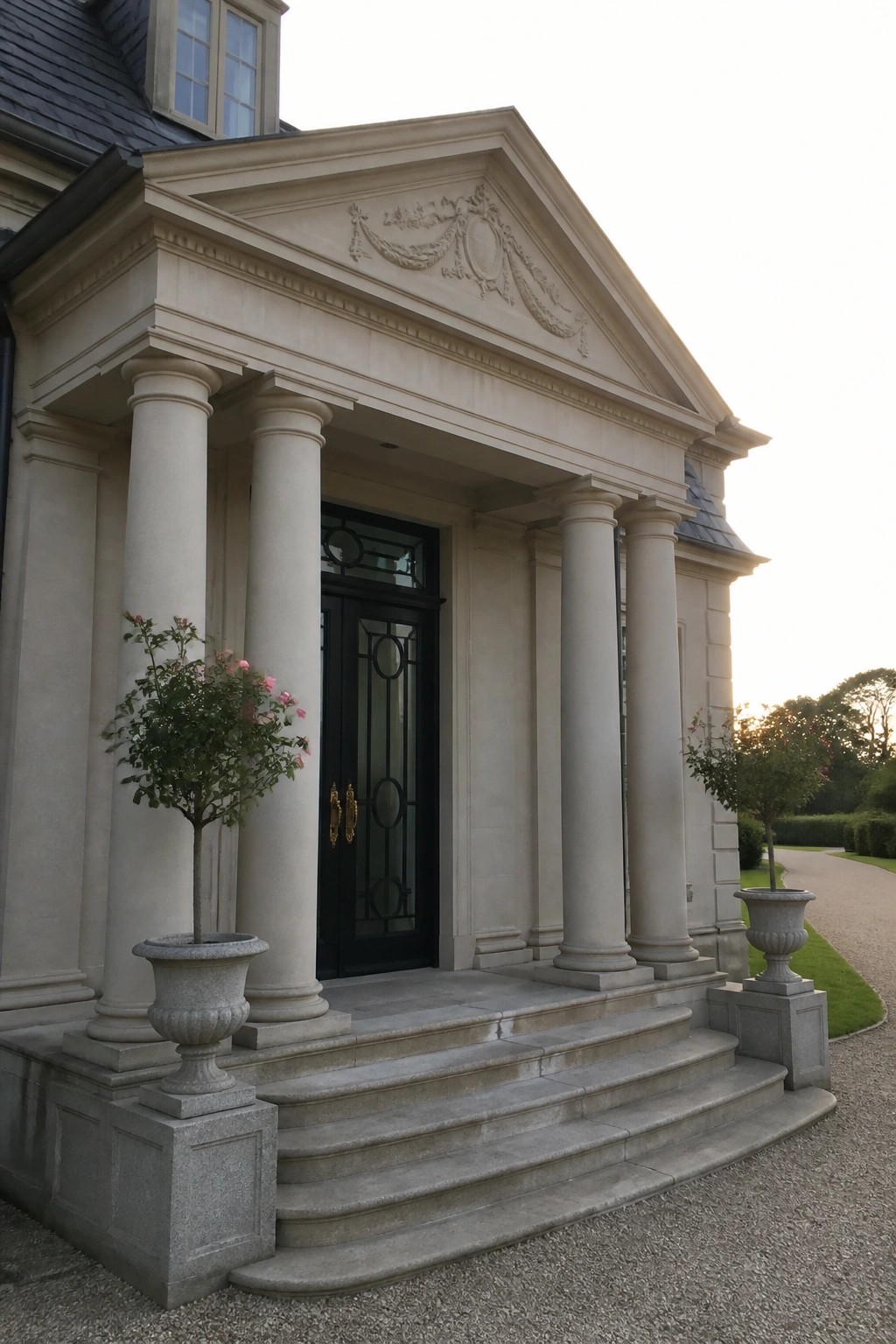
A portico built with stone columns and a triangular pediment gives the front door a clear sense of importance. It comes straight from European traditions and works especially well when the door itself carries some detail, like glazing or hardware that stands out.
This setup suits homes with enough facade width to carry the scale. Match the stone or paint to the rest of the exterior so the portico feels like part of the original structure rather than an add-on.
Carved Wood Doors For A Classic Entry

A carved wooden door adds presence to an entrance in a way few other details can. The floral patterns cut into the panels give the whole front a European touch that feels settled rather than added on.
This kind of door works best on brick or stone homes where the wood tones sit naturally against the masonry. Keep the surrounding trim simple so the carving reads clearly, and choose hardware that does not compete with the detail already there.
Dark Double Doors For The Entry
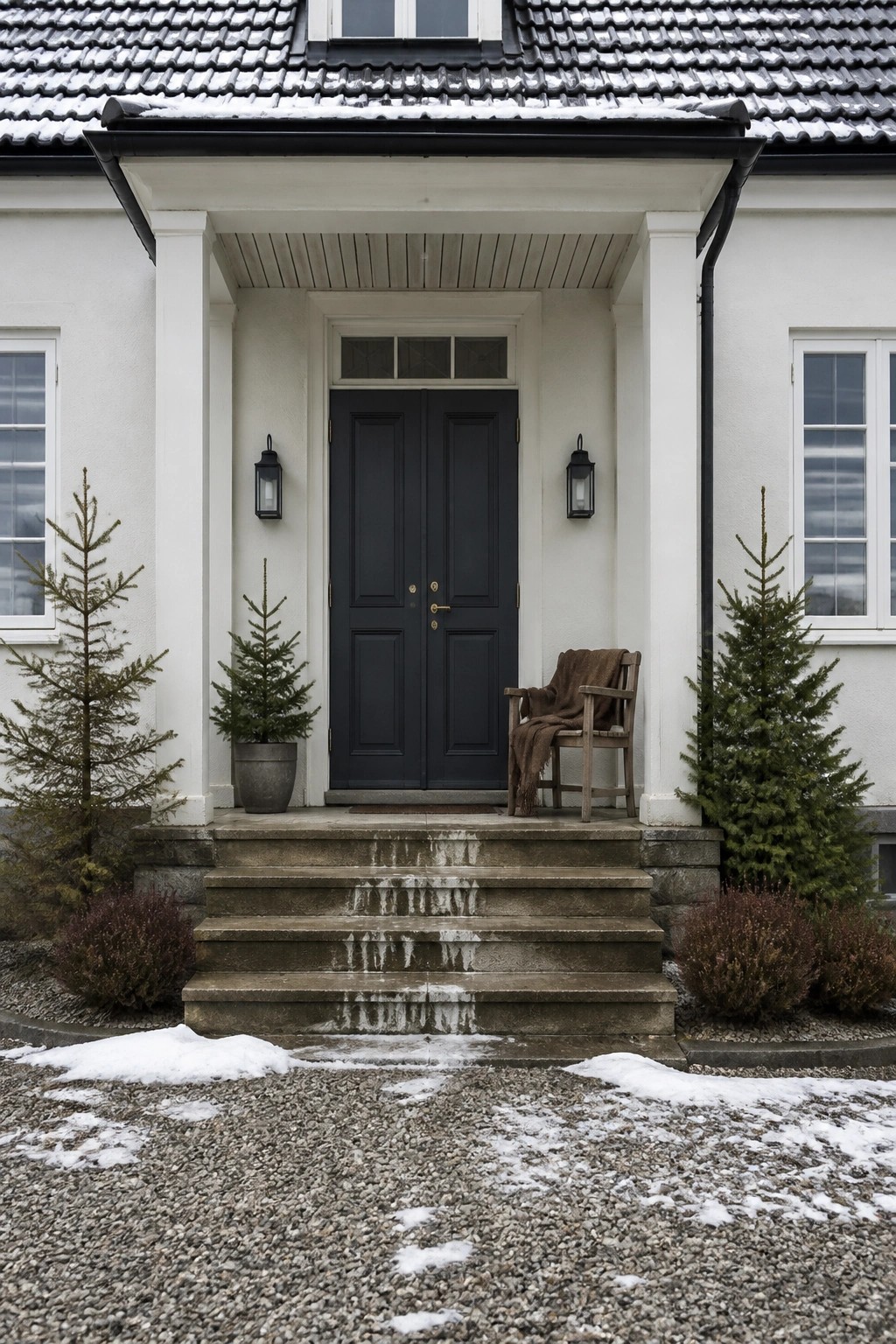
A dark double door gives the front of a house a solid, finished look that lighter doors often miss. It stands out against white walls and columns without needing extra trim or decoration, and the paneled style adds just enough detail to feel European without going over the top.
This approach works best on homes with clean, light exteriors where the door can carry the weight of the design. Keep the hardware simple and the surrounding area uncluttered so the door stays the clear focal point.
Ornate Wooden Doors As Entry Focal Points
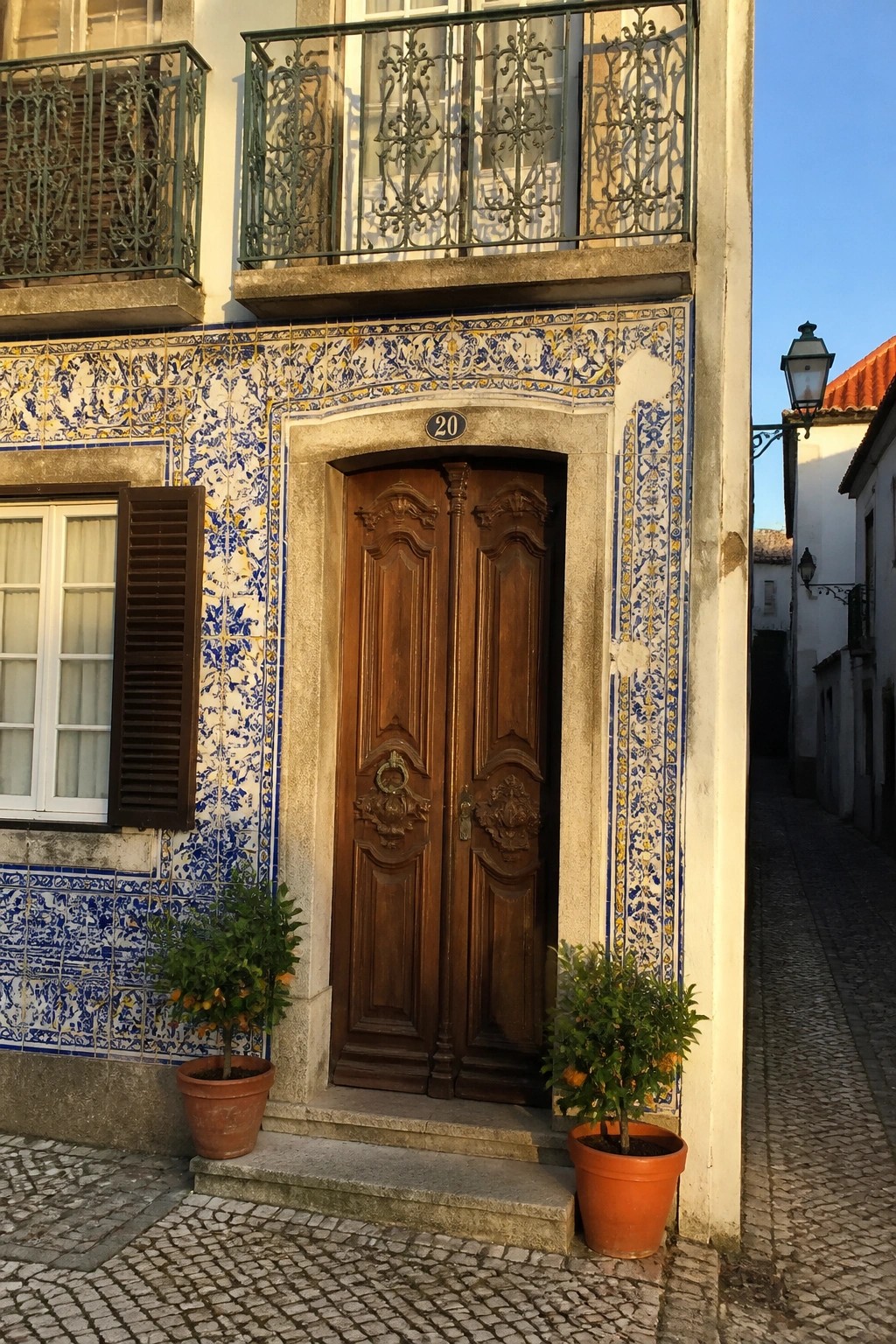
A carved wooden door can act as the main focal point on the front of a house. The detail in the wood stands out against tiled walls and gives the entry a solid, traditional feel.
This approach works well on older or European style homes where the goal is to keep the rest of the facade simple. Limit extra trim or color around the door so the carving remains the main feature.
Ornate Gates to Mark the Entry
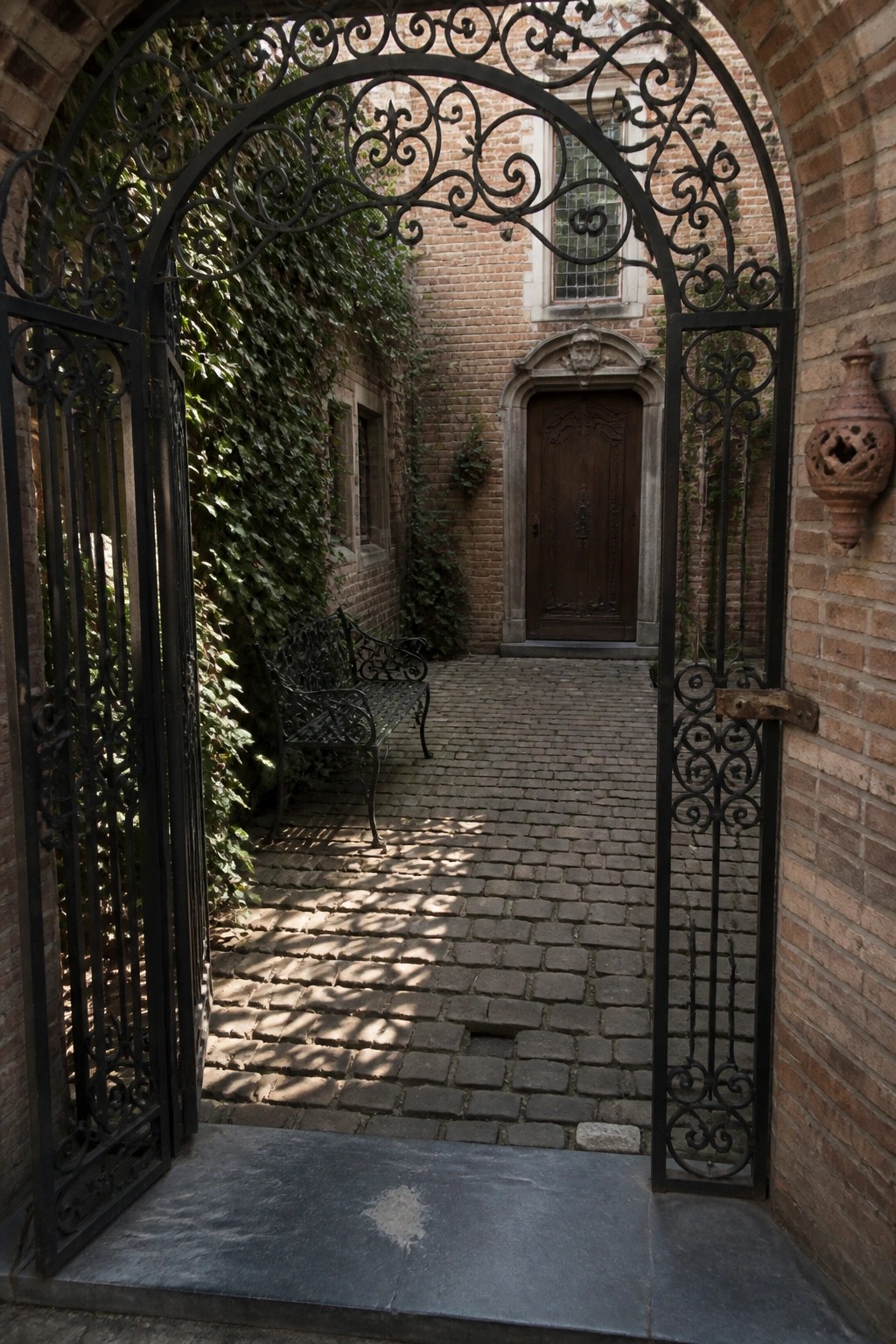
An ornate iron gate gives an entry a clear starting point and adds European character without much effort. It turns a plain walkway into something more intentional and sets the stage for the door beyond.
This works best on homes with brick or stone where the gate can echo the architecture inside the courtyard. Choose a simple pattern that matches the door style and keep the path open so the gate feels welcoming instead of closed.
Ornate Arched Doors For The Entry
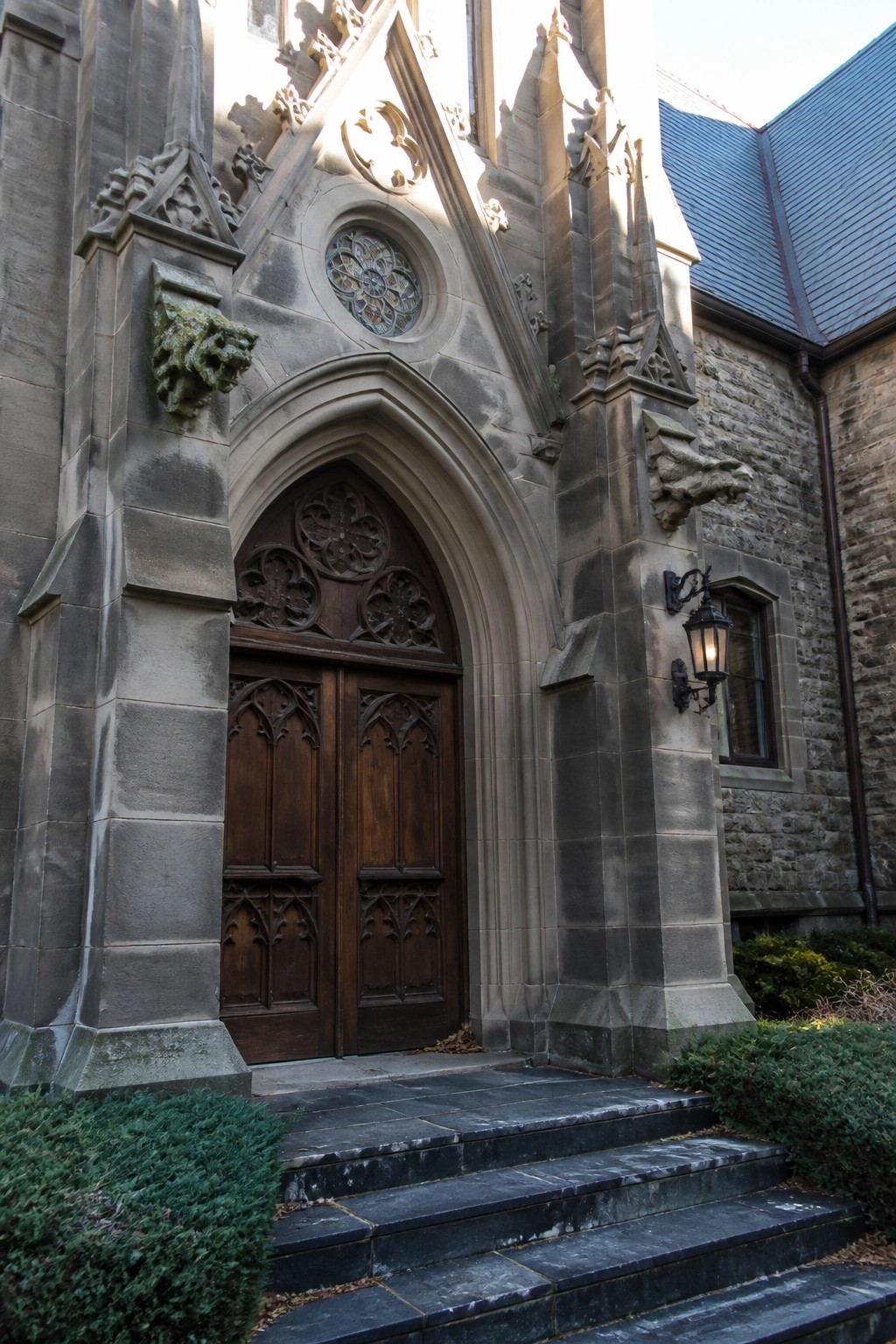
A large arched doorway with carved wood doors gives the front of a house a clear focal point. The style comes from older European buildings and works because it adds weight and detail right where visitors arrive.
This approach fits stone or masonry homes best. Keep the surrounding trim and steps simple so the door stays the main feature without competing with too many other elements.
An Ornate Carved Door At The Entry

A carved wooden door can become the main feature on a house front. It gives the entry a finished and personal look that stands out against simpler siding and stone.
This works well on homes with natural materials like wood and stone. Keep the rest of the facade fairly plain so the door details stay the focus.
Arched Doorways With Stone Detailing
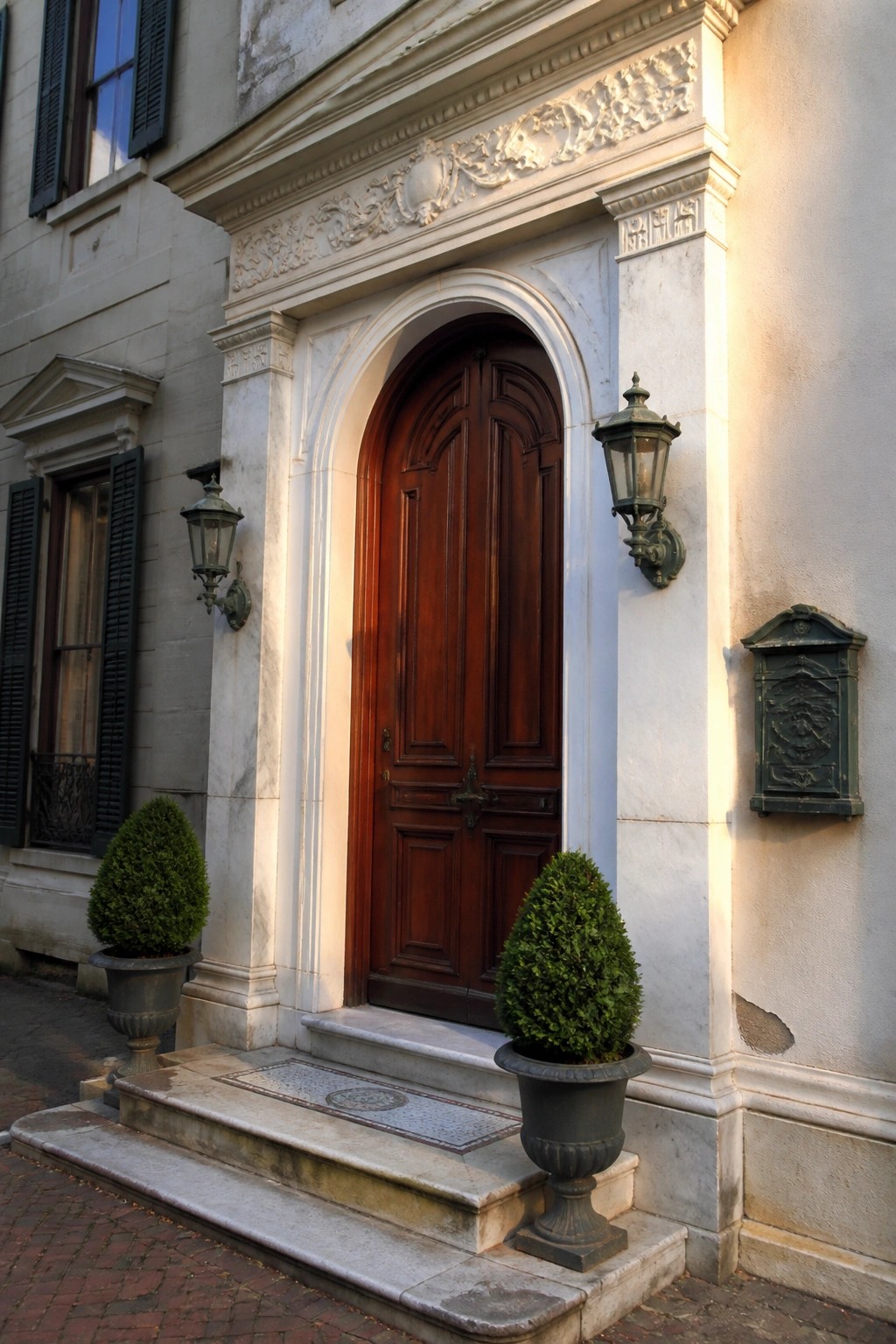
An arched doorway gives the front of a house more presence without extra fuss. The curve draws attention to the door itself and pairs well with carved stone or marble around the frame.
This approach suits masonry homes where the arch can be built into the facade. Keep the proportions in line with the door size so the whole entry feels balanced rather than oversized.
Frequently Asked Questions
Q: How do I pick a European-style door that fits my house? A: Look at the architectural details already in your home like moldings or window shapes. Match those to the door designs in the article for a natural flow. Visit showrooms to see the carvings up close before deciding.
Q: Do these doors need special hardware? A: Opt for solid brass or iron handles that echo the ornate patterns. They hold up better under the door’s weight and add to the overall European feel. Test the mechanism in person if possible.
Q: Are custom sizes available for these doors? A: Many makers offer custom options to match older European homes. Provide your exact measurements when you order.
Q: How often should I check for wear on the door finish? A: Inspect the surface once a season for cracks or fading. Touch up any spots right away with matching stain to protect the wood underneath.
