

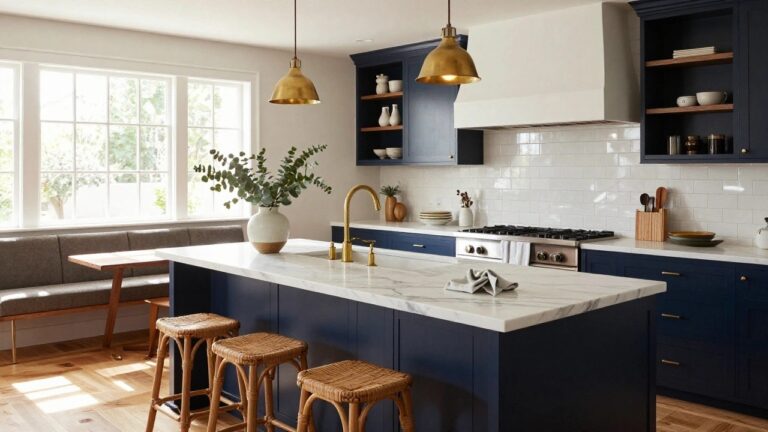
When I walk into a kitchen, my eyes go straight to the island because it sets the tone for how the whole space flows during meals or prep time.
A waterfall edge does something special by letting the countertop material cascade down smoothly, which makes even a big luxury setup feel grounded and part of the room.
I’ve noticed these work best when the stone or quartz picks up on nearby cabinets or backsplashes, avoiding that bolted-on look some custom jobs end up with.
What pulls people in first is usually the uninterrupted surface that invites leaning in for chats without awkward edges getting in the way.
A couple here shifted how I picture islands handling real family chaos.
Navy Waterfall Island with Rattan Stools
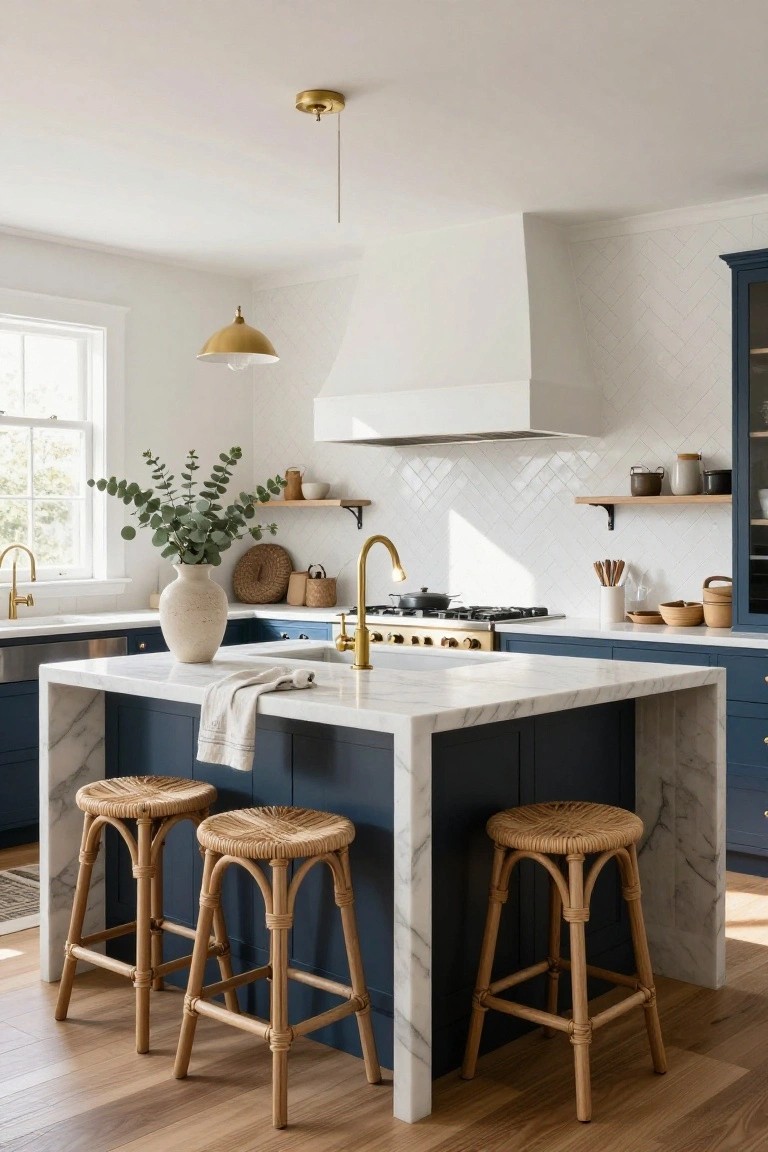
A navy blue kitchen island like this one really pulls a room together. The cabinets are deep and rich, topped with white marble that falls straight down the sides for that clean waterfall look. Rattan stools tucked in front keep things casual and beachy. It’s a solid way to add custom feel without going overboard.
This setup shines in airy kitchens with good light coming in the windows. The dark base makes the island stand out as the main spot for meals or gathering, and the light stone bounces brightness around. It suits homes with a mix of modern and relaxed vibes. Go for it if your space gets plenty of sun, but pick stools that match your floor height just right.
Walnut Waterfall Edges on a Dark Island
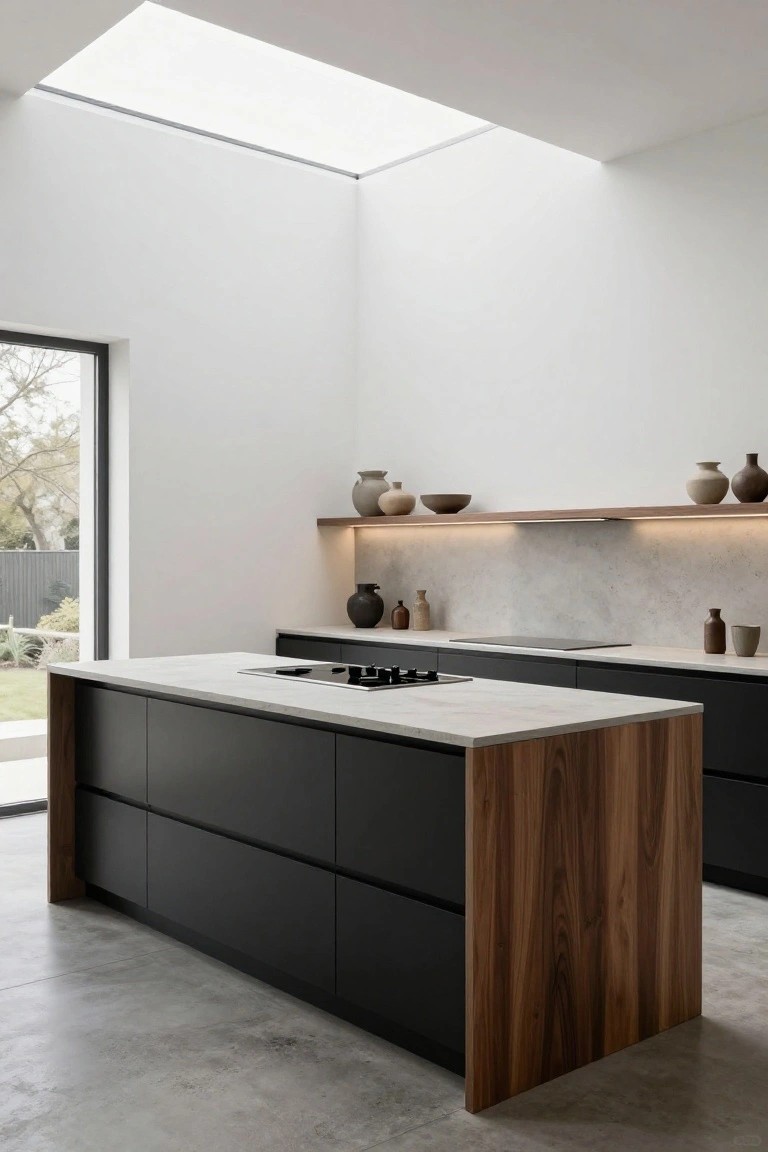
One simple way to warm up a sleek black kitchen island is wrapping the waterfall edges in walnut wood. Here the rich wood grain runs right down to the floor, catching the light from the skylight above. It softens those matte black cabinets without losing the modern edge, and pairs well with a plain white stone top.
This look fits best in open kitchens with good natural light, like ones connected to a garden view. Go for it if you want contrast that feels natural, not forced. Just make sure the wood finish matches your floors to keep things tied together.
Waterfall Marble Island in a Coastal Kitchen
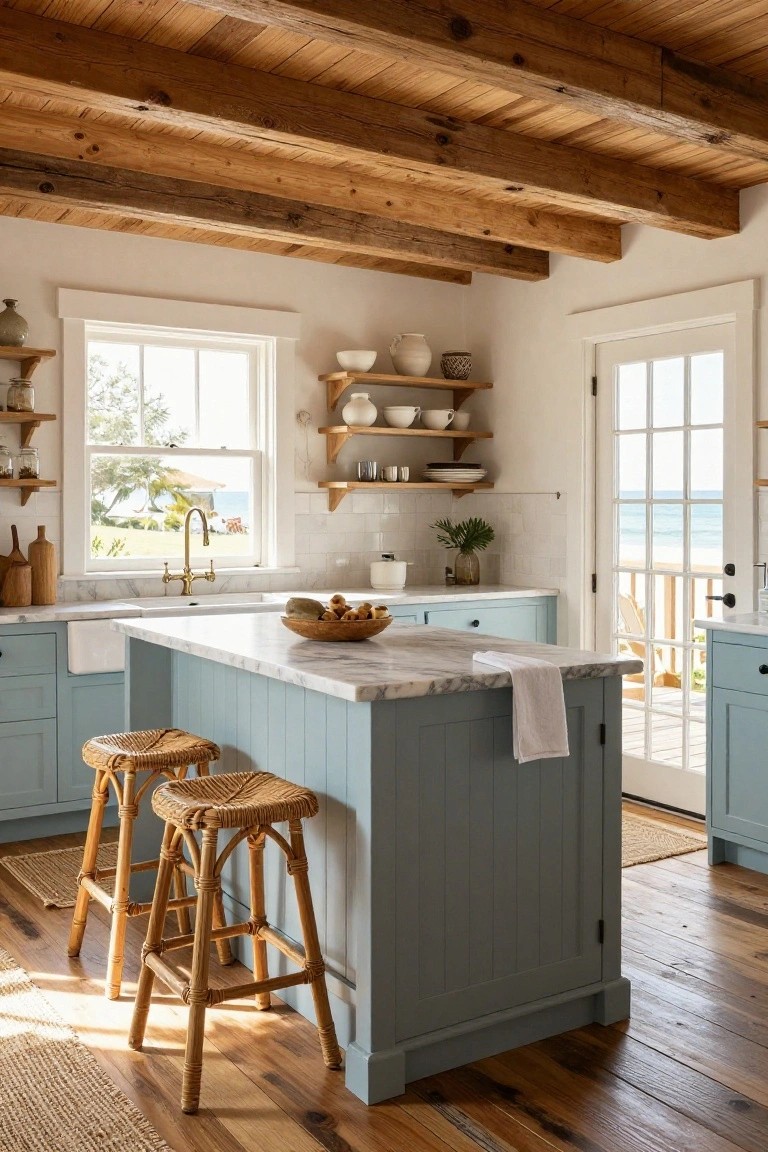
A waterfall island like this one uses marble that runs straight down the sides of the base cabinets. It makes the kitchen feel built just for that home, especially with the soft veining showing off against the blue cabinets. That custom touch keeps things practical too, since marble holds up well around sinks and daily use.
Put this in kitchens with good natural light and open sightlines to outside views. It suits beach houses or relaxed farmhouses best, paired with wood stools and open shelves. Just seal the stone right to avoid stains from cooking spills.
Green Waterfall Island in a Black Kitchen
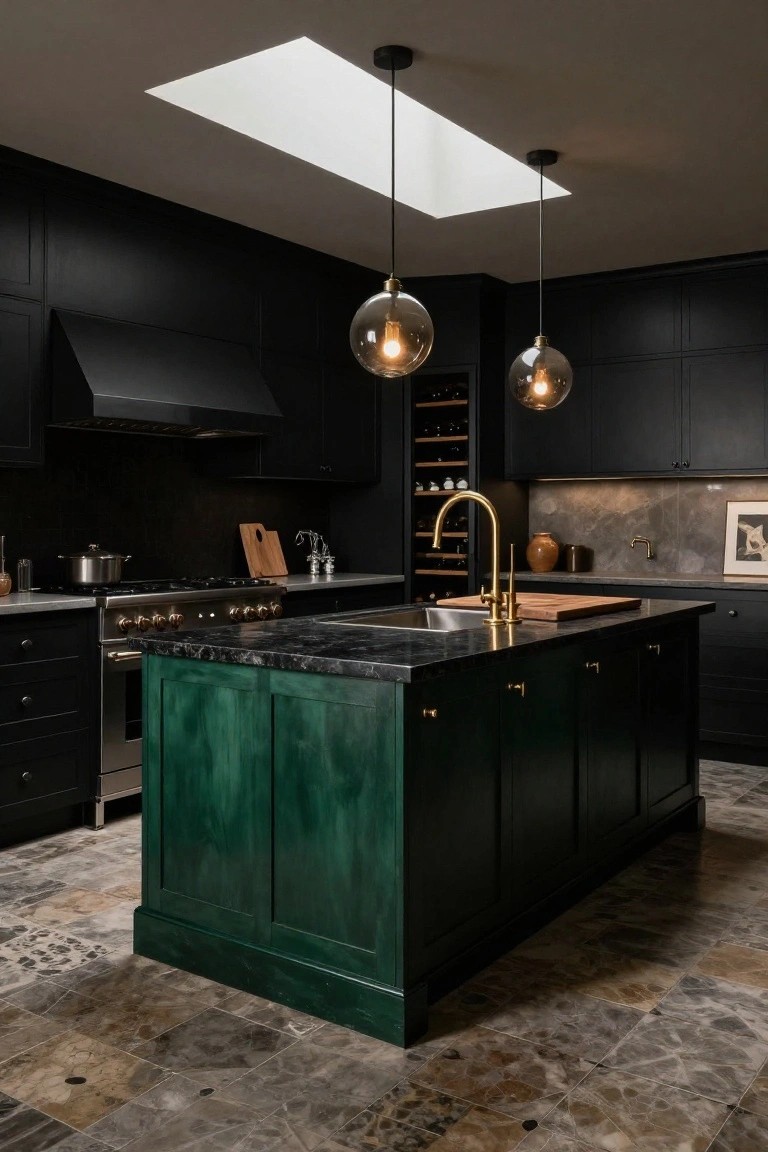
One way to make a waterfall island really pop is to paint it deep green while keeping everything else black. Here the island cabinets are that rich emerald shade, with black marble wrapping straight down the sides to the floor. It pulls your eye right across the room and gives the whole kitchen some life without messing up the dark mood.
This setup works best in larger kitchens where you want a focal point but not too much color overall. Go for it if your space has good natural light, like from a skylight overhead, and add gold hardware to tie things together. Just make sure the green is matte so it doesn’t fight the marble.
Warm Oak Waterfall Island in a Mostly White Kitchen
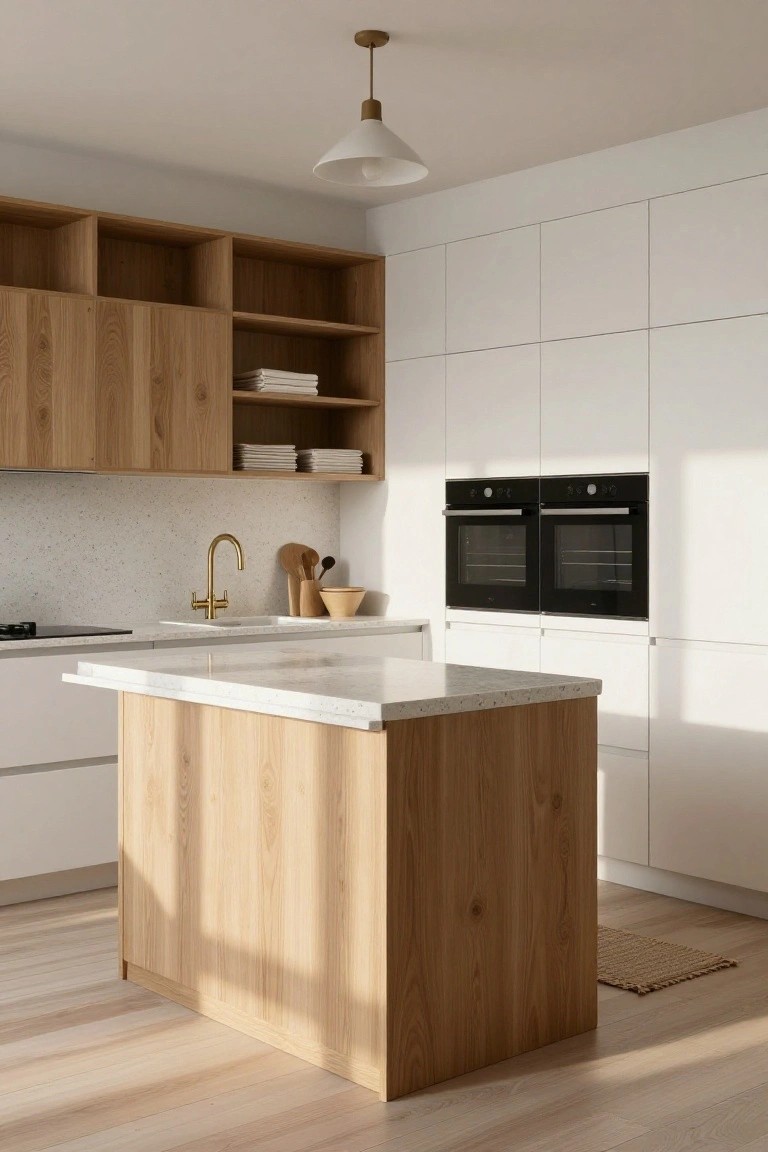
A wooden waterfall island like this one adds a natural touch to a bright white kitchen setup. The oak base with its quartz top that runs straight down the sides feels custom and sturdy. It breaks up all that crisp white without overwhelming the room. Sunlight pouring in makes the wood grain pop even more.
This works best in open kitchens where you want some warmth but still need that clean look. Go for light oak tones to keep it airy, and match the floors underneath. Skip dark woods here, or it might feel too heavy. Homes with lots of natural light pull this off easiest.
Wood Plank Waterfall Island
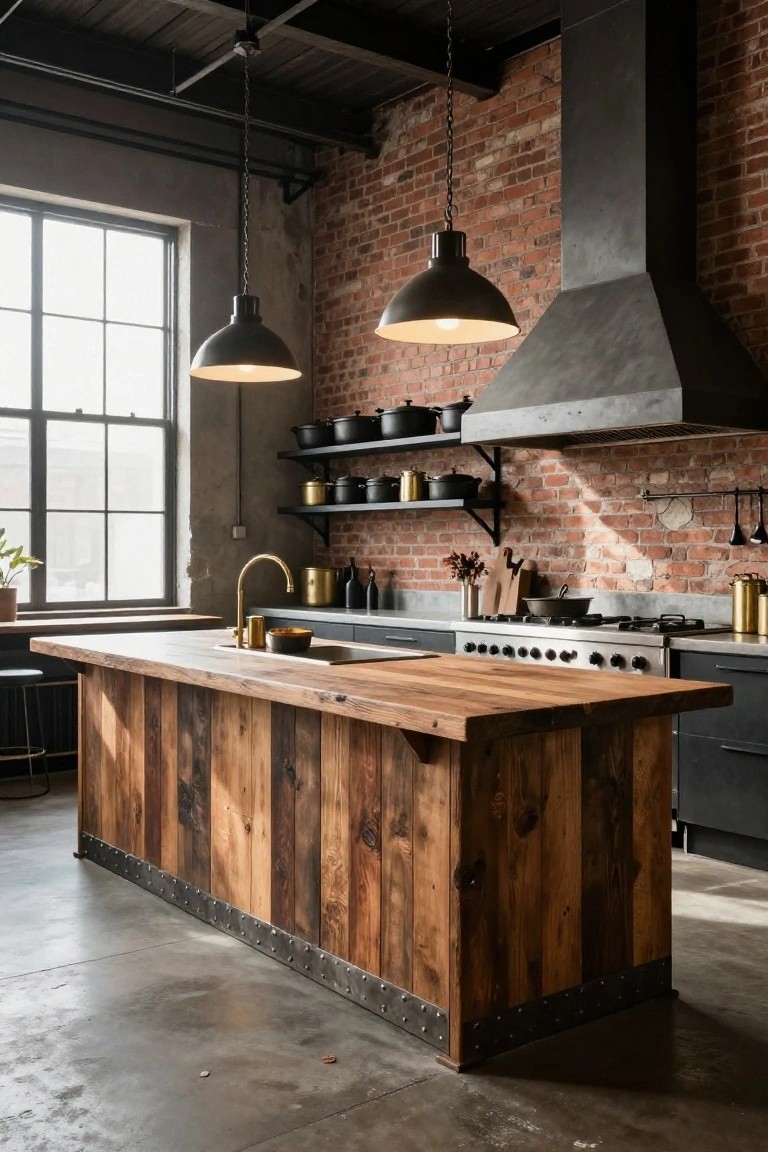
This kitchen centers on a waterfall island built from wide, weathered wood planks that drop all the way to the floor. It cuts through the industrial feel of the black cabinets and brick walls without overwhelming them. That full-height wood adds a handmade quality lots of folks want in custom spaces.
Try it in lofts or open homes with tall ceilings. Hunt for reclaimed planks at salvage yards for real character. Keep nearby surfaces matte and simple, like the steel hood here. Just seal the wood thoroughly so it holds up to daily use.
White Marble Waterfall Island
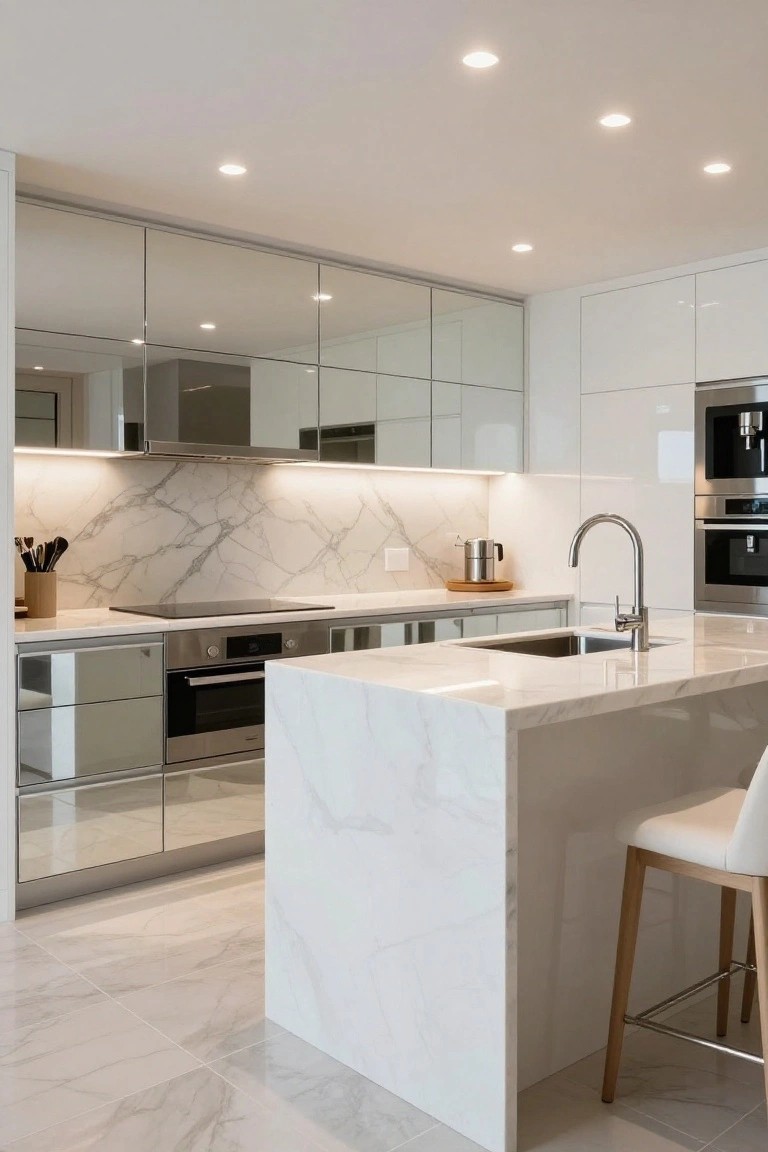
A waterfall island gets its name from the way the countertop material flows straight down the sides. In this kitchen, a thick slab of white marble does just that, wrapping the island completely while matching the backsplash behind the cooktop. It pulls the room together without any breaks or edges showing.
This setup shines in smaller or open kitchens, where the island needs to feel like part of the architecture. Glossy white cabinets keep things light, and a single stool works fine for casual spots. Marble shows wear over time, so plan on regular sealing if you cook a lot.
Oak Island with Marble Waterfall Top
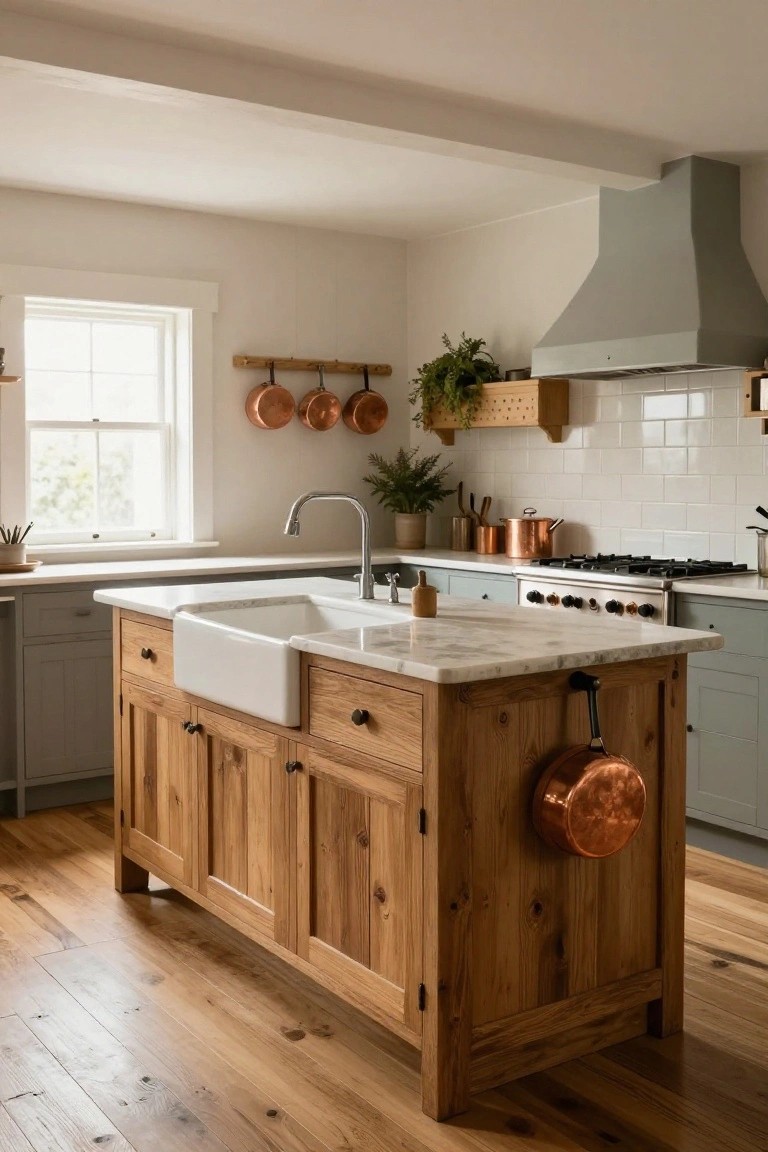
One simple way to make a waterfall island feel custom is to build the base from oak wood cabinets. Here the light marble top flows right down the sides over the warm wood tones. It stands out because the oak adds a bit of rustic character without overwhelming the space. Notice how copper pots hang off the side. That pulls the whole kitchen together nicely.
This setup suits airy kitchens with lots of natural light. Try it in an open plan home where the island is the main gathering spot. Keep surrounding cabinets in soft greens or whites to let the wood pop. Just make sure the marble is sealed well since sinks mean more water around.
Wood Base Waterfall Island with Wine Cooler
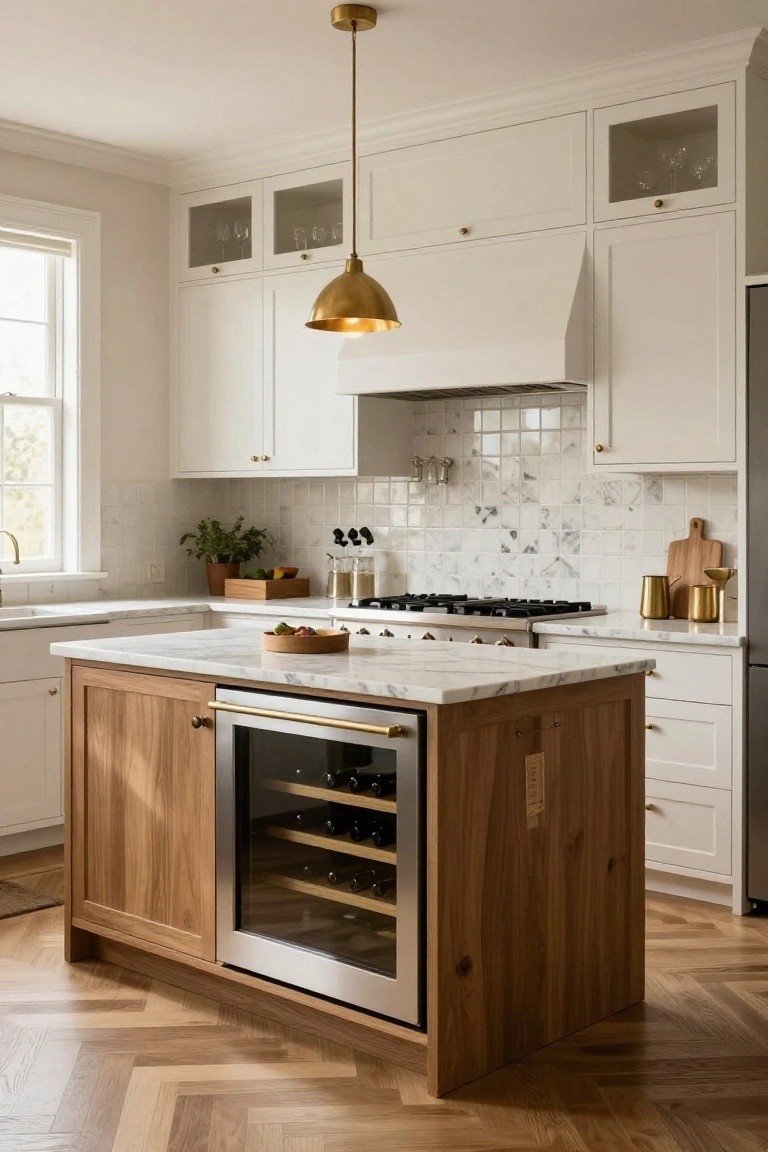
Kitchens get a custom feel from islands like this one. Here the base is warm wood cabinets with a marble top that falls straight down the sides. Built right into the wood side sits a glass-door wine cooler holding a few bottles. That wood against the crisp white cabinets and marble keeps things from feeling too cold.
This idea fits open-plan spaces in homes with some traditional touches. The wood warms up the luxury marble without much fuss. Watch the scale though. It shines when the island isn’t too big, so it stays part of the room flow… not a bulky center.
Marble Waterfall Island in a Wood Kitchen
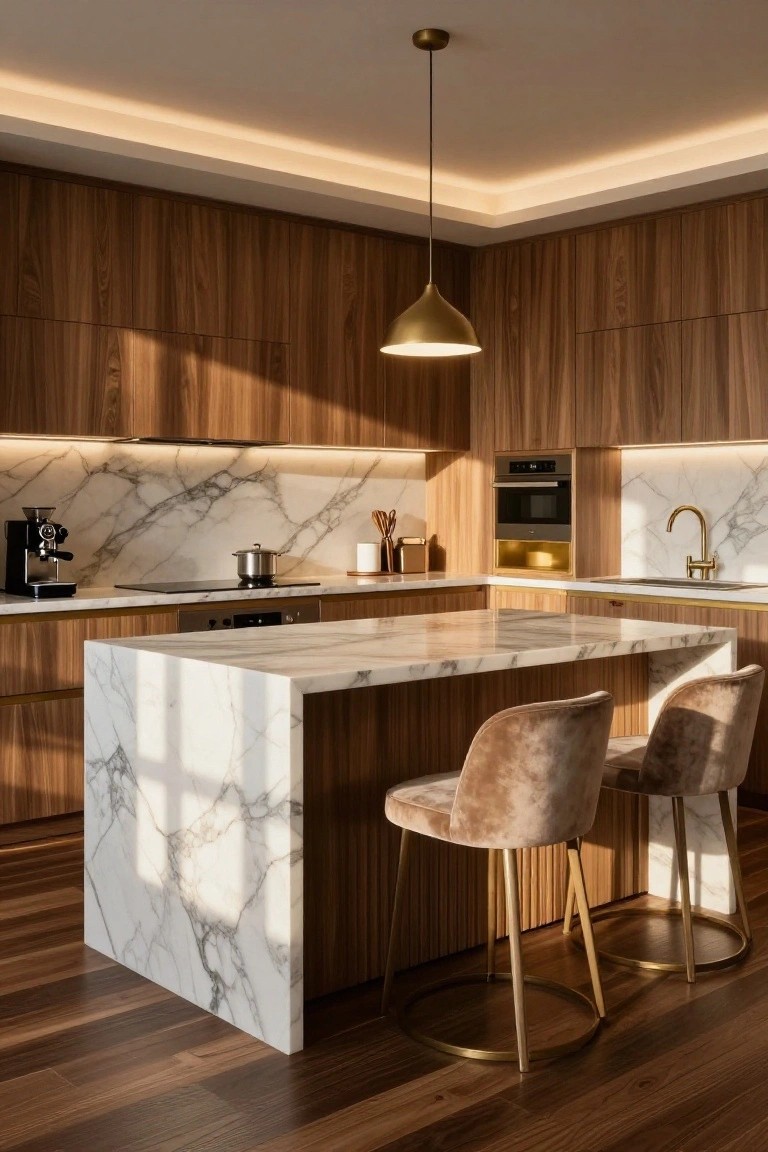
A waterfall island like this one takes a slab of white marble and lets it run straight down the sides of the base. Paired with warm wood cabinets all around, it keeps the kitchen feeling cozy instead of stark. That gold pendant light overhead pulls it together without overdoing things.
You can pull this off in open-plan spaces where the island needs to stand out as the main spot for eating or gathering. Stick to lighter marble if your room gets good natural light. It suits homes with a modern edge but still wants some wood warmth. Just make sure the stools are comfy, like these upholstered ones.
Black Waterfall Kitchen Island

A black marble waterfall island like this one takes center stage in the kitchen. The stone slabs down both sides to the floor for that seamless, custom look. It stands out against white cabinets and light walls, making the space feel pulled together and upscale.
Try this in an open kitchen where the island gets plenty of light from big windows. Use the open lower shelves for woven baskets to stash towels or produce, and add potted plants for a bit of green. It suits city apartments or modern homes… just make sure the stone is sealed well for everyday spills.
Warm Wood Waterfall Island
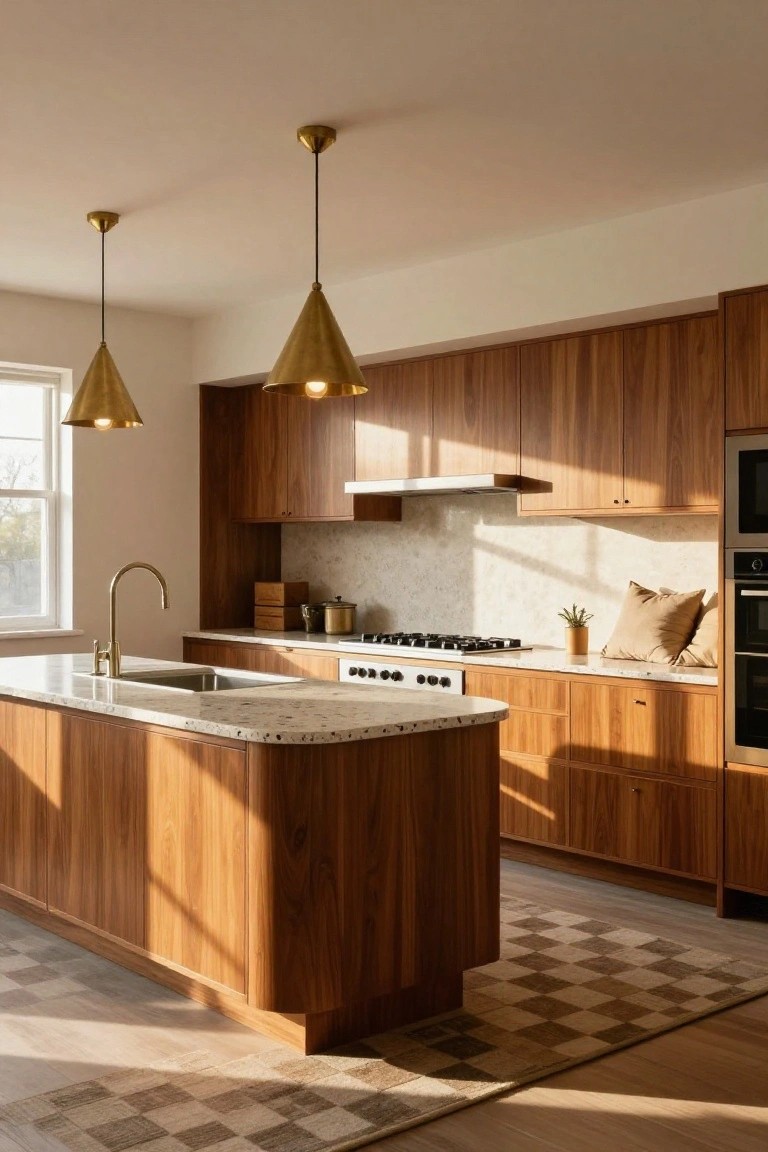
A waterfall island like this one stands out because the light wood cabinets wrap cleanly down the sides, making the whole thing feel built-in and solid. Those brass cone pendants overhead add just enough shine without overpowering the wood tones. It’s a straightforward way to get that custom look in a kitchen.
This setup suits homes with good natural light, where the wood warms up the space naturally. Pair it with a light stone top and similar cabinetry around the room. Skip it in super small kitchens though. The curve helps it fit odd layouts better than a straight island.
Rustic Stone Waterfall Island
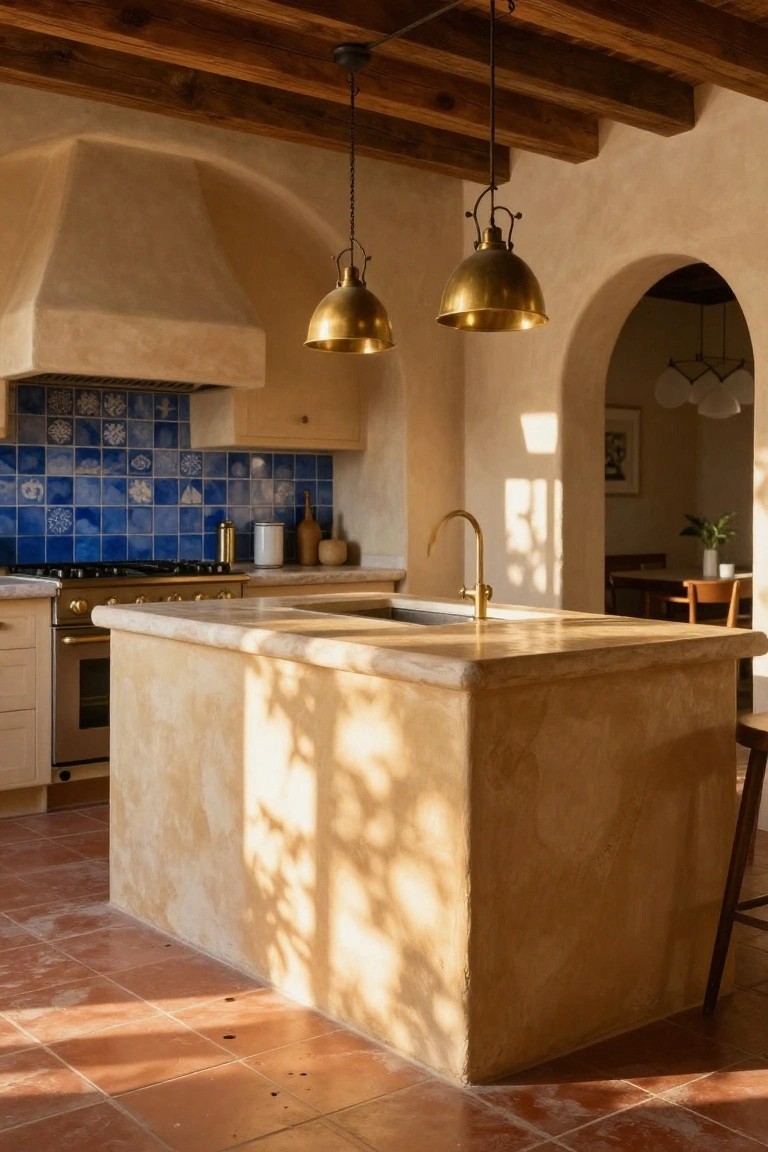
A thick block of natural stone forms the kitchen island here, with the material wrapping straight down the sides in a clean waterfall edge. That seamless drop makes it look built-in and custom, like part of the house itself. It pairs well with the rough adobe walls and warm terracotta floors, keeping things earthy without feeling too polished.
This works best in older-style homes or remodels aiming for a relaxed luxury feel, especially in warmer climates. Go for a light limestone or travertine, add gold hardware for shine, and keep counters matte to avoid glare. One thing… scale it right so it doesn’t crowd the room.
Zen Waterfall Island in Concrete and Wood
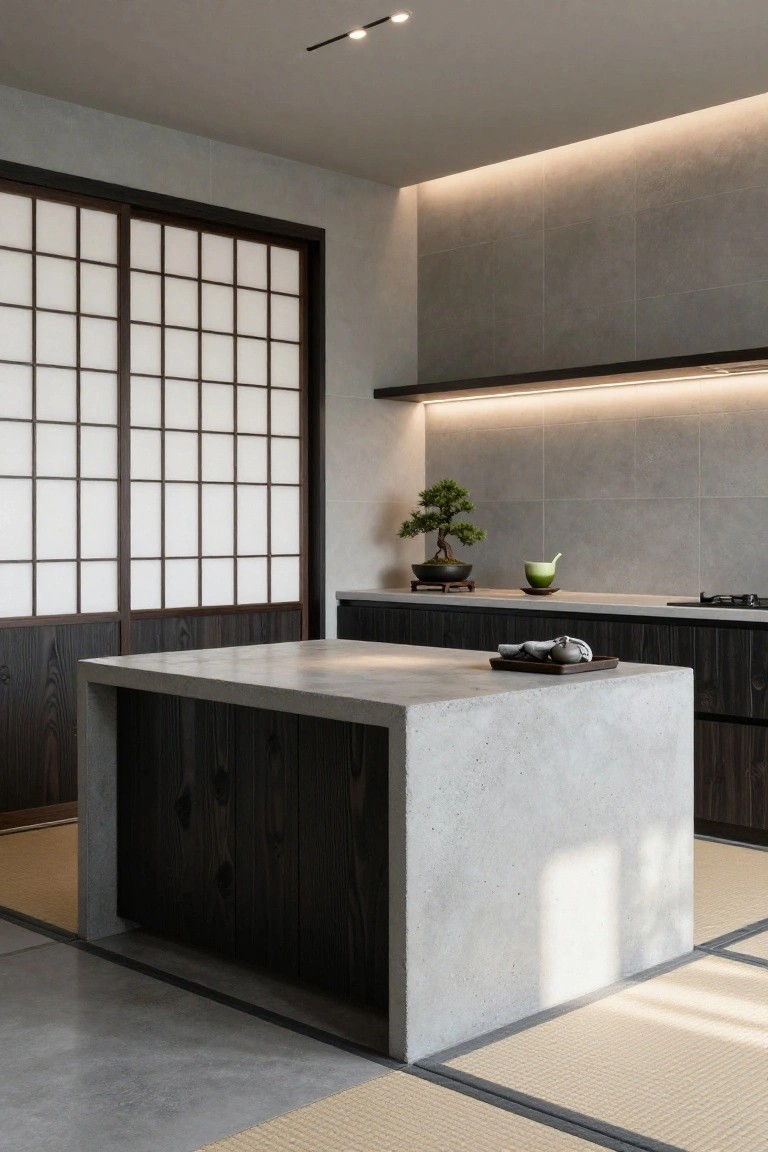
A concrete island that drops straight from the counter to the floor makes a strong simple statement here. Paired with dark wood cabinets and shoji screens, it brings a quiet Japanese feel to the kitchen. The raw concrete keeps things modern while the wood adds some warmth. People like how it stays understated yet feels custom.
This setup works best in open living areas where the island can be the center. It suits homes with clean modern lines or anyone after a calmer cooking space. Go for polished concrete if you cook a lot. One thing. Skip busy patterns around it so the island stands out.
Pro-Style Kitchen with Marble Waterfall Island
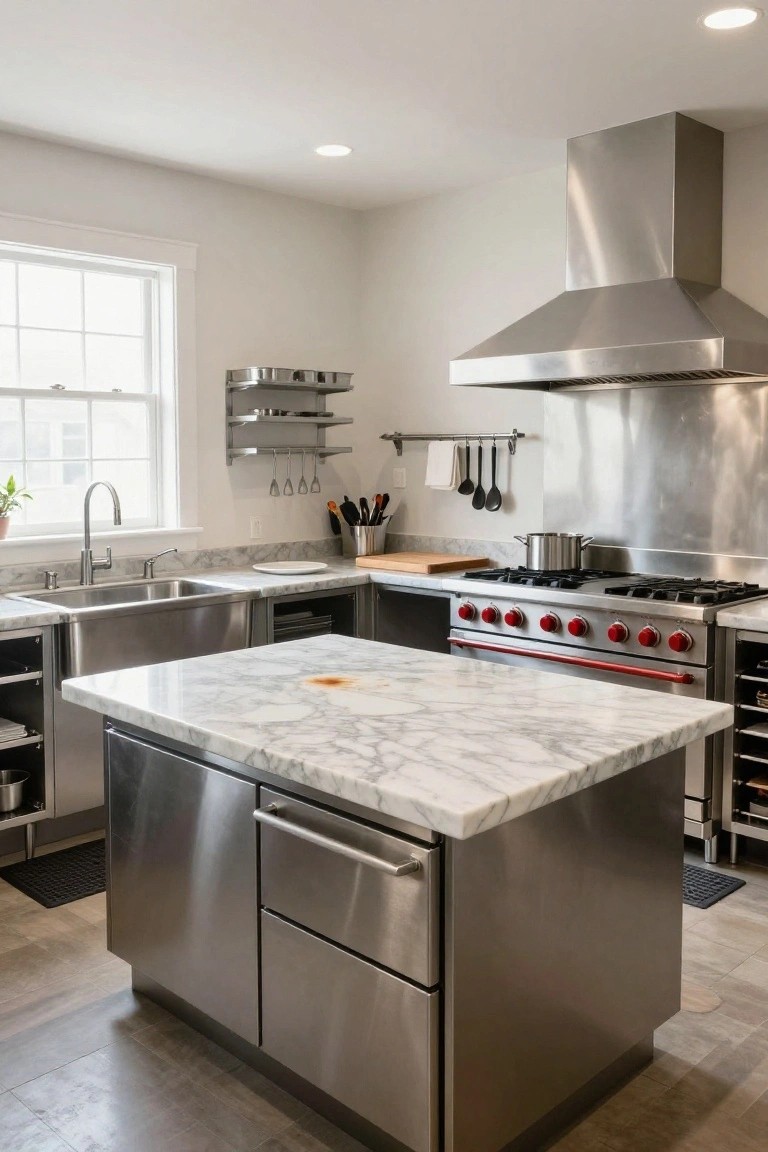
A waterfall island like this one takes center stage in a stainless steel kitchen setup. The white marble top with its gray veining runs cleanly down the sides to meet the metal base. It stands out against the pro-grade range and cabinets, giving everything a custom, high-end feel without much fuss.
This works well in open-plan homes where cooking is social. Go for it if you like clean lines and durable surfaces. Just seal the marble regularly since spills happen, and keep nearby counters plain so the island pops.
Black Marble Waterfall Island
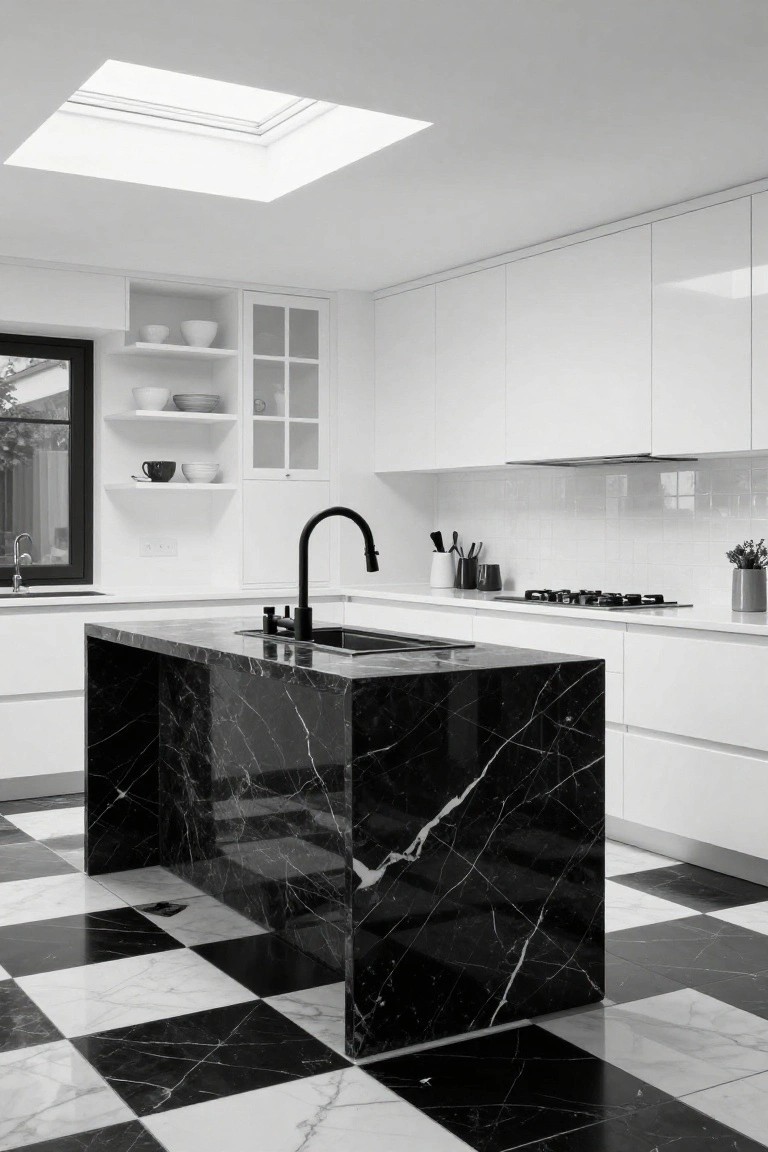
A black marble island with waterfall edges takes center stage here. The stone wraps cleanly down both ends, giving a solid, heavy feel that anchors the room. Against all the white cabinets and glossy surfaces, it adds real punch without cluttering things up.
This setup shines in modern kitchens with lots of light. Go for it if you want a focal point that handles cooking and gathering. White cabinets keep it from feeling too dark… and a checkered floor echoes the pattern nicely. Seal the marble well for spills.
Waterfall Kitchen Island Basics
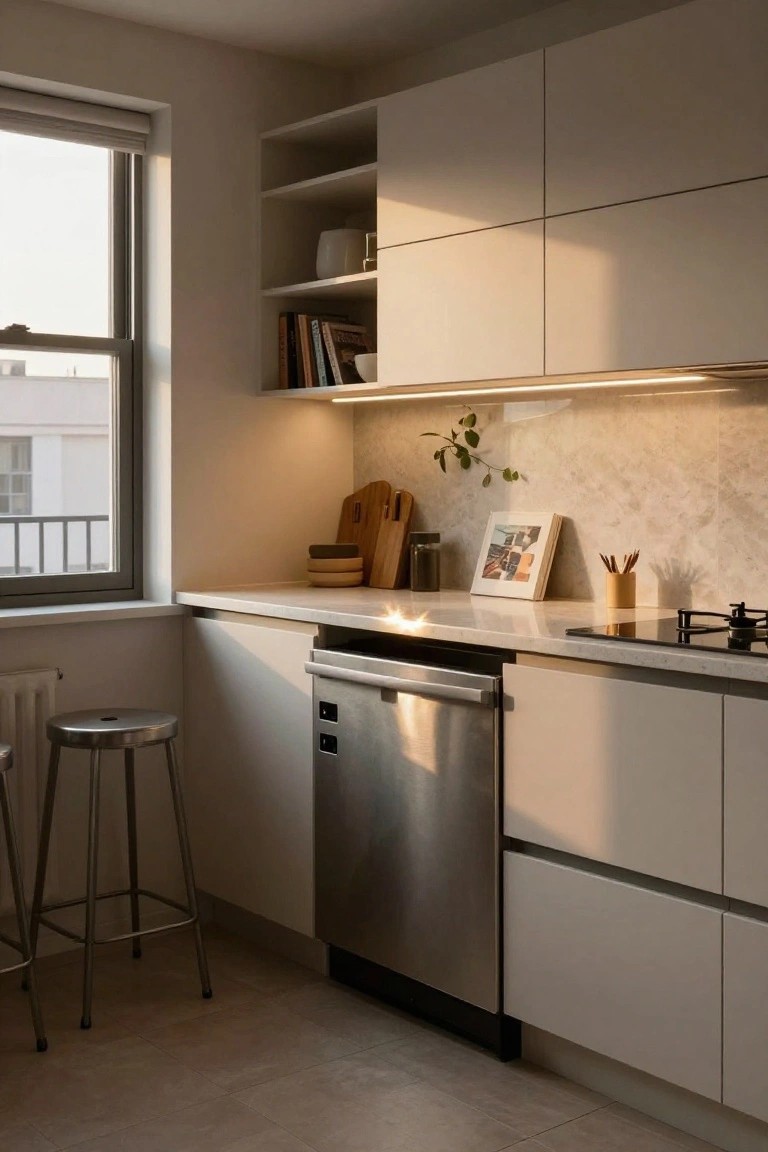
A waterfall island like this one keeps things simple and custom-looking. The quartz or stone top runs straight down the outer cabinets to the floor, no breaks or edges showing. It ties the whole setup together in a small kitchen space. Natural light from the window hits it just right, making the white cabinets and subtle backsplash feel even cleaner.
This works best in compact apartments or city homes where you want luxury without taking up room. Add a couple bar stools for casual seating. Stick to light neutrals so it stays open and easy to clean. Skip dark stones unless you have lots of light.
Concrete Waterfall Island Basics

A concrete waterfall island like this one wraps the edges smoothly down both sides. It makes the kitchen feel built for real life, sturdy enough for daily prep but with a custom edge. The matte finish keeps it from shining too much, letting the soft beige cabinets and wood stools take some focus.
This setup suits open-plan homes with good light from big windows. Go for a light gray concrete to match neutral tones, and add rattan stools for a natural touch. Skip glossy finishes unless you want more shine. It holds up well around kids or heavy use.
Clean White Waterfall Island
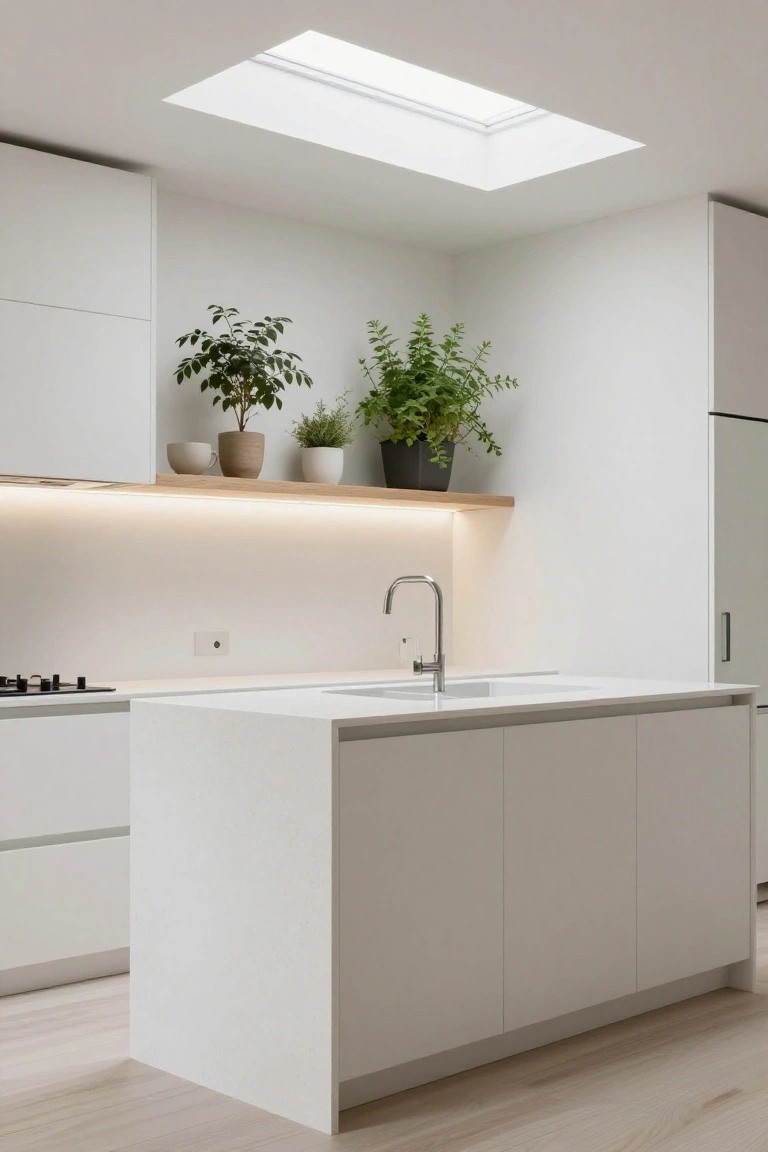
A white waterfall island like this one pulls the whole kitchen together in a quiet way. The counter drops straight down the sides, matching the cabinets perfectly for that seamless look. With plants tucked on a simple wood shelf above and plenty of light from the skylight, it feels open and easy to live with.
This setup works best in modern homes where you want a custom vibe but not a lot of color or pattern. It suits bigger kitchens that flow into living areas. Just make sure your lighting is good, or it might feel too stark… pair it with wood floors to warm things up a bit.
Colorful Mosaic Waterfall Island
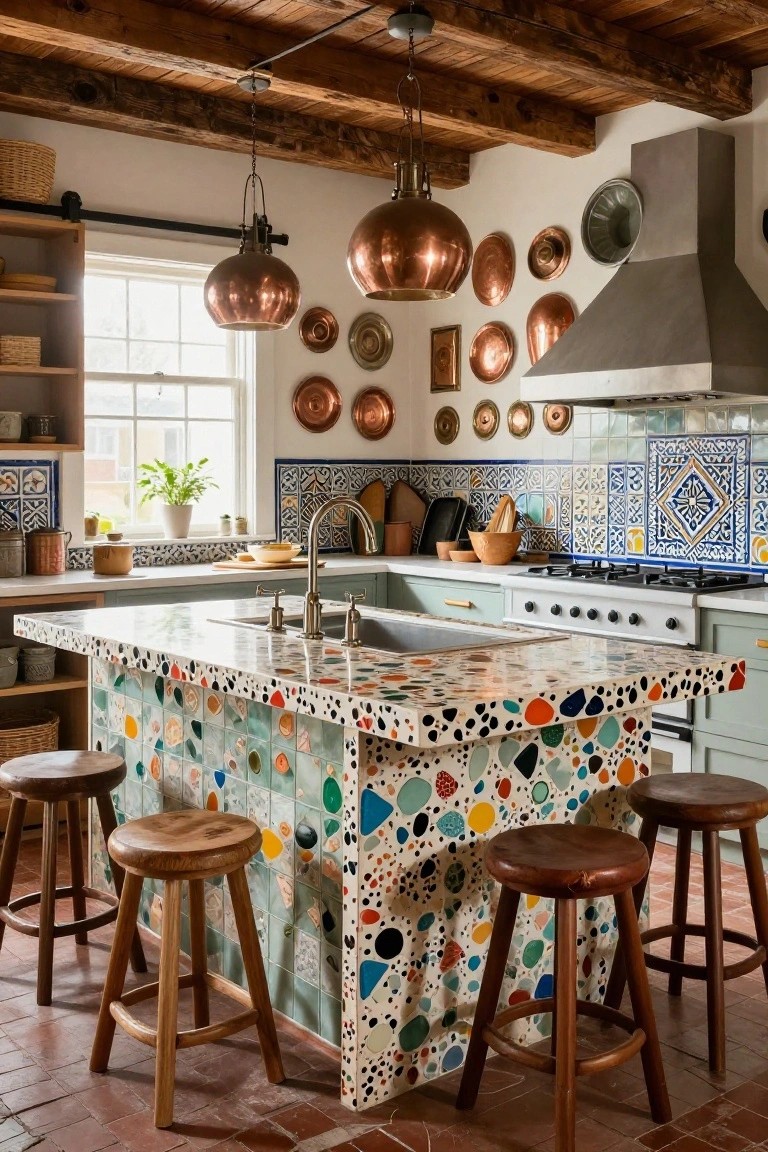
A waterfall island like this one uses bits of colorful tile in turquoise, orange, and white to create a handmade mosaic effect that runs right down the sides. It turns a basic kitchen counter into something custom and full of personality, especially against plain cabinets and wood stools.
This idea fits right into a rustic or Mediterranean-style kitchen with beamed ceilings and tile floors. Make it the star by keeping walls white and adding just a few copper pots for shine. Seal the tiles well so spills wipe up easy, and it holds up for family meals.
Moss Wall Next to Waterfall Kitchen Island
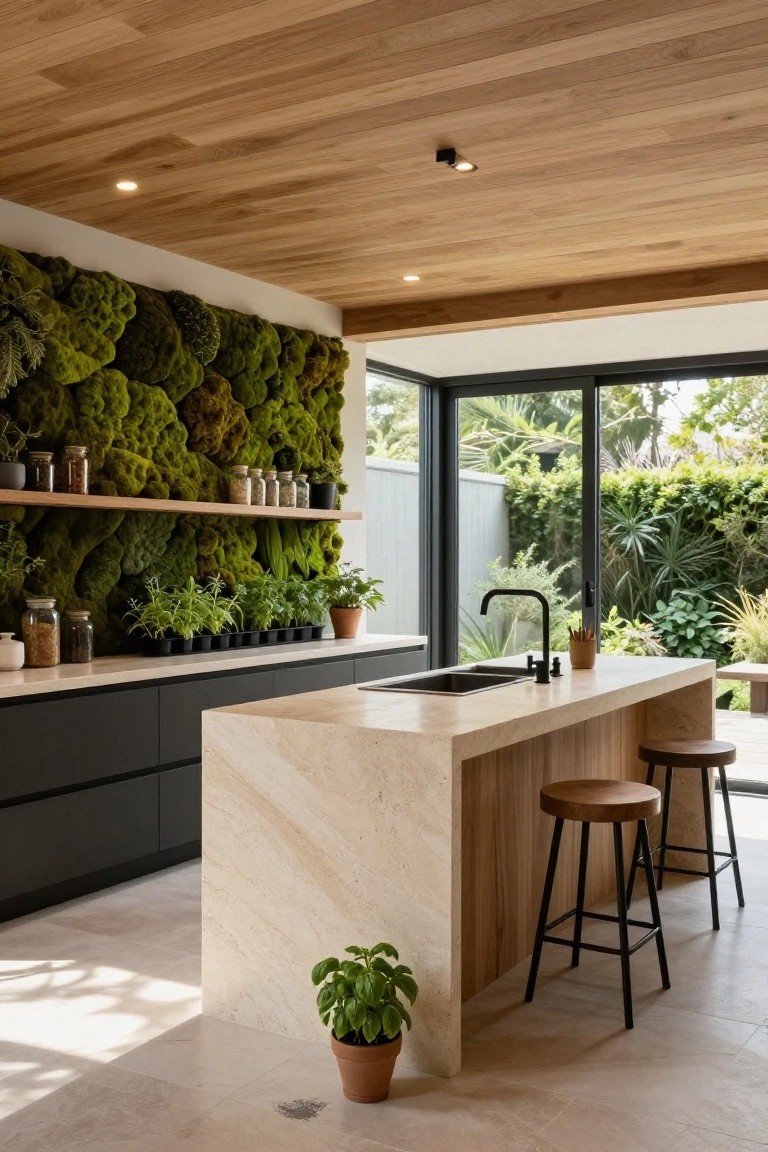
One simple way to make a waterfall island kitchen feel more custom is adding a living moss wall right alongside it. Here the thick light stone island with those full-height waterfall edges gets a fresh lift from the deep green moss covering the nearby wall. Shelves built into the moss hold jars and small plants, tying it all together without much fuss. It keeps the look natural and easygoing, especially with the garden showing through the glass doors.
This setup works best in kitchens that get decent light or where you can use preserved moss that doesn’t need watering. Pair it with a stone like travertine on the island for that organic match. It’s good for modern homes wanting a bit of green inside. Just pick low-maintenance moss to avoid extra work.
Frequently Asked Questions
Q: Can I add a waterfall island to a smaller kitchen without it feeling cramped?
A: Go for a slim profile, around 24 inches wide. Choose a lighter stone color to open up the space visually. It turns tight spots into standout features.
Q: What’s the easiest way to get that custom waterfall edge on a budget?
A: Hunt for remnant slabs from local fabricators. They often sell high-end quartz or marble pieces at half price. Pair it with simple cabinetry, and it looks bespoke.
Q: How do I pick a stone that won’t stain easily?
A: Test it yourself with coffee or wine right at the shop. Dense options like granite hold up best in busy kitchens. Seal it yearly to keep that fresh polish…
Q: Do I need a pro for installing the waterfall edges?
A: Yes, hire a stone setter experienced with mitered edges. They ensure tight seams that make it flow perfectly. DIY risks chips and gaps that scream amateur.
