


Living rooms often hinge on furniture that balances daily flow with a sense of gathering, or they end up feeling off no matter the decor.
I once moved a single armchair to face the window in my own space, and it opened up conversations that the old setup stifled.
People usually clock the main seating arrangement first, sensing right away if it pulls them in or pushes them apart.
Some concepts here rethink scale in ways that fit actual homes.
I’ve noted a couple worth sketching out for my next tweak.
Curved Bouclé Sofas

A curved bouclé sofa like this one takes center stage in the living room. Its soft, rounded shape in creamy white feels fresh and inviting, cutting against straight lines from the fireplace or windows. People go for it because it makes the space look bigger and more relaxed right away, especially with simple wood furniture nearby.
Put one in a room with good natural light and neutral walls. It suits modern homes or apartments where you want comfort without fuss. Just check the scale first, so it doesn’t crowd the floor.
Bulbous Leather Chairs for Retro Seating

Big rounded leather chairs like these orange ones show up in modern living rooms and change the whole feel. They look like soft pods, comfy for lounging, and pair easy with wood pieces and a simple stone table. The shape adds some 70s style but keeps things calm next to plain walls and a big window.
Put them in smaller spaces where you want seating that stands out without crowding. They suit apartments or open homes with light floors. Go for warm leather tones if your rug has patterns… just skip them if the room already has too many curves.
Built-In Daybed with Side Table
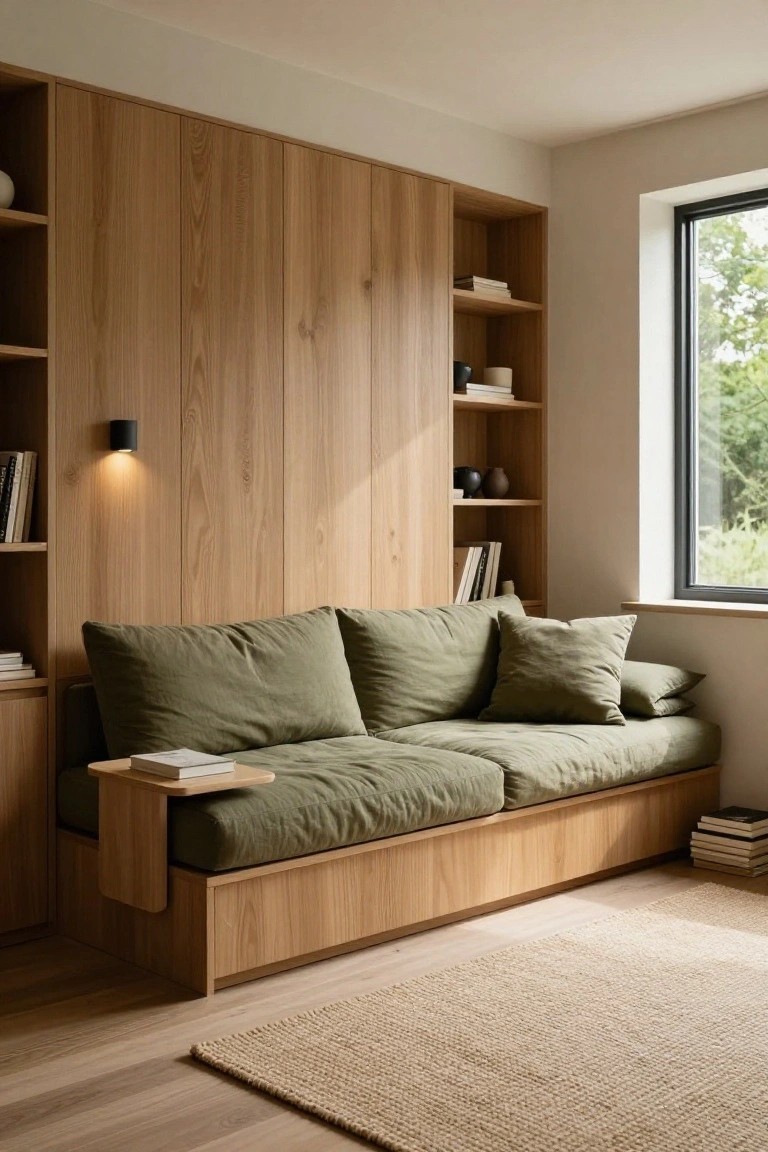
This daybed pulls right into the oak cabinetry on the wall, making the whole corner feel like one solid piece of furniture. The wood keeps everything warm and matching, and that little table shelf juts out just enough for a book or drink. It turns what could be empty space into a spot you actually want to use every day.
Try this in a tight living room or reading area where you need seating without bulky standalone pieces. Keep it low like shown, with storage drawers below, and toss on loose cushions in a muted green. Fits cozy apartments or homes with scandinavian vibes best… just measure your corner first to make sure it won’t crowd the flow.
Bookshelves Built Around a Daybed

One smart way to fit more storage and seating into a living room is to build bookshelves right around a daybed. This corner setup uses tall wooden shelves that wrap from wall to wall, holding books and a few pieces of art. The lower edge has a strip of warm lighting that highlights the spines without being too bright. It keeps books handy while giving a spot to sit and read.
This works well in smaller spaces or apartments where you want function without bulk. Go custom if you can measure the corner exactly, or start with matching freestanding units. Pair it with a low table nearby for drinks. Just keep the daybed simple… nothing too fussy.
Sunken Conversation Pit Seating
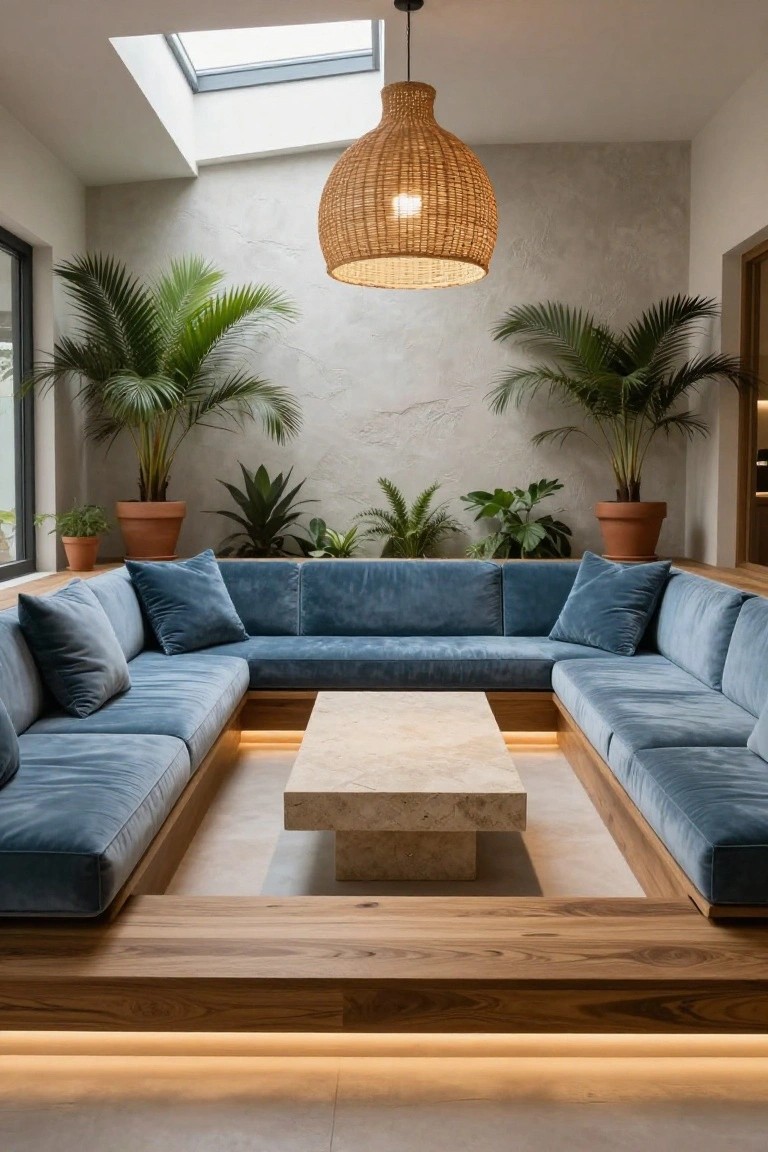
A sunken seating area like this takes a simple U-shaped sofa and drops it into a low wood platform around one central table. It turns an ordinary living room corner into a spot where people naturally gather close. That low profile with plush cushions makes everything feel relaxed and contained.
This works best in bigger open rooms that need a defined hangout zone. Pair it with a sturdy low table for drinks or games, and add plants nearby for some life. Skip it in tight spaces though… the step down takes room.
Slim Desk Makes Living Room Work Ready

A simple wooden desk like this one fits right next to the sofa without taking up much room. The walnut finish warms things up, and that built-in shelf underneath keeps chargers and small stuff out of sight. It’s a practical way to handle work from home in your everyday living space.
Try this in smaller apartments or open-plan homes where you want flexibility. Slide the desk perpendicular to the sofa for easy reach, pair it with neutral upholstery, and add a task lamp. It works best when the wood echoes other pieces, like the coffee table here… just measure your spot first to avoid crowding.
Curved Sofas Face the Fireplace
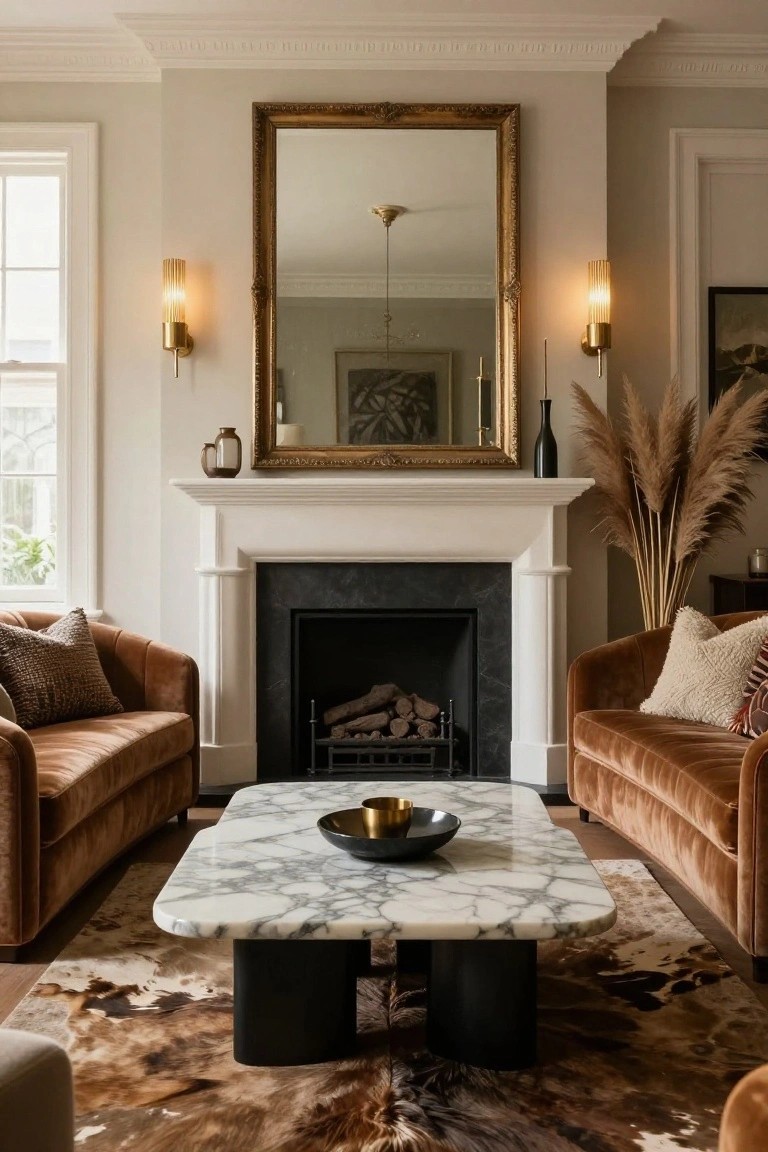
One simple way to set up a living room is to place a pair of curved sofas right on either side of the fireplace. Like these brown velvet ones, they draw the eye to the hearth and make a natural spot for two or three people to sit close. The curves keep it from feeling stiff, and the matching pair gives the space some order without trying too hard.
This works best in rooms where the fireplace is the main feature already. Put a low table, maybe marble like here, right in the middle for drinks or books. It suits older homes with classic trim or even apartments if you scale down the pieces. Just keep the rug underneath large enough to touch the sofa fronts.
Leather Floor Cushion Seating

A black leather floor cushion sits right on the tatami mats in this room. It’s oversized and low to the ground. That simple piece takes a traditional setup and gives it a modern edge. No need for bulky chairs or sofas. It keeps things open and easy to move around.
You can drop one of these in any living room corner for casual lounging. Works best in smaller spaces or rooms with a calm feel. Pair it with a low tray for drinks or books. Just make sure the leather holds up to daily use… wipe it down now and then.
Corner L-Shaped Sofa Layout
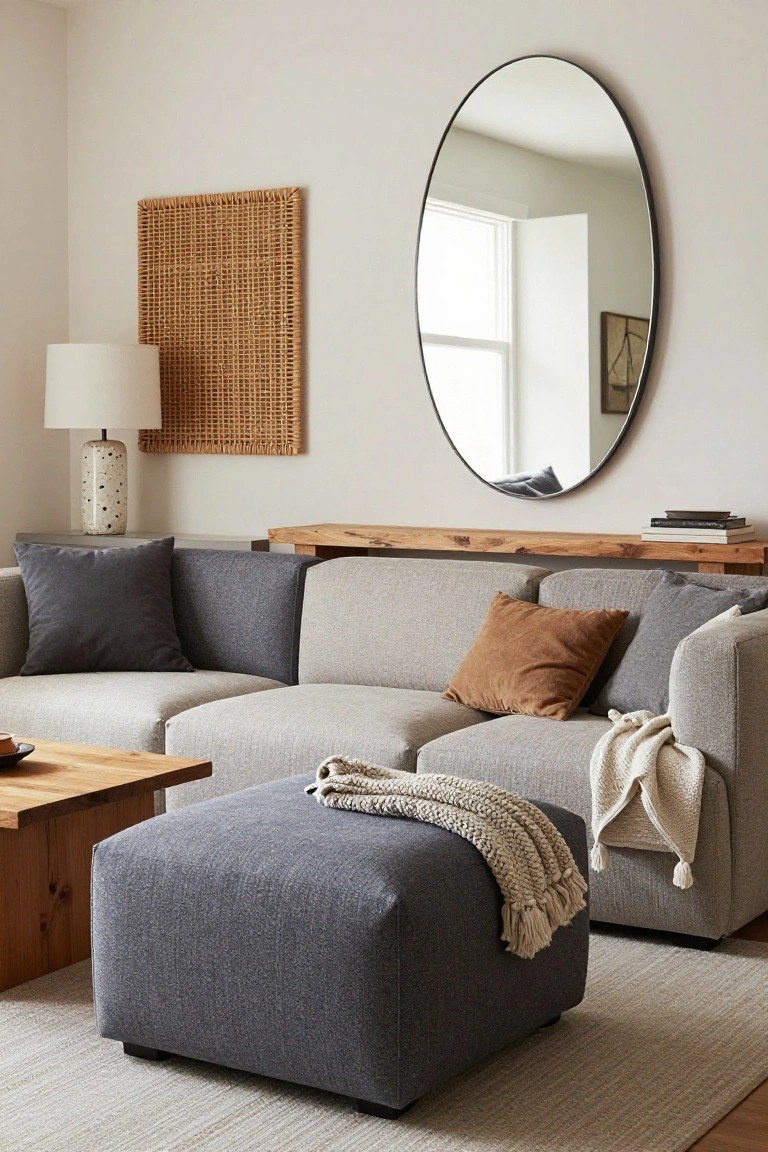
Tucking an L-shaped sofa into a room corner like this makes good use of space. The light gray fabric feels soft and current. It pulls people together without taking over the room. That ottoman nearby turns into extra seating or a spot for feet and drinks.
This works well in open living areas or smaller homes. Keep the colors neutral so walls and floors stay the backdrop. Add wood pieces like a low coffee table for balance. Just avoid dark tones that close things in. A throw on the ottoman finishes it off.
Plant-Filled Wooden Console

A wooden console like this one turns into an instant green centerpiece when you pack the top with plants. The walnut finish keeps it grounded, while trailing pothos and ferns spill over the edges. Small lights tucked among the pots add a soft glow that makes everything feel alive, even in a plain room.
This works best in living rooms with neutral walls and floors. Go for easy plants that don’t need much sun. It suits apartments or open spaces where you want nature without taking up floor area. Just keep the console low enough for TV use if that’s the plan.
Woven Rattan Canopy Daybed

This rattan daybed with a simple fabric canopy overhead makes a quiet lounging spot out of any living room corner. The woven frame keeps things open and breezy while the top adds a bit of enclosure, like your own little retreat indoors. It’s one of those furniture pieces that shifts the whole room’s feel without much effort.
Tuck it against a wall near a window, where soft light filters through sheer curtains. It suits relaxed homes with neutral walls and floors, pairing easy with cushions and a side stool. Keep the area uncluttered so the piece stands out… and watch the scale if your room runs small.
Floating Wooden Mantel Over the Fireplace
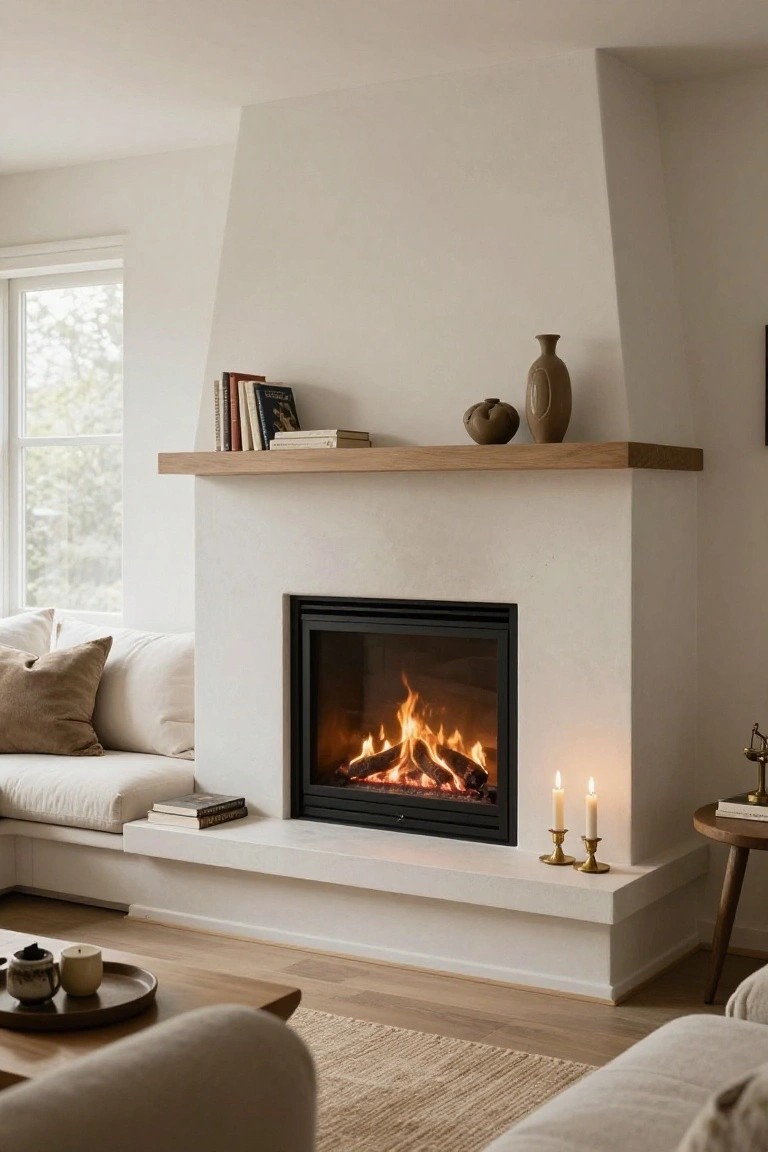
A floating oak mantel like this one sits right above the fireplace, holding just a stack of books and a couple of simple vases. It adds a touch of natural wood warmth to the mostly white room without cluttering things up. That bit of texture draws the eye up and makes the whole setup feel balanced around the fire.
You can pull this off in any living room with a basic fireplace. Pick a light oak shelf that matches your floors, keep the styling to three or four items max. It suits open-plan spaces or apartments best… just make sure it’s sturdy enough for a few candles down on the hearth too.
Pouf as Coffee Table Stand-In
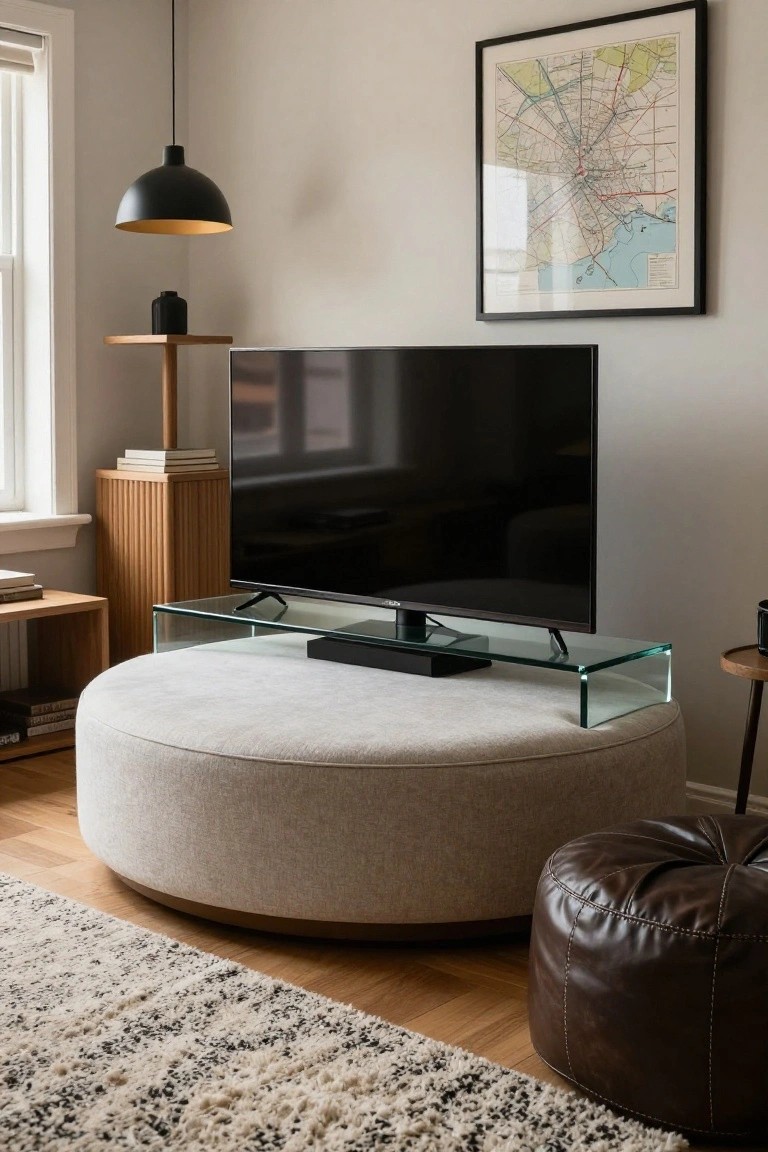
A large round pouf sits right under the TV setup in this corner spot. It skips the usual coffee table for something softer and more flexible. You get a spot for your feet or a tray of drinks without taking up much room. The whole area feels laid-back, perfect for sinking in after a long day.
Try this in tight living rooms or apartments where every inch counts. Raise the TV on a simple glass shelf over a wood stand so the pouf fits easy underneath. Go for neutral fabrics that blend with your floors. Watch the height though. Too tall a pouf and it bumps your knees. Works best with low ceilings or casual vibes.
Facing Sofas Around a Low Wood Table
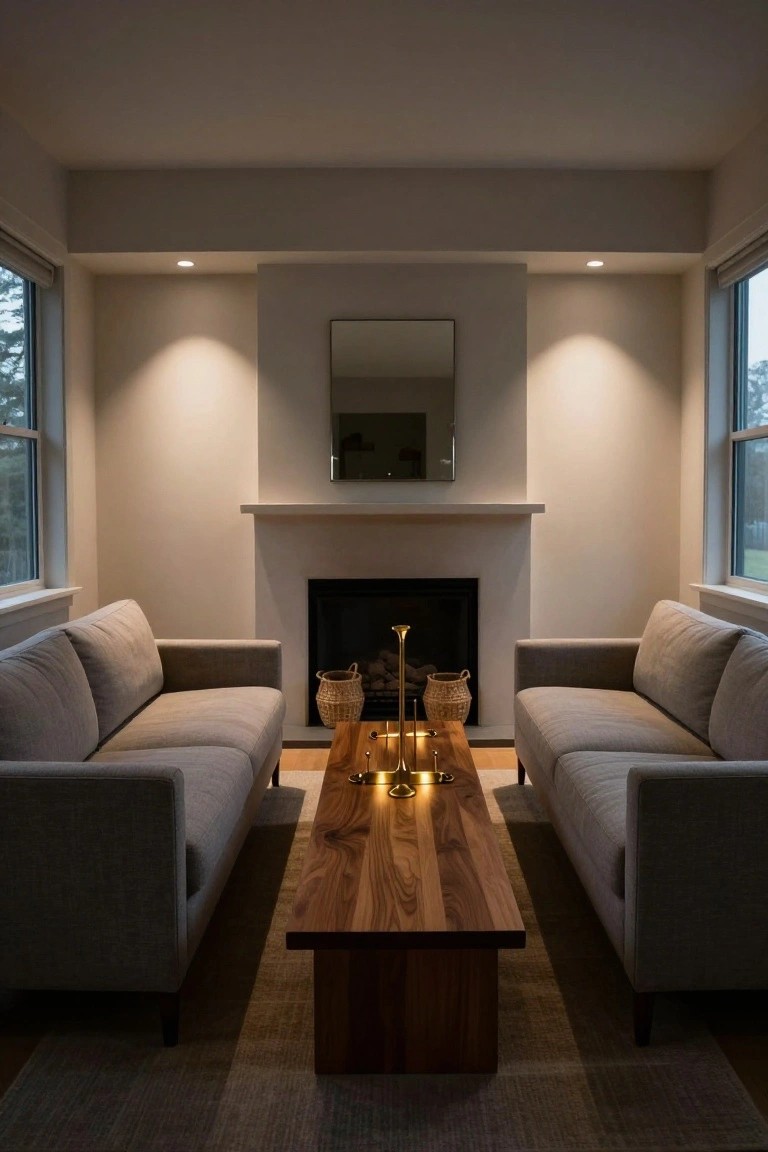
A pair of neutral sofas facing each other across a low walnut coffee table sets up an easy spot for talking or relaxing. That solid wood table in the middle keeps things steady and adds a bit of natural texture against the soft fabric seats. With the fireplace right there, it turns a simple seating area into something that feels pulled together.
This works best in rectangular rooms where you want to zone off a conversation spot without walls getting in the way. Go for low profiles all around so views stay open, maybe toward windows or the fire. Just keep the table clear-ish, a few brass candles or a low basket, nothing crowded. Fits modern homes or calmer traditional ones too.
Curved Floor Lamps in Wall Niches
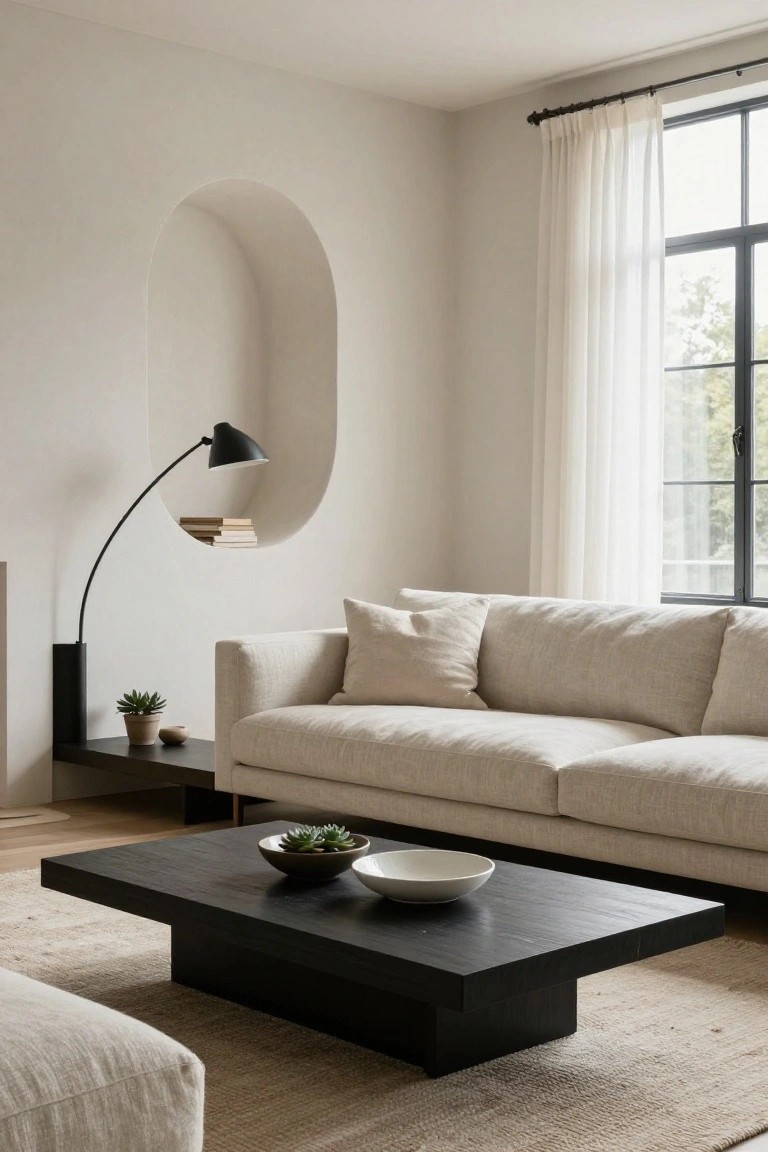
A curved floor lamp fits right into an arched wall recess like it was made for it. The black lamp here arcs up and over, with its shade lighting the niche and a stack of books below. This one piece turns a blank spot on the wall into something useful, without adding much bulk to the room.
Put one near your sofa in a living room with soft neutrals. It suits calmer spaces where you want a reading light or just a bit of shape. Pick a lamp shade that directs light down, and keep the niche simple so the curve shows.
Built-In Corner Benches
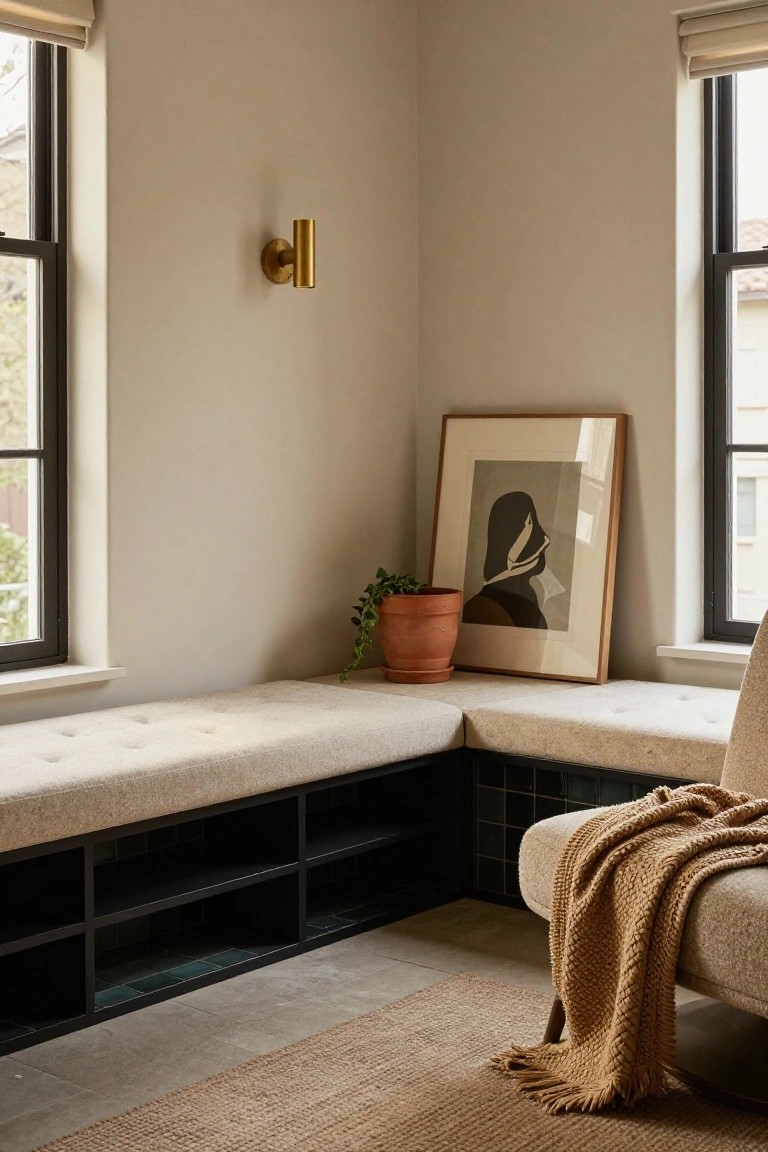
A built-in bench wrapping around a window corner turns dead space into a real sitting area. The tufted top gives it a soft feel for lounging, and open shelves below keep books or baskets handy without crowding the floor.
This setup fits best in living rooms with tall windows or odd corners. It adds seats for guests or quiet time, and works in most homes if you match the upholstery to your rugs. Watch the depth though, so storage stays useful.
Leather and Fabric Sectional Sofas
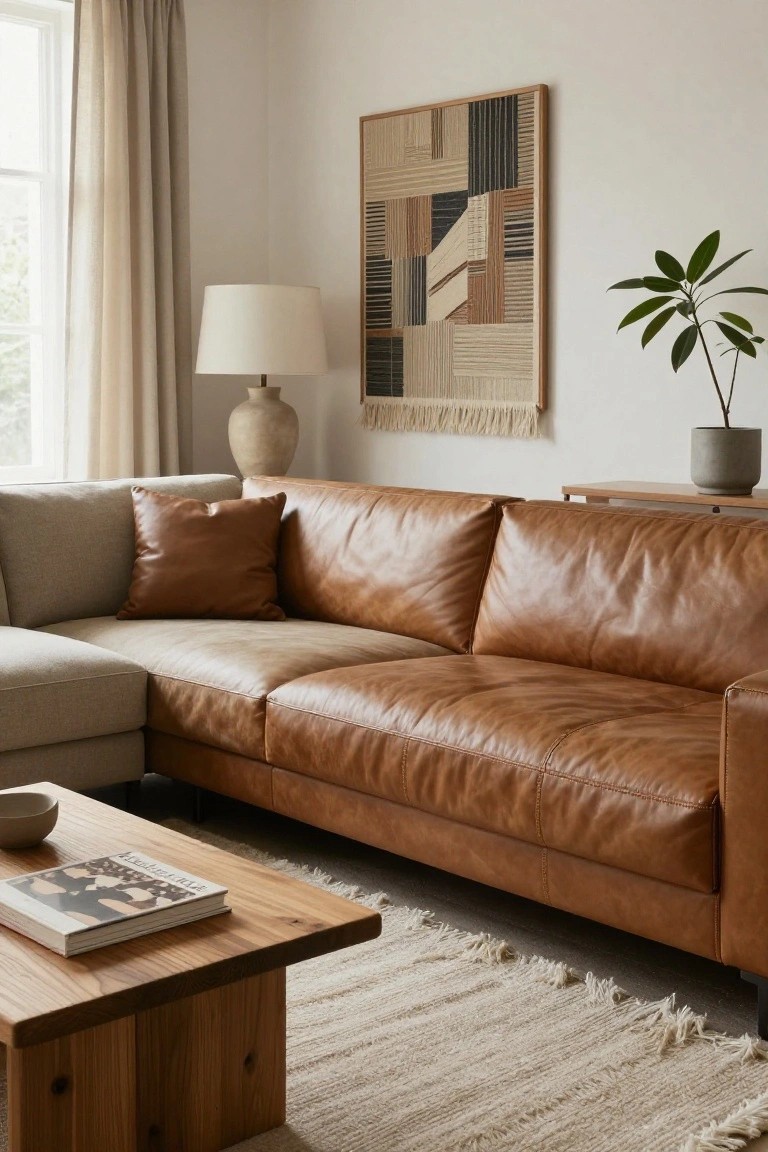
A simple way to update your living room is grabbing a sectional sofa with leather on one side and fabric on the other. Here the tan leather flows smoothly into light gray fabric, creating some natural interest right where people sit most. It feels modern but not fussy, and the mix holds up to everyday use.
This kind of sofa fits best in open family spaces or smaller rooms where you need flexible seating. Pair it with a wood coffee table and neutral rug to let the upholstery stand out. Watch the scale though. Too big and it crowds the room.
Full-Wall Bookshelves Bring Library Comfort Home
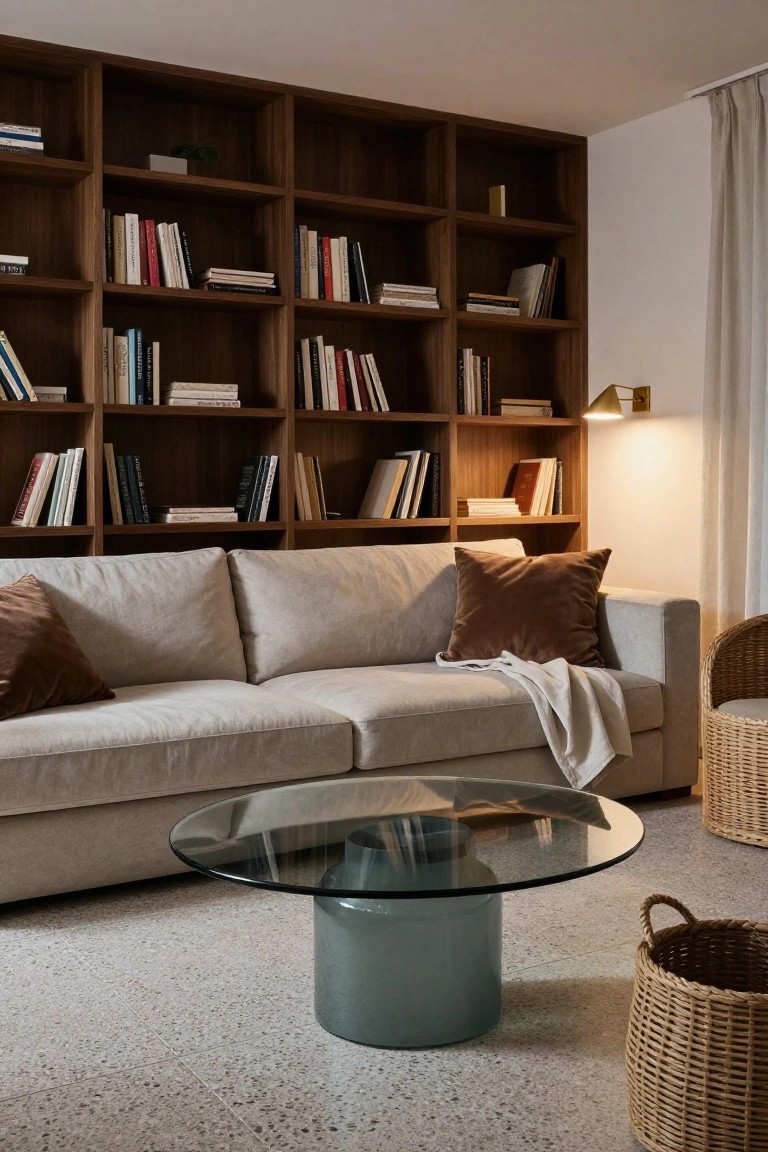
Tall wooden bookshelves running the length of one wall turn an ordinary living room into a spot where books take center stage. Filled with colorful spines and a few plants or objects, they add real warmth without much effort. The light sofa in front keeps things from feeling too heavy, letting the shelves do their job quietly.
These work best in homes with decent wall space, maybe near a window for good reading light. Go for solid wood tones like walnut to match most floors or rugs. Just avoid cramming every shelf full, or it starts looking cluttered. Pair with simple seating, and you’ve got a room that pulls people in for a quiet afternoon.
Dining with a Sofa Bench
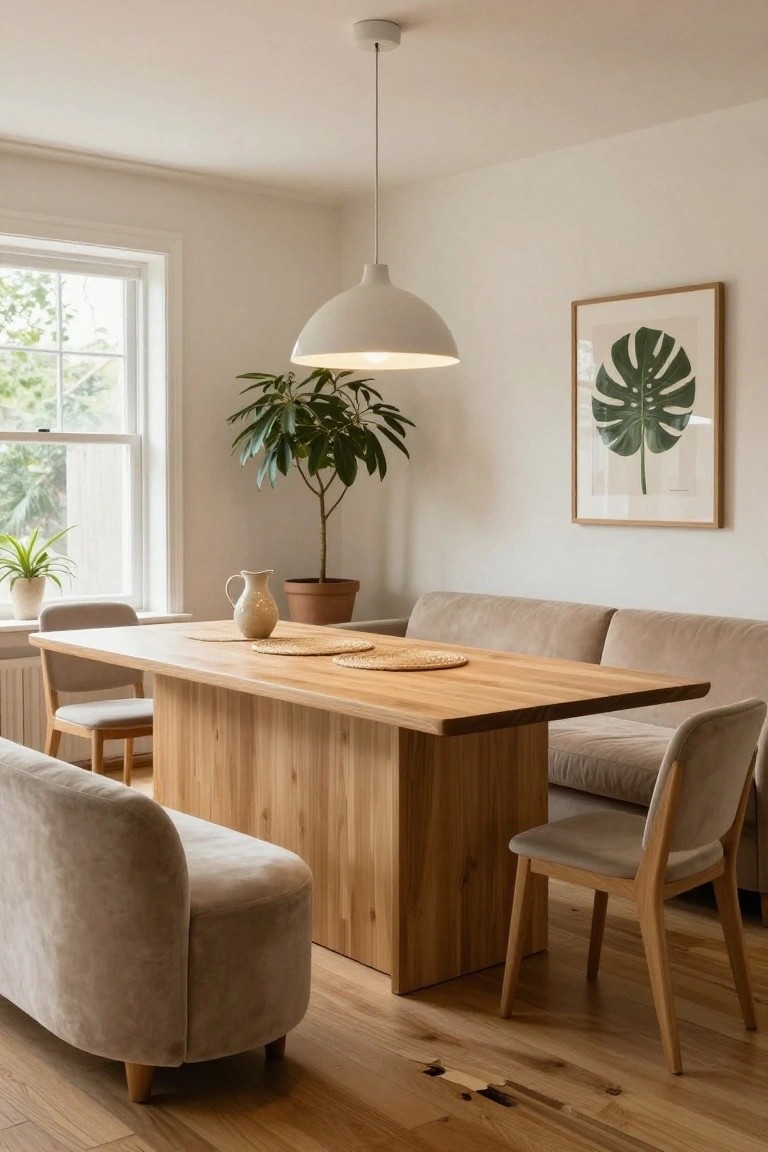
One simple way to make your dining area feel less formal is to swap out chairs on one side for a sofa bench. Like in this setup, where a curved upholstered sofa sits right up to the wooden table. It turns meals into something cozier, more like lounging at home. The natural wood table keeps things grounded.
This works best in open living-dining spaces, especially if you want a spot for lingering after dinner. Tuck the sofa against a wall or window for easy flow. It’s practical for smaller homes too… just make sure the sofa height lines up with your table.
Suspended Hammock Swing
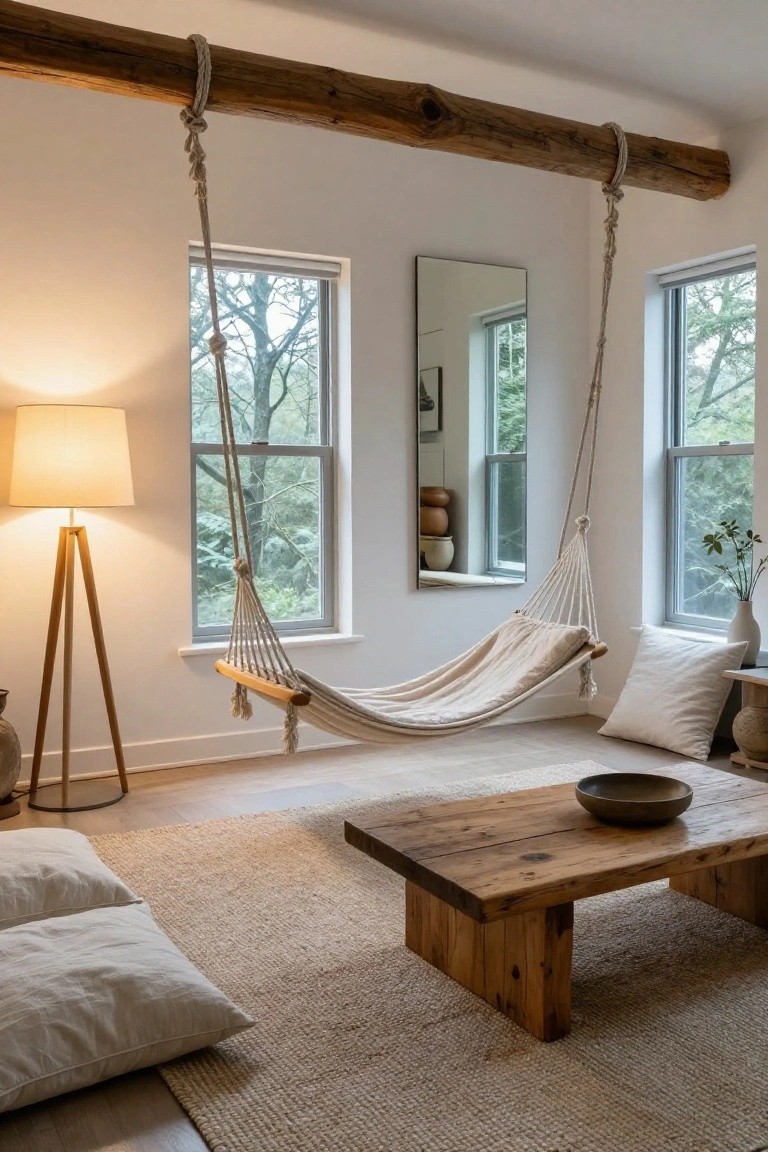
A hammock swing like this one adds a laid-back spot for reading or just kicking back in the living room. Hung from a thick wooden beam with soft pillows tucked in, it turns a corner into something cozy and unexpected. No big furniture needed. It fits right with light wood tones and simple rugs around it.
Try this in rooms with tall ceilings where you can secure ropes to a beam or install a hook. It suits casual spaces with plenty of natural light from windows. Keep the area open underneath so it doesn’t crowd the floor. One thing… make sure the hanging spot holds weight safely.
Custom Built-In Corner Bench
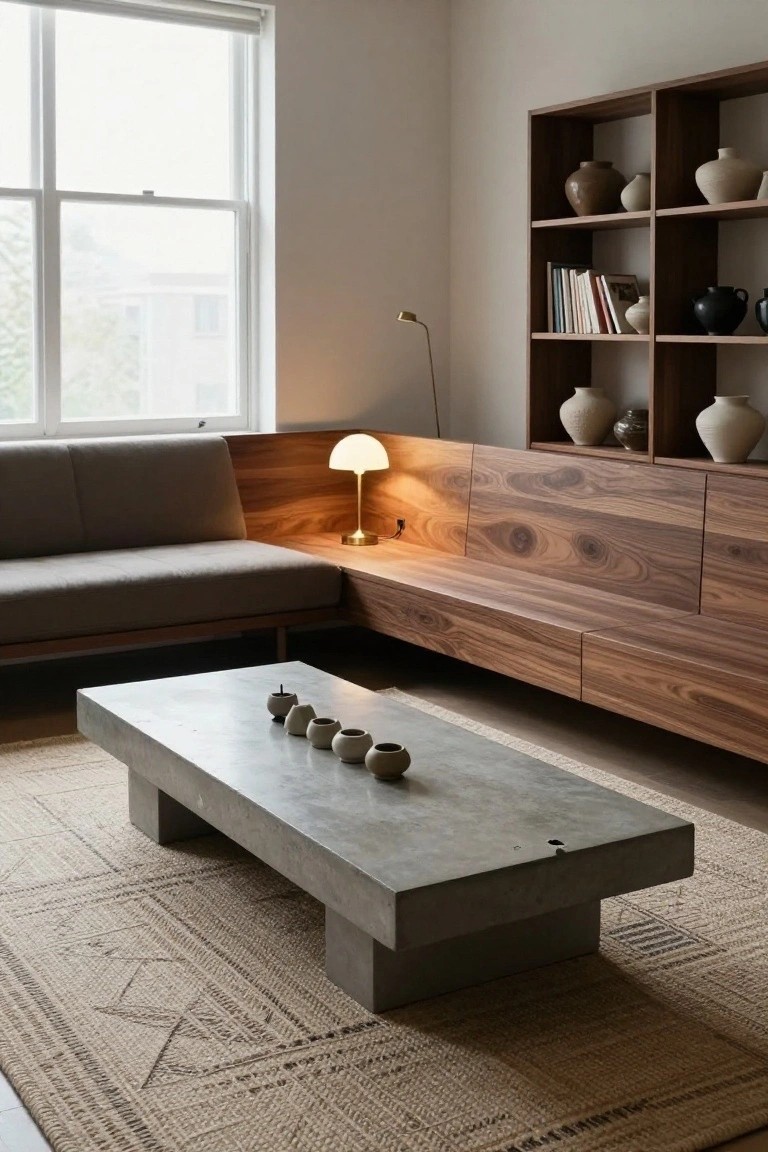
A built-in bench like this one turns a plain corner into real seating that feels part of the room. Made from warm wood panels with drawers and open shelves, it holds books and pottery while giving you a spot to sit. No freestanding furniture needed. It makes the space cozier right away.
Try this in a living room with good natural light or an open layout. The low gray sofa fits right against it, and a simple concrete table in front keeps things open. It suits modern homes or apartments best. Pick a wood like walnut that warms up white walls, but measure twice before building.
Artistic Tiled Console Table
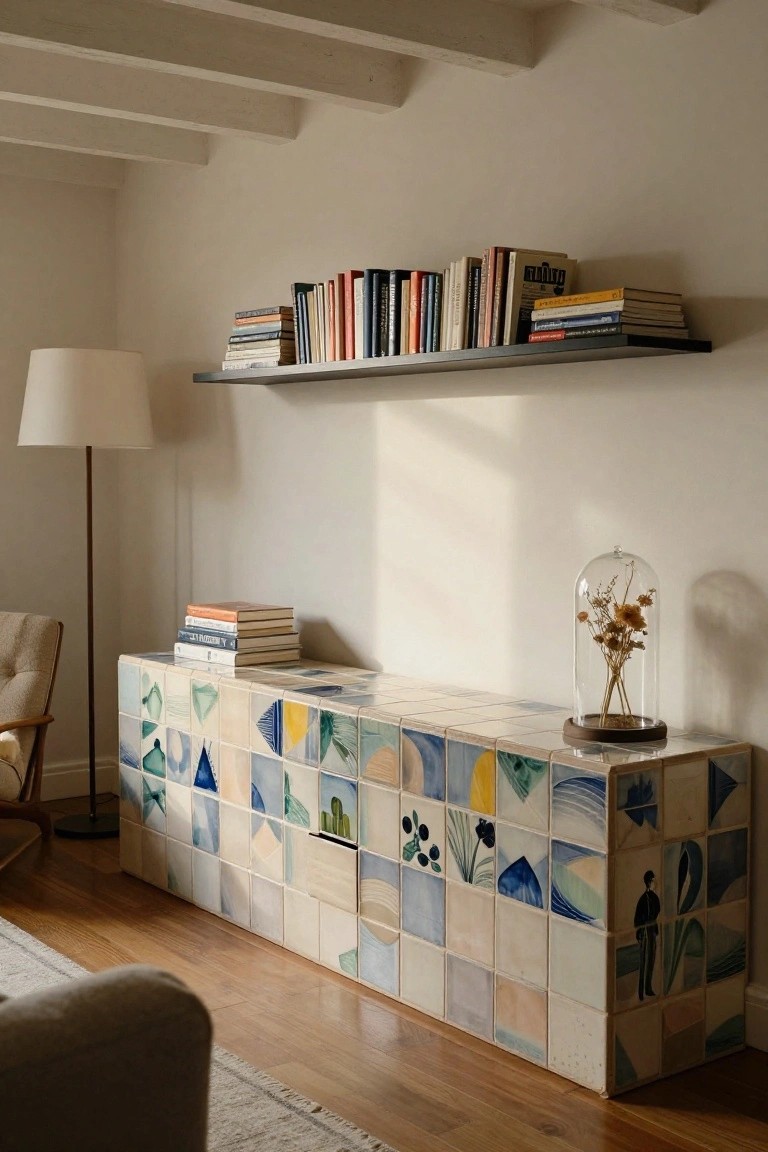
A console table like this one, faced with colorful hand-painted tiles, turns a simple spot in the living room into something special. The tiles mix blues, greens, and soft neutrals with fun details like a cactus and a little figure. It stands out against plain walls but keeps things calm, especially with books stacked on top and a glass dome nearby holding dried flowers.
Try it under a bookshelf in a hallway or living area. It suits homes with wood floors and neutral tones, adding interest without clutter. Seal the surface if kids or drinks are around, but otherwise it’s low fuss and makes guests look twice.
Sofa with Built-In Side Table
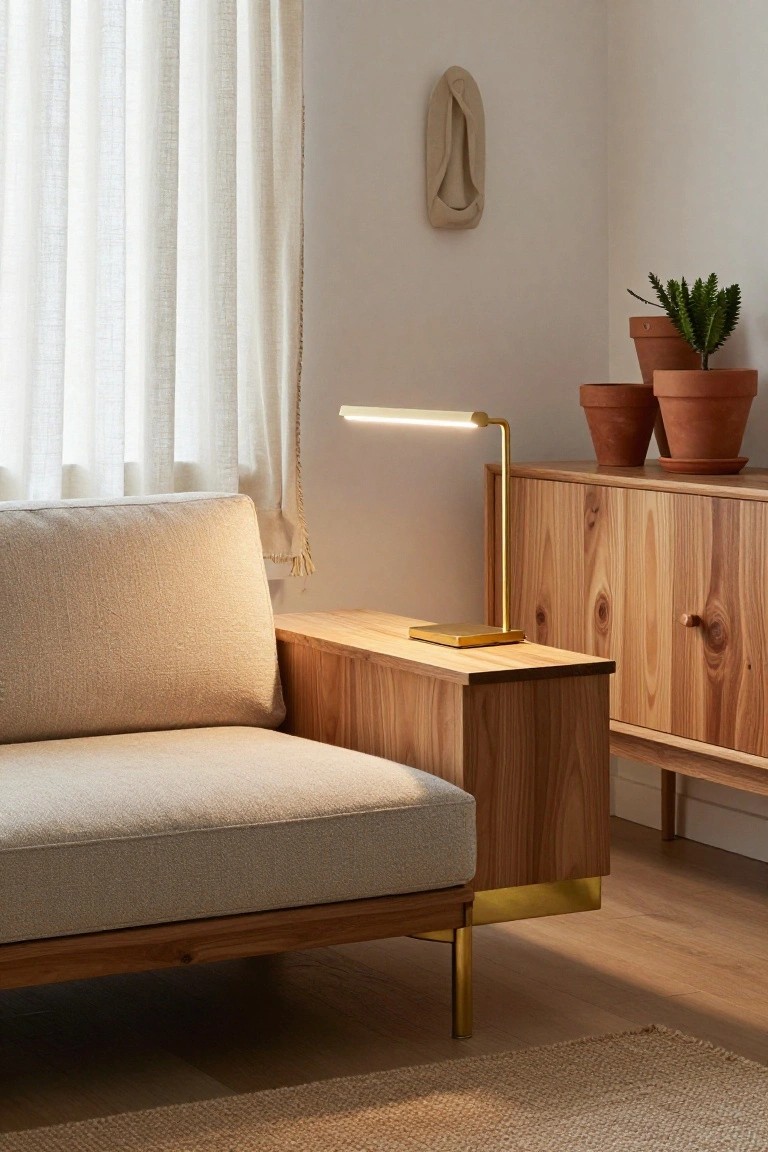
One simple furniture piece that changes a living room corner is this wood sofa where the arm flows right into a side table. No separate end table needed. It keeps things clean and lets you drop a book or cup without fuss. The warm wood ties into the nearby cabinet too.
Put this in a tight spot like next to a window. It suits casual homes with light walls and wood floors. Add a slim brass lamp like the one here for reading light. Skip heavy pillows to keep the lines sharp.
Wooden Shelves with Built-In Lighting
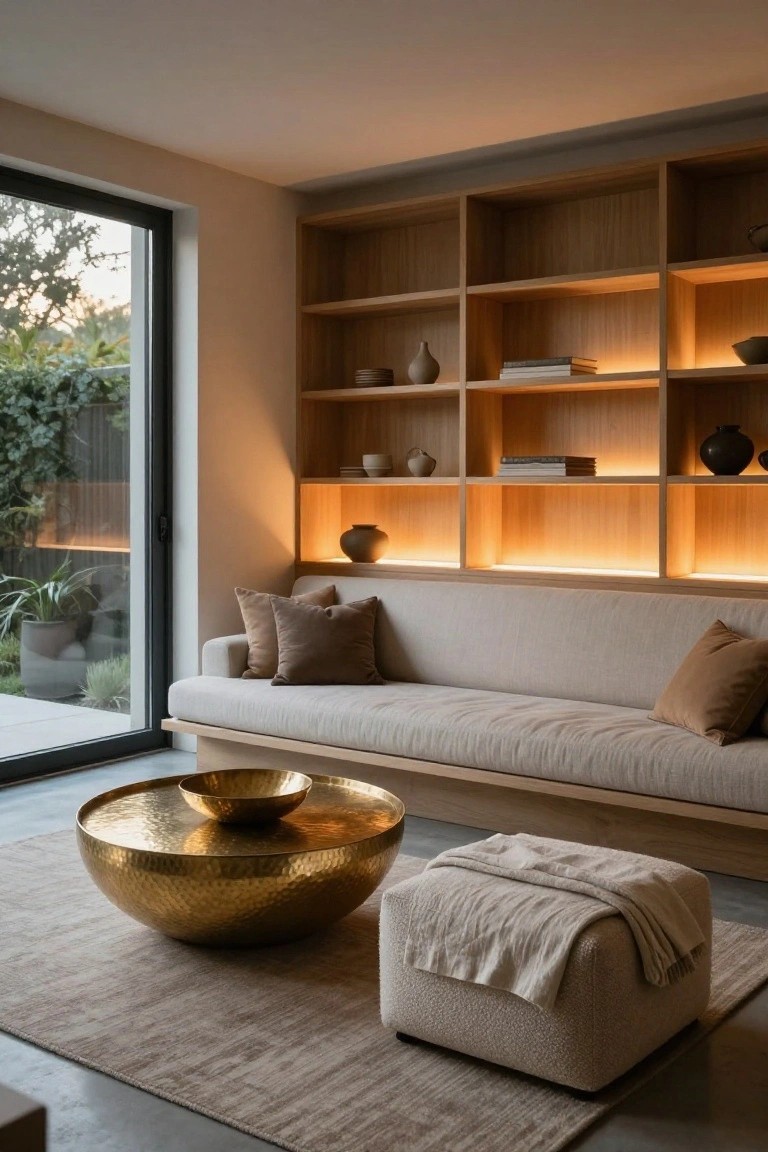
Those wooden open shelves running along the back wall catch your eye right away. Filled with simple pottery pieces and a few books, the soft LED strips tucked underneath give off a warm glow that lights up the whole seating area. It turns plain storage into something that feels lived-in and calm, especially against the light walls and sofa.
Try this in a small living room or family space where you need both display spots and some extra light. It fits homes with neutral furniture best, like a low cream couch and simple rug. Keep the shelves from getting too crowded so the light shows through nicely.
Sculptural Wood Stools as Side Tables

Those carved wood stools with the thick, curving legs work so well as side tables. One holds a stack of books and a glowing lamp vase. The other has more books nearby. They add an organic touch that feels handmade and lively, especially next to a plain leather sofa.
Try this in a relaxed living room where you want some shape without much fuss. The wood warms up white walls and a fireplace area nicely. Just keep the tops simple so the legs stay the star.
Frequently Asked Questions
Q: Can these furniture ideas work in a tiny living room?
A: Yes, pick the multifunctional ones like nesting tables or wall-mounted shelves. They tuck away when you need space. Your room feels bigger right away.
Q: What’s the quickest way to try one out without buying anything new?
A: Rearrange your current pieces into an unexpected layout, like floating the sofa away from the wall. Add pillows in wild patterns for punch. It refreshes everything in under an hour.
Q: How do I make sure a bold concept matches my style?
A: Start with one item that echoes something you already love, say the color of your rug. Build around it slowly. And trust your gut—if it sparks joy, it fits.
Q: Do I really need pro help to pull these off?
A: Nope, grab a tape measure and sketch your plan on paper first. Move stuff around on a weekend afternoon. You’ll nail the look yourself.
