

Living rooms today blend into kitchens and dining areas so seamlessly that they sometimes lose their sense of purpose amid the open flow.
I remember rearranging my own space last year and realizing a good partition turns chaos into calm by guiding movement without blocking it.
Folks usually spot first how these dividers play with light and sightlines to make the room feel larger yet more intimate.
They handle the push-pull of family gatherings and quiet evenings better than plain walls ever could.
One approach caught my eye for its simple tweak on everyday furniture.
Built-In Fireplace Cabinet Defines the Seating Zone
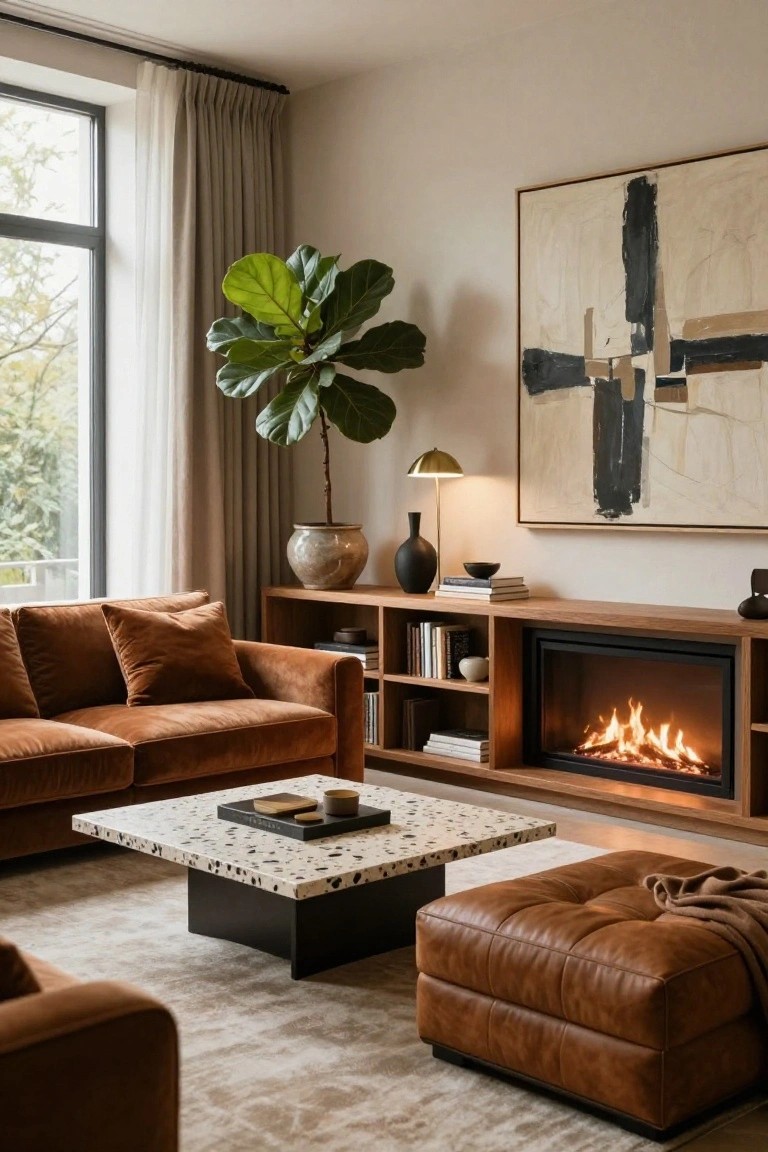
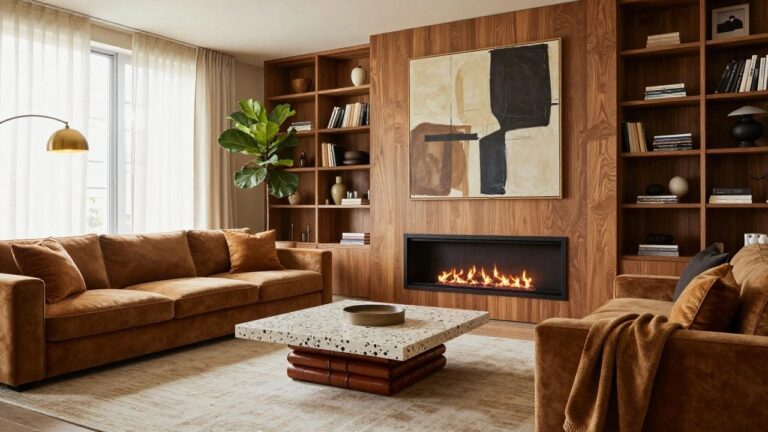
One smart way to partition a living room without full walls is a wooden cabinet built around a fireplace. Here, the oak-toned unit stretches along one wall, holding books, vases, and lamps while the flames flicker right in the center. It pulls the burnt orange sofa and coffee table into a cozy nook, making the space feel separate yet connected to the rest of the room.
This works best in open floor plans where you need subtle zoning. Face your seating toward the fire for that natural focal point, and keep storage practical but styled. It suits warmer modern homes… just make sure the cabinet depth fits your layout without crowding the flow.
Open Bookshelf Partition
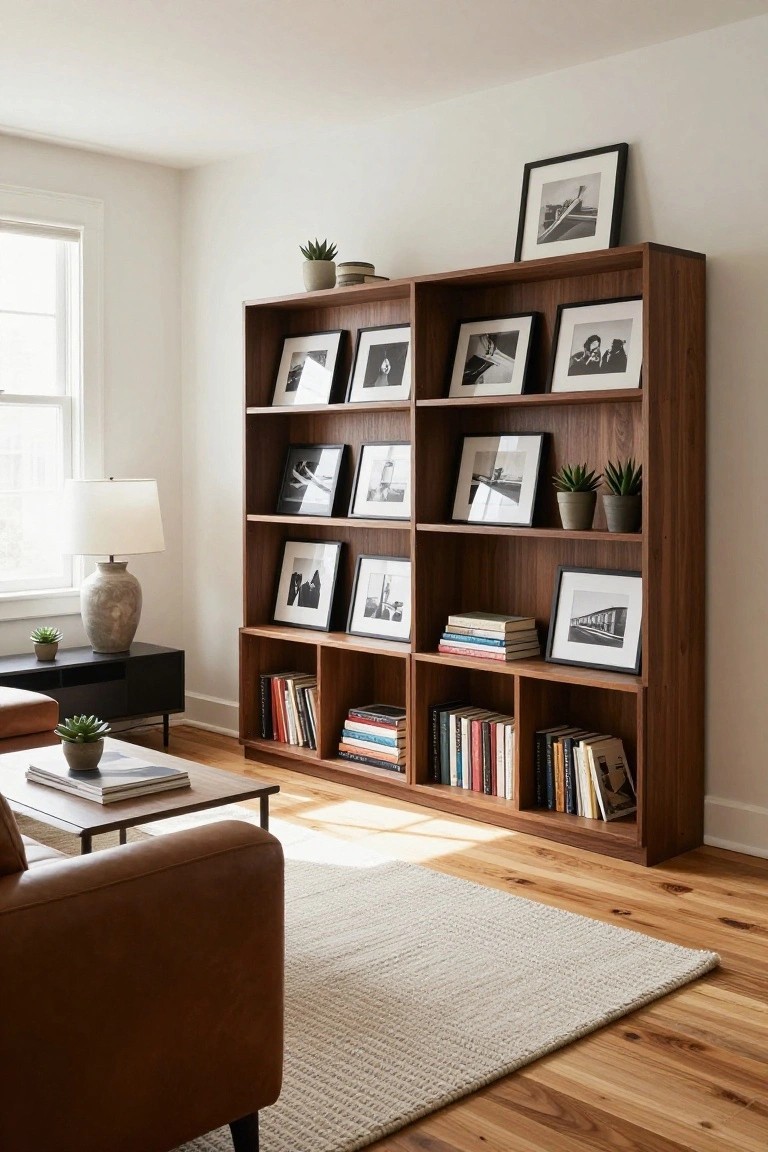
One simple way to divide a living room without shutting off the flow is a tall open bookshelf like this one. It stands against the wall but works as a partition by filling one side with books and the other with plants and photos. That setup adds storage and interest while letting light move through.
This works best in open-plan homes where you want to zone a reading spot from the main seating area. Go for a wood finish that matches your floors, and keep shelves half full so it doesn’t feel crowded. It’s practical for smaller spaces too, since it doesn’t eat up floor room.
Gilded Screen as Living Room Divider
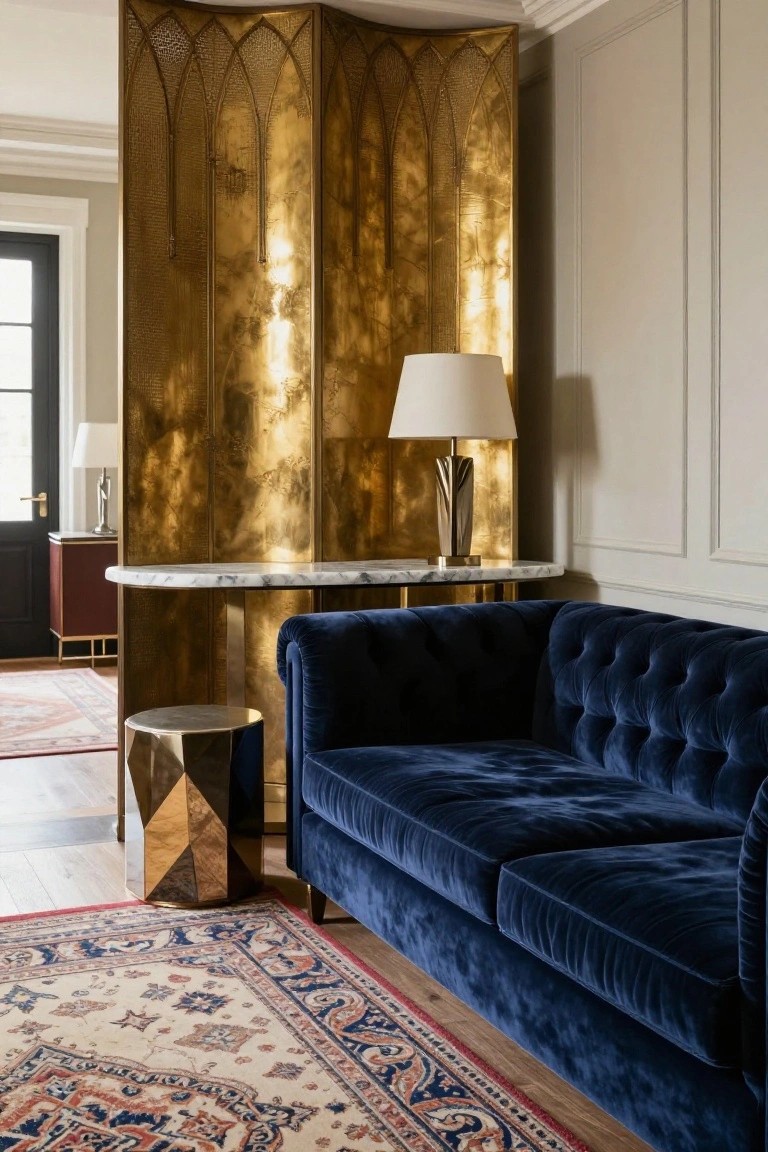
A tall folding screen with gold leaf and gothic arches makes a simple partition for open living rooms. It stands out against plain walls and lets light filter through while keeping zones separate. Here it’s placed by a marble console with a navy velvet sofa nearby, giving the space a formal yet cozy feel.
This setup suits traditional or transitional homes with high ceilings. Angle the screen to create a nook for seating or entry display. Pick one with some texture so it doesn’t look flat, and keep furniture low-scale to avoid crowding.
Frosted Glass Partition with Built-In Shelves

A frosted glass partition like this one uses black metal frames to hold the panels and wooden shelves for books. It splits the living room from a small work corner without blocking light or air. The shelves add storage right where you need it, and the glass keeps the space feeling open even when the doors are shut.
This works best in apartments or open homes with neutral walls and wood floors. Pair it with soft sofas nearby to keep things cozy. Scale it to your room… too big and it might crowd things. Simple upkeep too, just dust the shelves now and then.
Low Partition Defines Living and Dining Zones

A low wood-topped partition like this one works well in open living areas. It lets you tuck the sofa right up against it for a cozy spot to relax, while the dining table sits just on the other side. The setup keeps things connected. Light flows through easily, and you can chat across it without yelling. No full wall to block the room.
Try this in homes with combined spaces, especially if you want modern calm without sharp edges. Pair it with a warm wood finish and soft fabrics nearby. It suits apartments or family houses best. Just make sure the height stays low, around counter level, so it does not feel chopped up.
Shoji Screens Divide Living and Work Areas
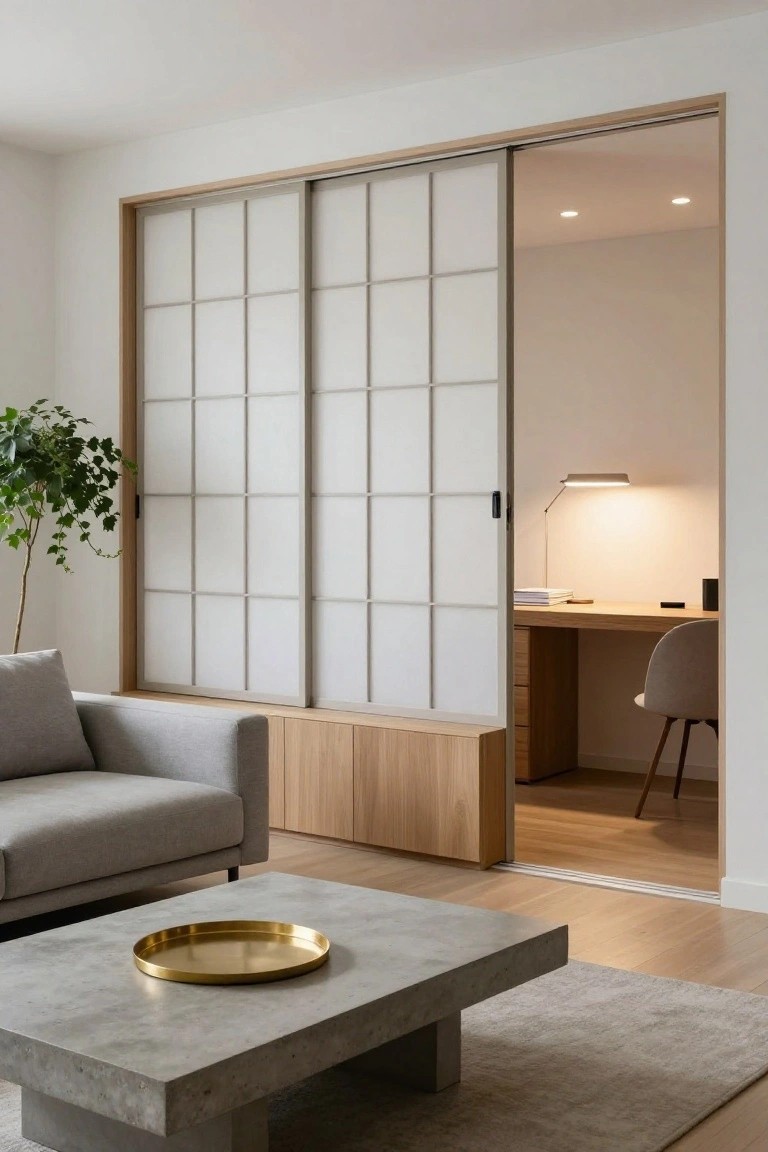
Sliding shoji screens like these give a clean partition between living room and office without blocking light or views. The white paper panels let you peek at the desk inside, keeping things connected yet private. A simple plant nearby softens the edge.
This setup fits open-plan homes where you need flexible zones. Use it in apartments or studies off the main room. Wood cabinets at the base match the floors for a grounded look. Go for tracks that slide smoothly, since you’ll use them often.
Built-In Window Bench Defines a Cozy Zone
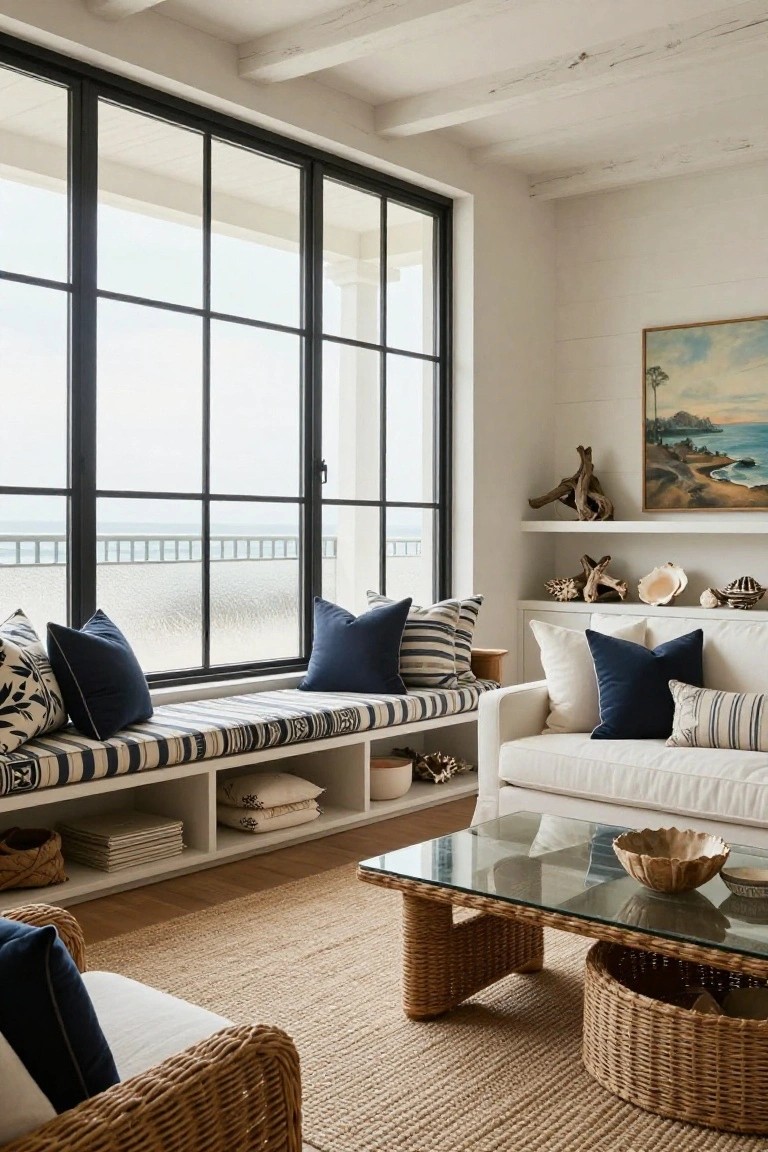
A built-in bench running along large windows makes a natural spot to sit and take in the view. It works as a soft partition in the living room, setting off this area from the main seating without blocking light or flow. Storage shelves below and pillows in navy and stripes keep it practical and lived-in.
This idea fits best in rooms with big windows or ocean views, where you want to highlight the outside. Build it low to match nearby sofas, and add cushions for comfort. It suits coastal or casual homes, but watch the scale so it doesn’t overwhelm a smaller space.
Vertical Slats Divide Open Living Rooms
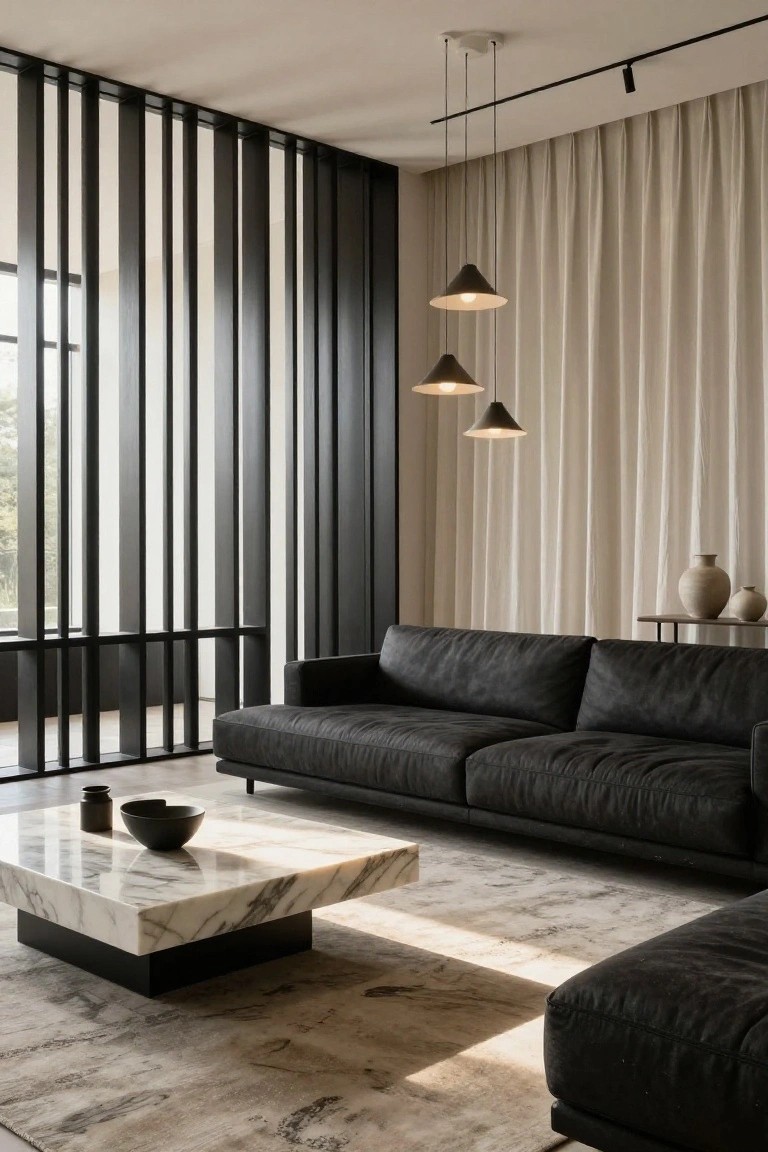
Tall black wooden slats run along one wall here, acting as a partition that sets off the seating area. They block direct views but let light slip through the gaps, so the space stays connected and airy. That dark finish gives a modern edge without making things feel shut in.
You can pull this off in bigger open-plan rooms, especially modern ones with high ceilings. Pair the slats with low furniture like a leather sofa and a simple coffee table. Keep the rest neutral… it lets the partition do its job. Scale matters though, so go full height or it might look half done.
Woven Rattan Screens as Living Room Dividers
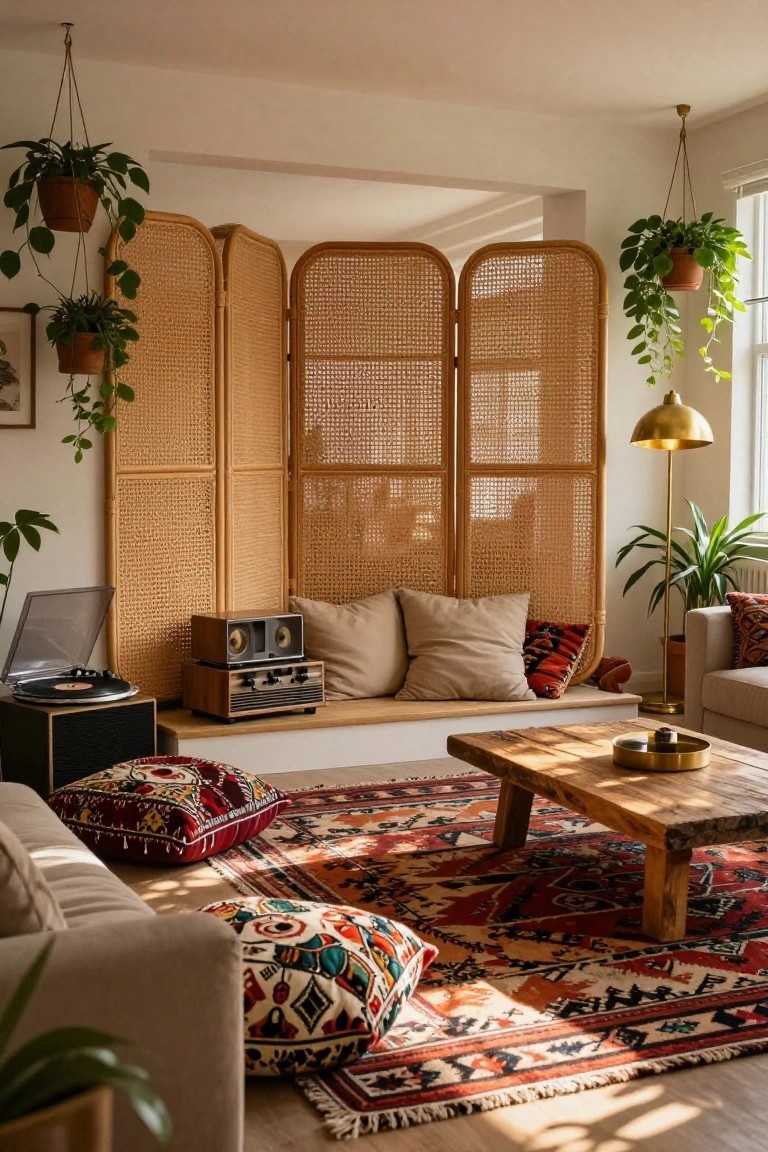
Woven rattan screens like these offer a simple way to split up a living room without making it feel shut off. They let light pass through the gaps, keeping things open and airy, while the natural material brings in some texture that fits right with plants and wood furniture. Behind the screens here, there’s a low platform with cushions that makes a relaxed spot for lounging or music.
You can use them in bigger open spaces to carve out a seating nook or meditation area. They suit homes with bohemian or casual vibes best, especially if you add hanging plants for extra life. Just pick screens tall enough for privacy but light enough not to block the room’s flow.
Brick Fireplace Wall as a Living Room Divider
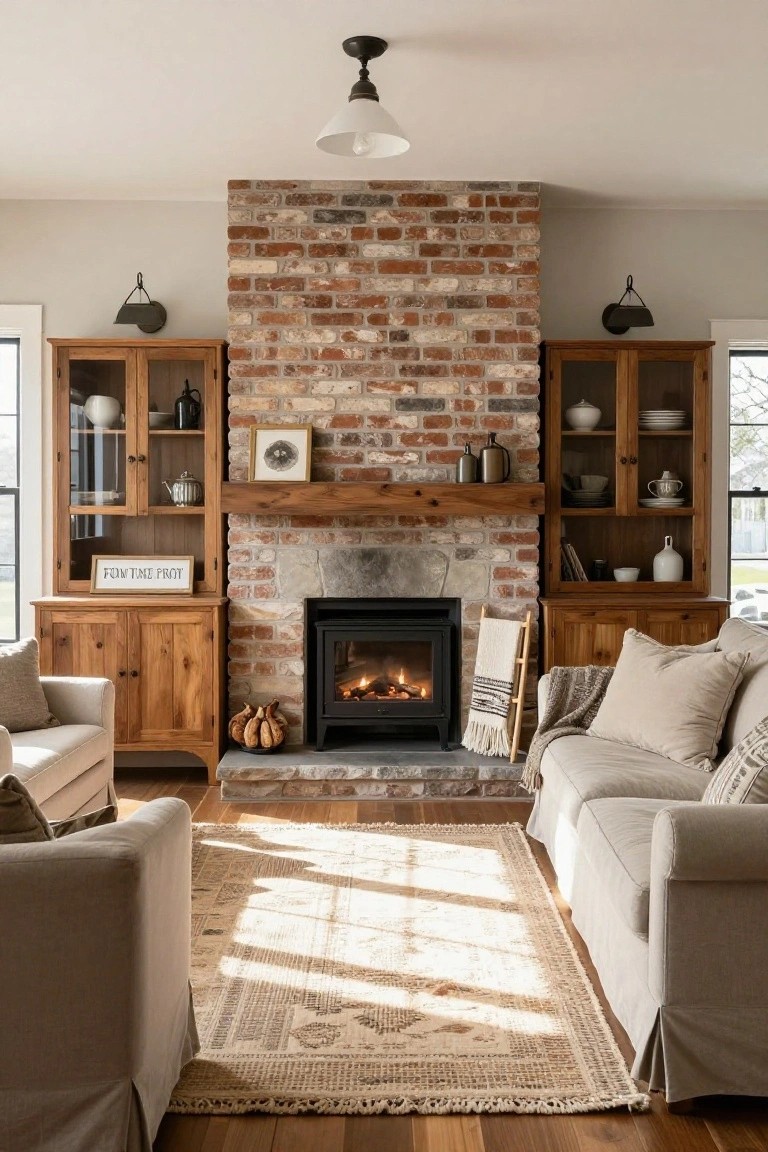
A tall brick chimney breast with a clean gas fireplace takes center stage here. Flanked by matching wood hutches for storage and display, it naturally divides the seating area from the rest of the open space. That rugged brick texture paired with the wood cabinets adds real warmth without overwhelming the room.
This works well in open-plan homes where you need to mark off the living zone. Go for neutral sofas and a simple rug underneath to keep the focus on the partition. It’s practical for family rooms… just make sure the built-ins have enough shelves for books and decor.
Gold-Framed Partition Separates Living Zones

A gold-framed folding partition like this one neatly divides the living area from the bar without closing things off completely. The glass panels let light flow through, and the slim metal frames keep it light and modern. It works because it gives you separate spots for relaxing or grabbing a drink, all in one open room.
Try this in city apartments or lofts with big windows. Fold it back for parties, or keep it in place for everyday use. Pairs well with neutral furniture and marble counters, but watch the scale, it needs tall ceilings to shine.
Plant Wall Partition Behind the Sofa
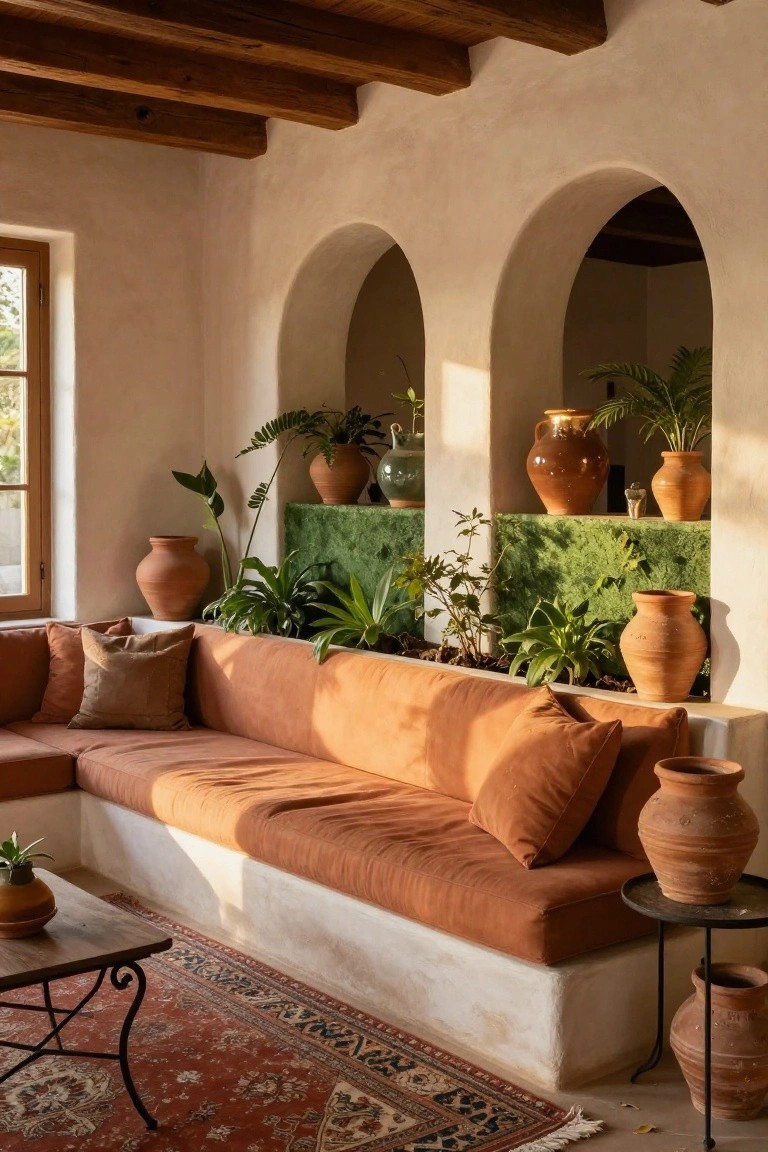
A simple plant wall makes a good divider in open living rooms. Here it’s a soft green moss panel right behind a low sofa. It sets off the seating area without blocking light or the room’s flow. Paired with terracotta pots and a few large leaves, it brings in some nature that fits adobe-style walls.
You can add this in homes with big open spaces, especially where you want a cozy spot for lounging. Mount the panels on a frame or use preserved moss for low upkeep. It suits sunny rooms best, since live plants need light. Skip it if your space is too dark.
Grand Mirror Partition Idea
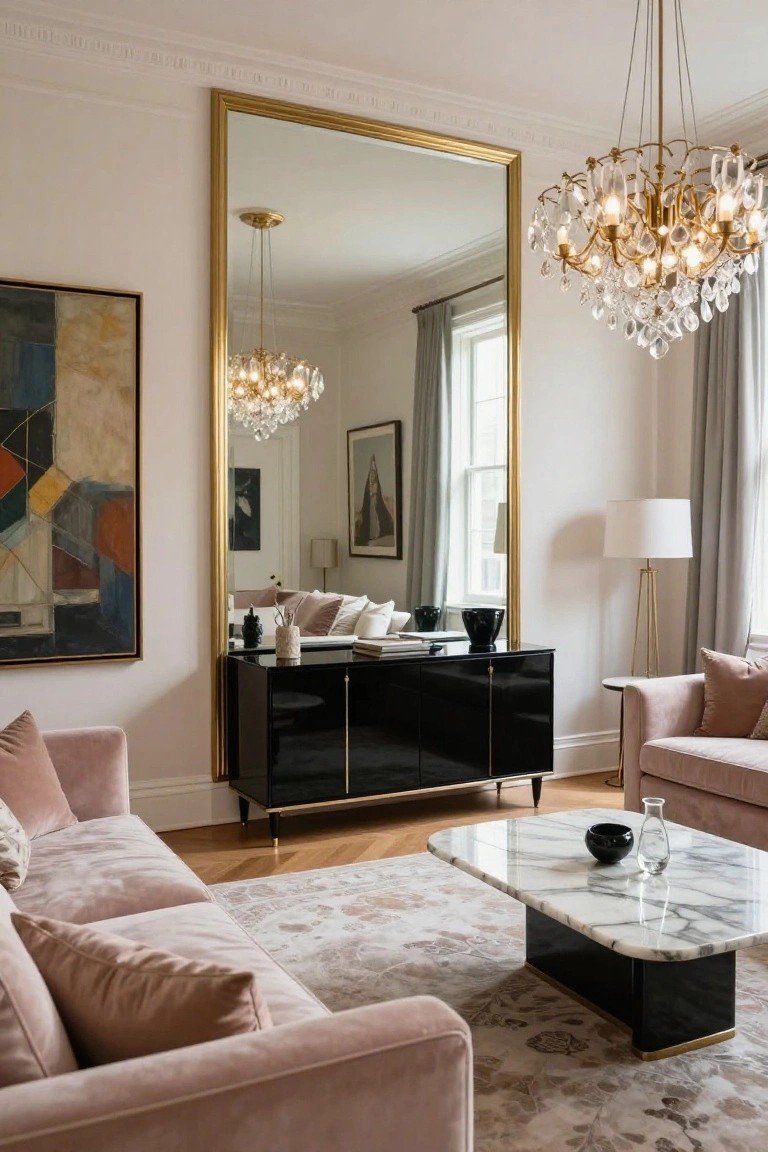
A tall gold-framed mirror like this one makes a smart partition in an open living room. Placed against the wall with a black credenza underneath, it quietly marks off the seating zone without blocking light or flow. The reflection pulls in the chandelier glow and doubles the sense of space, which keeps everything feeling airy even in a formal setup.
This works best in homes with high ceilings or wide rooms where you want subtle division. Anchor it with glossy furniture on one side and soft sofas on the other, like the pink velvet here. Skip it in tight spots, though. It needs room to shine.
Slatted Wood Screens Divide Living Rooms Gently

Vertical slatted wood screens offer a smart way to split a living room into zones without blocking light or the flow. They stand tall against a plain wall, framing off a raised platform for low seating and a simple tea setup. The gaps between slats keep things connected, so the space feels bigger and calmer.
This kind of partition fits open floor plans best, especially if you like a Japanese touch or minimalist vibe. Go for light-toned wood to warm up neutral walls, and add it near windows for soft shadows. Just make sure the slats match your floor height… it pulls the whole area together without much fuss.
Black Framed Sliding Partitions
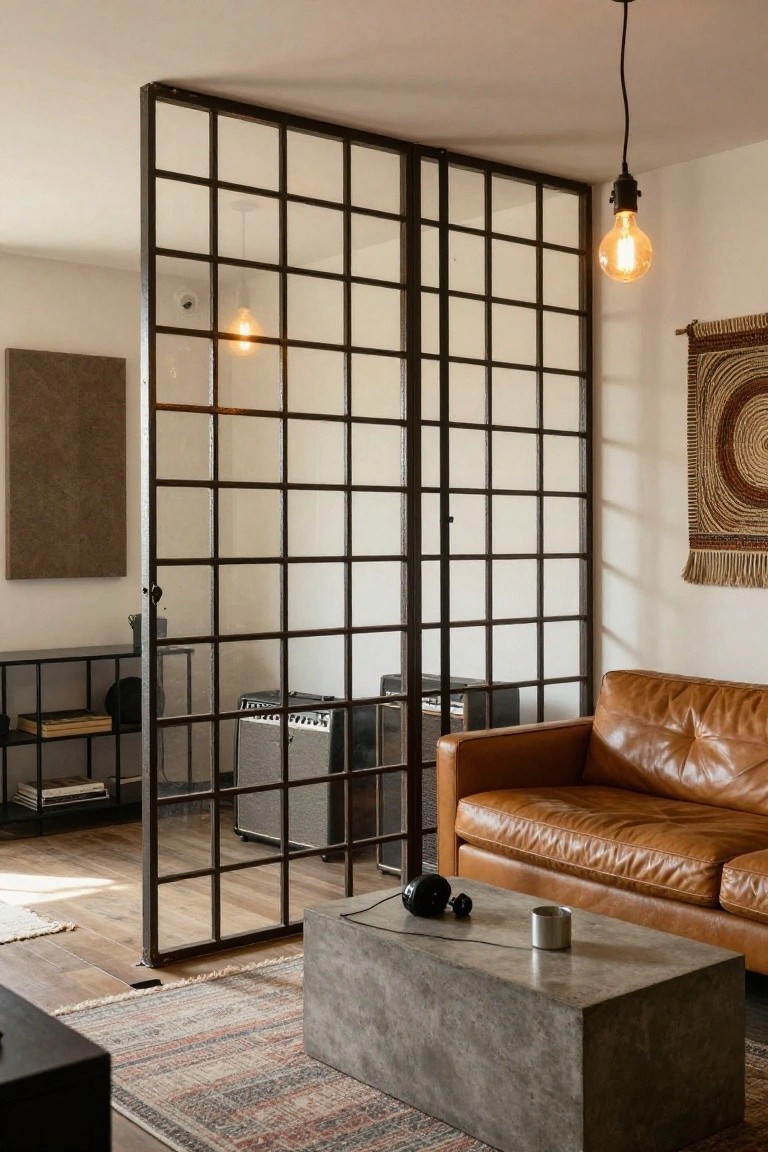
These partitions use slim black metal frames around large glass panels that slide back and forth. They divide a living room from adjacent spaces without blocking light or views. It’s a simple way to add separation in open homes, keeping things connected yet defined.
Put them in lofts or modern apartments where you want flexible rooms. Slide them wide open for parties, or partway for everyday use. They go well with leather seating and concrete tables. Watch the track placement so doors move smooth.
Sculptural Stone Fireplace Partition
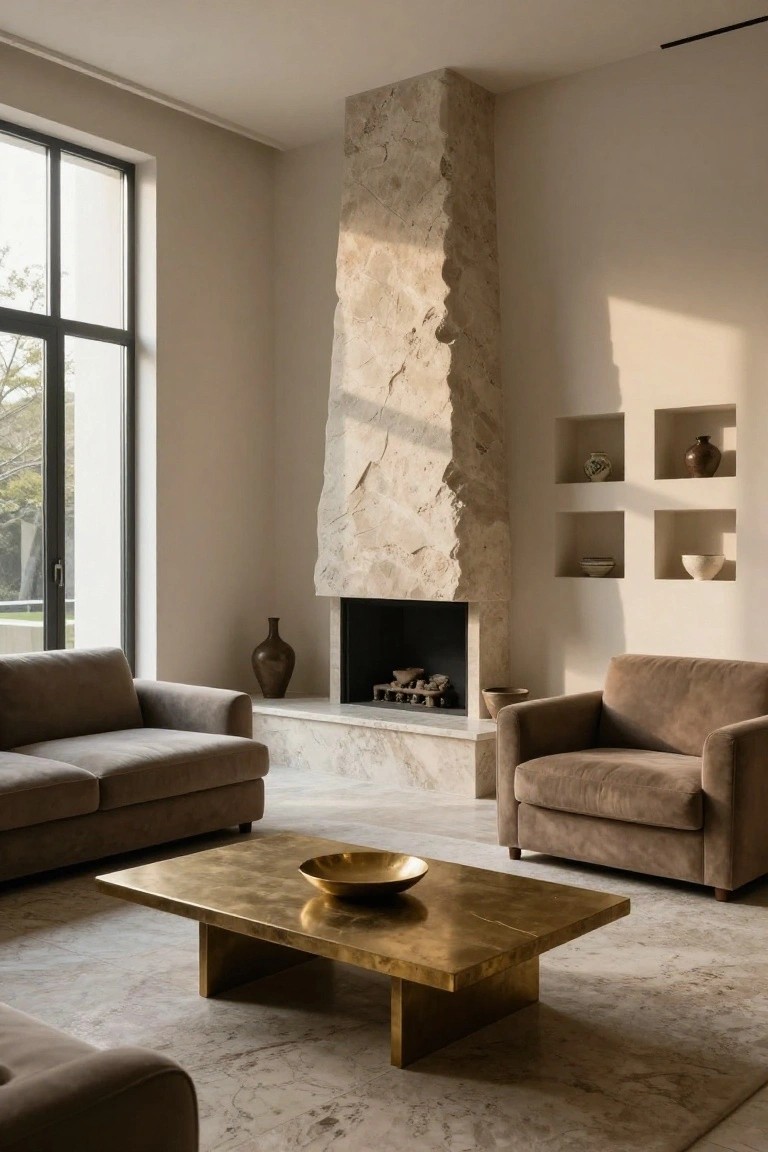
A tall, rough-textured stone wall built around the fireplace makes a strong partition in this open living room. It divides the seating zone from the rest of the space without blocking light or flow. The irregular shape and built-in niches add interest, turning what could be empty wall into a real feature.
This kind of partition suits modern homes with high ceilings and big windows. Use it to anchor sofas and a low table, like the brass one here holding a simple bowl. Fill the niches with a few pots or vases to keep it from feeling bare. Just make sure the stone doesn’t overwhelm smaller rooms.
Rope Screens Divide Open Living Rooms
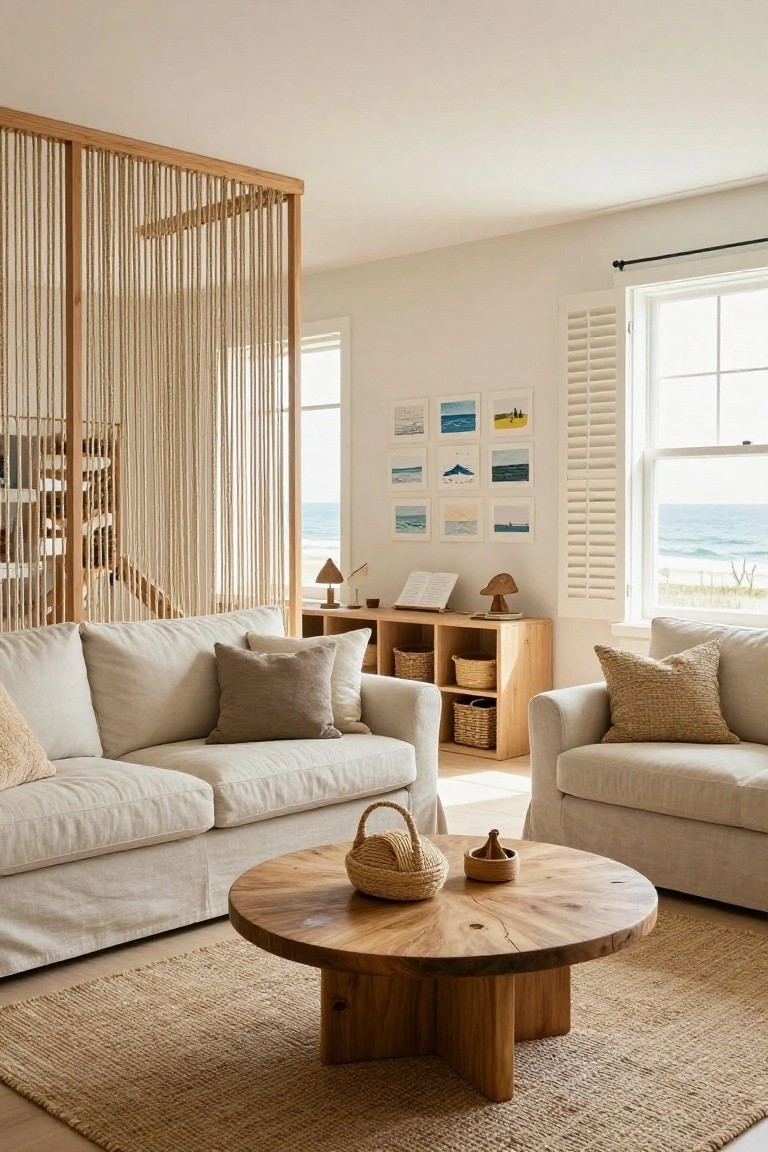
Rope screens like this one hang from a wooden frame right from the ceiling. They let you separate a seating area from a loft or upper space without blocking light or the view. In this setup, the thick natural ropes give a soft, beachy feel that fits right into a coastal room. It keeps things open but defined, which is handy in homes with high ceilings or multi-level layouts.
You can add one over a sofa zone or near stairs to create private spots without walls. It works best in light, airy spaces with neutral colors and wood accents. Just keep the ropes dusted since they catch stuff easily. Pair it with low furniture like those slipcovered sofas to make the room feel bigger.
Stained Glass Screens as Room Dividers

A suspended stained glass partition like this one works well to separate a cozy sitting area from the kitchen without closing things off completely. Hung from brass chains with colorful glass panels, it lets light filter through and adds some old-world interest to a modern space. You get privacy when you need it, but the room still feels connected.
This idea suits open-plan homes, especially those with high ceilings where you can really show off the hanging detail. Place armchairs nearby on a rug for a lounge spot that feels separate yet part of the action. Just make sure the glass style fits your home’s vibe… too bold and it might overwhelm a smaller room.
Frequently Asked Questions
Q: Will a partition make my living room feel smaller?
A: Go for open designs with glass or slim metal frames. They split the space without blocking light or air flow. You keep that spacious vibe even in a cozy room.
Q: How do I put one in without a big remodel?
A: Start with freestanding screens or sliding panels on tracks. Screw the track into the ceiling if you own the place, or use tension rods for renters. Measure twice, level it once, and you finish in an afternoon.
Q: Do luxury partitions cost a fortune?
A: Shop smart at high-end thrift spots or online vintage sellers. Hunt for reclaimed wood screens or etched glass dividers under $500. Quality pieces last years and look custom.
Q: How do I keep the luxury look from fading?
A: Dust weekly with a soft cloth, no harsh cleaners. Spot clean fabrics gently by hand. And swap seasonal accents to refresh the whole setup.
