

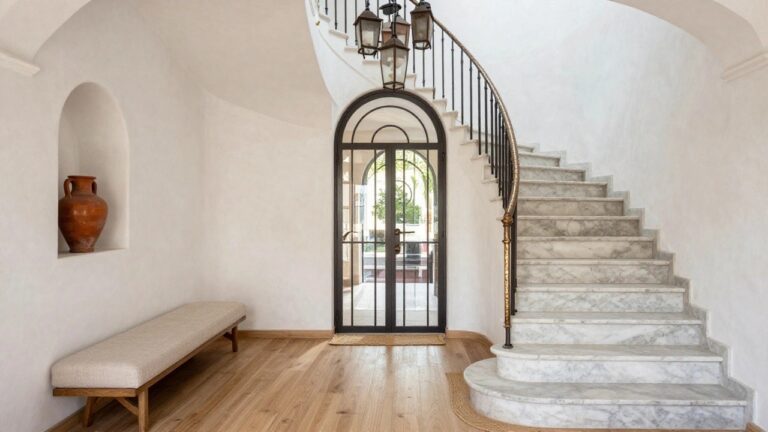
When you enter a luxury villa, the staircase usually catches your eye first, shaping how the whole interior feels from that moment.
I’ve seen homes where bland stairs make expansive living areas seem choppy and disconnected, no matter the furnishings.
They pull everything together best when they guide movement naturally between floors while adding warmth or drama to the space.
That makes them worth rethinking.
These ideas give practical ways to turn yours into something memorable that fits real daily life.
Curved Marble Staircase with Iron Railings
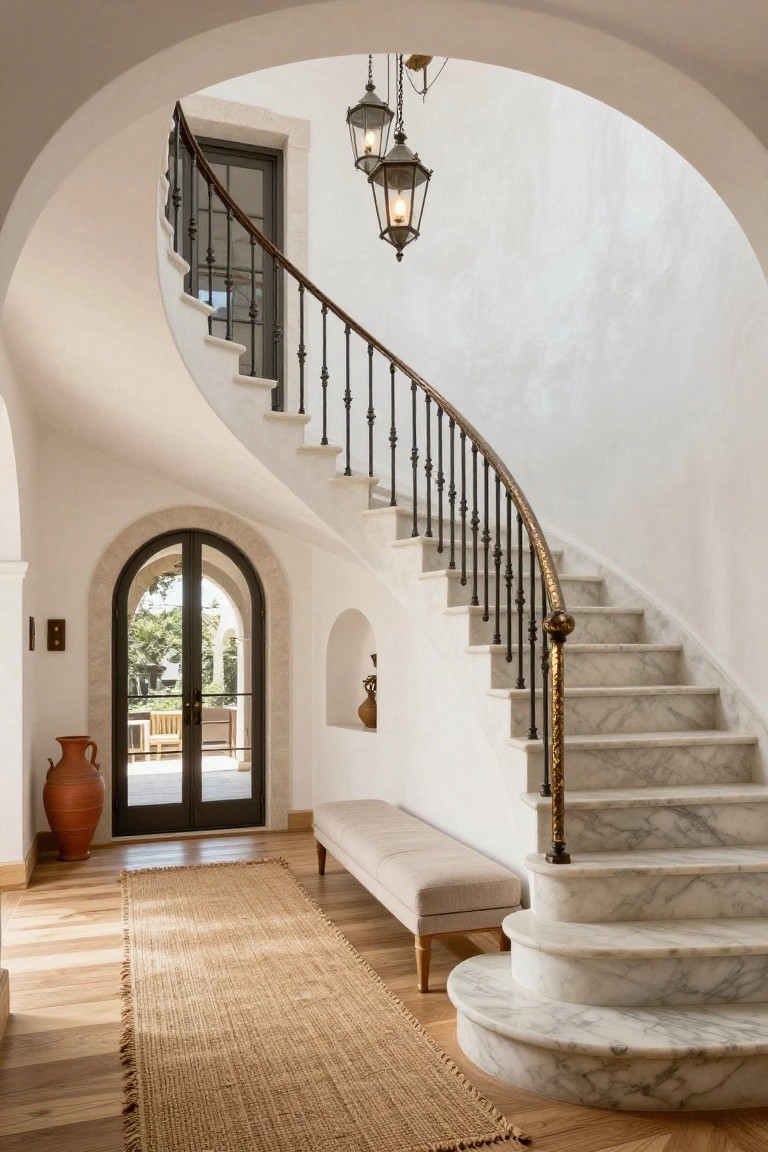
A curved staircase like this one really turns the entryway into something special. The white marble steps sweep up smoothly, paired with slim black iron balusters that have a bit of gold at the top. It fits right into the soft white walls and arches, making the space feel open and grand at the same time.
This setup works best in homes with tall ceilings where you want the stairs to be the main draw. Keep the floors light wood and add just a few pieces like a bench or simple pot nearby. It suits a villa style, but watch the scale, it needs room to breathe or it can feel tight.
Cantilevered Oak Stairs with Glass Railings
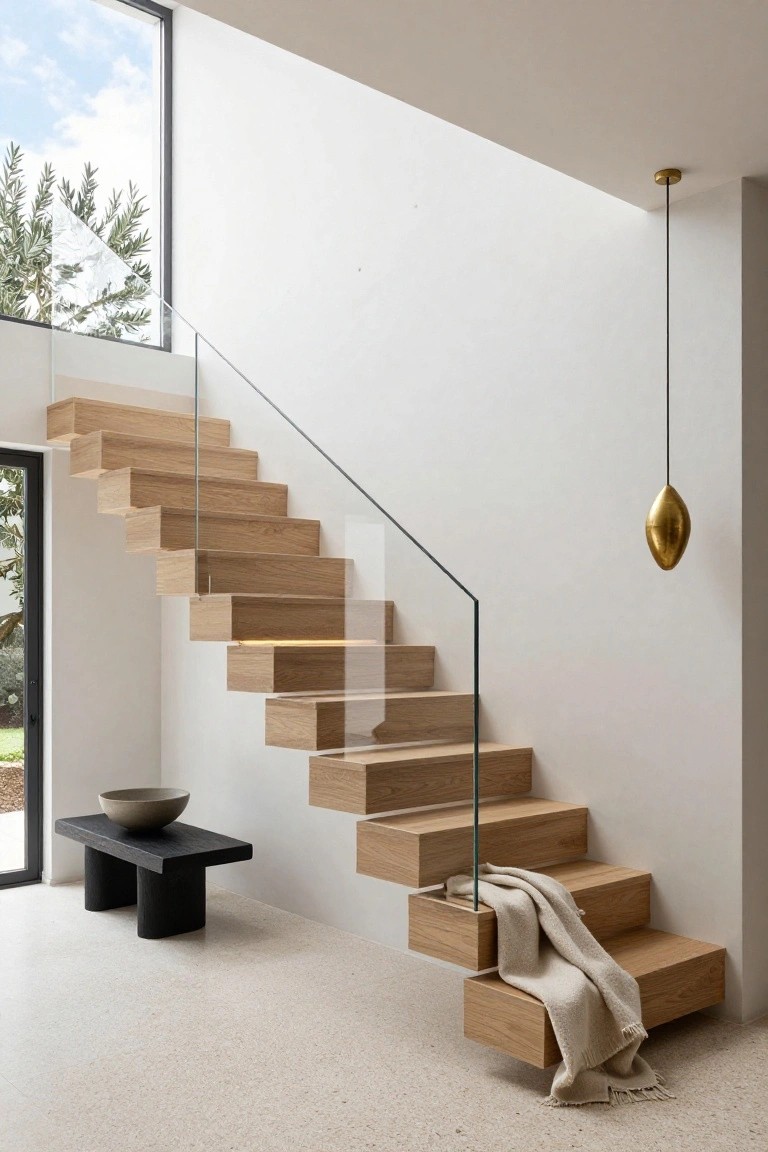
Cantilevered stairs like these hang straight out from one wall, using thick oak treads and slim glass panels for the railing. The open risers and lack of visible supports keep everything airy. A soft glow from lights tucked under the treads adds a nice touch without cluttering the look.
This setup works best in entryways or open living areas of modern homes with high ceilings. It turns stairs into real architecture that pulls the eye up. Check your building codes first though, since the wall needs to be strong enough to hold it all.
Spiral Staircase with Wraparound Bench
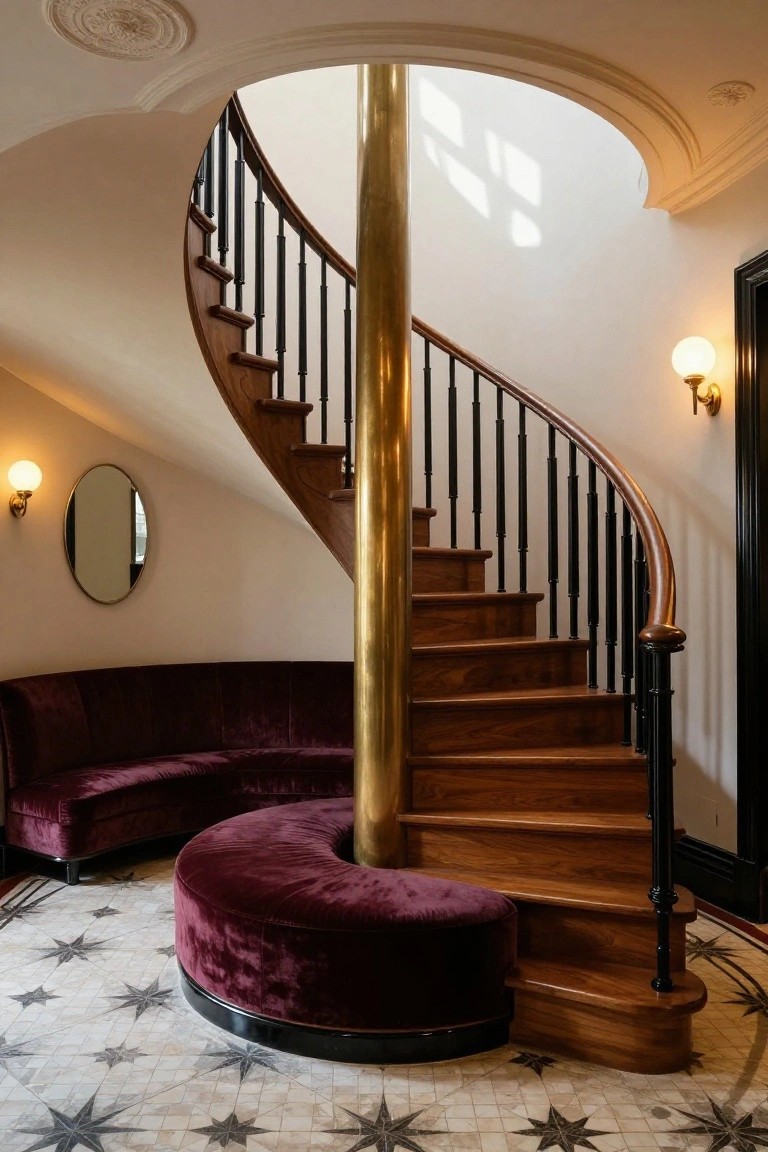
One smart way to turn a spiral staircase into more than just steps is to add a curved bench right around its base. Here the thick brass central pole gets wrapped by a plush purple velvet seat that follows the circle perfectly. It makes the stairs feel like the heart of the entry, with a spot to sit while you put on shoes or just pause. That bench adds a soft touch against the hard wood treads and black railings.
This setup works best in foyers or open entry halls where the stairs are already a focal point. Go for a banquette in a rich fabric like velvet to contrast the metal and wood, but keep the scale right so it doesn’t crowd the space. It’s great for villas or older homes with high ceilings… just measure twice before custom-building it.
Open Wooden Stairs with Trailing Plants
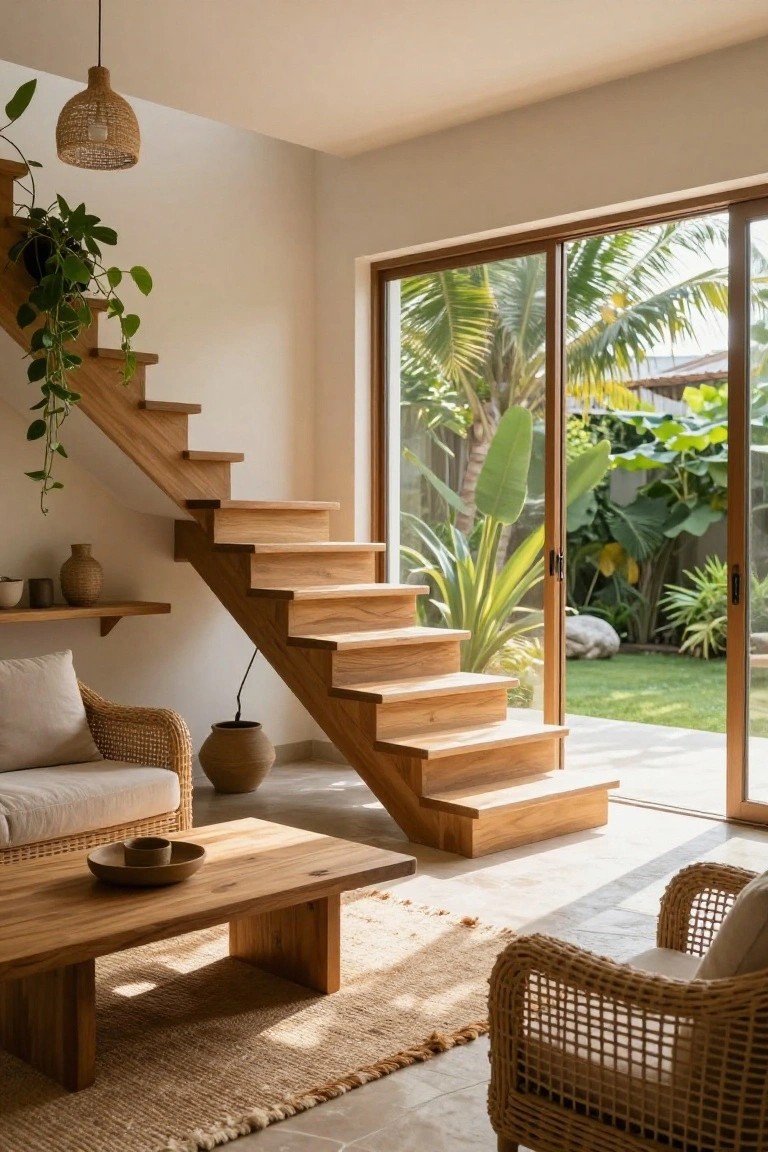
These open wooden stairs take center stage in the living room. Made from light teak or similar timber, they have a simple, open riser design that keeps the space feeling airy. Trailing plants hang down along one side, softening the wood and tying right into the tropical garden view through the sliding doors. It’s a quiet way to make stairs feel like part of the natural flow.
You can pull this off in open-plan villas or homes with indoor-outdoor connections. Pick pale woods to match neutral walls, then add easy-care vines like pothos. It suits warm climates best, where garden views are close. Just make sure the plants get enough light, or they might not thrive.
Striking Perforated Metal Stair Railings
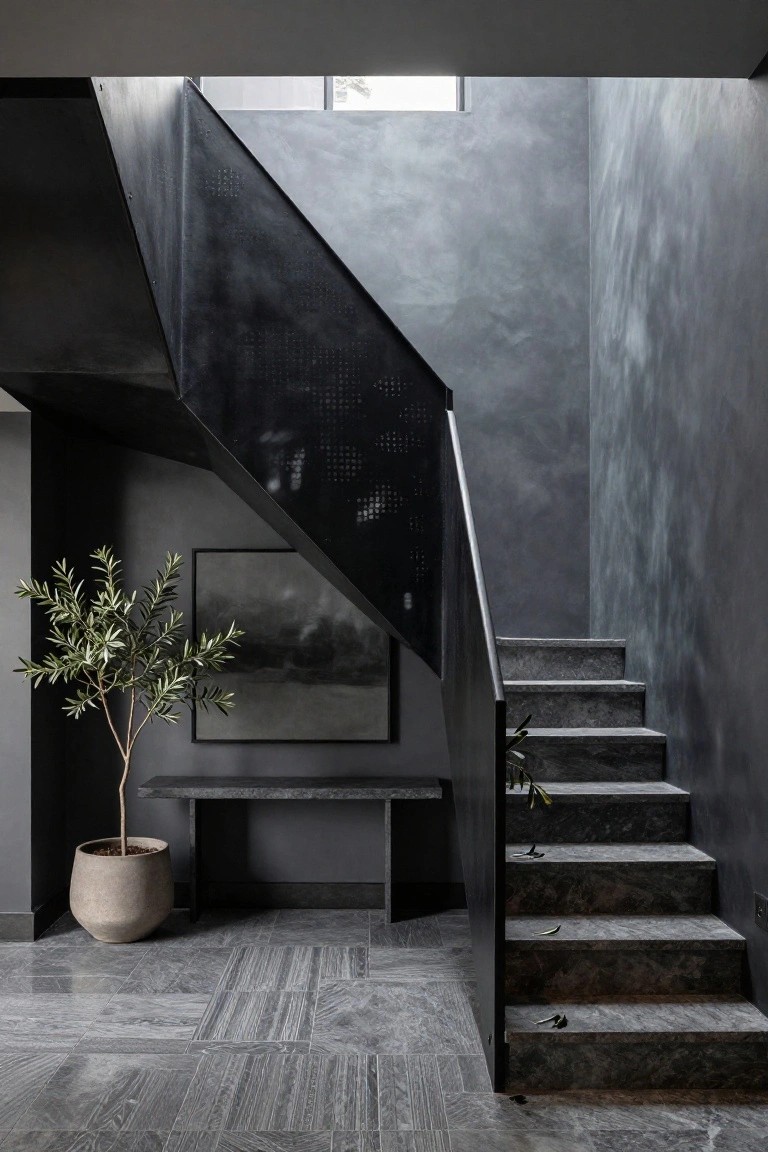
These railings catch your eye right away with their bold black perforated metal design. They turn a simple staircase into something sculptural, especially against soft gray textured walls. The pattern lets light filter through while keeping things open and modern. A few stone steps and a potted olive tree nearby keep it from feeling too stark.
You can pull this off in entry halls or open living areas of a luxury villa. It works best with neutral stone floors and minimal furniture, like that slim bench at the base. Go for matte finishes on the metal to avoid glare. In smaller spaces, it might overwhelm though.
Ornate Stone Staircase in a Loggia

A carved stone staircase like this one really makes the space. The swirling details on the steps and railing turn what could be plain access into a standout feature. It fits the warm adobe walls and terracotta floors without overpowering them. Notice the rough wood shelf nearby with a lamp and books. That adds a lived-in touch.
Put this in covered outdoor spots like a villa loggia or courtyard entry. It works best in sunny spots with some shade from beams overhead. Keep plants in pots around the base for softness. Avoid tight indoor stairs. The carving shows up better where light plays on it.
Built-In Bookshelves Along the Stairs
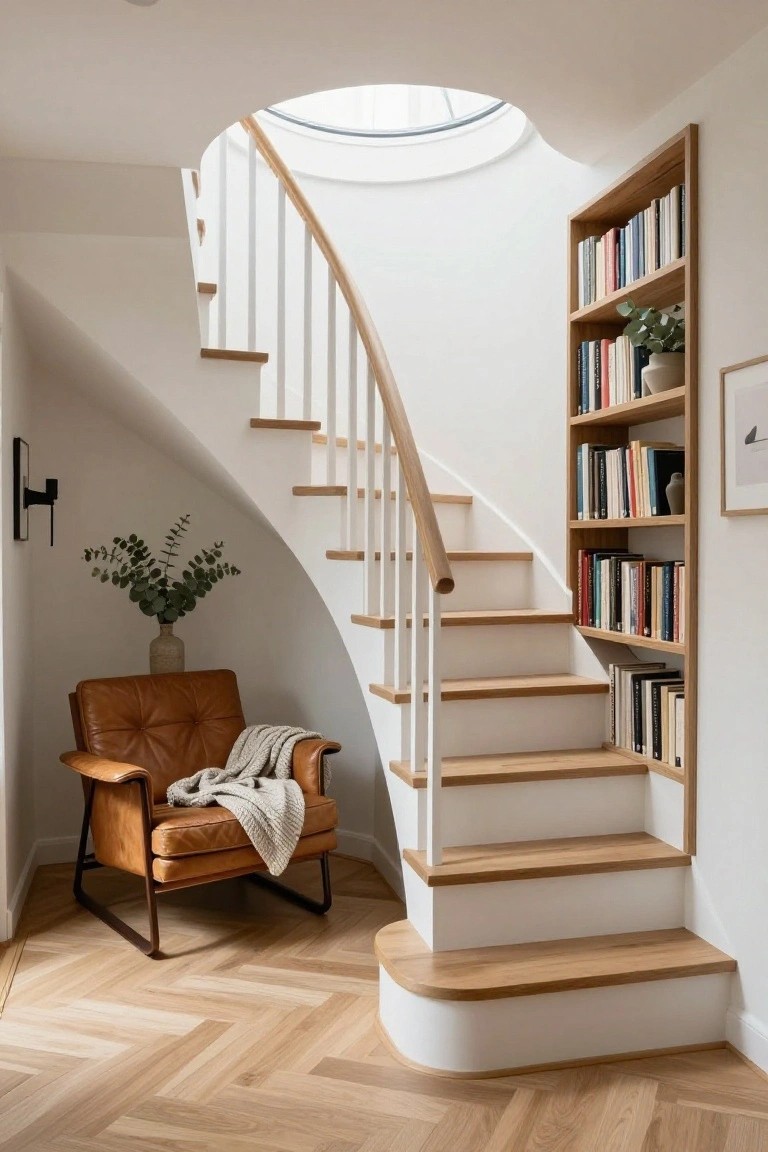
Turning a staircase into a library wall is a simple way to add function without taking up extra floor space. These oak shelves fit right into the curving white wall, holding books and a plant or two. A reading chair tucked at the base makes it feel like an extension of the nearby room.
This works best in open-plan homes or villas where stairs are visible from living areas. Go for light wood tones to keep it airy, and add a soft throw on the chair for comfort. It suits modern spaces with high ceilings. Watch the depth so books don’t stick out too far.
Built-In Bench at the Stair Base
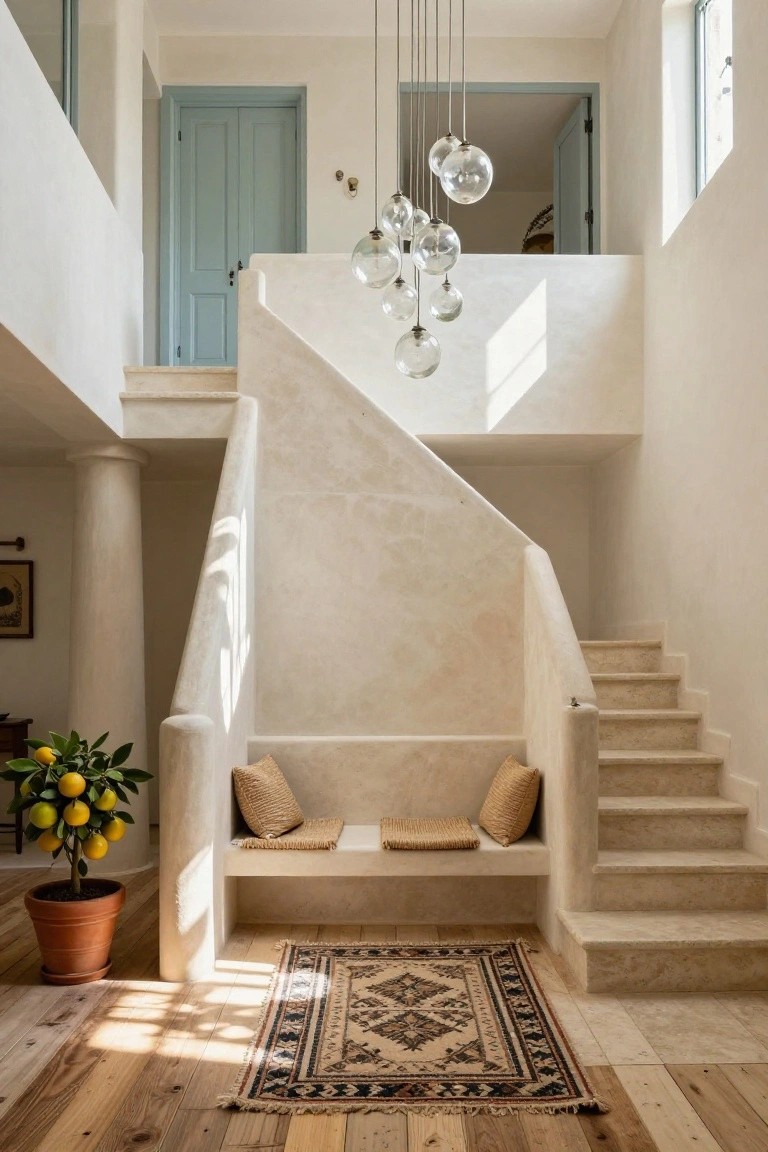
A built-in bench tucked right into the staircase wall turns a simple entry into something more useful. Here it’s carved from the same soft plaster as the stairs themselves, with a couple of woven cushions for comfort. That seamless match keeps things calm and cohesive. Plus it gives a spot to sit while you take off muddy boots or wait for someone upstairs.
This works best in open foyers with good light, like in a villa where stairs are part of the main show. Add pillows and maybe a plant nearby for life. Skip it if your stairs feel too narrow… it needs room to actually get used. Fits modern or Mediterranean-style homes without much fuss.
Wrought Iron Balusters on Wooden Stairs
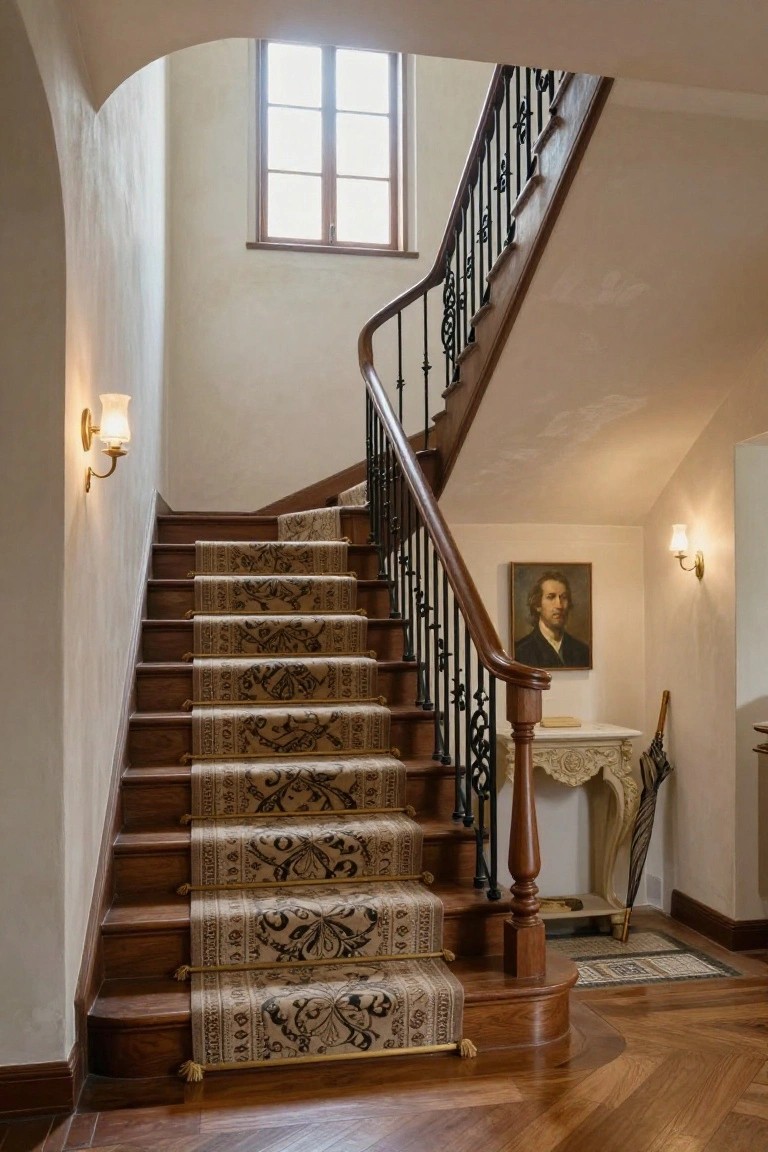
Wrought iron balusters like these add a touch of old-world detail to a plain wooden staircase. The scroll patterns twist along the railing and give the whole thing some movement. Paired with a runner, it turns stairs into more than just a way up. They stand out against soft walls.
This works best in entry halls with high ceilings or arched openings. Stick to dark wood steps and a subtle carpet pattern to keep it balanced. Avoid mixing with sleek modern lines unless you want contrast. A portrait nearby ties it into the room.
Terrace Stairs with Glass Railings
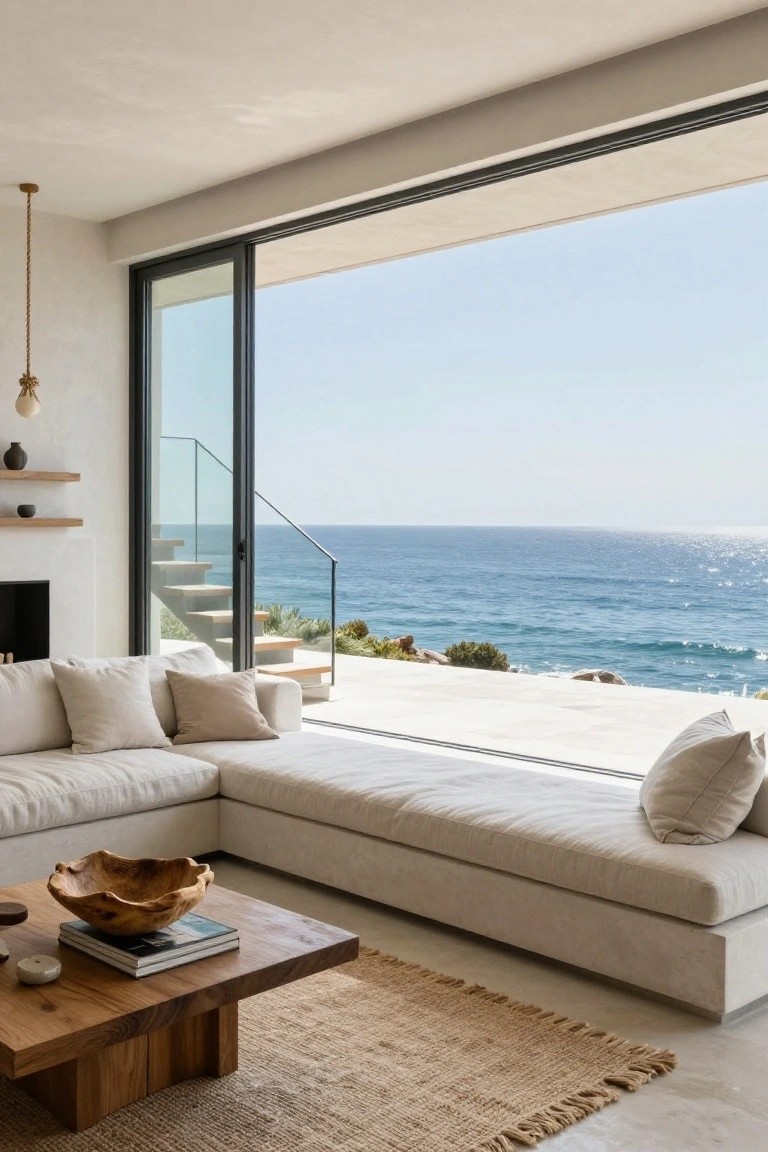
One simple way to turn stairs into a real feature is to give them glass railings and place them right off the main living area. Here, slim metal frames hold the glass panels along a set of outdoor steps that drop down to the terrace. With those big sliding doors pulled open, the stairs pull your eye straight out to the water. It keeps the whole space feeling connected and open.
You can pull this off in homes with a drop to a lower yard or beach access. It suits modern villas best, where you want clean lines without blocking the view. Just make sure the glass is sturdy for safety, and it works even if your drop isn’t huge. Keeps things light inside too.
Open Wooden Stairs with Metal Mesh Railings
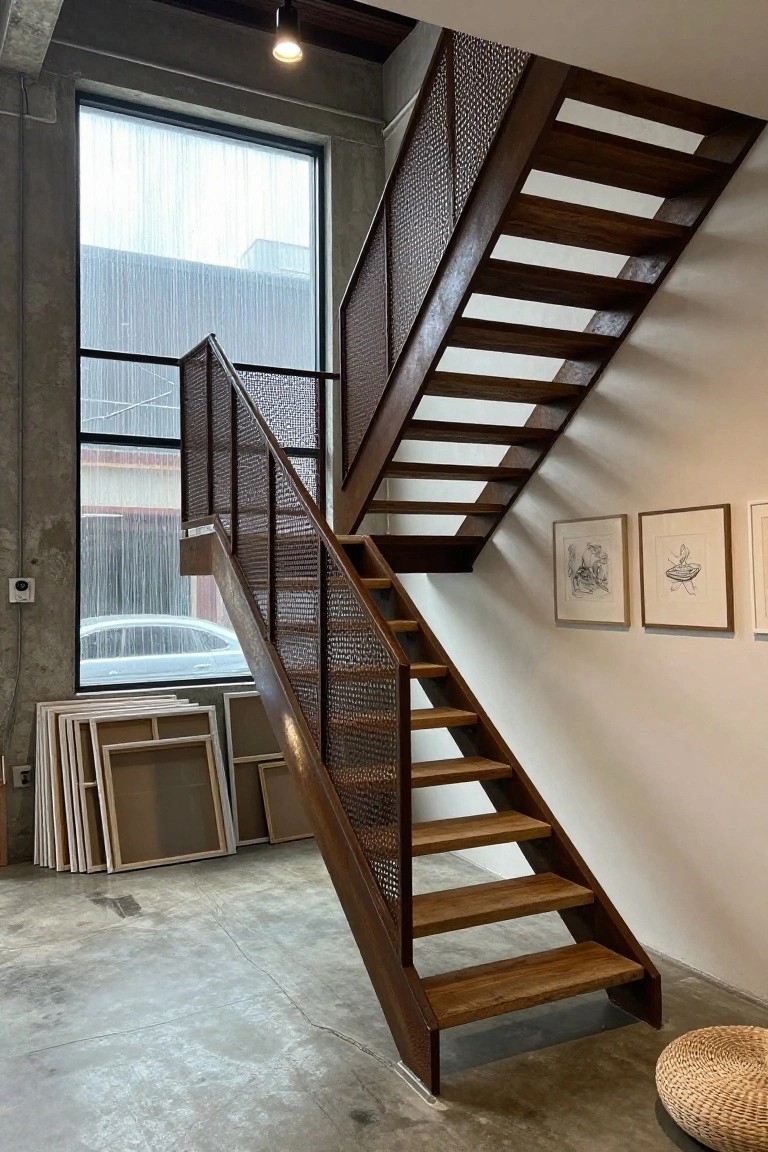
Stairs don’t have to be plain. These use solid wood treads paired with open metal mesh for the balustrades. The mesh lets light flow through and keeps sightlines clear up to the higher level. It fits right into an industrial spot like a loft, where the concrete floor and big windows already set a raw tone.
Try this in homes with tall ceilings or open plans. It suits modern villas that borrow factory vibes but need some warmth from the wood. Check local codes on railing gaps for safety, especially with kids around. A few pieces of art nearby make the stairs feel like part of a gallery setup.
Wood Paneling on Concrete Stairs
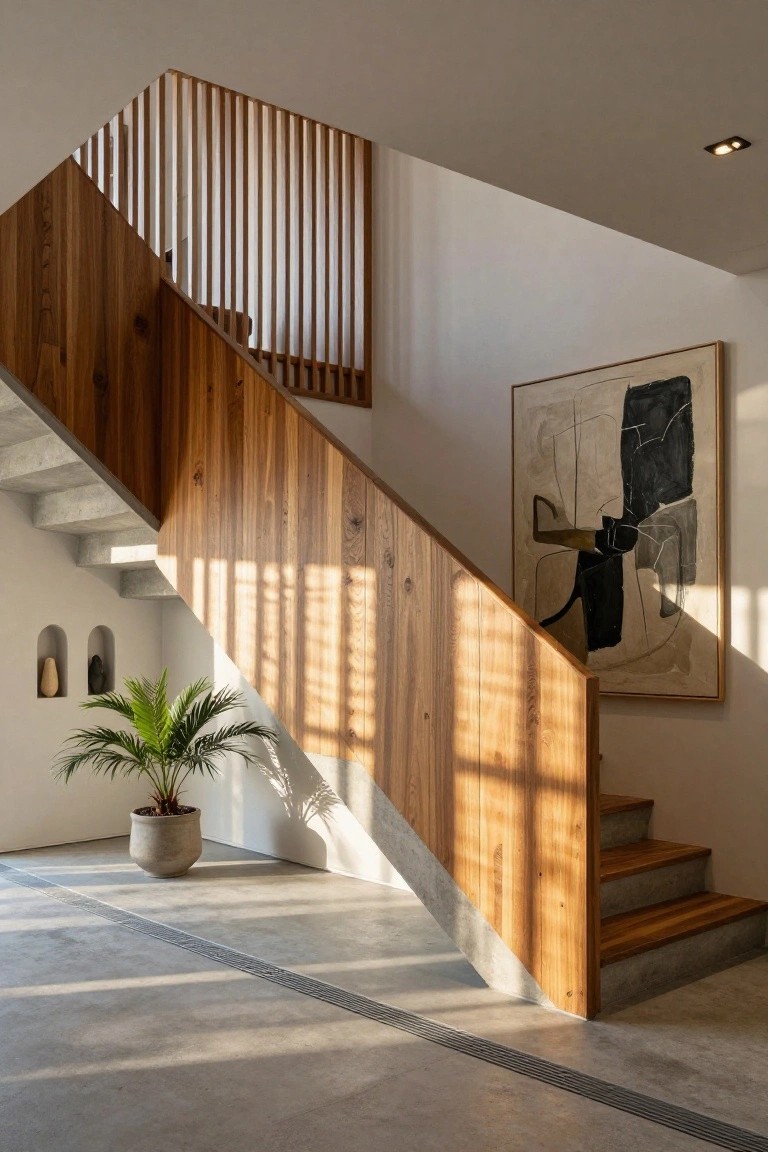
Concrete stairs can feel cold and industrial. Covering them with vertical wood planks changes that right away. Here the rich wood tones warm up the rough concrete while keeping its texture visible underneath. Slatted railings continue the wood look up high. It makes the staircase itself a real feature you want to notice every time you pass.
This works best in open modern homes or villas where you see the stairs from multiple spots. Use it on wide runs to avoid a cramped feel. Add a plant or simple wall art nearby like they did here. Just seal the wood well if there’s any moisture around.
Curved Wooden Staircase in an Atrium Entry

A curved wooden staircase like this one turns a simple way to get upstairs into the main event of your entryway. The rich, natural wood wraps smoothly around the space, pulling your eye up toward the skylight and chandelier. It feels warm and solid, not cold like stone stairs can sometimes be.
You can pull this off in homes with tall ceilings and open floors, especially villas where the entry sets the tone. Place a bold piece right in the center, like that marble basin, to anchor everything. Just make sure the wood finish matches your floors so it all flows together without looking busy.
Pebble-Inlaid Stone Stairs
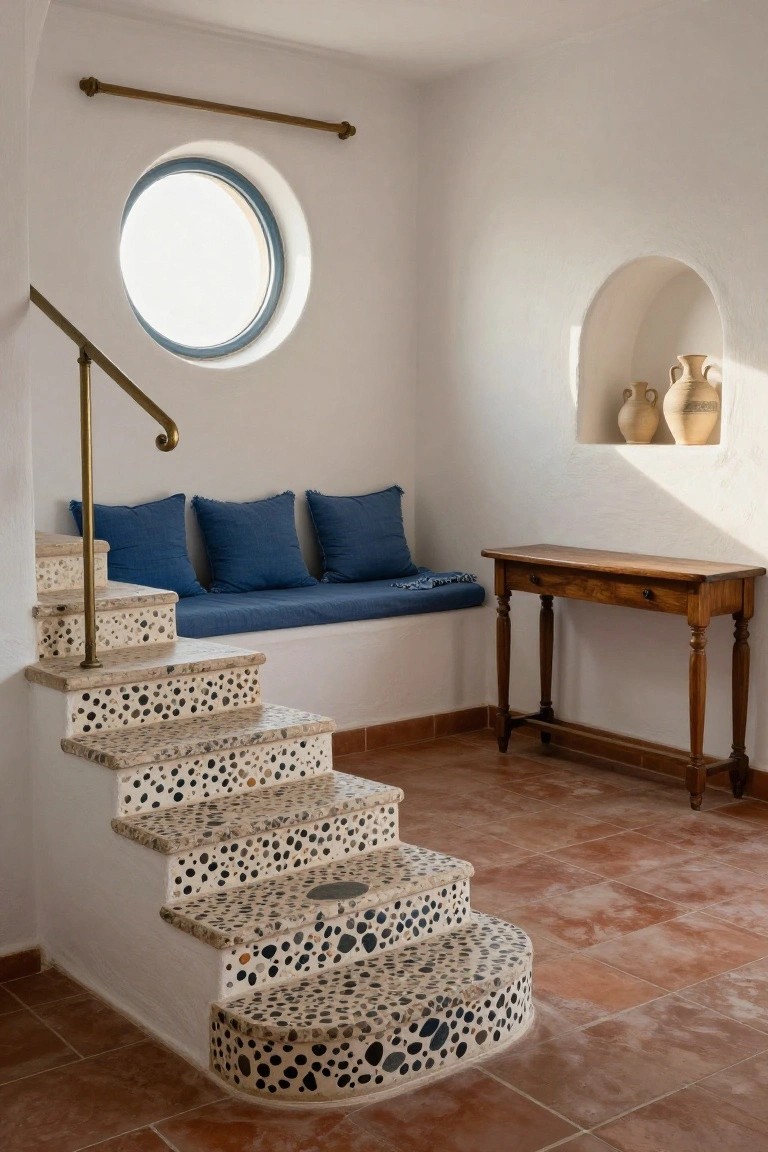
Stone stairs like these get their character from small pebbles set into the treads. The white stone base with dark pebble spots looks a bit like a dalmatian pattern. It adds quiet texture to a mostly plain corner without much fuss.
This works best in vacation homes or coastal spots where you want steps that feel part of the landscape. Keep nearby furniture simple, like a bench with cushions and a wood table. Avoid slick finishes nearby so the natural look stays the point.
Floating Stairs with Built-In Lighting
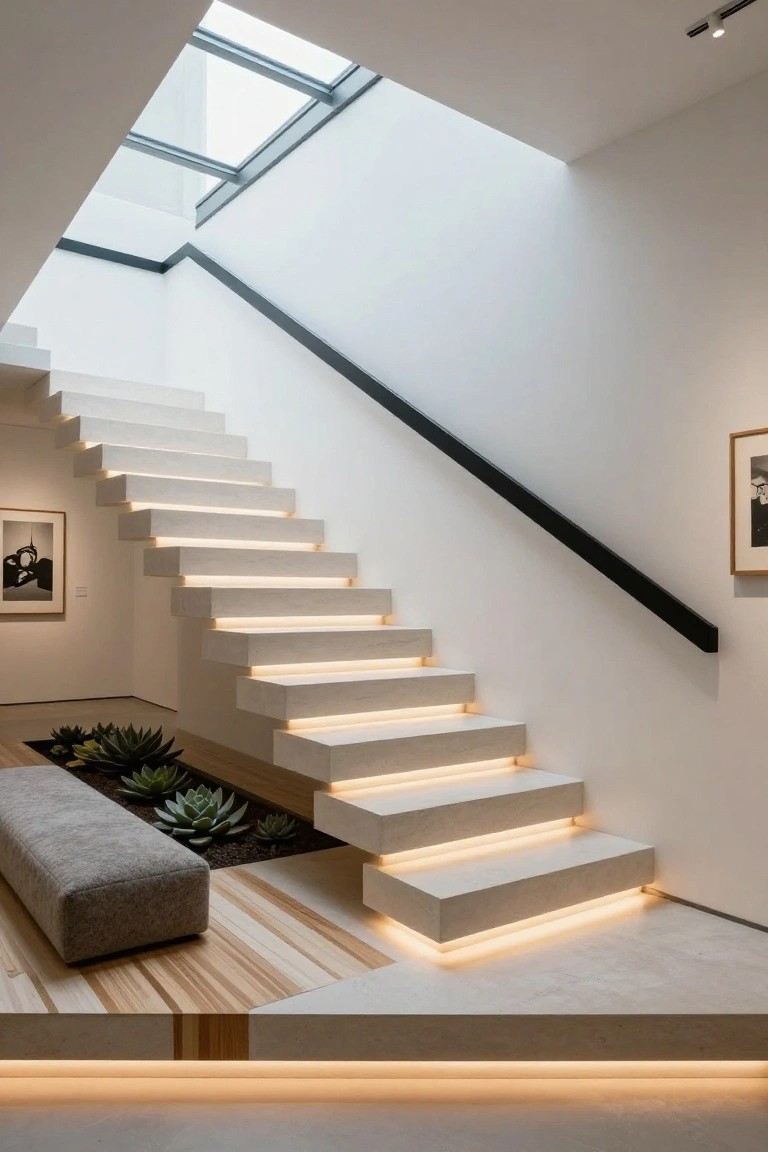
These stairs cantilever straight out from one white wall, made from thick concrete slabs with LED strips hidden right underneath each tread. That warm glow along the edges makes the whole staircase feel like it’s floating, especially under a big skylight. It pulls your eye up and turns a basic path into something worth noticing every time you climb.
You can pull this off in a modern entry or living area with tall ceilings. Keep the handrail simple in black metal for contrast, and add a few plants at the base to soften things. Watch the step depth though. It needs to feel safe for everyday use.
Wooden Stairs on Terracotta Floors
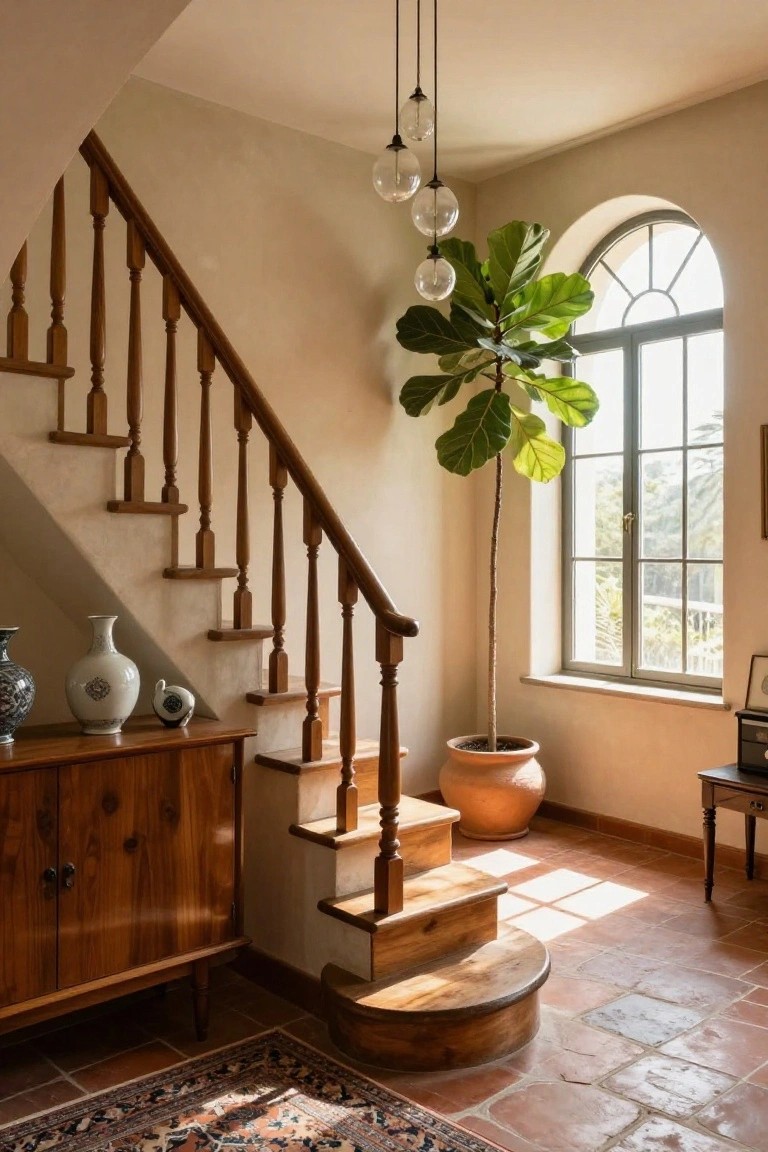
A wooden staircase like this turns a simple entry into something special. The stairs’ warm tones pick up on the terracotta tile floor below, while light walls keep everything feeling open. That big potted plant near the window adds a touch of green without crowding the space.
This look fits villas or older homes with a relaxed Mediterranean feel. Pair sturdy wood stairs with those hand-laid terracotta tiles for easy flow from ground level up. Just watch the scale, the stairs need room to breathe so they stay the main draw.
Brass Balustrades on Wooden Stairs

Slim brass balusters running up a dark wood staircase catch the eye right away. They give the whole setup a refined look, especially against a deep teal wall. A simple shelf with a few classical busts sits above, tying into that old-world vibe without much fuss.
You can pull this off in a villa entry or hallway where stairs are visible from the main rooms. The brass warms up wood tones nicely, and it holds up well over time. Just keep the walls textured or bold colored so the metal stands out. Avoid plain white walls, or it might feel too stark.
Open Wooden Staircase in Kitchen Space
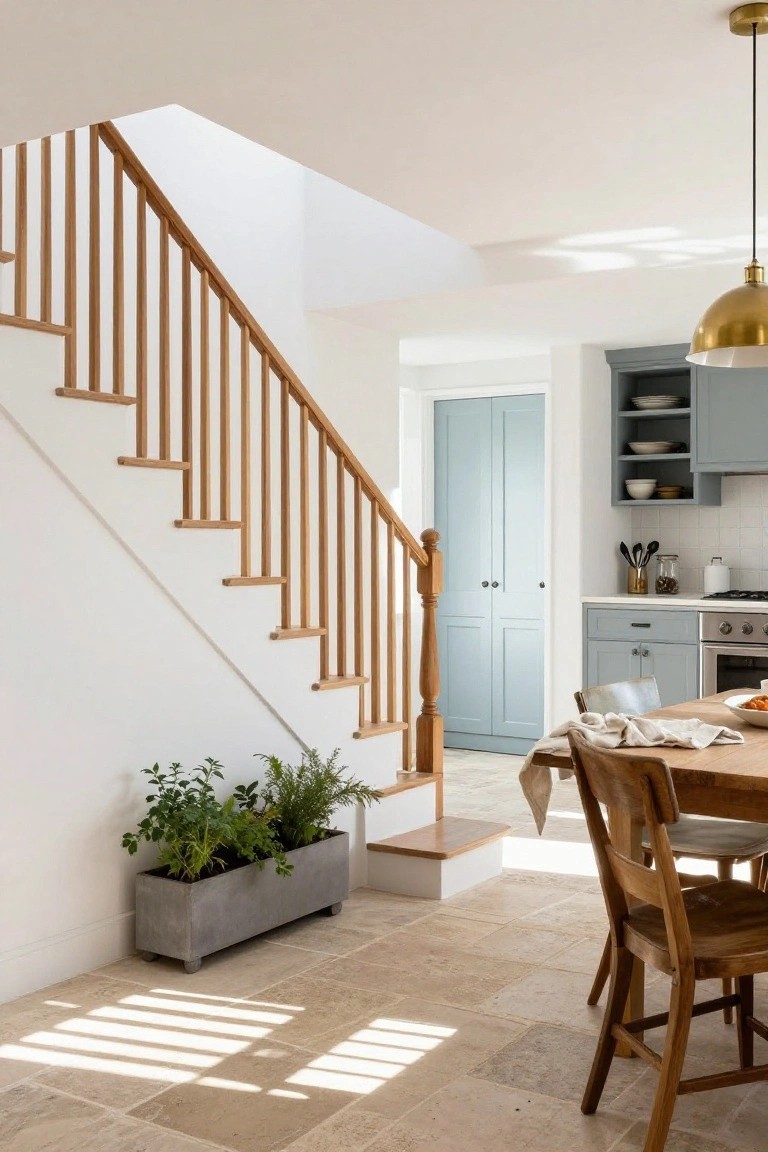
A wooden staircase like this one turns a basic transition into something you actually notice. The oak treads and those slim vertical balusters climb up cleanly against plain white walls. It pulls the whole area together without blocking light or views. Sun streams in from above, making the wood glow a bit.
Try this in open-plan homes where kitchen meets dining or living rooms. Light floors like that beige tile keep it from feeling heavy. It suits villas with high ceilings best… just make sure the wood finish matches your cabinets or table for flow.
Courtyard Seating at Stair Base
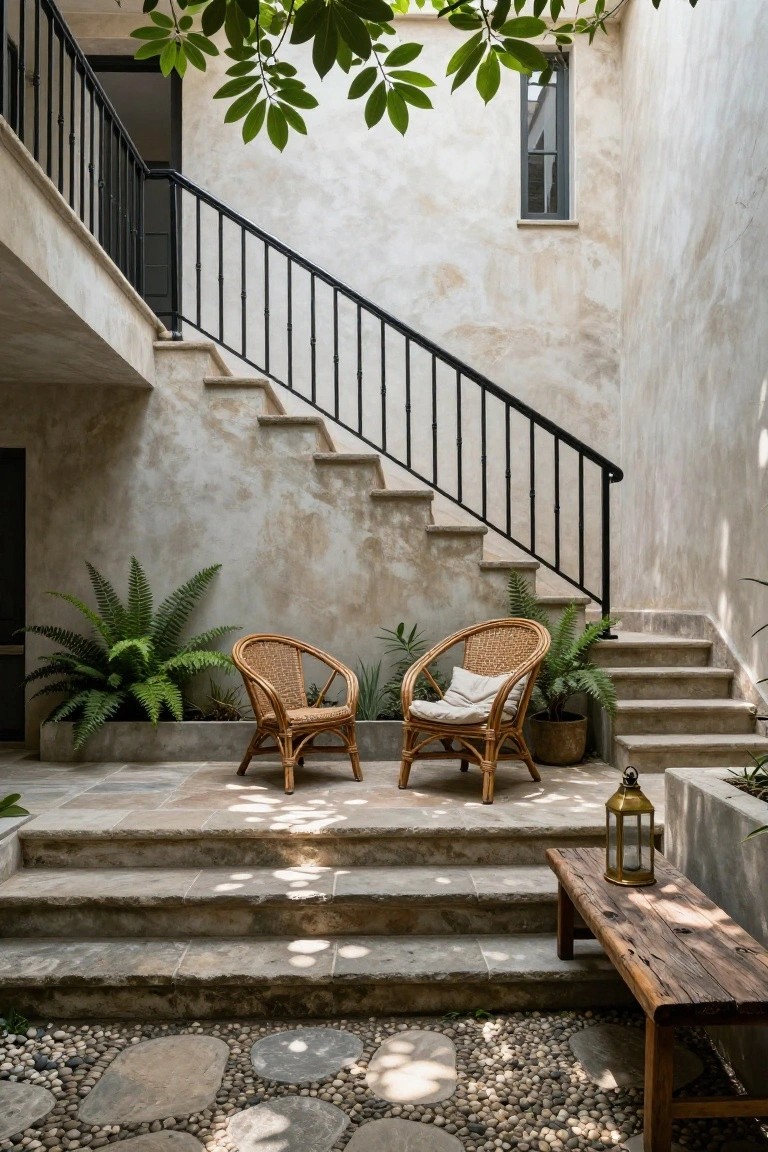
One simple way to make outdoor stairs stand out is by adding a couple of chairs right at the bottom landing. Here, rattan seats with a cushion tuck in close to ferns in concrete planters, turning what could be just a passageway into a spot to pause. The light wood bench nearby adds another place to sit, all grounded by pebbles and flat stones. It keeps things casual but pulls the stairs into the living area.
This works best in a villa’s open courtyard where you want flow between levels without losing usable space. Pick furniture that handles sun and rain, like woven pieces, and keep plants low around the edges so you don’t block the steps. It’s great for warmer spots, but watch for too much direct sun fading the cushions over time.
Frequently Asked Questions
Q: How do I adapt these big staircase ideas for a smaller villa?
A: Focus on one standout feature like open risers or a sleek metal rail. Skip the full curves and go vertical to save floor space. You get that luxury vibe without crowding the room.
Q: What lighting turns ordinary stairs into a nighttime showstopper?
A: Tuck slim LED strips along the treads or undersides. They make steps glow and feel like they’re floating. Dimmers let you dial it up for parties or down for quiet evenings.
Q: How do I pick materials that handle daily villa life?
A: Grab hardwood or polished concrete for treads that wear well. Seal them right from the start to fend off scuffs and spills. Pair with soft rugs on landings for extra grip.
Q: Can I add these features to stairs I already have?
A: Swap out the balusters first; it’s the quickest wow. Then layer in paint or wallpaper on the walls behind.
