


The front door pulls everyone in from the street, shaping how your whole house reads before anyone steps closer.
I swapped out a plain slab on our place a few years back, and it settled the facade right into the neighborhood without overpowering the roofline.
Doors that nod to your siding materials or add subtle hardware details often make the biggest difference in curb appeal.
That first impression sticks.
Some of these tweaks feel worth measuring against your own entry to see what adapts best.
Teal Front Door as Focal Point

A teal front door like this one turns the entryway into a spot worth noticing. The deep blue-green color stands out against white walls and light wood floors, while the round window lets in a bit of light without taking over. It’s an easy switch that adds character to what might otherwise be a plain hallway.
Try this in homes with neutral interiors where you want some color up front. Paint an existing door or swap in a new one, then balance it with wood benches or rattan accents nearby. Keeps things practical too… coats and umbrellas have spots right there.
Doorstep Bench for Easy Welcome

A low bench right at your front door changes the whole feel of arriving home. In this setup, a simple rattan one sits on the stoop between two pots of spiky grasses. It gives a place to sit for a second, drop packages, or just enjoy the view before knocking. Folks notice it right away and it makes the entry less stark.
Try this on compact homes like cottages or bungalows where space is tight. Go for natural materials that weather well, like woven or wood, and keep plants low-maintenance. It suits coastal or country spots best, but watch the scale, nothing bulky that blocks the door.
Cohesive Wood Tones in the Entryway

Warm walnut wood pulls this entry together nicely. The door, slim console table, and oval mirror all share that rich grain and tone. It gives a calm, connected feel from the moment you step in. A sculptural brass lamp on the console keeps things from feeling too matchy.
This look fits smaller foyers or hallways well. Pick furniture in the same wood as your door for easy cohesion. It suits mid-century or modern homes, especially with light floors like terrazzo. Just keep the table narrow so it doesn’t crowd the path.
Bright Yellow Entry Door

A bright yellow door like this one turns a plain entryway into something memorable from the moment you step inside. Against those soft gray walls it really stands out without overwhelming the space. The color brings a bit of cheer and warmth right where you need it most.
This works best in older homes or cottages with neutral backgrounds and wood floors. Paint a simple four-panel door in a sunny shade and add practical touches like a boot tray or basket nearby. Just keep the rest of the room calm so the door does the talking.
Black Framed Frosted Glass Doors

Black metal frames around frosted glass panels make a strong entry statement. They pull in natural light to brighten the space but keep things private from the inside. Against a brick wall like this, the dark frames stand out without overwhelming the look. It’s a simple way to feel modern and a bit industrial right at the front door.
Try this in apartments or older homes with exposed brick. Add a bench for shoes and a coat rack nearby to make it practical. Skip busy patterns on the glass. It suits spots where you want some openness but not full transparency.
Vintage Suitcase Console by the Door

Old suitcases stacked on a rattan cabinet make a perfect little console right next to the front door. You get storage inside for gloves or scarves, plus a surface for a lamp or vase on top. The leather and wood bring in that lived-in feel without much effort.
This works great in tight entry spaces where you want function plus some personality. Grab suitcases from flea markets in a few sizes, set them on a simple stand, and add a few pots nearby. It fits older homes or apartments… just make sure the base is steady.
Glass Entry Door with Black Frame

A glass front door like this one in a slim black frame keeps things modern and open. It lets you see right through to the inside, so the entry doesn’t feel closed off. That transparency makes the whole approach more welcoming, especially with natural light pouring in during the day. The black frame gives it clean lines without being too bold.
This setup works great on mid-sized homes where you want to blend the outdoors with indoors. Pair it with a bench for shoes or plants, like the wooden one here, to add some practical warmth. Just make sure the glass is tempered for safety, and think about privacy film if you need it at night. It suits contemporary or minimalist styles best.
Vibrant Painted Front Doors

A front door like this one, brushed in layers of turquoise, green, blue, and yellow, turns a simple entry into something you remember. It stands out against plain white walls and feels right at home in a warm climate. That mix of colors gives the whole facade more life, especially with a shiny brass knocker pulling it together.
Paint your door this way if you have a stucco or adobe house that needs a lift. Go for weatherproof exterior paint and colors that nod to nearby rugs or plants. It works best where the sun hits, but test shades first to avoid clashing with the rest of the trim.
Navy Blue Entry Door

A deep navy blue door like this one turns a simple entryway into something memorable right away. The glossy paint gives it a rich shine that catches the light, and with gold hardware it feels classic without trying too hard. It stands out against lighter walls and floors, pulling your eye straight in.
Try this in a traditional hall or foyer where you want some color punch. It works best on a paneled door with crisp lines, and pair it with black and white floors for extra contrast. Just use a tough semi-gloss paint so it holds up to daily use.
Matching Door Panels to Wainscoting Color

One simple way to make an entryway feel pulled together is painting the lower panels of the door to match the wainscoting. Here, a soft sage green on both keeps things cohesive from the start. The cream upper door and walls stay light, so the green adds just enough color without busyness. Wood floors ground it all.
This works best in narrow halls or small foyers where you want subtle interest. Pick a muted green for traditional or craftsman-style homes. Avoid bright shades, or it can feel too much right at the door. A quick paint job like this updates without big changes.
Wood Entry Door with Frosted Glass Panels
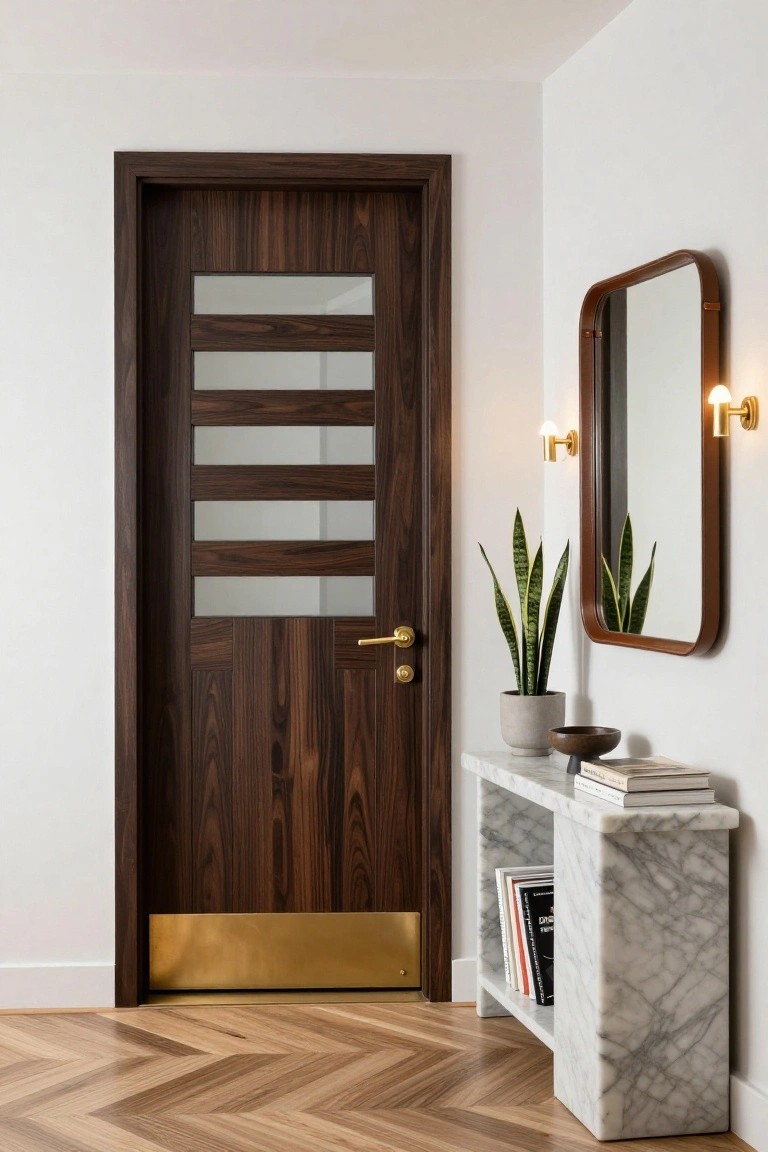
This kind of door uses dark wood, like walnut, with four horizontal frosted glass panels stacked neatly across the middle. The brass handle and bottom threshold add a bit of shine without overdoing it. What stands out is how the glass lets in light but keeps things private. It turns a plain entry into something that feels put-together right away.
You can pull this off in a hallway or foyer that gets decent light. Pair it with a slim console table and a tall plant, like a snake plant, to fill the space without crowding. Works best in apartments or modern homes where you want clean lines. Just make sure the glass matches your wall color so it doesn’t fight the room.
Arched Wooden Entry Door

An arched wooden door like this one turns your front entry into something special. The gentle curve at the top adds a bit of character that straight doors just can’t match. With rough-hewn wood planks, black iron hinges, and a fresh olive wreath, it feels rustic yet polished. It’s the kind of detail that makes neighbors slow down when they drive by.
This works best on stucco or adobe-style homes, especially in sunny spots where the wood can age nicely. Hang a simple greenery wreath to keep it going year-round… swap for seasonal ones if you like. Just make sure the arch fits your door opening, or build it in during a remodel. Pairs well with terracotta steps or potted plants nearby.
Crate Bench for Entryway Storage

A wooden crate turned into a bench works great right by the door for shoes and boots. It’s simple and sturdy, holding everything you need without taking up much space. In this setup, it sits low and open so you can grab things quick, and the natural wood keeps things from feeling too fussy.
This kind of bench fits small entryways or mudrooms best, especially in homes with kids or wet weather. Stack a couple crates if you need more room, or add a cushion on top for sitting. Just make sure it’s solid pine or something that won’t splinter… keeps it practical for daily use.
Warm Wood Paneled Entry Doors

A solid wood door like this one brings a real sense of welcome right at the threshold. The vertical panels and natural grain give it a sturdy, handmade feel that fits older homes or craftsman styles. Paired with matching shelves nearby, it makes the entry feel connected and lived-in, not just a pass-through spot.
You can pull this off in smaller foyers or hallways where you want warmth without much fuss. Go for oak or pine in a light stain to keep it bright, and add a simple black handle for contrast. It works best in homes with wood floors already, but watch the scale, a too-heavy door can crowd tight spaces.
Color-Blocked Front Doors

A front door painted in bold contrasting colors like deep blue and warm orange grabs attention right away. That split panel effect, with a shiny brass plate hung on it, turns a simple door into the star of the entry. It feels fresh and a bit playful, especially against a plain white wall.
This works best on homes with clean lines or stucco siding, where the color pop adds personality without overwhelming. Just pick hues that suit your home’s style, maybe test samples first, and pair with a simple chair or plant nearby for a lived-in touch. Avoid too many clashing shades elsewhere or it might feel busy.
Simple Shelf Storage by the Door

Entryways often end up cluttered with keys, mail, and whatever else we drop when we walk in. This setup keeps it all in check with a basic floating wood shelf mounted right next to the door handle. A simple hook holds the keys, and that’s it. No fuss. It leaves room for a mirror above to check yourself before heading out, making the space feel put-together without taking up floor area.
Put this in tight spots like apartments or narrow hallways where you need function over flash. Use light wood to warm up pale walls, or match a darker tone to your door. Skip anything too deep on the shelf, or it starts feeling crowded. Works best in modern or minimalist homes… just make sure it’s sturdy for daily use.
Sage Green Front Doors

A soft sage green on the front door brings a fresh, natural feel right to your entry. It works so well here because it picks up the tones in the surrounding ivy and potted plants, making the whole approach feel connected and alive. That color softens the look of paneled doors like these, turning a simple entry into something memorable without trying too hard.
Try it on homes with white siding or light walls where the green can stand out. Pick a shade that’s not too bright so it stays calm year-round. Add a few large plants nearby to echo the color. It suits milder climates best, where the green won’t fade fast in harsh sun.
Dark Entry Door with Marble Accents

A black painted door like this one sets a strong tone right at the entry. The tall mirror panel helps it feel less heavy, and the slim console table next to it holds just a couple white marble pieces, a lit bowl and a vase. That simple contrast pulls your eye in without much fuss. It keeps the space moody but polished.
This setup works best in tight entry areas where you want impact fast. Go for matte black paint on the door and walls, then pick marble that’s smooth and not too big. It suits apartments or older homes getting a modern update. Just keep the floor clear underneath, maybe with a runner rug, so it stays easy to move through.
Rustic Bench for Entry Storage

A plain wooden bench like this one sits right by the door, with a big wicker basket tucked underneath for shoes or whatever you track in. Folded towels or a throw on top make it feel lived-in and ready for guests. It’s straightforward, and that rough wood pairs nicely with white walls without trying too hard.
This kind of setup fits tight entry spots, especially in cottages or beach houses. Put it opposite a simple shelf if you want spots for keys. Just keep the basket from overflowing… or empty it now and then. Works in older homes too, adds function without remodeling.
Frequently Asked Questions
Q: Can renters pull off these entryway door ideas? A: Focus on no-damage add-ons like adhesive hooks for wreaths or peel-and-stick tiles. They transform the look fast and peel right off when you move. Landlords love that you kept it simple.
Q: What’s the quickest way to refresh a plain door? A: Grab a can of spray paint in a punchy hue and go for it. Prep with a light sand and clean first. Boom—your welcome just got way friendlier.
Q: How do I keep a colorful door looking good year-round? A: Wipe it down monthly with soapy water to fend off dirt. Touch up scuffs right away with matching paint. That keeps the vibrancy popping through seasons.
Q: Do these ideas work on older homes? A: Pair modern twists with vintage hardware, like brass knobs on a fresh blue door. It blends old charm with new energy. Walk in feeling right at home every time.
