

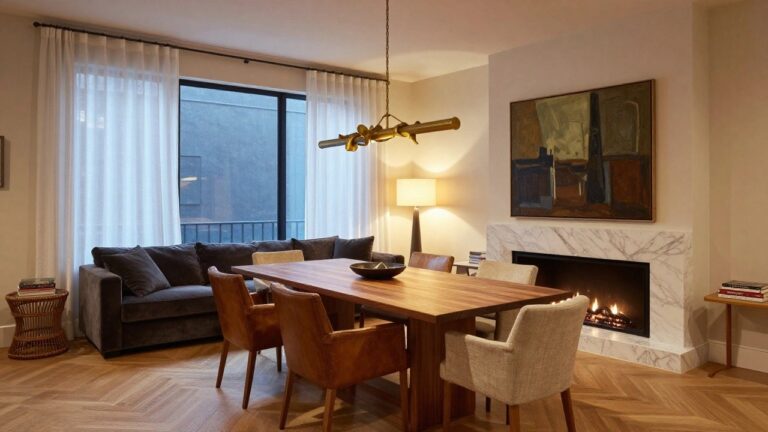
When you step into a living room that flows into a dining area, the success hinges on whether the space feels connected or chopped up by furniture and walls. I’ve rearranged my own setup a few times to smooth that transition, and it always transforms how the room serves daily life. People tend to notice the lighting first, especially when it warms both zones without creating harsh divides. These combinations balance high-end pieces with practical layouts that encourage lingering over meals or evenings on the sofa. That central rug trick in one works every time.
Dining Table Beside the Fireplace
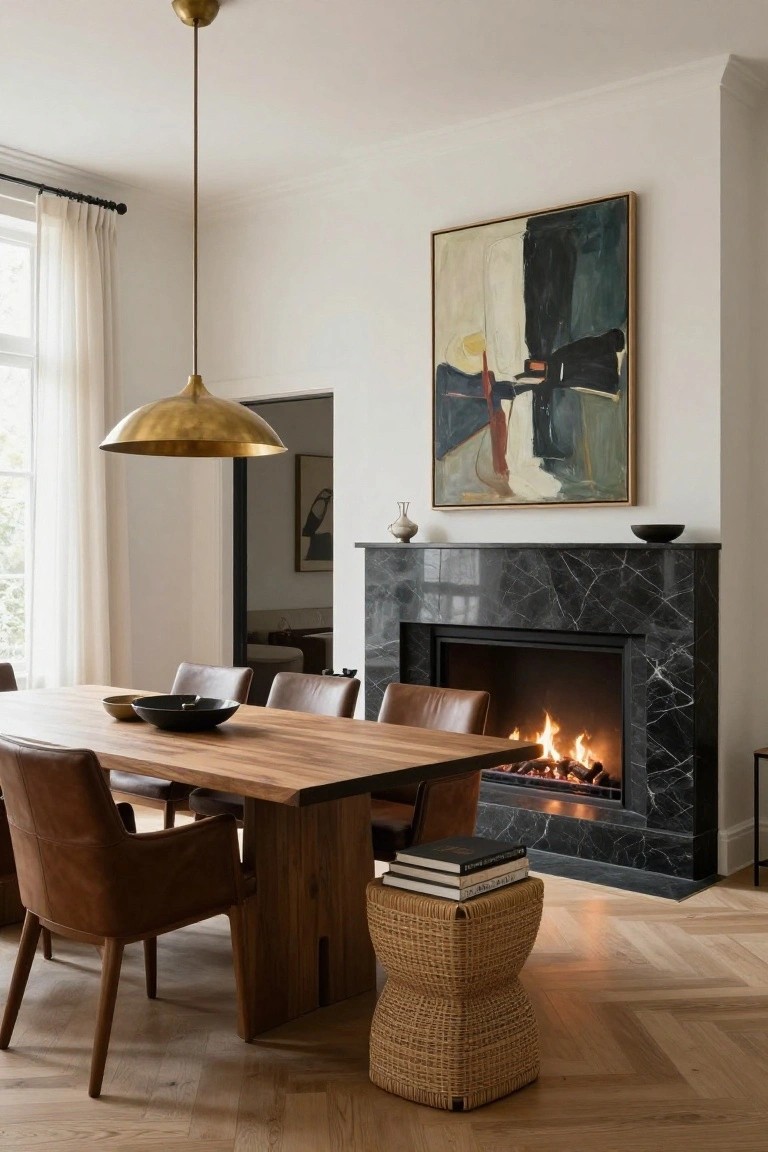
A simple way to blend dining and relaxing is to pull the table right up next to the fireplace. Here, a long wood table with leather chairs sits close to a tall black marble hearth. The flames make meals feel warmer and more casual. It turns everyday dinners into something special without much effort.
This layout fits open rooms where living and dining flow together. Go for a sturdy table like this one, maybe live-edge oak, and chairs that are comfy for long sits. It suits modern homes with high ceilings or city apartments wanting a cozy touch. Just keep the mantel clear so the fire stays the focus.
Curved Sofa Blends Living and Dining

One smart way to make a small living-dining room feel open yet cozy is with a curved sofa. It hugs the space softly, wrapping around a low coffee table like the oak one here, while sitting right next to the dining table. The gentle bend pulls your eye from eating area to seating without hard lines breaking things up. White paneled walls and big windows keep it light.
This setup works best in apartments or narrow city rooms where you want both functions without walls. Pick a light fabric sofa to match pale walls, and add wood tones for warmth. Keep pillows simple… nothing too fussy. Just watch the scale; too big a curve can crowd things.
Emerald Green Velvet Sofas in Dark Rooms
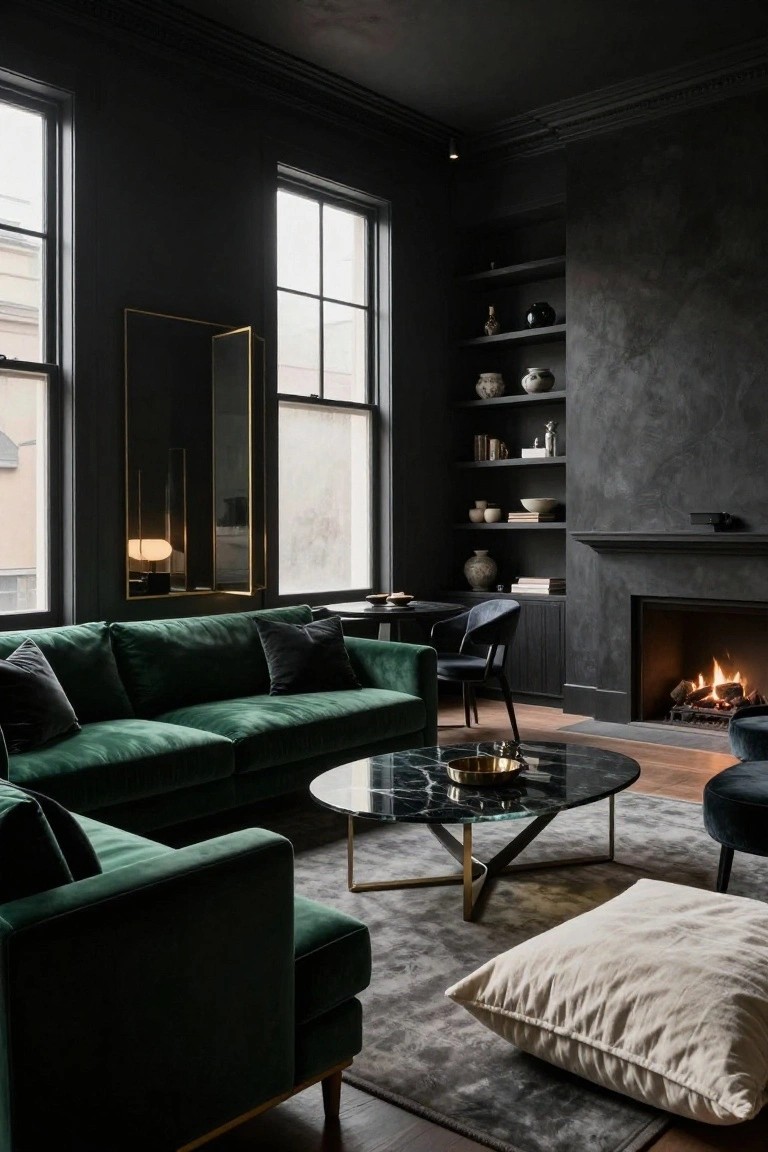
Deep green velvet sofas stand out in this dark living room. The plush fabric picks up the low light from the windows and fireplace, giving the space a cozy, upscale feel without needing bright colors. Paired with charcoal walls, it keeps things intimate and easy to live with.
This look works best in rooms with good natural light or a fireplace to warm it up. Use it for formal sitting areas in older homes, or add one green piece to a neutral setup if you want to test it. Just keep accessories simple so the velvet does the talking.
Recommended Products

Woven Rattan Body: The rectangular frame is fully wrapped in tightly woven rattan, creating a continuous textured surface across the top and sides.

[COFFEE TABLE]: SAFAVIEH's Jesse coffee table works as a center table in a living room, den or family room, low enough to reach across from a seated position.

Open Living Dining Area with Ocean Views

This kind of setup takes a living room and dining area and puts them right together in one open space. Big sliding doors pull back to let in the sea view, making the whole room feel bigger and connected to outside. The cream sofa and wood tables give it a calm, beachy feel without much fuss.
You can pull this off in any coastal spot or sunny room with a nice outlook. Stick to light walls, natural wood furniture, and rattan chairs to keep things easygoing. Watch the scale though. Too much stuff and it loses that open flow… keep it simple for the best effect.
Library-Inspired Dining by the Fireplace
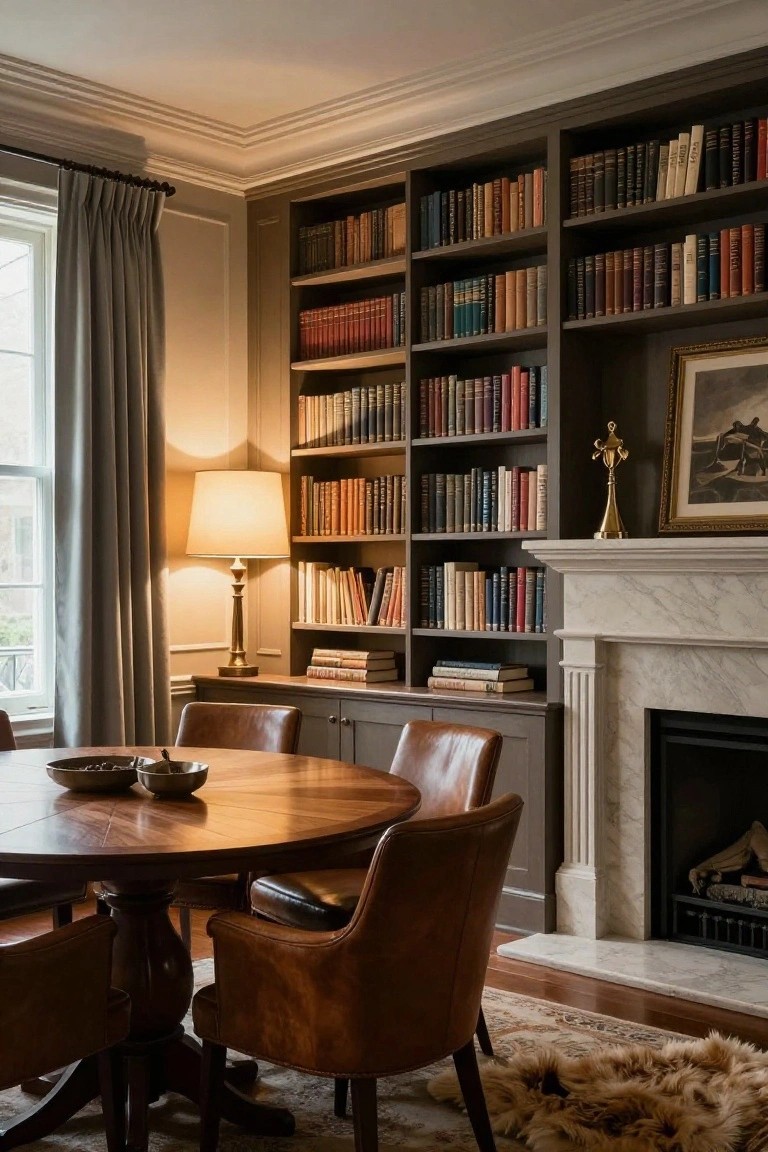
One simple way to blend living and dining spaces is with built-in bookshelves wrapping around a fireplace. This room pulls it off nicely. The shelves are packed with books in all colors, giving the spot a lived-in, thoughtful feel. A round wood table sits close by with leather chairs, turning everyday meals into something more cozy and conversation-friendly.
You can try this in a larger living room where you want one area to do double duty. It suits older homes or ones with classic details, like paneled walls. Just make sure the shelves have enough depth for your books, and pick a table that doesn’t crowd the flow. A soft rug underfoot helps tie it together too.
Recommended Products

1. **Elegant Design**: This side table, featuring a delicate waist design, adds a touch of modern luxury to any space. Its unique aesthetics make it an ideal choice for both contemporary and classic interiors.

[Framed Abstract Wall Art]: A set of 2 large framed green abstract wall art, each panel measures 24x36 inches, creating a bold 48" W x 36" H display when placed side by side. This framed wall art set of 2 is ideal for living room walls, bedrooms, dining rooms, and other large spaces

【Modern Cloud Sofa】 — A soft, cloud-inspired silhouette with rounded arms and warm wood legs creates a refined, inviting centerpiece for modern living room furniture. The versatile design complements organic-modern and cozy contemporary spaces.
Industrial Loft Living and Dining Combo
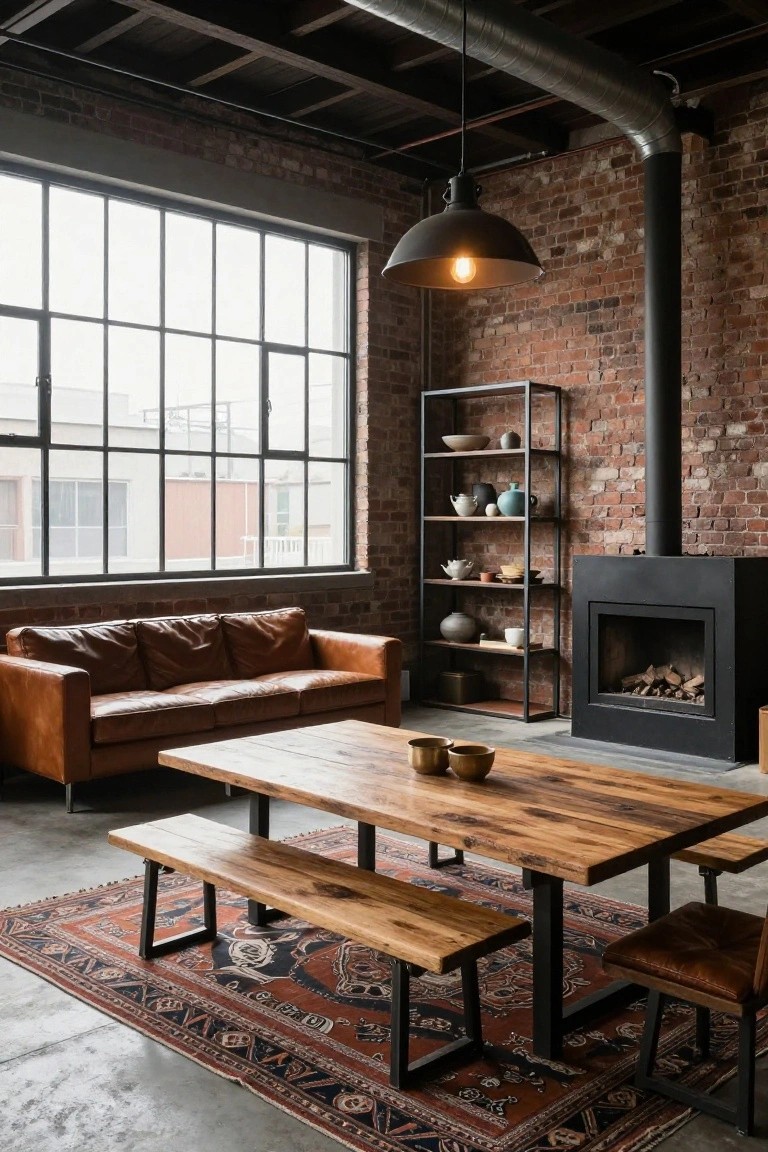
This look pulls off a shared living and dining space in a converted warehouse vibe. A hefty reclaimed wood table with black metal legs takes center stage, benches on one side and a leather sofa close by on the other. Exposed brick walls and a simple fireplace keep things raw, while the wood table makes it feel lived-in and ready for meals or game nights.
Try this in tall-ceiling lofts or wide-open rooms where walls aren’t dividing things up. It suits homes with factory windows for that natural light. Go for sturdy benches that double as extra seats when company shows up, and add a rug underneath to mark the spot without crowding the concrete floor.
Living-Dining Spaces Open to the Garden

One straightforward way to make a living room feel more relaxed is to tie it directly to the outdoors with big sliding glass doors. Here, a round wood table sits with simple chairs right by the doors, pulling in garden views of palms and green lawn. The light walls and floor let sunlight flood in, and that neutral rug helps settle everything without closing off the flow.
This kind of setup suits homes where the yard is pretty and private. Pick warm wood pieces to warm up the open feel, and keep seating low-key around the table. It might not work if your garden gets too wild… just add some screening if needed.
Dining Table by the Fireplace
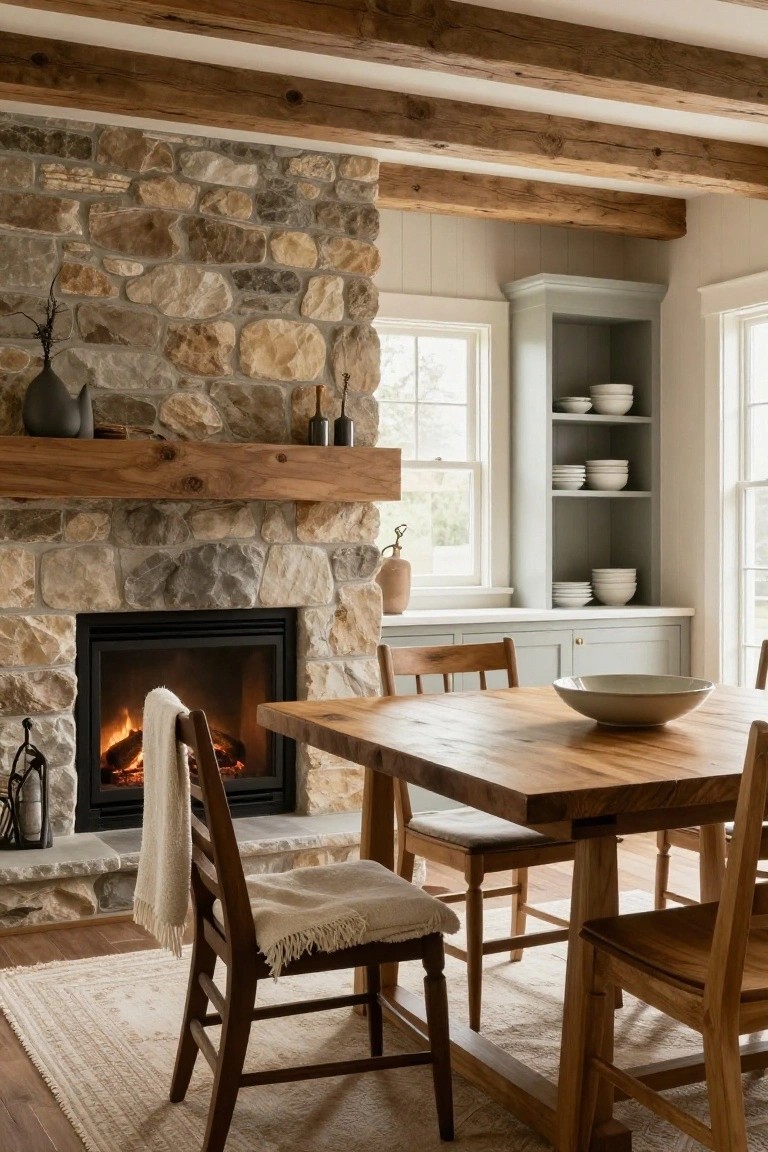
Putting a dining table right next to the fireplace pulls the whole room together in a natural way. The big stone surround and thick wood mantel make it feel sturdy and warm, especially with those exposed beams overhead. Meals turn into something special when everyone’s close to the fire, and it saves space too by blending living and eating areas without walls getting in the way.
This works best in casual family homes or cabins where you want everyday comfort over fancy separation. Go for a solid wood table like the one here, pair it with simple chairs, and keep the floor neutral so the stone and wood stand out. Just make sure the hearth has enough clearance for safety, and add a rug underneath to soften things up.
Velvet Seating Around the Fireplace
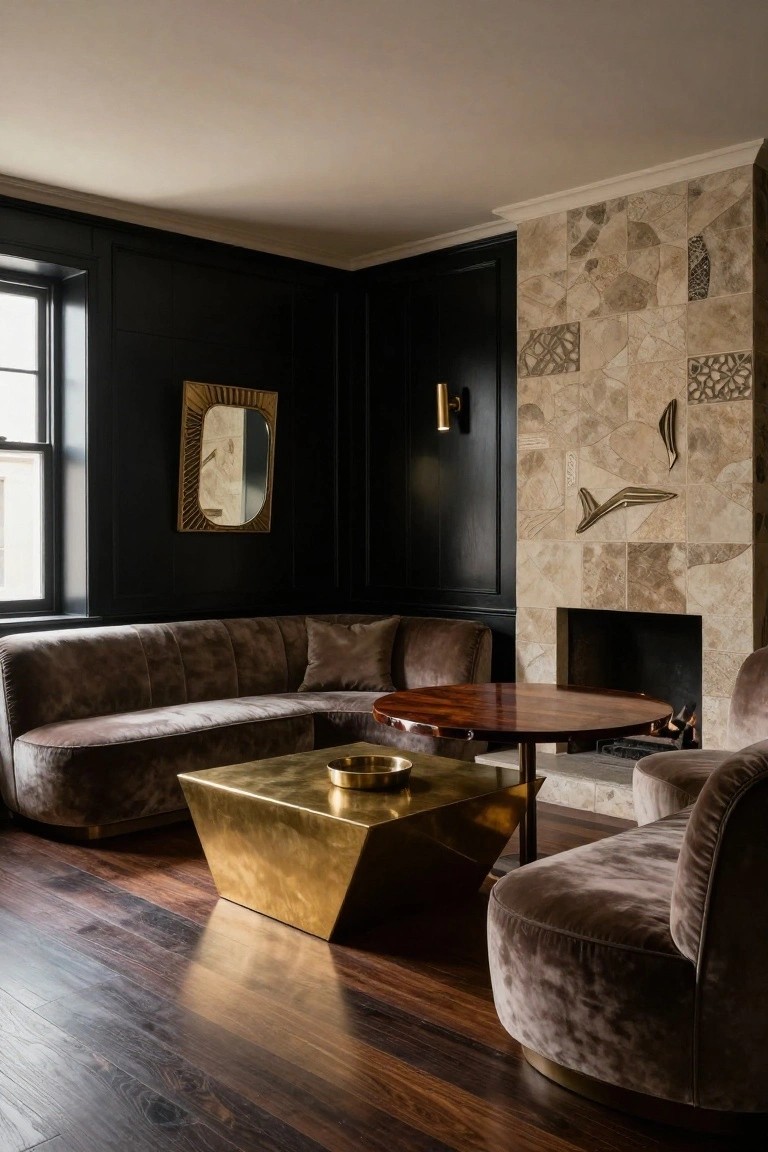
A simple L-shaped sofa in soft brown velvet wraps around a stone fireplace in this dark-paneled room. The plush fabric pairs nicely with a geometric brass table right in front, holding a bowl that catches the light. That mix keeps things cozy and upscale, especially against black walls that hug the space close.
Try this in a living room corner that needs warmth, like one with tall windows or steady evening use. Velvet holds up well if you pick performance fabric, and the brass adds shine without overwhelming. It suits older homes with wood floors, or any spot where you want seating that feels special but not fussy.
Tatami Mats and Low Table Living Area

Tatami mats cover the floor here, paired with a simple low wooden table right in the center. Cushions sit around it for floor seating, and there’s a low sofa off to one side. This setup keeps things open and relaxed. No bulky chairs or high furniture to crowd the space. It pulls you down to a calmer level, perfect for lingering over tea or a casual meal.
Try this in a sunny corner room where you want living and light dining to blend. It suits modern homes with Asian touches, or any spot needing more calm. Stick to natural woods and neutrals so it stays airy. Add just a few plants or trays… nothing more.
Blush Pink Velvet in Formal Living Rooms

Blush pink velvet shows up here on the sofa and chairs, giving the living area a soft luxury feel that flows right into the dining spot. It stands out against the white marble fireplace and pale walls, making the space feel warm and put-together without too much fuss. That gentle pink tone keeps everything connected, even with the mix of gold mirrors and abstract art.
This setup works best in open homes where living and dining share the room. Go for velvet in lighter pinks on bigger pieces like sofas, then add glass tables or metallic legs to keep it airy. It suits city apartments or classic houses that need a fresh, lived-in touch… just pair it with neutral rugs to avoid overwhelming the floor.
Navy Walls Warm Up Dining Corners
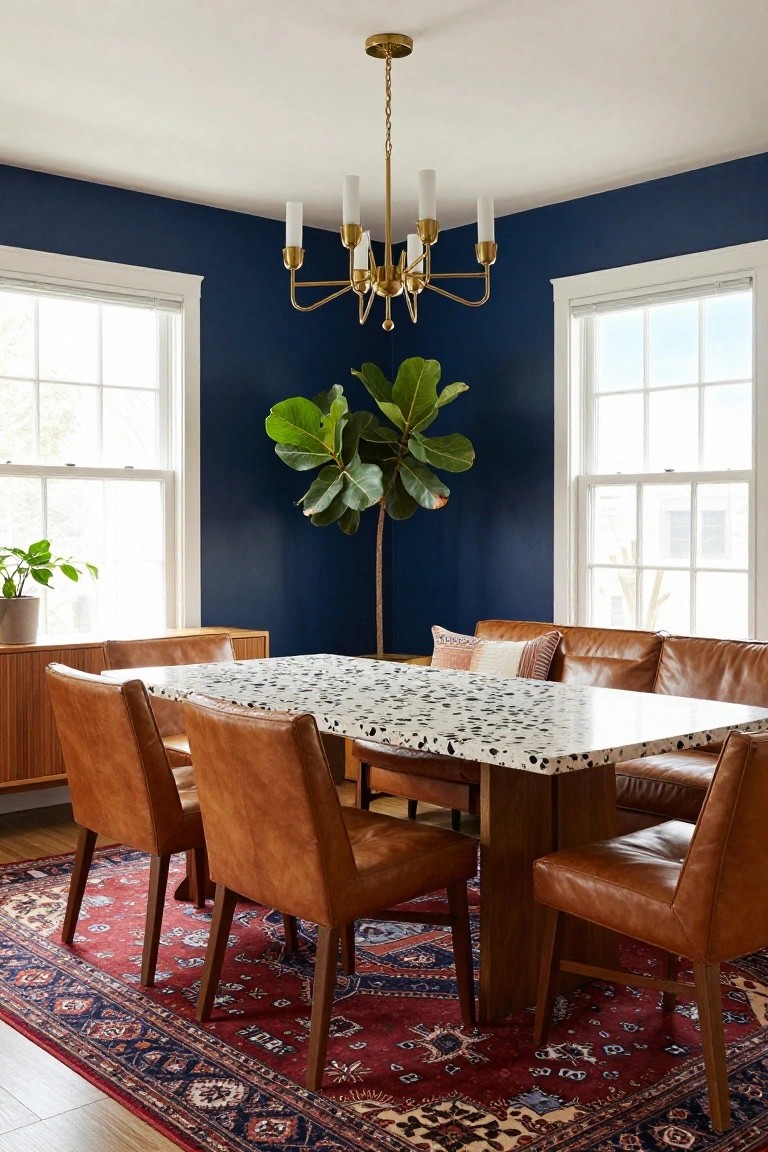
Navy walls give a dining area real presence. They wrap the space in a rich, moody blue that feels pulled together right away. In this setup, the gold chandelier pops against the color, and a big fiddle leaf fig tree softens one corner.
Try this in a room with good natural light from windows. It suits older homes with wood floors or open layouts tying into living areas. Stick to warm leather chairs and wood tones nearby to avoid a cold feel.
Round Dining Table in a Living Room Setup
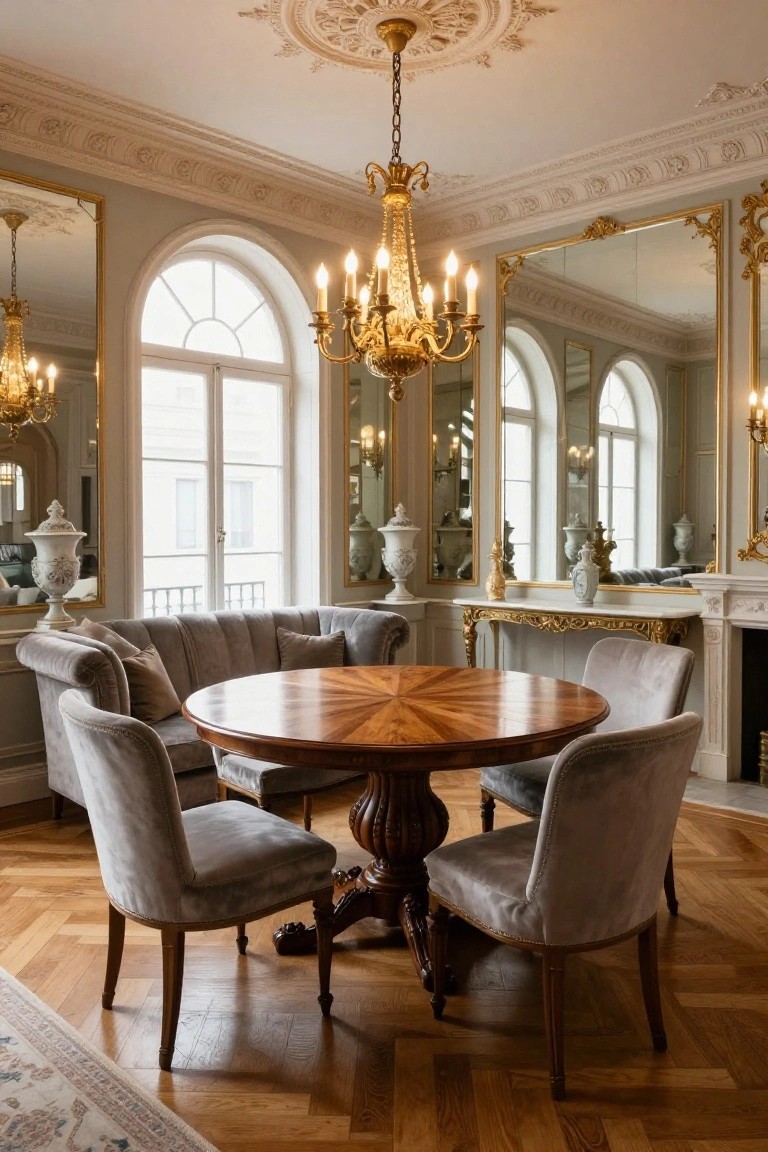
This room pulls off a smart living and dining combo by placing a round wood table with grey velvet chairs right up against a curved sofa. The pedestal base on the table keeps it from feeling crowded, and that starburst top adds a touch of formality without overpowering the cozy lounge vibe. Mirrors and soft light make the whole area feel bigger and more connected.
You can try this in apartments or open-plan homes where space is tight but you still want guests over for meals and chats. Pick chairs in the same fabric as your sofa for easy flow, and keep the table small, maybe 48 inches across. Skip it in super modern spots, though. It shines best in rooms with classic details like ornate trim.
Wood Paneling Warms Up Open Living Dining Areas
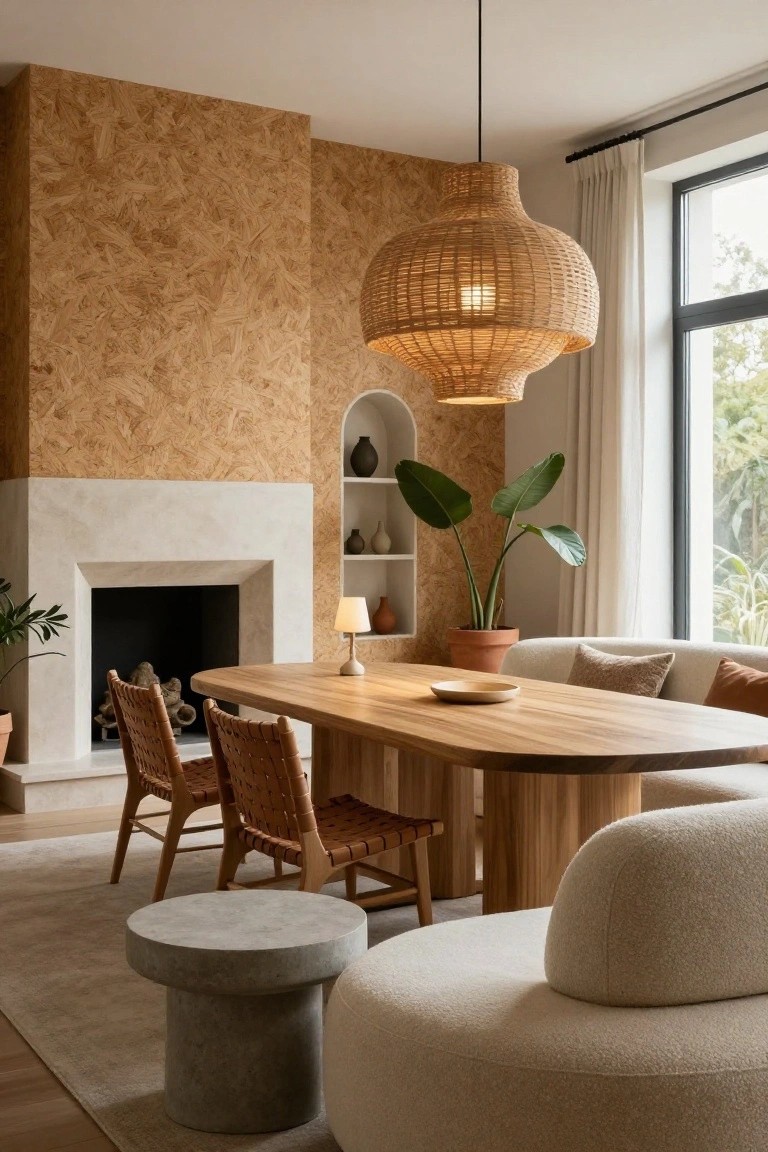
One simple way to make a combined living and dining space feel more inviting is with a textured wood panel wall. Here it’s a warm orange-toned plywood look behind the fireplace. That rough grain pulls the eye and adds real coziness without overwhelming the room. The oak dining table nearby picks up on it nicely, tying everything together.
This works best in open-plan homes where you want some definition between zones but not hard walls. Use lighter wood tones if your space gets dim light. Skip it in super small rooms though… it can close things in. Add plants on shelves for extra life.
Integrated Living and Dining Layout
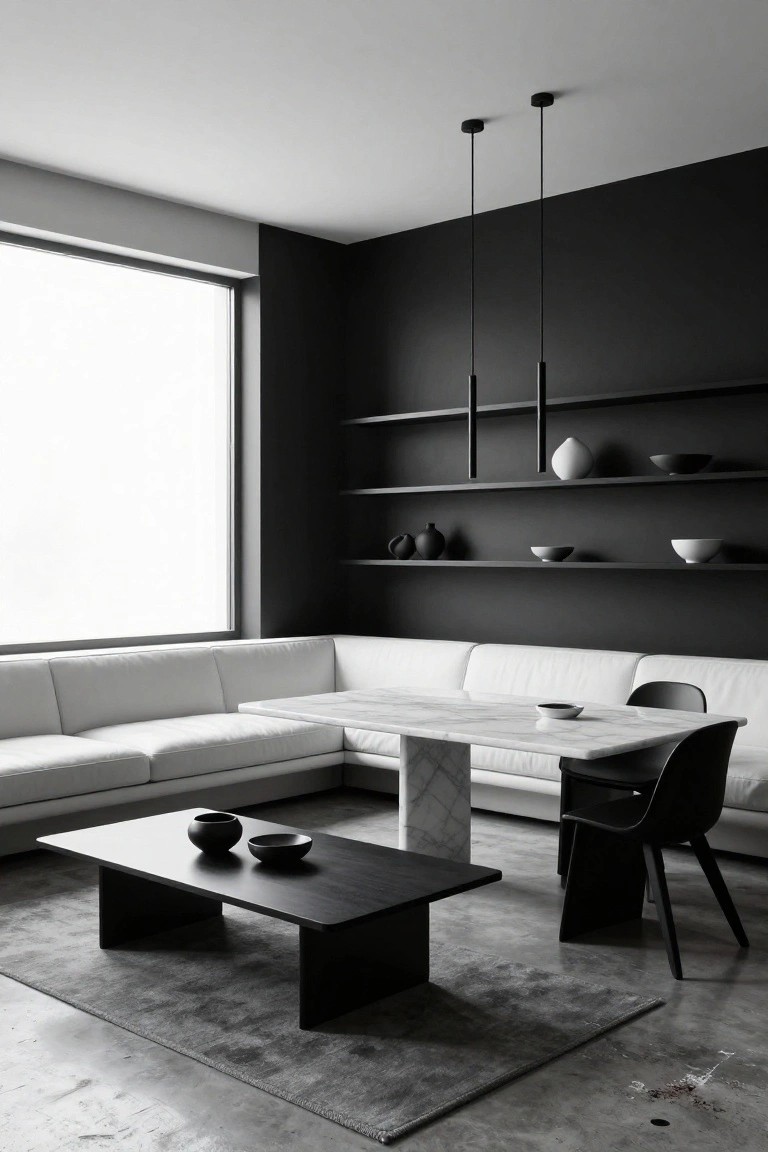
One smart way to mix living and dining spaces is to place an L-shaped sofa right next to the dining table in a corner. The white sofa hugs the marble-top table here, all set against dark walls that let the pale pieces stand out. It pulls both areas together without needing much room.
This layout fits best in open apartments or modern homes with limited square footage. Hang simple pendant lights above, toss a low coffee table in front, and call it done. Skip busy patterns… the calm vibe is what sells it.
Indoor Vertical Garden Dining Nook
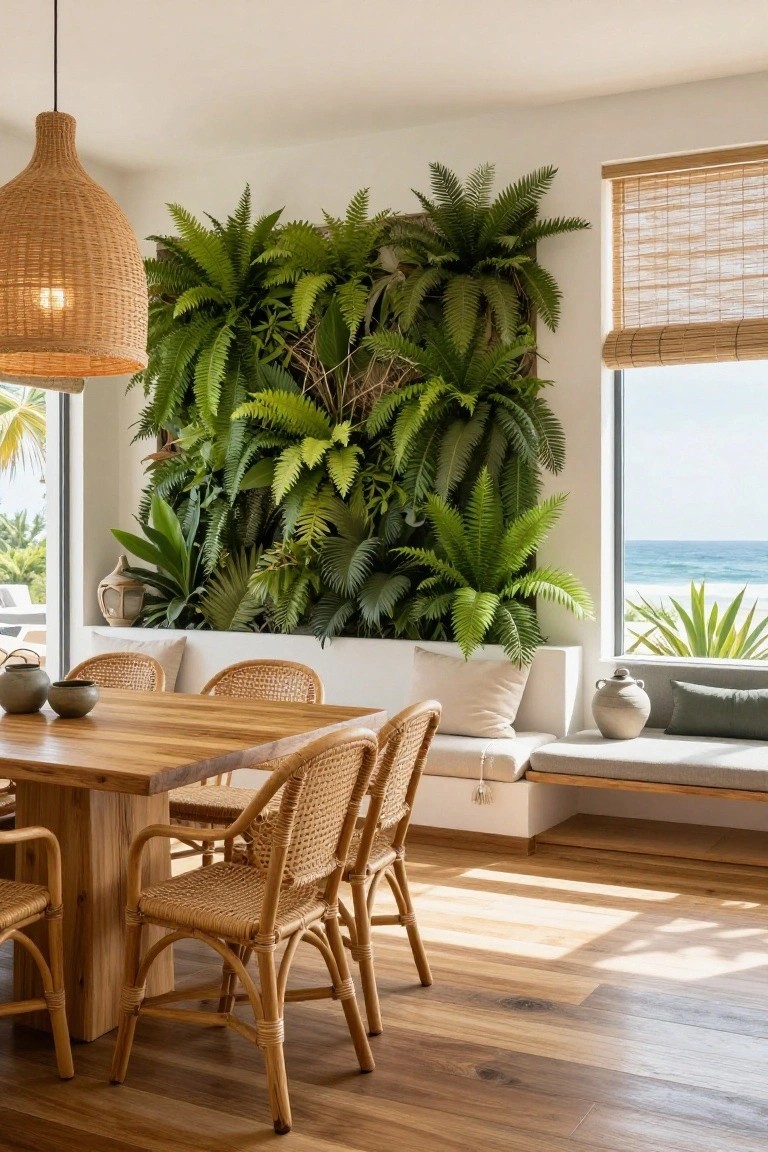
A full wall of lush ferns makes this dining area feel alive and connected to nature. It covers the space behind the wooden table and rattan chairs without overwhelming the room. Sunlight filters through bamboo blinds onto the ocean view, keeping everything fresh and relaxed.
This setup shines in homes with big windows and tropical leanings. Pick low-water plants like ferns that hang naturally. It suits open living-dining combos where you want green without the mess of potted stuff on the floor. Just make sure the wall has good drainage.
Dining Area by the Fireplace

One simple way to blend living and dining spaces is to place a long table right up against a classic marble fireplace. It turns meals into something cozier, especially on cooler nights. Here, the wood table with its glossy top sits comfortably beside the clean white fireplace, while gray velvet chairs add a soft touch that keeps things feeling open and light.
This setup works best in corner rooms with good window light, like older homes with high ceilings. Pull it off by keeping walls neutral, maybe a subtle gray pattern, and hanging a soft layered pendant overhead. Skip heavy rugs under the table if you want the wood floors to show through. It’s practical for everyday use but still looks pulled together for guests.
Rustic Dining Table Anchors Living and Dining
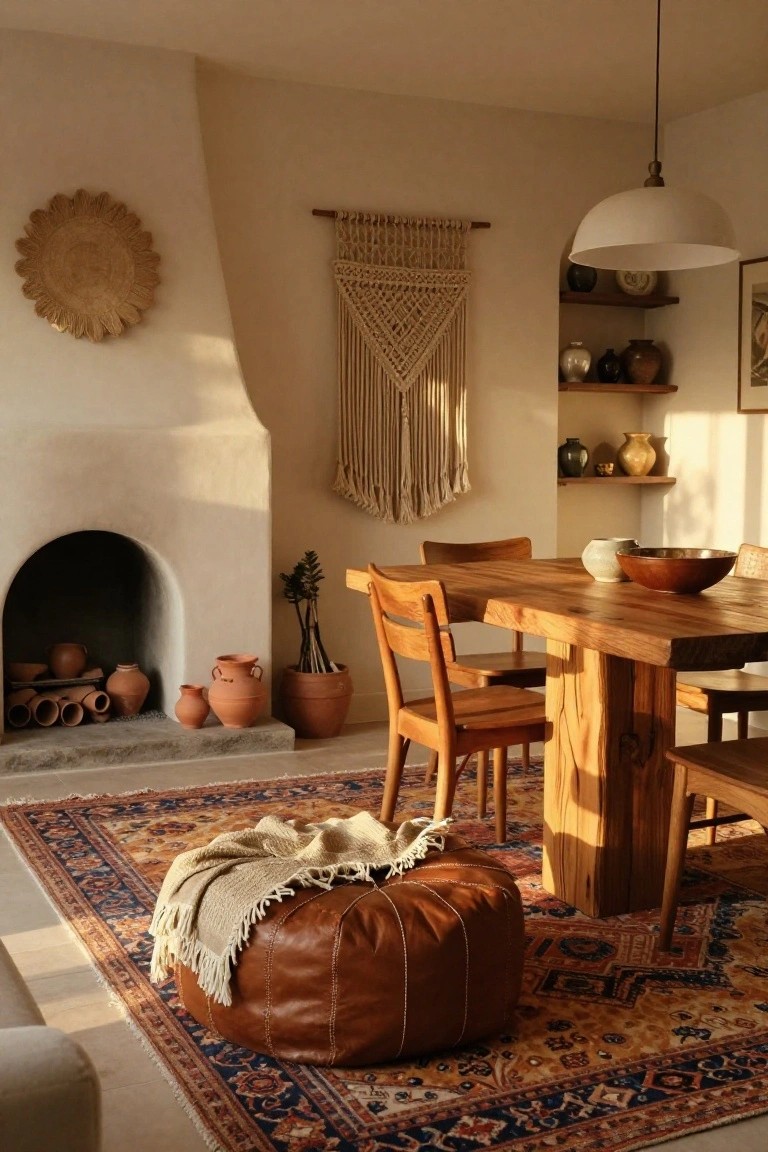
A solid wood dining table like this one takes center stage in the living area, right by the fireplace. It pulls double duty for meals and casual hangouts, with wooden chairs around it and a leather pouf nearby for extra spots to sit. The table’s rough edges fit right in with the adobe walls and terracotta pots stacked by the hearth. Keeps everything feeling connected and lived-in.
This works best in open-plan homes where you want one spot for family time. Size it to fit your traffic flow, maybe 8 feet long for six people. Pair it with a big rug underneath to define the zone. Skip it if your space is too narrow, or the table might crowd things.
Frequently Asked Questions
Q: Can I make one of these combos work in my apartment without it feeling cramped?
A: Go for multifunctional pieces like a low sofa that doubles as extra seating near the table. Keep walkways clear and use sheer curtains to blur boundaries. The room breathes easy that way.
Q: How do I pick rugs that flow between living and dining?
A: Choose one large rug under the dining set in a subtle pattern. Let it peek out toward the living area or layer a smaller one there in a matching hue. It connects everything without overwhelming the floor.
Q: What’s the easiest way to add luxury lighting?
A: Drop a sculptural pendant right above the table for drama. Scatter table lamps on sideboards to warm up the seating area. Flip on dimmers at night and watch the glow transform it.
Q: Do the furniture styles have to match exactly?
And skip rigid matching. Mix a modern velvet sofa with classic wood dining chairs. The contrast sparks interest and feels lived-in luxe.
